
 Asep Darmawan
By James Moultrie
Special to Cyclingnews
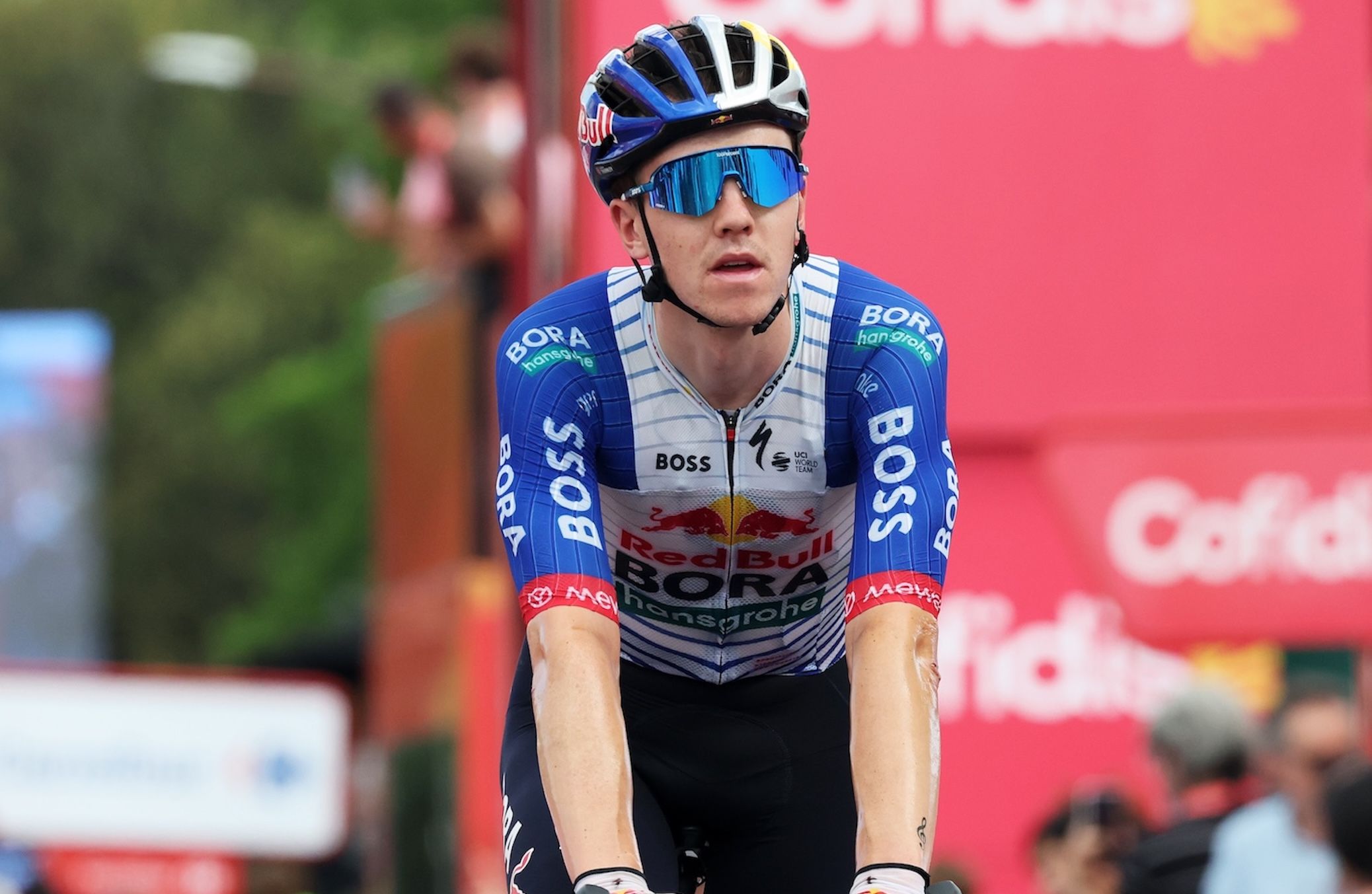
JEREZ, Spain — For more than an agonizing, thrilling hour during Stage 18 of the Vuelta a España, a seismic shock reverberated through the professional peloton. Scottish newcomer Callum Thornley, riding in his debut Grand Tour for Red Bull-Bora-Hansgrohe, sat comfortably in the hot seat of the individual time trial.
As established world-class specialists rolled down the start ramp one by one, failing to dislodge the 23-year-old from the top of the leaderboard, the unthinkable began to look entirely plausible: a Grand Tour stage victory on debut for a young neo-professional.
Ultimately, sport can be a cruel and unforgiving judge. Thornley was agonizingly denied the crown by a flying Stefan Küng (Tudor Pro Cycling), who scraped past the Scot’s time by a mere two to three seconds across the demanding route in Jerez. Yet, despite missing out on the golden hardware, the overarching narrative of the day was not one of defeat, but of the arrival of a generational time-trial talent.
Main Facts: A Whisker Away From History
The individual time trial on Stage 18 of the 2026 Vuelta a España was billed as a pivotal day for the General Classification (GC) contenders, a battleground featuring heavyweights like Enric Mas and Primož Roglič. Yet, it was a relative unknown who hijacked the headlines for the majority of the afternoon.
- The Protagonist: Callum Thornley, 23, competing in his debut Grand Tour for Red Bull-Bora-Hansgrohe.
- The Performance: Set a scorching early benchmark that held off elite specialists for over 60 minutes.
- The Result: Finished second on the stage, beaten only by time-trial maestro Stefan Küng by an agonizing margin of just 2 to 3 seconds.
- The Contrast: The stellar performance came just 24 hours after Thornley finished Stage 17 "well off the pace," saving his energy entirely for the race against the clock.
Chronology of a Thriller: How Stage 18 Unfolded
To understand the magnitude of Thornley’s ride, one must look at how the day evolved in Jerez. Stage 18 presented a technical and physically punishing route designed to test the limits of recovery in the final week of a brutal three-week Spanish tour.
The Setup and the Contrast
Just a day prior, during Stage 17, Thornley had crossed the finish line deep in the grupetto, rolling in well off the pace of the stage winners. To the untrained eye, it might have looked like a young rider simply suffering through the grueling third week of his maiden Grand Tour. In reality, it was a calculated tactical deployment of energy. The Red Bull-Bora-Hansgrohe management and Thornley himself had circled Stage 18’s time trial in red ink.
Setting the Benchmark
Roll-out for the early starters began under rising Andalusian heat. Thornley, starting much earlier in the order due to his overall position in the GC, delivered a masterclass in pacing. Negotiating the technical corners and power sections of Jerez with the poise of a seasoned veteran, he crossed the finish line and stopped the clock, setting a standard that immediately caused ripples through the paddock.
The Long Wait in the Hot Seat
As hour after hour ticked by, cycling’s heavy hitters took to the course. Riders known for their prowess against the clock—rouleurs, national champions, and time-trial specialists—tackled the intermediate checks. Time and again, riders flashed across the timing mats behind Thornley’s ghost.
For over 60 minutes, the young Scot occupied the coveted hot seat. Social media feeds lit up, and television commentators began to seriously contemplate a fairytale outcome. Could a 23-year-old neo-pro pull off one of the biggest upsets of the 2026 cycling season?
Küng’s Late-Stage Heroics
The fairy tale was ultimately gatecrashed by Stefan Küng. The Swiss powerhouse, one of the premier time-trialists of his generation, paced his effort to absolute perfection. Pushing into the red in the final kilometers, Küng clawed back the deficit, crossing the finish line just hairs ahead of Thornley. When the official times were locked in, only two to three heartbreaking seconds separated the Swiss veteran from the Scottish newcomer.
Supporting Data & Context: The Anatomy of a Neo-Pro
Thornley’s trajectory to this point underscores why his performance, while shocking to casual fans, came as less of a surprise to cycling insiders who have monitored his development through the lower ranks.
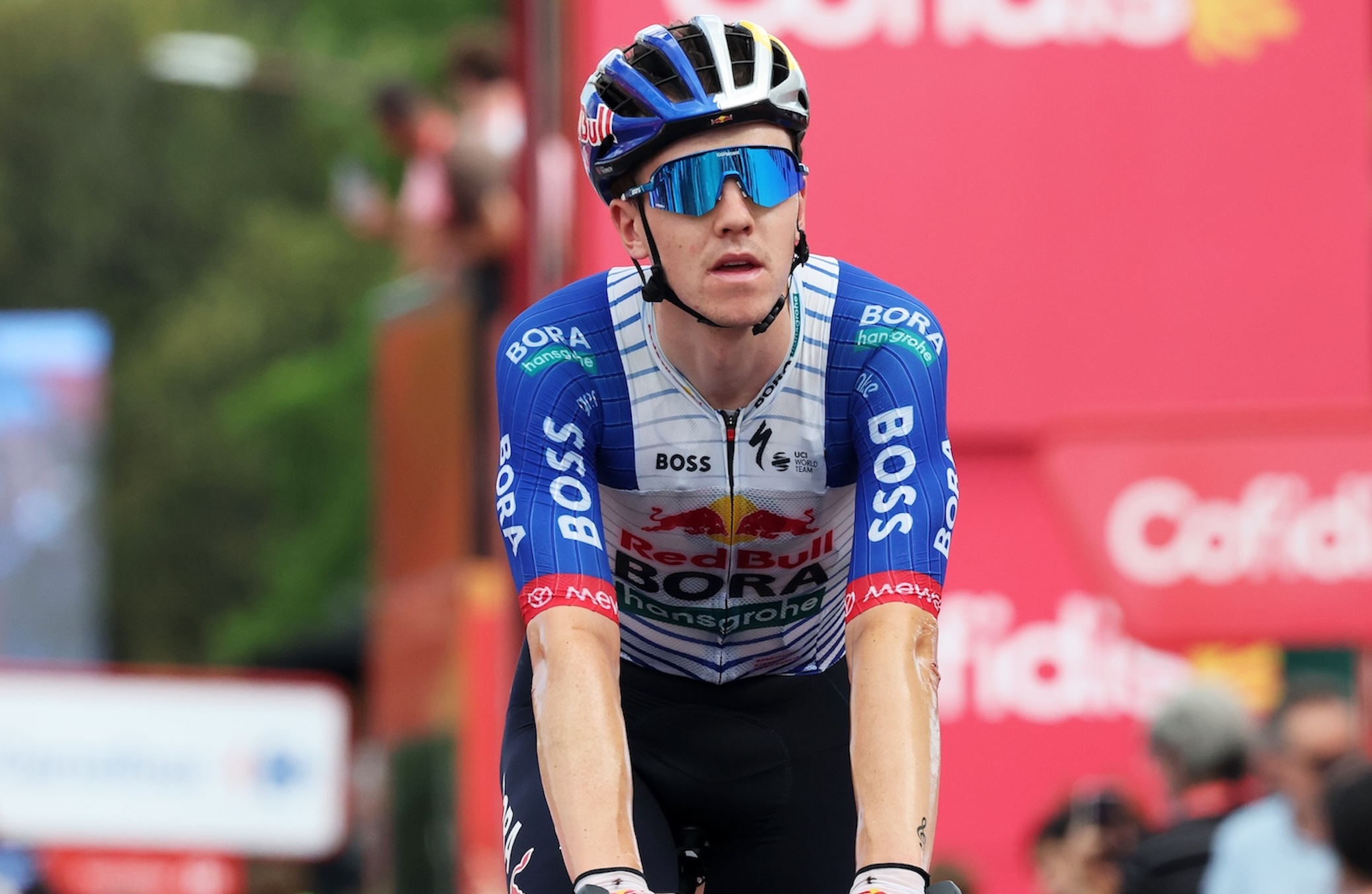
- Grand Tour Steep Learning Curve: Entering a three-week race requires an immense adaptation of physical and mental resilience. For a 23-year-old, simply finishing a Grand Tour is typically the primary goal. Contesting a stage win—let alone in an individual time trial against world-class specialists—demands an elite aerodynamic profile and pacing discipline.
- The Red Bull-Bora-Hansgrohe Factor: The German WorldTour outfit has increasingly focused on nurturing young, specialized talent. Thornley’s inclusion in the Vuelta roster was designed as a developmental stepping stone, making his near-miss on Stage 18 a massive vindication of the team’s scouting and coaching infrastructure.
- The Margins of Defeat: In cycling, time trials are won and lost in the wind tunnel and the fractions of seconds taken on tight corners. Losing by 2–3 seconds over a multi-kilometer course highlights just how evenly matched Thornley was with a multi-time national and European championship-caliber rider like Küng.
Official Responses and Paddock Reactions
The cycling world was quick to rally around the young Scot after the dust settled in Jerez. While the victory went to Küng—who was simultaneously navigating the GC implications involving Enric Mas and Primož Roglič—the post-race chatter belonged almost entirely to Red Bull-Bora-Hansgrohe’s breakout star.
Pundits, rival team directors, and fellow riders took to interviews to voice their admiration. The consensus across the paddock was unanimous: this is not an anomaly, but the birth of a star.
"For over an hour, we thought we were watching history," noted one veteran race analyst. "When a 23-year-old comes into his first Grand Tour and nearly beats Stefan Küng in a pure test of truth, you aren’t just looking at a good day on the bike. You’re looking at a future world-class triallist."
Team insiders noted that Thornley’s ability to completely switch off on Stage 17 to preserve matches for Stage 18 demonstrated a tactical maturity well beyond his years. Rather than hanging his head over the narrow loss, Thornley’s demeanor post-stage was reportedly one of fierce hunger, recognizing that he can mix it up with the absolute best in the world.
Implications: What This Means for Thornley’s Future
As the 2026 Vuelta a España winds toward its final conclusion in Madrid, the reverberations of Callum Thornley’s ride will stretch far beyond this single three-week race.
- A Shift in Team Roles: Up until Stage 18, Thornley was viewed strictly as a support rider, a neo-pro learning the ropes. Moving forward, Red Bull-Bora-Hansgrohe will likely view him as a protected rider for prologue and time-trial stages in shorter, week-long WorldTour stage races.
- Classics and Chronos: With his engine proven over the distance of a Grand Tour time trial, Thornley instantly elevates his profile for races against the clock at events like Paris-Nice, Tirreno-Adriatico, and eventually, the World Championships.
- The Next Generation of British/Scottish Cycling: The UK has a rich pedigree of producing elite time-trialists (think Bradley Wiggins, Chris Boardman, and Ethan Hayter). Thornley’s performance firmly stamps his passport into that elite conversation, signaling that a new torchbearer is ready to step up in the discipline.
While Stefan Küng took the flowers and the stage win in Jerez, Callum Thornley captured the imagination of the cycling universe. As he continues his journey toward Madrid and looks ahead to the 2027 season, one thing is abundantly clear: the rest of the professional peloton has officially been put on notice.

 Nana Muazin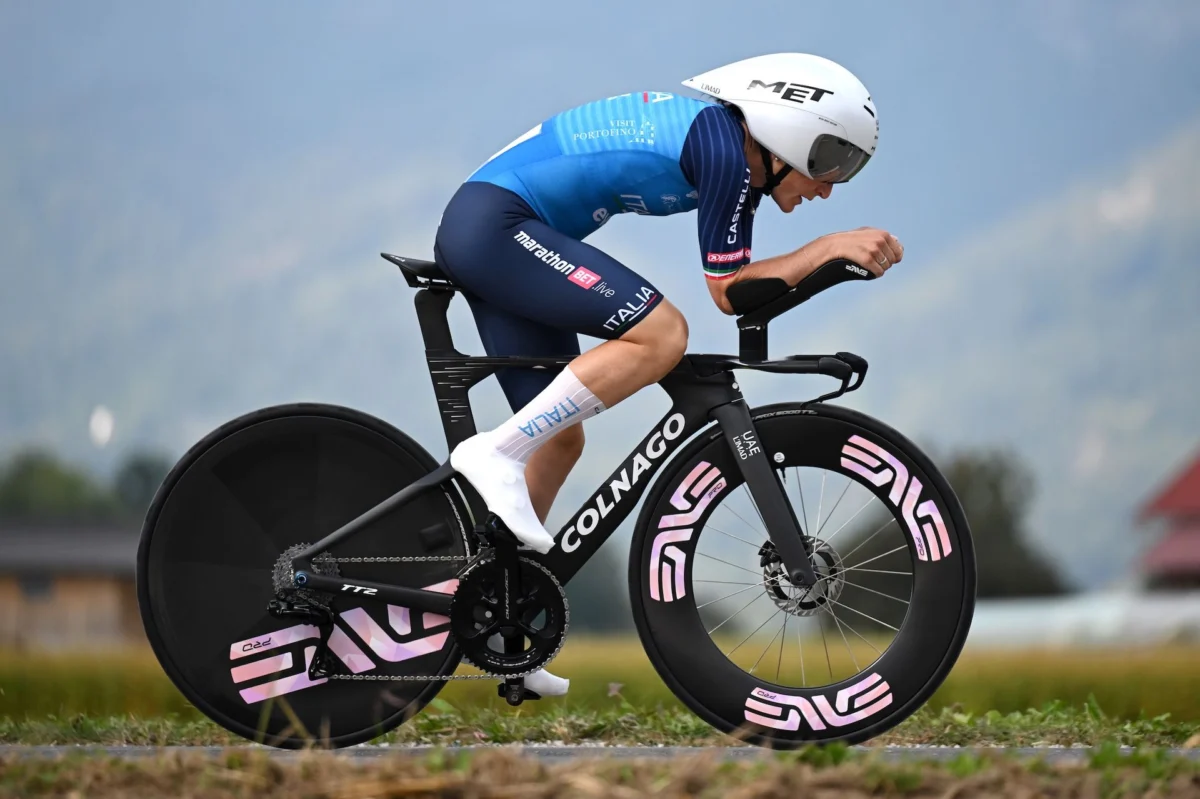
 Jia Lissa
 Ammar Sabilarrohman
 Muslim
 Pevita Pearce
 Siti Muinah
 rifanmuazin
 Basiran