
 Dwi Wanna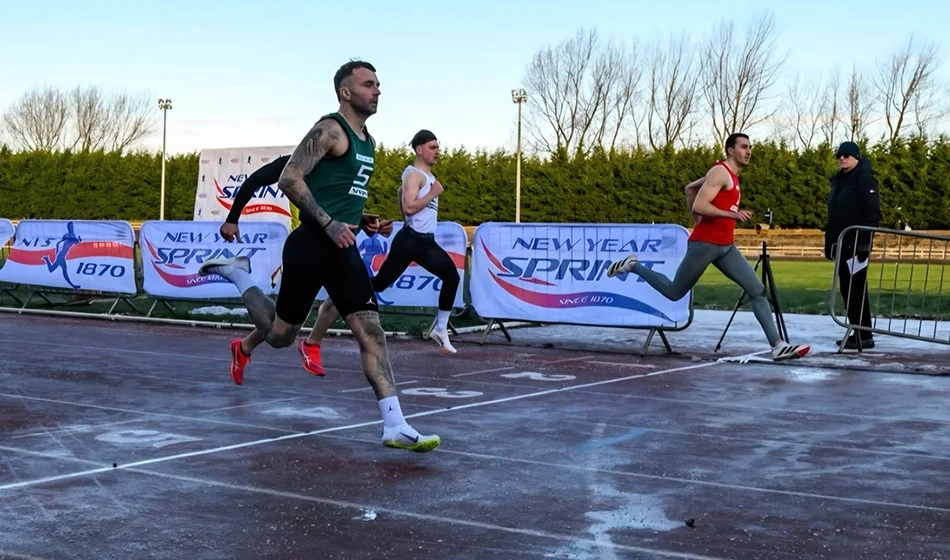
EDINBURGH, SCOTLAND — Deep in the historical tapestry of British athletics lies a tradition unlike any other, one forged amid the soot, grit, and roaring betting rings of nineteenth-century mining towns. As the calendar counts down to the 158th running of the New Year Sprint, the sport prepares to celebrate a contest that is simultaneously a solemn historical institution and a masterclass in high-stakes sporting theatre.
Set for January 1, 2027, at the historic Musselburgh Racecourse near Edinburgh—with preliminary heats unfolding on New Year’s Eve at Dalkeith High School—the upcoming meeting represents more than just another milestone. For organiser James Cunningham, it is a pivotal moment in a calculated campaign to return Scotland’s most colourful athletics tradition to the glittering heights of its bygone eras.
Blending athletic purity with a colourful, rule-bending past, the New Year Sprint remains a crown jewel of winter sport. Yet, as Cunningham looks toward 2027 with dreams of a wider British reach and mainstream broadcast exposure, the story of the Sprint remains inextricably linked to the underground culture that birthed it.
Main Facts: The Anatomy of a New Year Tradition
First contested in 1870, the New Year Sprint is one of the oldest and most distinctive footraces in the world. Unlike conventional modern athletics events where the fastest athlete crossing the finish line is crowned champion, the New Year Sprint operates on a meticulous handicap system.
Under this format, runners are assigned starting marks based on their sex, age, and historical ability—frequently referenced through databases like the UK’s Power of 10. The system is designed to level the playing field so entirely that the theoretical "scratch" runner—the fastest athlete in the field, starting from the back—must hunt down a wave of competitors staggered yards ahead.
"The beauty about handicap running is you have no idea who’s going to win that race when the gun goes, whereas at an amateur meeting you pretty much know from people’s form where they stand," explains Cunningham, who took over the organisational reins in 2023 from long-time director Frank Hanlon. "Runners are funny—runners can bottle it. You’ve got a hot favourite, fastest by a metre, definitely going to win it on the day, and nerves get to him and he just chokes."
The 2027 edition promises to elevate the stakes even further. Organisers have announced a lucrative £8,000 first-place prize, backed by £100 awards for every heat winner. Crucially, the event will be integrated into a premier horse racing programme at Musselburgh Racecourse, complete with live television coverage on ITV1—a platform that routinely draws upward of 750,000 viewers on New Year’s Day.
Chronology and Evolution: From Powderhall Pits to Modern Tracks
To understand the soul of the New Year Sprint, one must journey back to the industrial heartlands of the Victorian era. The race’s genesis was deeply intertwined with the working-class gambling culture of the nineteenth century.
"Back in the day miners liked to gamble," Cunningham reflects, tracing the event’s roots. "A lot of the reason the New Year Sprint existed is that at Powderhall [in Edinburgh] there was a dog track, and they used to bet on dogs. But they thought if we could introduce some runners to this, we could maybe make some more money."
The geographical footprint of the event’s early competitors read like a map of the British coal mining industry. On the west coast, contingents travelled from Barrow-in-Furness and Cockermouth; the east coast sent miners from Cramlington, Whitley Bay, and Newcastle; while Scottish participants poured in from Wishaw, Lanarkshire, Fife, and East Lothian.
Over the decades, the event became a nomadic institution, migrating across venues as urban landscapes shifted. From its foundational years at Powderhall, the Sprint traversed locations such as the Royal Patent Gymnasium, Buccleuch Park, Tranent, Victoria Park, Meadowbank, and Grangemouth, before finding its upcoming home at Musselburgh.
Despite logistical shifts, the roll of honour boasts some of the most fascinating figures in sprinting history. Early winners gave way to mid-century legends like Willie McFarlane, who secured back-to-back titles in the 1930s—winning off scratch in 1934. The post-war era welcomed international intrigue, such as Australian E. Cumming’s victory in 1952, and American Olympian Barney Ewell—a gold and double-silver medalist at the 1948 London Games—who travelled to Powderhall in 1950 for a special invitation handicap, narrowly missing victory from the scratch mark.
Perhaps no name is more synonymous with the event’s mythical status than George McNeill. Crowned champion in 1970, McNeill recorded stunning times off scratch the following year, equivalent to breaking the 10-second barrier for 100 metres. Tragically, strict amateurism rules of the era barred McNeill from representing his country at the Olympic Games because he had played schoolboy football for Hibernian—a bureaucratic casualty that denied British athletics a potential global champion.
Supporting Data: The Golden Age of Skullduggery
With thousands of pounds moving through Victorian and Edwardian betting rings—colossal sums for the era—the New Year Sprint inevitably attracted a heavy dose of ingenuity, secrecy, and outright deception.
Athletes and their handlers went to extraordinary lengths to dupe the race handicapper and outsmart the bookmakers. As Cunningham details, the preparation of young runners resembled the high-performance regimen of modern elite athletes, decades ahead of its time.
"You had 16- and 17-year-old lads taken out of the pits and put in a preparation where they were taken away and trained in secret… and given chicken, steak, eggs, trained twice a day, their legs massaged every day," Cunningham says. "They were trained like a king and they’d come out on the day a completely transformed runner—it was almost like they’d been on drugs—and of course they beat the handicapper."
The betting syndicates were equally sophisticated. To avoid triggering sudden odds shifts that would alert bookmakers, cohorts of backers coordinated their actions down to the second.
"They’d all synchronise their watches and they would all go up to a bookie at different areas around the whole track and all put their bets on at 11 o’clock on the dot—so it just looked like a £100 bet, but that bet was actually a £2,000 bet," Cunningham reveals. "Runners had false names to try and get money on—you’d put money on the runner with a pseudonym and that would bring the odds down on him, but push the odds up on someone else and then they’d put the real money on the actual runner."
The atmosphere surrounding these clandestine operations was cutthroat. Historical newspaper archives paint a grim picture of the gambling underworld that permeated professional pedestrianism: "If the turf accountants told you to lose, you’d do it. Their heavy features and dead eyes carried the promise of a fractured skull."
Even Cunningham himself is part of this storied folklore. Having taken over as organiser in 2023, he won the Sprint himself in 1998, netting his coach a £20,000 windfall after a summer of being kept "under wraps" to protect his handicap mark.
Official Responses and Mechanics: Preserving Integrity
Cunningham is quick to assure that the days of underground syndicates and physical intimidation are firmly buried in the past. Today, the integrity of the New Year Sprint is maintained through rigorous data analysis, transparency, and strict governance.
The modern handicapping mechanism leaves little room for runaway bandits, though balancing the field remains an art form.
"Your handicap is given to you based on your sex, your ability, and your age—that all comes together, and you take a lot of that information from Power of 10," Cunningham explains. "If you win the sprint and win the prize money, you will get pulled about three or four metres so you can never win it again… there’s always a wave of people coming through. You always have to do a bit of an apprenticeship to get to the point where you win it."
For the handicapper, the margin for error is razor-thin. "The handicapper doesn’t want to look daft," Cunningham notes. "If he’s gone and given someone a mark and they just rock up on the day and romp home by a few metres clear of everyone else—that looks bad on him. So they tend to play safe."
This delicate calibration ensures that while past champions like Jazmine Tomlinson (the first female winner in 2016) or recent victors like Daniel Bruce (2026) earned their places in history, they did so through hard-fought tactical execution rather than simple athletic superiority.
Implications: A Blueprint for Revitalising Heritage Sports
The strategic pivot toward Musselburgh Racecourse and the embrace of mainstream television broadcasting carry profound implications for the future of professional handicap racing in the United Kingdom.
In an era where traditional track and field meetings across Britain struggle for spectator engagement and commercial sponsorship, the New Year Sprint offers a compelling alternative model. By fusing high-stakes wagering culture, historic narrative, and mainstream sports entertainment, the event transcends niche athletics circles.
Cunningham’s explicit goal for the 158th running is geographic expansion—luring elite sprinters from England and further afield up to Scotland to test their mettle against the historic handicap system. With a £8,000 purse serving as a powerful financial magnet, and three-quarters of a million television viewers tuning in via ITV1 on New Year’s Day, the event is well-positioned to attract modern corporate sponsorship.
Yet, even as it looks forward to digital-age broadcasting and broader demographics, the Sprint retains the ghosts of Powderhall. It stands as a living museum of working-class grit, where the ghosts of Victorian miners, clandestine trainers, and lightning-fast legends like George McNeill still whisper across the track.
As the starter’s pistol prepares to fire at Musselburgh on January 1, 2027, the New Year Sprint will prove once again that while running is fundamentally about speed, true sporting greatness requires unmatched stamina to survive the test of time.
To enter the 158th New Year Sprint, visit the official registration portal via SiEntries.


 Nana Wu
 Siti Muinah
 Neng Nana

 Lina Hope
 Sagoh
Sagoh
 Iffa Jayyana