
 Basiran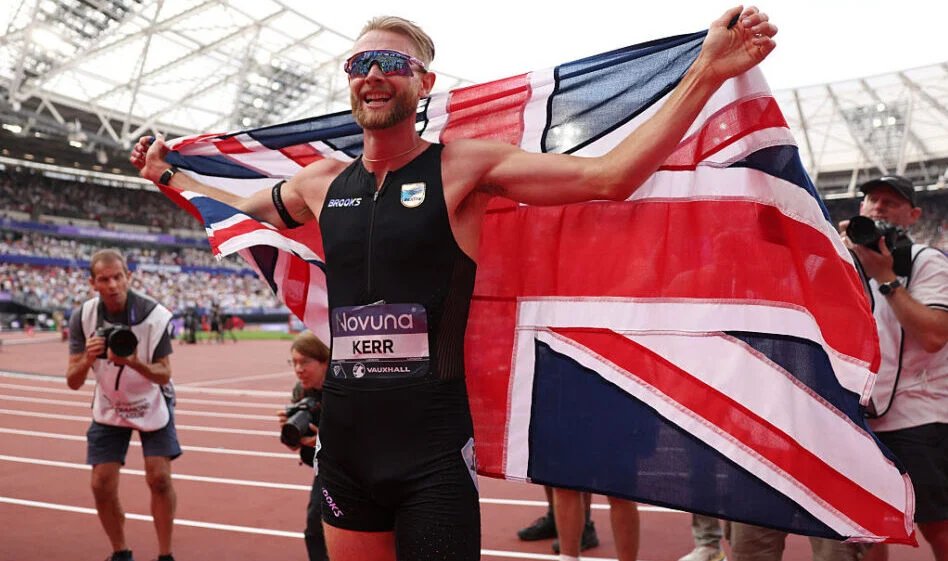
Main Facts
As the global athletics calendar builds toward its dramatic crescendo, British middle-distance superstar Josh Kerr arrives in Budapest this week for the prestigious World Athletics Ultimate Championship. He does so not only carrying the aura of invincibility, but also bearing the weight of a fierce ongoing debate surrounding athlete welfare, selection ethics, and financial compensation within the sport.
Kerr’s return to the Hungarian capital is deeply symbolic. It was on this very track in 2023 that the 28-year-old captured his maiden world 1500m title—a career-defining triumph that fundamentally shifted the landscape of global middle-distance running. Now, he returns in the form of his life, primed for a blockbuster showdown that could feature old rival Jakob Ingebrigtsen, Olympic champion Cole Hocker, and the world’s elite.
Yet, as Kerr prepares to toe the line on Sunday, his presence in Budapest is accompanied by headlines extending far beyond his staggering athletic achievements. In a wide-ranging, candid interview, the British champion addressed:
- The intense backlash he received for skipping the European Championships in Birmingham.
- A direct war of words with Norwegian rival Jakob Ingebrigtsen regarding professional obligations.
- The stark reality of archaic bonus structures, revealing he is still awaiting his payout for breaking the world mile record.
- His meticulous long-term strategy leading directly to the Los Angeles 2028 Olympic Games.
Operating at the absolute peak of his powers, Kerr is unapologetic about his choices, fiercely protective of his body, and entirely focused on cementing his legacy as the defining middle-distance runner of his generation.
Chronology of a Stellar Season
To understand Josh Kerr’s current mindset and his calculated decision-making regarding his racing schedule, one must trace his phenomenal trajectory over the past twelve months.
- Early 2024 (Poland): Kerr set the tone for a monumental year by dominating the field to capture the world indoor 3000m title, showcasing an explosive tactical range that immediately put his global competitors on notice.
- July (London): In front of a roaring home crowd at the London Diamond League, Kerr etched his name into the history books. Clocking a breathtaking time of 3:42.66, he shattered the world mile record, electrifying the athletics world and further cementing his status as a transcendent talent.
- August 1 (Glasgow): Following his exploits in London, Kerr returned to British soil to contest the mile at the Commonwealth Games. Displaying supreme confidence and tactical mastery, he delivered an emphatic victory, sweeping the field to claim gold.
- August (The Recoup Period): Rather than traveling to Birmingham for the European Championships—a move expected of many top British stars—Kerr made the conscious, controversial decision to pull the plug on his European campaign. He retreated to the United States to rest, recover, and reset.
- September (Budapest): Kerr arrives fresh for the World Athletics Ultimate Championship. Having bypassed the exhaustion traps that plague many elite competitors, he enters the weekend in phenomenal physical condition, ready to cap off an unforgettable year on the very track where his world championship journey began.
Supporting Data: The Metrics of Dominance and Financial Realities
Kerr’s dominance is backed by hard statistics, but his commentary sheds light on the less glamorous, highly bureaucratic side of elite professional athletics.
On-Track Performance Metrics
- World Mile Record: 3:42.66 (set in London, July).
- Major Titles in 2025/2026 Cycle: World Indoor 3000m Champion, Commonwealth Games Mile Gold Medalist, 2023 World 1500m Champion.
- Ultimate Championship Prize Purse: Up to $150,000 for the winner—a massive sum for track and field, though still dwarfed by major global team sports.
The Financial Disconnect
While the Ultimate Championship offers life-changing money for a single track race, Kerr highlighted a glaring stagnation in the sport’s financial incentives regarding historic achievements:
- Stagnant Bonuses: Kerr pointed out that the financial bonus structures for breaking world records have fundamentally not evolved over the decades. He noted that the bonus for breaking the world mile record today mirrors what Hicham El Guerrouj was running for back in 1999.
- Delayed Payouts: In a surprising revelation, Kerr admitted that despite shattering the world mile record in July, he is still waiting to receive his contractual record bonus, attributing the delay to rigid corporate contracting and bureaucratic red tape ("That’s just contracting").
Official Responses and the Ingebrigtsen Feud
The friction between Josh Kerr and Jakob Ingebrigtsen has become one of the most compelling narratives in modern sports. The rivalry intensified when Kerr opted out of the European Championships in Birmingham—where Ingebrigtsen returned from Achilles surgery to secure the 5000m gold.
Jakob Ingebrigtsen’s Critique
Ingebrigtsen did not hold back when assessing Kerr’s absence from the continental showcase, arguing that elite athletes carry a duty to the sport to show up wherever and whenever major championships call.
"It’s not for us as athletes to choose almost where to participate," Ingebrigtsen stated sharply. "We have these championships for a reason, and that is for the best athletes to compete—that is the whole point. So I definitely think it is ruining the sport if we are not participating. We all have different plans, but I could never see myself in that position."
Josh Kerr’s Defiant Rebuttal
Kerr fired back with a multi-layered defense. First, he emphasized human limitations, famously declaring: "I’m not going to get greedy. I’m a human being at the end of the day… I’m not a robot."
Furthermore, Kerr defended his decision on ethical and sporting grounds regarding national team slots:
"I didn’t go to British Championships and I made that decision not to go. Three people qualified by right to go to the European Championships. I had an option to take a 1500m spot from someone that deserved it, and I chose not to."
Addressing the "exceptional invite" to the Ultimate Championship in Budapest, Kerr added with a wry smile:
"I didn’t ask to be there. I didn’t ask for the invite. They sent it to me. Either I’ll be in trouble for not going, or I’ll be in trouble for taking an invite I don’t deserve. So pick your frustrations with me."
Regarding Ingebrigtsen’s current competitive form—having suffered a few Diamond League losses since his return from injury—Kerr offered a measured, albeit sharp, assessment:
"I foresee some struggling, obviously, from his side… that’s what it’s like when you take nine, ten months off of racing. That’s just life. I’m very happy that he is back running and racing… I’m not going to lose, but I’m excited to go out there and race him."
Implications: Building Toward Los Angeles 2028
Every stride Josh Kerr takes right now is part of a grand, meticulously calculated master plan. At 28 years old, his ultimate north star is not a summer meeting in Budapest or a regional championship in Birmingham—it is the 2028 Los Angeles Olympic Games.
By managing his calendar carefully, turning down races that could push his body over the edge, and prioritizing rest over accumulation of medals, Kerr is safeguarding his physical longevity. He understands the thin line between greatness and catastrophic injury. His choice to skip August racing was a declaration that his career belongs to a long-term vision, refusing to be pressured by governing bodies, media pressure, or rival critiques into burning out prematurely.
This fierce autonomy extends right up to the starting blocks. Offering a rare glimpse into his psychological fortress on race day, Kerr made it clear he has no time for pre-race pleasantries:
"Yeah, I like to keep to myself. I’m not looking to make friends in the call room. I think people do that when they’re nervous—they try and find another nervous individual to share thoughts and feelings with, and that’s just not really how I roll. I’m not seeing the call room as a networking event, but some athletes seem to think that it is."
As Kerr steps onto the track in Budapest this Sunday—perhaps balancing language-learning apps in his downtime or mastering his newly acquired Spanish—his mind will be completely clear. Armed with elite fitness, unmatched tactical intelligence, and a burning desire for pure athletic glory, Josh Kerr is ready to show the world once again why he dictates the pace of his own destiny.


 Iffa Jayyana
 Nana Wu
 Suro Senen
 Nana Muazin
 Asro
Asro

 Dwi Wanna