
 Dwi Wanna
By Motorsport Analytics Desk
Published: Formula 1 Season Analysis
Main Facts: The Bottas Extension and the Cadillac Conundrum
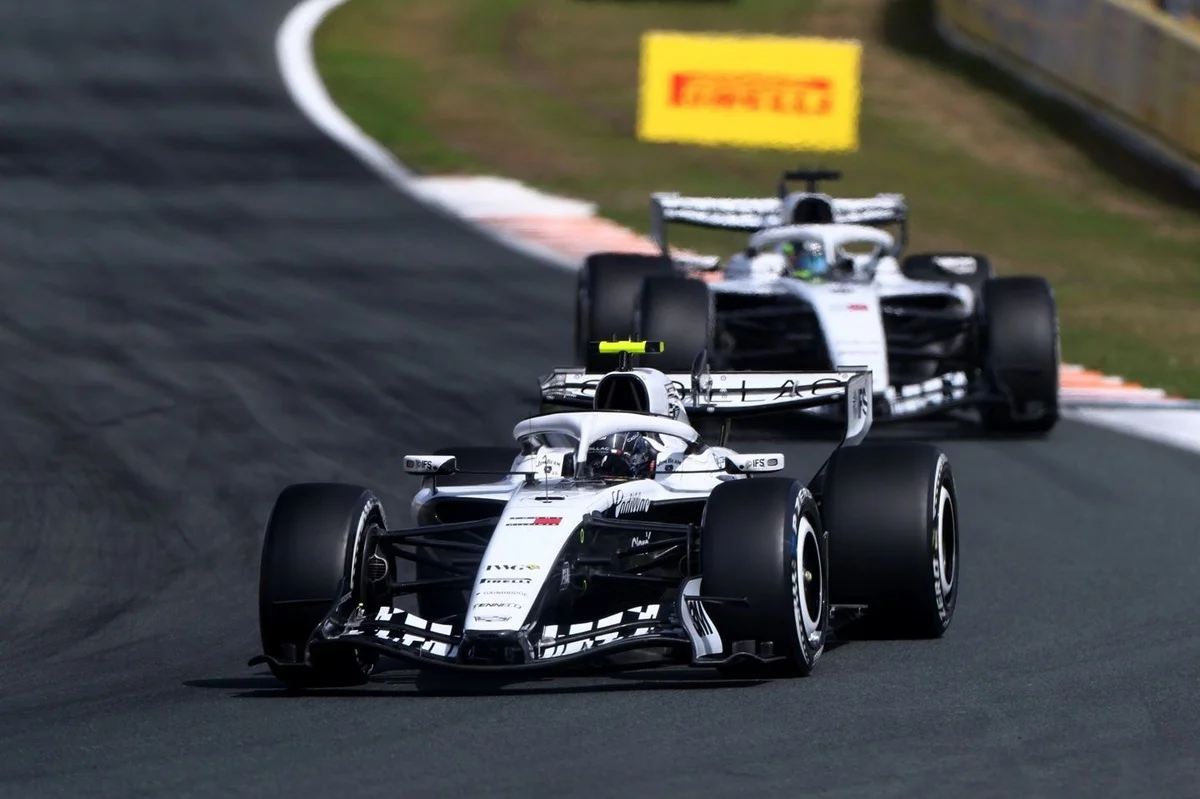
The longest-running and most intensely scrutinized contract saga of the Formula 1 season has officially drawn to a close. Valtteri Bottas has secured his continuation with Cadillac F1, triggering the extension clause tucked inside his initial "one-plus-one" contract.
While the retention of a ten-time Grand Prix winner might not register as a Hollywood-scale blockbuster—principally because Cadillac continues to toil away near the back of the starting grid—the decision is rich with internal politics, strategic compromises, and hard engineering realities.
On paper, parting ways with Bottas would have been the path of least resistance for Cadillac’s stakeholders. Throughout the campaign, the veteran Finn has been outqualified by teammate Sergio Perez 11-9. More damningly, Bottas finished behind the Mexican driver in five of the six Grands Prix where both cars successfully reached the checkered flag. The visual optics were particularly punishing in Azerbaijan and Singapore, where Bottas dropped off Perez’s pace by as much as two seconds per lap.

Yet, despite his struggles to master the unpredictable machinery, Bottas remains immensely popular and respected within the garage. The agonizing delay in finalizing his contract extension underscored a deep ideological split at the top of the Cadillac F1 organization regarding where the blame for their lackluster debut season truly lies.
Chronology: From Launch Optimism to Summer Turmoil
To understand how Cadillac reached this juncture, one must trace the timeline of the team’s turbulent entry into the Formula 1 paddock.
- Pre-Season & Early Rounds: Former team principal Graeme Lowdon championed the narrative that merely getting two functional, regulation-compliant cars onto the grid for the season opener was a monumental triumph. Given the aggressively compressed timescales required to build an F1 outfit from scratch alongside partners TWG Motorsports and General Motors, survival was framed as success.
- Mid-Season (The Summer Breakdown): As the season wore on, a glaring disparity emerged between management’s lenient self-assessment and the demanding expectations of the team’s ultimate owners. While Lowdon and his inner circle preached patience, the cars consistently failed to escape Q1. Furthermore, they were plagued by erratic reliability. TWG Motorsports and General Motors expected immediate competitiveness, leading to a swift summer decapitation exercise. Lowdon was shown the door, replaced by Marcin Budkowski—the seasoned aerodynamicist and former Alpine/FIA executive brought in to impose rigorous technical discipline.
- Autumn Driver Speculation: With Budkowski at the helm, the focus shifted to the driver market. IndyCar standout and Cadillac test/reserve driver Colton Herta stepped into the spotlight during Free Practice 1 outings, publicly and privately lobbying for a full-time seat. Names like Frederik Vesti and Jak Crawford entered the whispered corridors of the paddock, while external candidates like Esteban Ocon were swiftly ruled out.
- Late Autumn (The Resolution): Ultimately, as the calendar rolled toward the final stretch of the season, Cadillac opted for continuity. The decision to retain Bottas signals an internal consensus: car performance, not driver capability, is the team’s true Achilles’ heel.
Supporting Data: Technical Troubles and the Performance Gap
While occasional high-profile DNFs—such as the cross-threaded wheelnut that prematurely ended Bottas’s race at the Sao Paulo Grand Prix—grabbed headlines, they masked a deeper, more systemic engineering crisis at Cadillac.
The Brake Temperature Dilemma
A statistically significant cluster of reliability and performance setbacks has stemmed from the team’s inability to effectively manage brake temperatures.
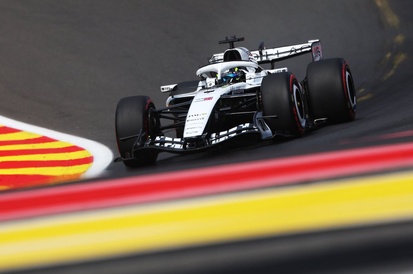
- The Consequences: These thermal anomalies haven’t merely resulted in sudden mechanical failures affecting brakes and adjacent suspension components; they have also compromised race pace in events where both cars managed to finish.
- The "Lift-and-Coast" Penalty: Drivers have routinely been forced into extensive lift-and-coast protocols to keep temperatures within safe operating windows, instantly bleeding crucial tenths of a second per lap.
The Engineering Complexity
During his tenure, Graeme Lowdon frequently characterized these thermal management issues as typical "teething problems" native to a brand-new constructor. While that explanation failed to appease team owners accustomed to elite motorsport excellence, it highlights a classic chasm between boardroom impatience and paddock reality.
To an armchair analyst, the solution sounds simple: just fit bigger brake ducts.
The aerodynamic reality, however, is intensely unforgiving. Optimizing brake cooling requires a delicate, highly sensitive management of airflow and temperatures across both axles while simultaneously factoring in tire degradation and pressures. It is an intricate web of compromises where altering one variable frequently destabilizes downforce elsewhere on the car. Until Cadillac’s aerodynamic department can decode these nuances, changing drivers will yield zero performance dividends.
Official Responses and Internal Discord
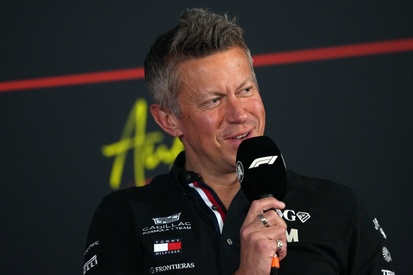
The internal friction at Cadillac F1 has rarely spilled into the open, but subtle cracks have been visible to the observant eye. Marcin Budkowski, usually renowned for his polished, eloquent media appearances, has more than once been caught tongue-tied when pressed on the team’s driver lineup by journalists. Those moments of hesitation spoke volumes, laying bare the fierce internal debates raging behind closed doors.

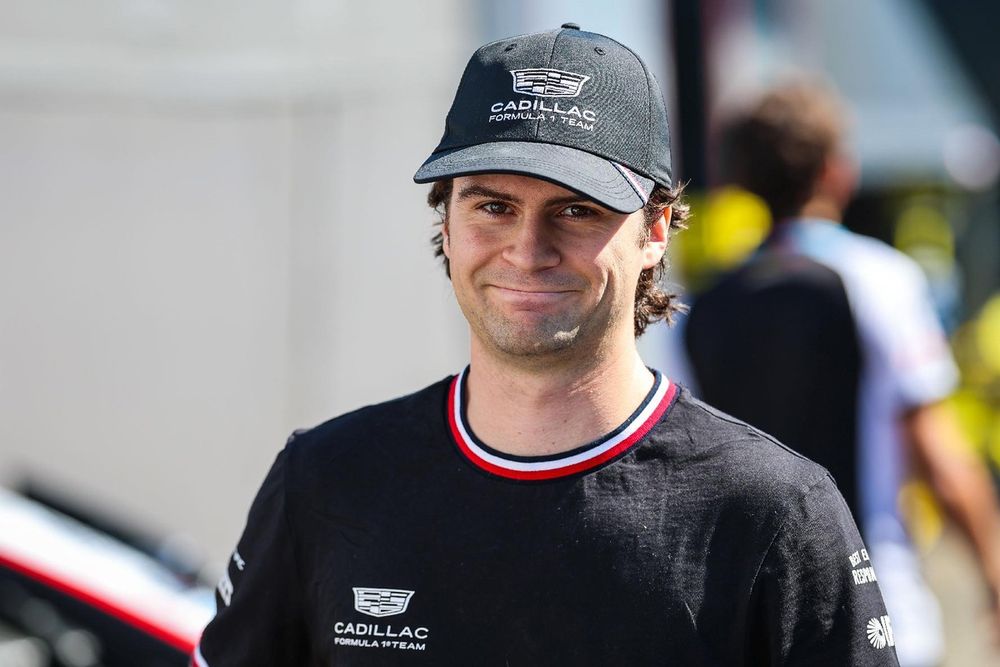
On one side stood the proponents of aggressive Americanization. TWG Motorsports CEO Dan Towriss has heavily invested both capital and capital-P political capital in developing Colton Herta, shepherding the American star through a structured transition path.
Following an impressive FP1 outing in Mexico City, Herta made his ambitions crystal clear:
"I back myself 100 percent on everything," Herta declared. "I can be as quick as anybody. I think I have the capability of learning very quickly too, and picking up on things. So 1000 percent, I back myself in being able to do this [getting an F1 seat]. Whether that means next year or the following year, I really don’t know what the plan is at the moment. We’ll have to wait and see."
Despite Herta’s confidence—and Cadillac’s long-term corporate desire to feature an American driver on the grid—management ultimately decided that thrusting a rookie into an unrefined, highly temperable car could irreparably damage a promising career.
Other alternatives were similarly weighed and found wanting:
- Frederik Vesti: Well-regarded by TWG Motorsports from his IMSA exploits with Cadillac and boasting Mercedes reserve experience, Vesti is viewed internally as a "safe pair of hands." However, telemetry and expert consensus suggest he remains two to three tenths off the pace of established F1 front-runners, having stepped away from single-seaters after finishing runner-up in the 2023 F2 championship.
- Jak Crawford: While the American-born Aston Martin reserve ticks the nationality box, he was not deemed a definitive performance upgrade over Bottas.
- Esteban Ocon: Freshly available after leaving Haas, Ocon was dismissed immediately. His past volatile history with Sergio Perez, combined with a known aversion to unpredictable technical gremlins—precisely the kind plaguing the Cadillac chassis—made him a non-starter.
- Ugo Ugochukwu: Fresh off capturing the FIA Formula 3 title and stepping up to F2 next year, Ugochukwu’s stock is high. Yet, packaging concerns—specifically whether his towering 1.92m frame can be comfortably shoehorned into an F1 cockpit without compromising weight distribution and aerodynamic packaging—kept him off the immediate 2027 shortlist.
Implications: What Continuity Means for Cadillac’s Future
By locking in Valtteri Bottas alongside Sergio Perez for 2027, Cadillac F1 has chosen stability over a gamble.
The primary takeaway from this protracted saga is that leadership has diagnosed the team’s root sickness correctly. Throwing Valtteri Bottas "under the bus" would have served as a convenient public relations scapegoat, but it would have done nothing to solve the complex aerodynamic imbalances, thermal management failures, and fluctuating performance windows plaguing the car.
For Bottas, the extension offers a vital vote of confidence and a chance to stabilize his career trajectory in an environment that desperately needs his vast telemetry experience gathered over years at Mercedes and Alfa Romeo/Sauber.
For Marcin Budkowski and the engineering team in the factory, the pressure is now immense. With the driver lineup settled for the foreseeable future, the spotlight shifts squarely back to the drawing board. If Cadillac is to escape Q1 and truly challenge the midfield pack, the upgrades coming down the pipeline must solve the fundamental physics holding the car back—because no driver on earth can outdrive a thermal limitation.

 Asep Darmawan
 Nana

 Nana Wu
 Evan Lee Salim
 Laily UPN
 Ammar Sabilarrohman