
 Nana Muazin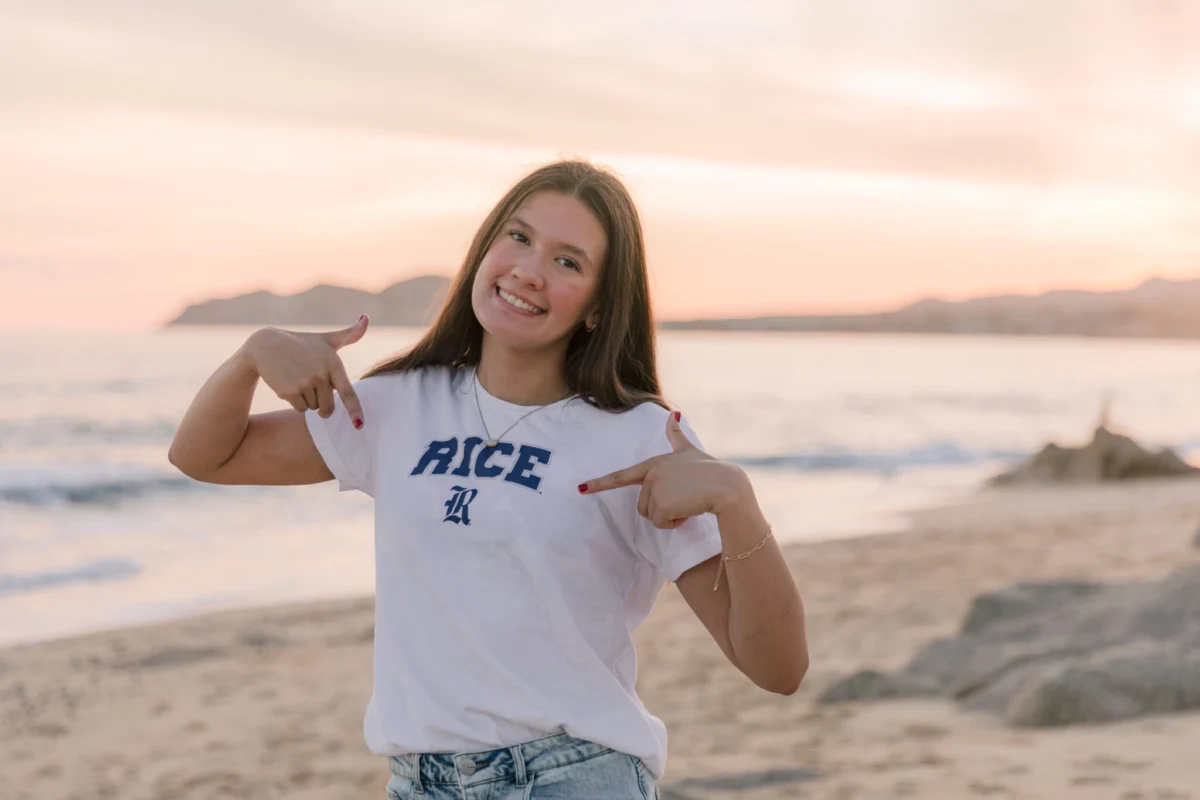
The 2026 Walnut Speedo Sectionals in California have officially shifted into high gear. As the pool deck at the Walnut facility hummed with anticipation during day two of competition, a wave of breakout performances redefined the leaderboard, signaling a massive shift in the momentum of the high school swimming circuit. From significant time drops to national ranking shifts, the day belonged to a cohort of young athletes proving their mettle against seasoned collegiate talent.
Leading the charge was 2027 Rice University commit Liliana Hineman, whose performance in the women’s 400-meter individual medley served as the headline act of the day. Her masterclass in endurance and versatility was a microcosm of the entire meet’s theme: rapid, calculated improvement.
The Main Event: Liliana Hineman’s Masterclass
The 16-year-old Gold Medal Swim Club representative, Liliana Hineman, delivered one of the most emphatic swims of the meet. Touching the wall at 4:55.96, Hineman secured a decisive victory in the women’s 400 IM, finishing a full second ahead of University of Denver standout Sabrina Rachjaibun.
The narrative of Hineman’s race is one of sheer progression. Entering this season with a personal best of 5:04.02—established back in July 2024—Hineman had already signaled her intent by dropping down to 5:02.28 in May of this year. However, her performance in Walnut shattered those benchmarks, marking a "monster drop" of over six seconds from her May time.
This long-course conversion brings her back into alignment with her impressive short-course yardage (SCY) pedigree. Having clocked a 4:20.86 in March 2026 at the Four Corners Sectionals, Hineman’s ability to translate that speed into the long-course pool is a testament to her recent training block. Currently, the swim slots her into the 17th position among all 15-16-year-old girls in the United States this season, narrowly edging out Clovis Swim Club’s Rowyn Wilber, who holds a 4:56.07.
Rachjaibun, representing the University of Denver, claimed the silver medal with a 4:57.02. While she finished behind Hineman, her presence pushed the field to maintain a punishing pace, even as she navigated a challenging race that saw her add nearly four seconds to her lifetime best of 4:53.38, set back in 2019.
Chronology of Competition: A Wave of Personal Bests
The Walnut Sectionals have proven to be a fertile ground for personal records, with the schedule of events producing a cascading series of breakthroughs throughout the day.
The Women’s Backstroke and Freestyle Sprints
The trend of dominance from the Gold Medal Swim Club continued with 15-year-old Marley Spray. In the women’s 100-meter backstroke, Spray delivered a dominant performance, stopping the clock at 1:02.76. This result was a significant leap forward; she entered the season with a time of 1:04.29 (August 2025) and had managed a 1:03.93 in June. Spray’s ability to shave over a second off her best time in a single day of competition indicates a major technical refinement in her underwater transitions.
Chasing her closely was Rancho San Dieguito’s Claire O’Mara, who pushed the limit to touch in 1:03.56. For O’Mara, the race was a marginal but critical gain, shaving two-hundredths of a second off her previous lifetime best of 1:03.58.
The women’s 200-meter freestyle saw the emergence of Adalyn Lee. The Brea Aquatics standout, currently a rising high school sophomore, annihilated her previous personal best. Clocking in at 2:03.00, the 15-year-old improved upon her June 2025 time of 2:05.28 by two full seconds. This performance is not merely a personal win; it places her 13th in the current national rankings for the 15-16 age group, placing her just ahead of Sarasota Tsunami’s Zoe Rattee (2:03.19).
The Men’s 400 IM: Eric Chen’s Strategic Triumph
On the men’s side, Irvine Novaquatics’ Eric Chen commanded the 400 IM. Chen, who balances his training between Hong Kong and the United States, dominated the field with a 4:27.51, finishing four seconds ahead of Ian O’Neil. This effort was two seconds faster than his previous best of 4:29.64, set just this past April. For Chen, who is committed to Penn for the Class of 2027, the result demonstrates a high level of tactical discipline in the back half of the race.
Ian O’Neil, a rising junior at the University of Denver, also enjoyed a productive day. Despite taking second to Chen, O’Neil’s 4:31.96 represented a monumental improvement, as he dropped nearly four seconds from his previous best of 4:35.62, set in July 2024.
Supporting Data: Why These Times Matter
In the landscape of competitive swimming, a "drop"—a reduction in race time—is the primary metric for success. However, the context of these drops at the Walnut Sectionals suggests something more systemic.
- Age-Group Trajectory: The athletes mentioned are predominantly in the 15-16-year-old bracket. This is a critical development window where physical maturation often meets high-level training volume. The data shows that the athletes are not just hitting plateaus; they are breaking through them with consistency.
- National Ranking Implications: By entering the top 20 in the United States for their respective age groups, swimmers like Hineman and Lee are positioning themselves for higher-tier recruitment attention and potential selection for regional or national developmental camps.
- The "Sectional" Standard: Sectional meets serve as the gateway to National-level competition. The intensity displayed at Walnut suggests that the caliber of the "Speedo Sectionals" circuit is increasing, forcing collegiate-bound athletes to perform at their peak to maintain their standing against the rising youth tide.
Perspectives from the Deck: The Competitive Climate
While official press conferences are reserved for major championship events, the sentiment on the pool deck was one of validation. Coaches noted that the training cycles implemented in the spring are finally paying dividends during the mid-summer peak.
For an athlete like Eric Chen, the logistical challenge of training in two different hemispheres (Hong Kong and California) presents unique hurdles. The fact that he was able to hit a lifetime best in Walnut suggests that the integration of his training programs is highly successful. Similarly, for the University of Denver swimmers like Rachjaibun and O’Neil, the meet serves as a vital mid-cycle assessment, allowing them to gauge their endurance against the explosive speed of the younger high school competitors.
Implications: Looking Toward the Future
The results from the Walnut Sectionals carry significant weight as the summer season progresses toward the national championships. Several key implications emerge:
- Recruitment Value: Athletes like Liliana Hineman and Eric Chen have cemented their status as high-value recruits. Their ability to hit lifetime bests in a championship-style environment provides college coaching staffs with empirical evidence of their "race day" capabilities.
- The "Gold Medal" Standard: The success of the Gold Medal Swim Club—specifically with Hineman and Spray—suggests that their current training methodology is optimized for mid-to-long-distance endurance. This will likely draw increased scrutiny from observers looking to understand the club’s recent surge in performance.
- Competitive Depth: The fact that runners-up like Claire O’Mara and Ian O’Neil also achieved personal bests while losing their respective races speaks to the overall depth of the field. The competitive environment in Walnut is clearly pushing every swimmer to elevate their game, creating a "rising tide" effect where the quality of the entire field is being pulled upward.
As the meet continues, the focus will shift to the shorter sprint events and the remaining medley relays. If the first two days are any indication, the 2026 Walnut Speedo Sectionals will be remembered as a turning point for several of these rising stars. The standard has been set, the records have been broken, and the path toward the next level of competitive swimming has become significantly clearer for this talented group of high schoolers.

 Sagoh
Sagoh

 Neng Nana
 Nana Wu
 Lina Hope
 Iffa Jayyana