
 Pevita Pearce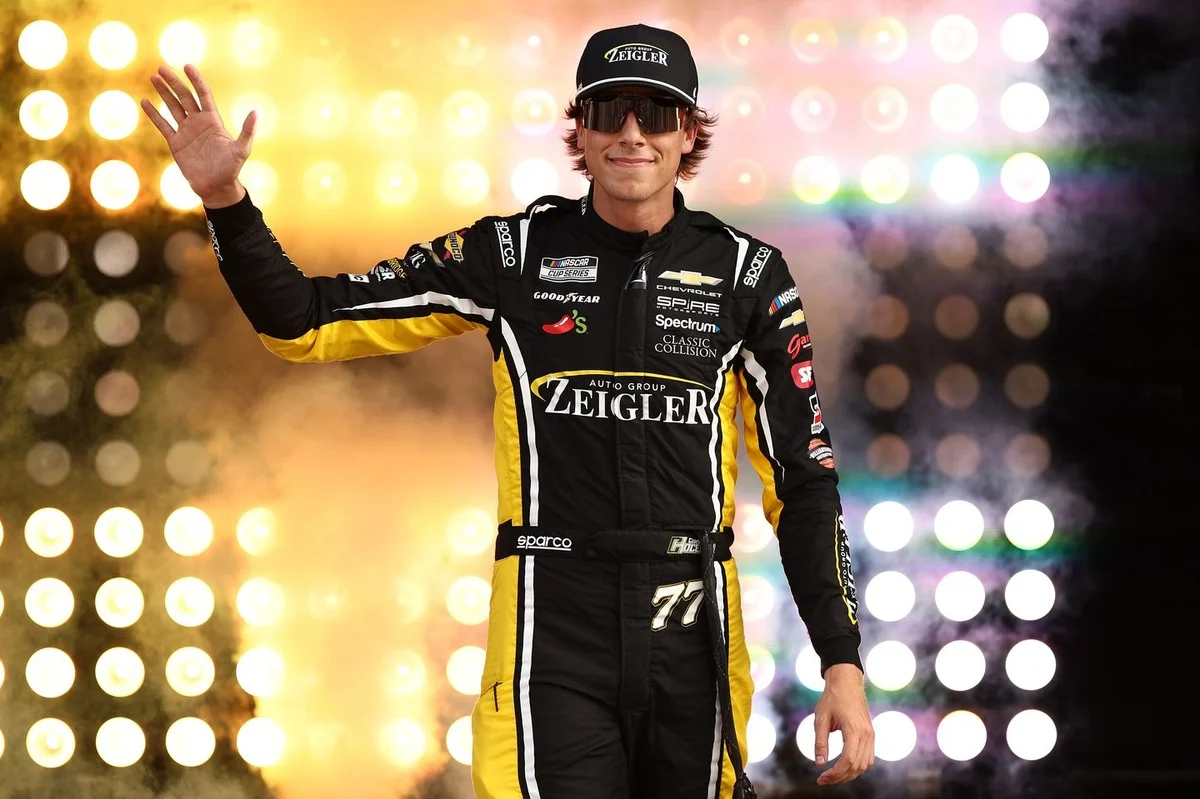
In the insular, high-octane world of NASCAR, the metric for success has historically been measured in checkered flags, championship rings, and pit-road dominance. Yet, at just 23 years old, Spire Motorsports driver Carson Hocevar is recalibrating what it means to be a "face of the sport." While he is still hunting for his second career Cup Series victory, Hocevar has become an unexpected fixture at the intersection of high society, global celebrity, and mainstream media—a trajectory that has left even the driver himself scratching his head.
The Meteoric Rise: From Banned Prodigy to Gala Guest
The narrative of Carson Hocevar is one of rapid, almost dizzying acceleration. Only a decade ago, Hocevar was a teenage sensation navigating the friction of local short-track politics. He was famously banned from his local track for being too young to compete in Late Model races he was already winning—a testament to a talent that far outpaced his age.
Fast forward to 2024, and the scene has shifted from dusty bullrings to the red carpets of the Met Gala and the TIME 100 Sports Gala. This transition is not merely a change in scenery; it is a fundamental shift in the branding of a modern NASCAR driver. In an era where the sport is fighting to capture the attention of a fragmented digital audience, Hocevar has emerged as a bridge between the traditional garage and the global zeitgeist.
His recent appearances haven’t just been for show. They have involved intimate, high-profile encounters with the titans of global pop culture, including basketball icon LeBron James and Prince Harry, the Duke of Sussex. Coupled with his high-profile relationship with popular content creator Tabitha Swatosh, Hocevar is navigating a level of fame that is rarely seen in the NASCAR Cup Series outside of the sport’s most established veterans.
Chronology of a Cultural Shift
To understand Hocevar’s rise, one must look at the changing landscape of professional racing. In the 2000s, figures like Dale Earnhardt Jr. were cultural commodities, appearing on MTV, music awards shows, and national late-night talk programs. That was the blueprint for stardom, but it has become increasingly rare in the modern, digital-first era.
- The Early Years (2014-2019): Hocevar’s dominance in youth series created local notoriety. The "banned for winning" narrative served as his first lesson in the power of public perception.
- The Developmental Path (2020-2023): Through the Truck Series, Hocevar proved he had the grit and mechanical intuition to handle top-tier machinery, setting the stage for his Cup Series debut.
- The Breakthrough (2024): Hocevar began appearing on lists like the TIME 100, finding himself in rooms filled with global icons. His ability to navigate these spaces with a sense of self-deprecating humor has differentiated him from his peers.
The LeBron Encounter: A Case Study in Modern Celebrity
During a recent industry event, Hocevar’s experience with LeBron James perfectly captured the surreal nature of his current reality. Initially, Hocevar was hesitant to approach the basketball legend, adhering to the unspoken rules of celebrity protocol.
"I walked over and he was at his table," Hocevar recalled during a press conference at North Wilkesboro Speedway. "I sat at a table far away from him and some guy came up to ask for a seat. He happened to know who I was and I knew him. He was like, ‘Hey, I’m taking this seat over to LeBron, why don’t you walk over?’"
The moment highlighted the shift in power dynamics. As Hocevar approached, the defensive perimeter of James’ security team began to tighten—a standard reaction to any approaching stranger. However, when the intermediary signaled, James stood up, removed his sunglasses, and engaged in a genuine conversation. The encounter revealed something surprising: LeBron James knew exactly who Carson Hocevar was, thanks to his trainer’s son, who is currently cutting his teeth in the North Carolina racing scene. For Hocevar, the photo he eventually secured was more than a souvenir; it was validation that the NASCAR brand still holds weight in the most elite circles of sports and entertainment.
Prince Harry and the Value of Relatability
If the meeting with LeBron James was a moment of professional recognition, his interaction with Prince Harry was a lesson in personal brand management. Aware that his mother held a deep admiration for the British royal, Hocevar recognized the opportunity not just for himself, but for the legacy of his family’s support.
"I think I was like, ‘Man, I wouldn’t make my mom proud if I didn’t ask for a photo,’" Hocevar shared. The resulting interaction, where the Duke of Sussex expressed hope that the photo would bring joy to Hocevar’s mother, demonstrated the driver’s innate ability to humanize himself. In an industry often criticized for being "stiff" or overly corporate, Hocevar’s candidness is a refreshing asset.
Official Perspectives: The Burden of the Spotlight
While Hocevar embraces the attention, he is acutely aware of the "win-loss" reality of professional sports. He understands that the glitz of the Met Gala must be backed by performance on the asphalt.
"Obviously, I want to win more," Hocevar admitted. "But I think it’s been proven a lot within the sport that you can win multiple races in a row and that doesn’t make your name known outside the NASCAR bubble."
This observation cuts to the heart of NASCAR’s current struggle: the difference between a high-quality race and a high-quality narrative. Hocevar argues that the sport’s growth depends on the fans’ connection to the drivers themselves. "You can have the greatest finish of all time, but if you don’t care who’s involved in the finish, you might as well go watch iRacing, AI racing, an animation, any kind of motorsport. It’s been super humbling for me to have a lot of people ultimately care about who’s in my car."
Implications: The Future of NASCAR Marketing
Hocevar’s rise signals a pivot in how NASCAR teams approach driver development. For years, the focus was strictly on technical proficiency. Now, the industry is recognizing the value of the "personality hire."
The "Driver as Content" Model
Hocevar’s strategy mirrors the evolution of the athlete as a content creator. By engaging with audiences outside of the traditional NASCAR broadcast footprint, he is effectively acting as a funnel, bringing new eyes to the sport.
Bridging the Gap
The implications for Spire Motorsports and the sport at large are significant. By placing a 23-year-old at the center of cultural conversations, NASCAR is testing whether a driver’s personality can generate the same level of interest as a photo finish. If successful, this could lead to a massive overhaul in how NASCAR teams allocate their marketing budgets, favoring drivers who can translate their charisma into digital engagement.
The Balancing Act
The danger, of course, is the "distraction trap." Critics often point to drivers who focus too much on their public image at the expense of their lap times. Hocevar seems to walk this line with a maturity beyond his years, acknowledging that his seat at the table is ultimately a privilege granted by his performance on the track.
Conclusion: A New Blueprint for Success
Carson Hocevar is not just driving a car for Spire Motorsports; he is driving a conversation about what the future of NASCAR looks like. In a world where viewership is increasingly fragmented, his ability to transcend the "NASCAR bubble" is perhaps his most valuable skill.
Whether he is trading stories with NBA legends or navigating the complexities of high-society events, Hocevar remains focused on the core tenet of his career: the race. He knows that the spotlight he currently enjoys is a result of both his talent behind the wheel and his willingness to step outside of it. As he continues to grow, his journey will serve as a fascinating case study for the next generation of drivers—a generation that must learn to be just as adept at navigating a red carpet as they are at navigating a turn at North Wilkesboro.
Ultimately, Hocevar’s ascent is proof that in the modern sports landscape, speed is only half the battle. The other half is being a person that the world wants to watch, win or lose.

 Evan Lee Salim
 Neng Nana
 Nana Wu
 Lina Hope
 Sagoh
Sagoh
 Iffa Jayyana