
 Layla Zulfa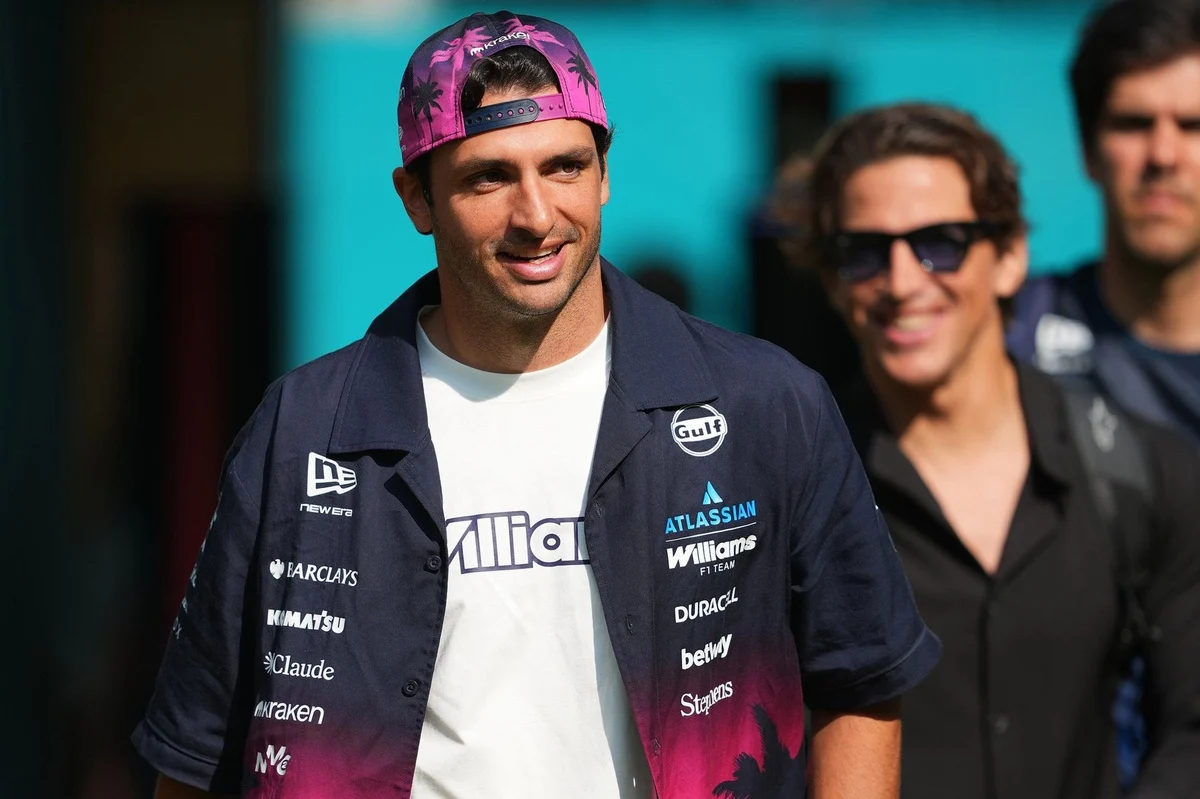
The promise of a resurgence at Williams Racing, once a titan of Formula 1, is facing a harsh reality check. As the 2024 season progresses, the narrative surrounding the Grove-based team has shifted from one of optimistic rebuilding to one of growing frustration. Central to this discourse is the arrival of Carlos Sainz, a race-winning caliber driver who opted for the Williams project over several other enticing alternatives. However, recent commentary from former F1 driver Jolyon Palmer suggests that Sainz’s ambitious attempt to lead the team out of its performance slump is currently "getting nowhere."
The Genesis of the Struggle: A Promise Unfulfilled
The arrival of Carlos Sainz at Williams was hailed by many as a masterstroke. Following the shock announcement that Lewis Hamilton would replace him at Ferrari for 2025, Sainz became the most coveted free agent on the grid. After weighing offers from Audi (via the Sauber transition) and Alpine, the Spaniard committed his future to the Williams project, citing the long-term vision of team principal James Vowles as the deciding factor.
Yet, as the season nears its midpoint, the anticipated synergy between a top-tier driver and a historic team has yet to materialize. The frustration came to a boiling point following the British Grand Prix, where a series of aerodynamic upgrades—specifically a new front wing—failed to yield the expected performance delta. For a team that has been vocal about its "paper gains" and weight-reduction strategies, the lack of on-track translation has left both the drivers and observers bewildered.
Chronology of a Stagnant Season
To understand the depth of the current crisis at Williams, one must look at the timeline of their technical progression:
- Pre-Season Optimism: Under the guidance of James Vowles, Williams entered 2024 with a reformed internal structure, claiming that the FW48 (and its predecessor’s evolution) had addressed the fundamental aero-efficiency flaws that plagued the team in previous years.
- The "Paper" Promises: Throughout the early stages of the season, specifically around the Miami Grand Prix, Vowles was transparent about the team’s development path. He noted that the team had solved many issues in the wind tunnel and on computer simulations, implying that it was merely a matter of manufacturing and bringing parts to the track within the constraints of the cost cap.
- The Upgrade Disconnect: As the European leg of the season commenced, Williams rolled out a series of updates. Unlike their midfield rivals, who saw tangible improvements in lap time and race pace, Williams remained tethered to the back of the midfield pack.
- The British Grand Prix Catalyst: The failure of the upgraded front wing at Silverstone acted as the tipping point. The data discrepancy between the simulator and the asphalt sparked a rare moment of public concern from Sainz, who is known for his technical feedback and meticulous attention to detail.
Supporting Data: The Cost of Underperformance
Williams currently sits in eighth place in the Constructors’ Championship with a meager 11 points. When analyzed against their technical infrastructure, the statistic is damning.
The core of the criticism, as voiced by Jolyon Palmer on the F1 Nation podcast, lies in the power unit. Williams utilizes the Mercedes-AMG High Performance Powertrains—the same power unit that has been the gold standard of the hybrid era.
"They have the power unit that’s winning the championship," Palmer noted. "Everyone else is doing an all-right job with that power unit. Alpine has risen to the front in their first year with that. Williams has had an old partnership with Mercedes. That is no excuse."
The comparative data is unfavorable for the Grove outfit. While other teams have utilized the same engine architecture to find meaningful gains in drag reduction and thermal efficiency, Williams continues to struggle with a chassis that lacks the necessary downforce to compete with the likes of Haas, RB, or even the newly competitive Alpine. The discrepancy between the theoretical performance ("on paper") and the real-world results suggests a fundamental issue in correlation—the ability to replicate simulation data on the actual car.
The Human Element: Sainz’s Leadership Crisis
Carlos Sainz is widely regarded as one of the most intelligent and tactically astute drivers on the grid. His decision to join Williams was not made in a vacuum; he was looking for a team where he could be the primary focal point of development. However, the current situation is testing his patience.

"He’s a driver in demand," Palmer observed. "He’s a race winner. He’s a seriously intelligent guy who’s trying to be a leader in the team, and he’s just getting nowhere with them."
For a driver of Sainz’s pedigree, who has spent the last several years fighting for podiums and race wins at Ferrari, the adjustment to struggling for single points is jarring. The "miffed" sentiment described by analysts is not merely about missing out on trophies; it is about the feeling that the team’s internal processes are failing to provide him with the platform his talent deserves. When a team leader provides feedback and the engineering response is a series of failed upgrades, the psychological impact on the team’s morale is significant.
Official Responses and Internal Pressures
James Vowles, since taking the helm at Williams, has been the face of the team’s transformation. He has been remarkably candid about the "archaic" systems he inherited and the necessity of investing in people and software before the car can truly compete.
However, the "wait and see" approach is becoming increasingly difficult to sell to stakeholders and drivers. While Vowles has defended the team’s trajectory, insisting that the necessary changes are long-term, the clock is ticking. The cost cap, which was designed to level the playing field, has ironically made it harder for struggling teams to "buy" their way out of a slump, as every failed upgrade consumes precious budget and development time that cannot be recovered.
Williams’ official stance remains one of internal accountability. The team is currently conducting a deep dive into why their correlation data failed at Silverstone, but the window for salvaging the 2024 season is closing rapidly.
The Broader Implications for Formula 1
The struggle of Williams serves as a microcosm of the challenges facing the sport’s midfield. It highlights the difficulty of modern F1 engineering, where the margins for error are razor-thin.
- The Correlation Trap: Teams are increasingly reliant on CFD (Computational Fluid Dynamics) and wind tunnel data. When these tools provide a "false positive," as seems to be the case with Williams, it can set a team back by months.
- The Driver Market Dynamics: If a top-tier driver like Sainz cannot improve the fortunes of a team, it raises questions about the "driver impact" theory. Can a single driver truly lift a team, or is the engineering deficit simply too vast to overcome?
- The Sustainability of "The Project": For teams like Williams, the "long-term project" narrative is a powerful recruiting tool. However, if the results do not show a clear upward trajectory by the end of the 2024 season, the team may struggle to attract top-tier talent in the future, creating a self-perpetuating cycle of mediocrity.
Conclusion: A Turning Point or a Dead End?
The coming races will be decisive for the Williams-Sainz partnership. For the team, it is about proving that their technical infrastructure is sound and that the Silverstone failure was an anomaly rather than a systemic issue. For Carlos Sainz, it is a test of his resolve.
As Jolyon Palmer noted, everything "should be in place" for the team to succeed. They have the pedigree, the engine, and the driver. The fact that the results are not coming is a source of immense disappointment for the fans and a growing concern for the sport. Whether this is merely a "growing pain" in a multi-year rebuild or a sign that the team has lost its way, only the coming months of the 2024 season will reveal. One thing is certain: in the high-stakes world of Formula 1, time is the one resource that no amount of money or ambition can replenish.

 Pevita Pearce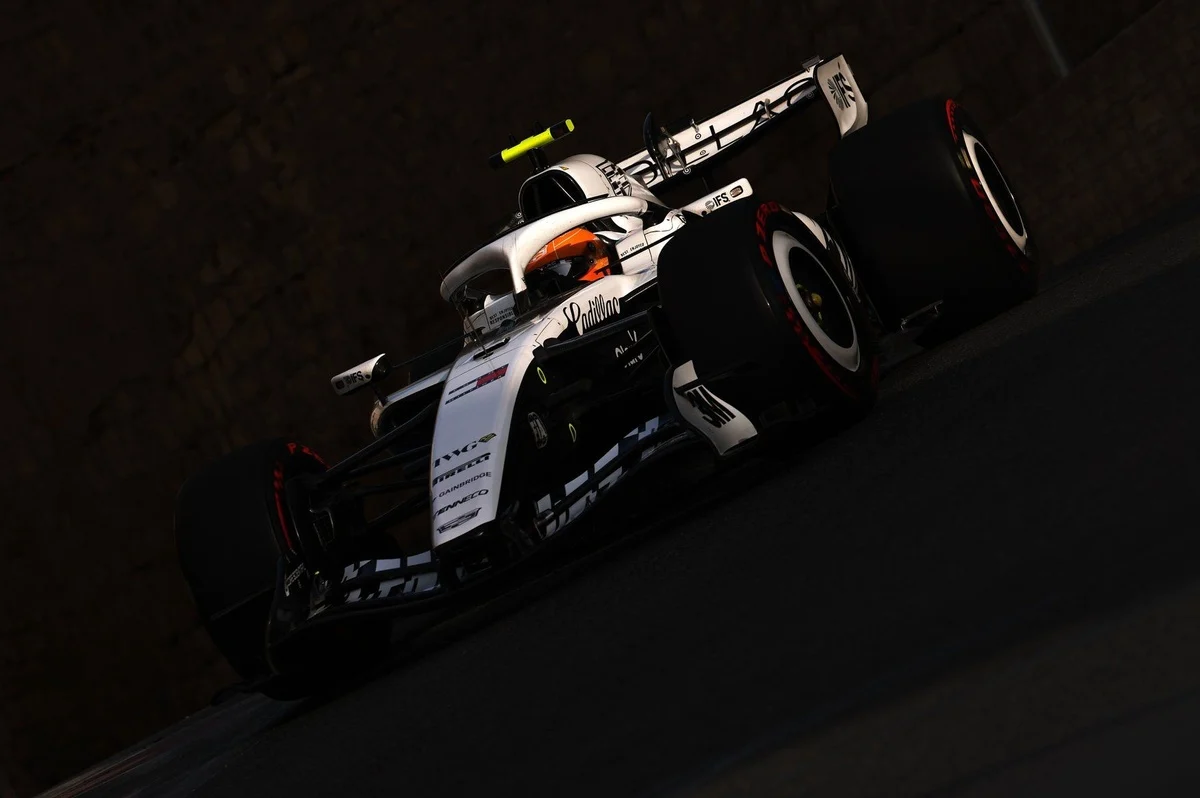
 Evan Lee Salim
 Neng Nana
 Nana Wu
 Lina Hope
 Sagoh
Sagoh
 Iffa Jayyana