
 Reynand Wu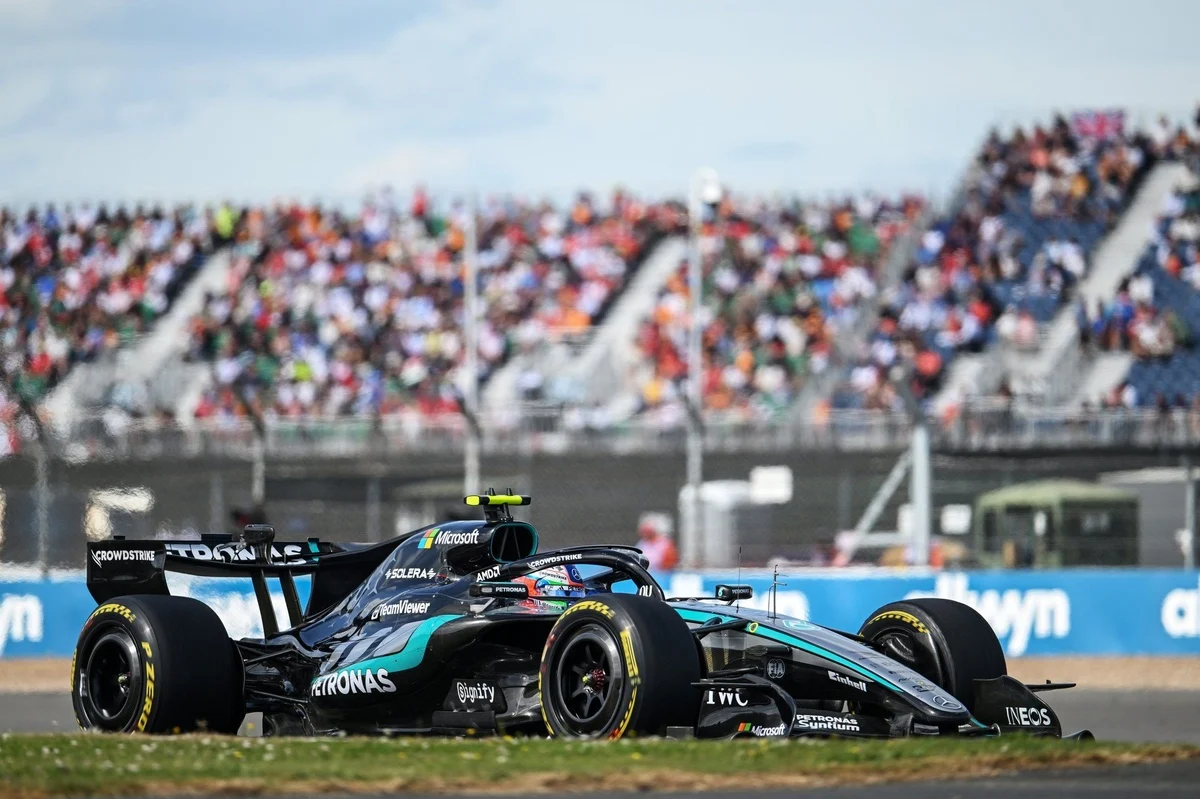
Executive Summary: The Silver Arrows Accept the Stewards’ Ruling
The Mercedes-AMG Petronas Formula 1 team has officially confirmed it will not pursue a formal appeal against the five-second time penalty handed to rising star Kimi Antonelli during the British Grand Prix. The penalty, which relegated the championship leader from a hard-fought ninth place to a disappointing 16th, was initially questioned by team principal Toto Wolff. However, after an exhaustive post-race technical review, the team has conceded that the stewards’ decision was consistent with existing FIA regulatory frameworks regarding track limits.
The incident, which saw Antonelli struggling with a damaged Mercedes W17, serves as a poignant reminder of the fine margins in Formula 1, where mechanical misfortune and sporting regulations often collide in high-stakes championship battles.
Chronology of a Silverstone Struggle
To understand the gravity of the decision, one must look at the trajectory of Antonelli’s race at the iconic Silverstone Circuit.
The Early Promise
Antonelli entered the British Grand Prix with significant momentum, holding the lead in the Drivers’ Championship. Starting from a competitive grid position, he showcased his characteristic maturity, managing his tires effectively and keeping pace with race leader Charles Leclerc. For much of the middle stint, Antonelli was the primary challenger, utilizing a superior tire-life strategy that appeared to set the stage for an overtake on the Ferrari driver.
The Turning Point: Mechanical Failure
The race began to unravel for the young Italian when he reported severe handling difficulties. Telemetry data confirmed that the W17 was suffering from an acute imbalance, making the car notoriously difficult to turn, particularly through the high-speed corners that define Silverstone. Despite the team calling him into the pits twice to assess the damage, the diagnostic was grim: a broken front-left wheel shield.
With the aerodynamic integrity of the car compromised and the handling window significantly narrowed, Antonelli was forced to navigate the remaining laps with a machine that was fighting him at every apex.
The Infractions and the Penalty
As the handling issues intensified, the driver’s ability to keep the car within the confines of the track became increasingly difficult. On lap 44, during a particularly fraught segment of the race, Antonelli drifted wide at Turn 6. This marked his fourth track-limits violation of the afternoon.
Under current FIA guidelines, a fourth transgression triggers an automatic five-second time penalty. While the car crossed the finish line in ninth place, the application of the penalty saw him tumble down the classification to 16th, stripping him of vital championship points.

Technical and Regulatory Context: The Weight of the W17
The Mercedes W17, while a formidable piece of engineering, relies heavily on its front-end aerodynamics for balance. The loss of a wheel shield is not merely a cosmetic issue; it alters the airflow around the front suspension and the floor, leading to unpredictable levels of downforce.
The Stewards’ Rationale
In their official report, the FIA race stewards were explicit regarding their reasoning. While they acknowledged the "mitigating factor" of the mechanical failure, they maintained that such an issue did not provide a legal justification for exceeding track limits. The document stated:
"It was evident that Car 12 left the track at Turn 6 on Lap 44 without a justifiable reason… The Stewards accepted that Car 12 was experiencing a mechanical issue. However, that did not amount to a justifiable reason for leaving the track."
This interpretation highlights a strict, almost binary approach to the rules: if a car is deemed too damaged to stay within the lines, the team is expected to retire the vehicle or accept the penalties for continued non-compliance.
Official Responses: From Defiance to Acceptance
Immediately following the checkered flag, Toto Wolff was vocal in his frustration, viewing the penalty as an unjust application of the rules given the circumstances of the car’s damage.
The Initial Stance
"We’re definitely looking at a situation whether we can avoid that penalty," Wolff told reporters in the paddock. "At the end of the year, if we’re able to get rid of that penalty, these points could be decisive for the championship."
Wolff’s initial argument hinged on the concept of leniency—suggesting that when a car is hampered by a freak mechanical failure, the stewards should exercise discretion. He questioned whether the damage necessitated a retirement, noting, "In that case, I think the car was fine. It was just one feature that it was really difficult to turn."
The Post-Race Pivot
However, the tone from Brackley shifted by the following Tuesday. Following a deep-dive analysis in the team’s post-race debrief, Mercedes concluded that further challenging the FIA would be futile. The team recognized that Antonelli had accumulated multiple warnings before the final infraction, and the consistency of the penalty application meant that a successful appeal was highly unlikely. By withdrawing the challenge, Mercedes has demonstrated a pragmatic approach to the remainder of the season, choosing to focus on reliability rather than litigation.

Implications for the Championship
The loss of these points is not insignificant. In a title race as tightly contested as the current season, every point carries the weight of a potential championship trophy.
Tactical Lessons for Antonelli
For Kimi Antonelli, this weekend serves as a brutal "baptism of fire." Learning to manage a damaged car while simultaneously juggling the technical demands of track limits is a hallmark of a seasoned veteran. His persistence to stay on track despite the handling issues showed his competitive spirit, but the stewards’ ruling underscores that in modern F1, tenacity must be balanced with strict regulatory compliance.
Engineering and Reliability
For the Mercedes engineering team, the focus now shifts to the structural integrity of the wheel shields. While the failure at Silverstone may have been an isolated incident, the team will undoubtedly be conducting stress tests to ensure that such a failure does not recur. If a small piece of debris or a minor contact can lead to such a massive performance deficit and subsequent penalty, the team cannot afford to leave such vulnerabilities in the design.
The Championship Outlook
Antonelli remains the points leader, but the gap has closed. The psychological pressure of leading the standings, combined with the heartbreak of a point-less finish at a marquee event like the British Grand Prix, will test the resolve of the young driver. Mercedes has backed their driver publicly, reinforcing their commitment to him, but the team knows that their margin for error has effectively vanished.
Final Thoughts: The Integrity of the Rules
The episode at Silverstone has sparked a wider conversation regarding the "track limits" debate in Formula 1. While fans often call for more leniency when mechanical issues are involved, the FIA’s firm stance serves to protect the integrity of the racing surface. If exceptions were made for mechanical damage, it would inevitably lead to subjective debates about "how much damage" is enough to justify going off-track.
By opting not to appeal, Mercedes has put the incident behind them. The focus now turns to the next round, where the team will look to prove that the performance displayed at Silverstone was not an anomaly, but a sign of a car—and a driver—that is ready to fight for the crown. The championship race is far from over, and if the British Grand Prix proved anything, it is that the road to the title is rarely a straight line.


 Neng Nana
 Nana Wu

 Lina Hope

 Sagoh
Sagoh
 Iffa Jayyana