 rifanmuazin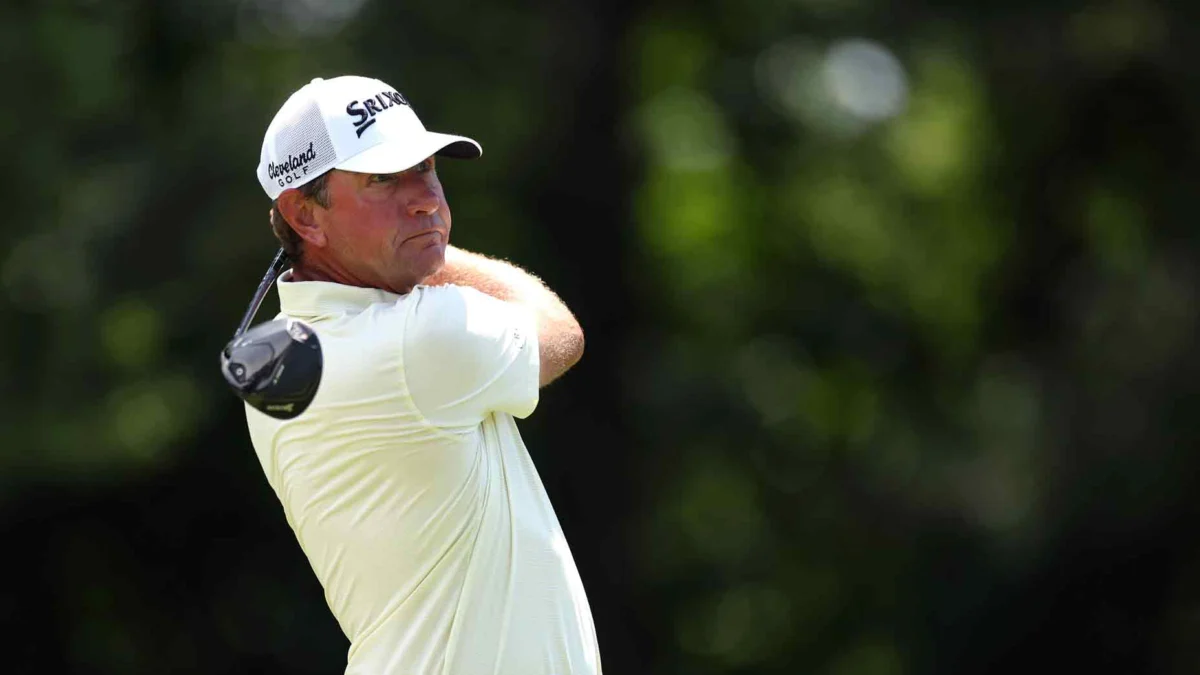
By Maddi MacClurg | July 4, 2026
As the Fourth of July weekend unfolds, the lush, rolling fairways of TPC Deere Run in Silvis, Illinois, have become the theater for a masterclass in professional golf. The 2026 John Deere Classic has reached its critical midpoint, and it is a familiar face who commands the leaderboard. Lucas Glover, a veteran whose career has spanned over two decades, has surged to a commanding position, reminding the field that experience remains one of the most potent weapons in the game.
With two bogey-free rounds under his belt, Glover sits at 14-under-par, holding a two-stroke cushion as he prepares for the decisive weekend push. The atmosphere at TPC Deere Run is electric, as fans flock to the Midwest to witness a tournament that has historically been defined by low scoring, aggressive play, and the emergence of future stars.
The Main Facts: A Leaderboard Defined by Contrast
The leaderboard at this year’s John Deere Classic offers a fascinating study in contrast. At the pinnacle sits Lucas Glover, a player who captured this very title in 2021 and has navigated the highs and lows of the PGA Tour for 23 years. His 14-under-par performance has been characterized by clinical precision and an uncanny ability to avoid the scorecard-killing mistakes that often plague players on this birdie-friendly layout.
Trailing Glover by two strokes is Lee Hodges, who currently sits at 12-under-par. Hodges, no stranger to the pressure of a final-group Sunday, is looking to secure his second PGA Tour victory. Just one stroke further back is Zac Blair, who enters the weekend at 11-under-par. Blair, an agile tactician of the game, is hunting for his maiden PGA Tour win, a milestone that would represent a career-defining breakthrough.
The competition, however, remains dense. A group of six players—Jackson Suber, Tyler Duncan, Troy Merritt, David Lipsky, Ryo Hisatsune, and Ben Kohles—are locked in a tie for fourth place at 10-under-par. For many in this group, the next 36 holes represent a monumental opportunity to elevate their status within the professional ranks.
Chronology: How the Weekend Stage Was Set
The first two days of play at TPC Deere Run were defined by ideal scoring conditions and a palpable sense of urgency. The course, known for rewarding players who can navigate its tight corridors and undulating greens, saw a flurry of red numbers from the opening tee shot on Thursday.
Glover’s path to the lead was not necessarily explosive, but it was remarkably consistent. By avoiding bogeys, he allowed his aggressive approach—hitting high-percentage shots into the heart of the greens—to accumulate a steady stream of birdies. While the younger members of the field often attempted to force the issue with high-risk drives, Glover’s patience served as a firewall against the volatility of the course.
By Friday afternoon, as the shadows grew long over the Illinois landscape, the leaderboard had crystallized. The transition from the "getting to know you" phase of the tournament to the "championship" phase was complete. With the cut line finalized, the focus shifted entirely to the 72-hole sprint that concludes on Sunday evening.
Supporting Data: The Statistics of Success
To understand Glover’s dominance, one must look at the strokes-gained metrics that are increasingly shaping modern professional golf. While official tournament data is updated in real-time, the narrative of his performance is clear: he is hitting fairways at a clip that minimizes the need for "recovery golf."
At TPC Deere Run, the primary defense of the course is the placement of the pins and the speed of the bentgrass greens. Glover has demonstrated an exceptional aptitude for lag putting, ensuring that he rarely faces a three-putt scenario. Conversely, the chasing pack has shown flashes of brilliance—notably Lee Hodges, who has demonstrated a superior approach-to-green game, creating numerous birdie opportunities from within 10 feet.
The statistical depth of the field is perhaps most visible in the "birdie-or-better" percentage. With the course yielding an average score well under par, the weekend will likely require the eventual champion to maintain a pace of at least five birdies per round. For the quartet of Suber, Lipsky, Hisatsune, and Kohles, the ability to capitalize on the reachable par-fives will be the deciding factor in whether they can bridge the four-stroke gap to the leader.

Official Responses: The Veteran’s Perspective
In the aftermath of Friday’s round, the media gathered in the press tent to hear from the man at the top. When asked about the pressures of leading a PGA Tour event midway through the tournament, Lucas Glover was characteristically grounded.
"I mean, this is my 23rd year," Glover said, reflecting on his longevity in a sport that is increasingly dominated by younger, power-hitting athletes. "There’s nothing I haven’t been there, done that, to be fair. I’ve played in the last groups and played great, and I’ve played in the last groups and played terrible. It’s all part of the process."
Glover’s comments underscore the psychological endurance required to compete at this level. When pressed on whether he would adopt a defensive strategy to protect his two-shot lead, his answer was emphatic.
"There’s no formula other than hydrate and rest and keep the pedal down this week, because it’s not going to be able to hang on," he stated. "There’s going to be birdies and eagles. It’s going to be fun."
This "pedal-to-the-metal" mentality is a nod to the reality of TPC Deere Run: it is a venue that rarely rewards those who play it safe. The winner, almost invariably, is the player who is most comfortable being uncomfortable, pressing for birdies even when they hold the lead.
Implications: The Road to Sunday
The implications of this weekend go far beyond the trophy and the winner’s share of the purse. For the younger players in the hunt, such as Jackson Suber and Ryo Hisatsune, a high finish provides invaluable FedEx Cup points and momentum for the remainder of the season.
For the veterans like Glover, a win would reinforce his status as a perennial contender and a stabilizing force on the Tour. Furthermore, with the golf calendar reaching its most intense phase, performances at events like the John Deere Classic serve as a litmus test for those hoping to secure spots in the year’s final major championships and high-stakes playoff events.
As we look toward the final two rounds, the storylines are clear: Will the seasoned veteran hold off the hungry challengers, or will we see a new name etched onto the trophy?
How to Follow the Action
For fans looking to catch every shot of the third and final rounds, the broadcast schedule is as follows:
TV Coverage:
- Golf Channel: Saturday, 1:00 p.m. – 3:00 p.m. ET
- CBS: Saturday, 3:00 p.m. – 6:00 p.m. ET
Streaming Options:
- PGA Tour Live on ESPN+: Comprehensive streaming coverage from 7:45 a.m. to 6:00 p.m. ET, featuring marquee groups and dedicated hole-by-hole feeds.
- Paramount+: Live simulcast of the CBS broadcast coverage.
- GOLF App: Real-time streaming of the Golf Channel broadcast.
As the sun rises over the TPC Deere Run complex, the stage is set for a weekend of high-stakes drama. Whether you are a fan of the tactical, precision-based golf favored by the veterans or the high-octane, aggressive play of the younger generation, the 2026 John Deere Classic promises to be a quintessential celebration of the sport. With Lucas Glover leading the charge, the narrative is perfectly poised for a gripping conclusion. The question remains: who has the mettle to catch him?


 Lina Hope
 Iffa Jayyana
 Neng Nana
 Nana Wu

 Sagoh
Sagoh