
 Nila Kartika Wati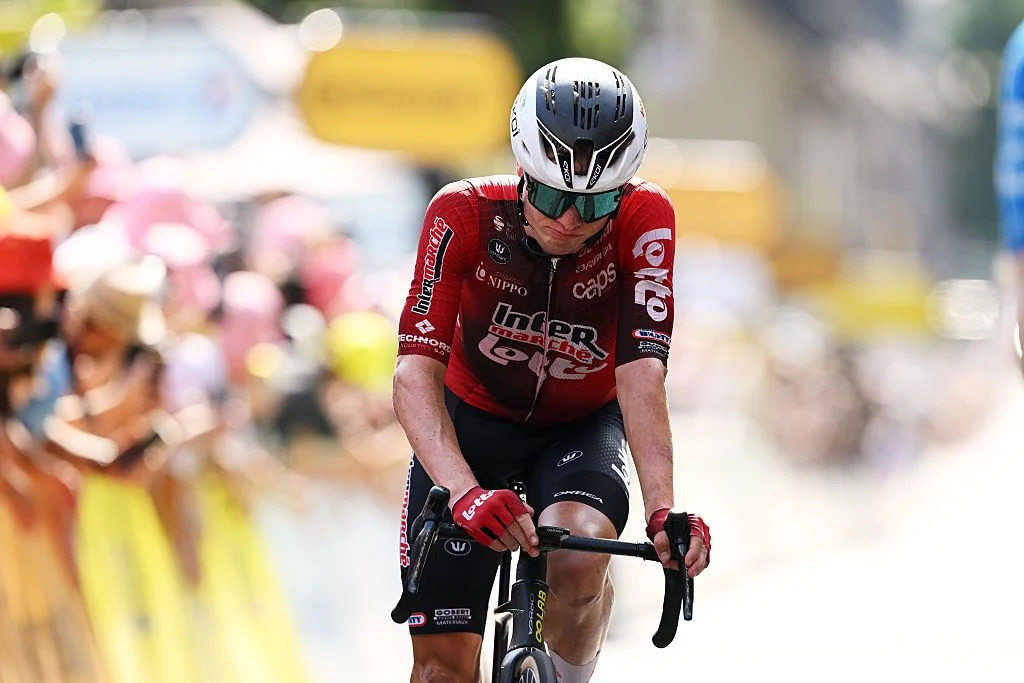
For any professional cyclist, the Tour de France is the ultimate crucible. It is a three-week test of physical endurance, psychological fortitude, and tactical brilliance. For Lotto-Intermarché’s rising star, Lennert Van Eetvelt, however, the race has transformed into a haunting cycle of misfortune. As the peloton pushes through the grueling middle stages of the 2026 edition, Van Eetvelt finds himself once again battling not just the brutal gradients and elite rivals, but the cruel hand of fate that seems determined to keep him from reaching Paris.
The Recurring Nightmare: A Chronology of Misfortune
The narrative of Lennert Van Eetvelt at the Tour de France is one of "what could have been." In professional cycling, momentum is everything, and for a rider of Van Eetvelt’s caliber, the Grand Boucle serves as the primary stage to announce one’s arrival among the sport’s elite.
2025: The Abrupt Departure
Last year, during his maiden voyage at the Tour, Van Eetvelt entered the race with high expectations. His preparation had been meticulous, and his form leading into July suggested he was ready to compete for stage honors and potentially a high spot in the general classification. However, the Tour is a merciless master. During the pivotal Stage 14, a back injury—the result of the constant, jarring vibrations of the road and a culmination of mid-race stress—forced him to withdraw.
The injury was not merely a tactical setback; it was a physical disaster that ended his 2025 season entirely. What followed was a long, arduous winter of rehabilitation, as the Belgian talent had to watch from the sidelines while his peers contested the final monuments of the year. The mental toll of such an early exit is often harder to overcome than the physical injury, yet Van Eetvelt returned in 2026 with a renewed sense of purpose.
2026: The Stage 10 Collision
History, it seems, has a cruel sense of humor. Entering the 2026 Tour de France, Van Eetvelt had navigated the opening week with relative stability. He was poised to animate the high mountains, looking to test his legs against the likes of Tadej Pogačar and the UAE Team Emirates-XRG juggernaut.
Then came Stage 10. In a high-speed shuffle within the peloton, a tangle of bikes sent several riders to the tarmac. Among the casualties was Van Eetvelt. While he managed to remount and finish the stage—a day dominated by Pogačar’s clinical, solo climbing masterclass—medical examinations revealed the sobering truth: a broken rib.
The irony is palpable. Stage 14 was the graveyard of his 2025 campaign; now, as the race reaches the same point in the calendar, Van Eetvelt is riding in a state of compromised physical integrity, nursing a fracture that would see most athletes sidelined for weeks.
Supporting Data: The Impact of Physical Compromise
To understand the magnitude of Van Eetvelt’s struggle, one must look at the physiological demands of the Tour de France. A broken rib is not merely an "injury" in the context of professional cycling; it is a fundamental impediment to performance.
The Respiratory Bottleneck
Cycling at the WorldTour level is, at its core, an aerobic endeavor. Riders are constantly working at their VO2 max, requiring massive, rhythmic intake of oxygen. A broken rib restricts the expansion of the chest cavity. Every deep breath—essential for climbing the HC (Hors Catégorie) passes that define the Tour—triggers a spike of acute pain. This creates a "respiratory ceiling" that effectively prevents a rider from reaching the necessary power output to stay with the elite climbers.
The Power Displacement Issue
Beyond breathing, professional cycling requires core stability. Riders exert immense force through their handlebars during out-of-the-saddle climbing efforts. This requires the torso to act as a rigid bridge between the legs and the bike. A broken rib compromises this stability. The body, in a protective reflex, subconsciously mitigates effort to avoid pain, leading to uneven power distribution and significantly higher fatigue levels in the secondary muscle groups.
Data from previous years shows that riders competing with rib fractures experience a drop in sustained power-to-weight ratios of between 5% and 8%. In a race decided by seconds, this margin is the difference between a podium contender and a rider struggling to make the time cut.
Official Responses and Team Strategy
The silence from the Lotto-Intermarché team management has been telling. In the wake of the stage 10 crash, the team’s medical staff issued a brief, measured statement confirming the diagnosis but emphasizing the rider’s "extraordinary desire to continue."
"Lennert is a fighter," said the team’s sports director in a post-stage press briefing. "We have consulted with the medical team, and while the discomfort is significant, there is no immediate risk of structural displacement that would cause long-term damage. The decision to remain in the race is a collaborative one. We are taking it day-by-day. If he can survive the transit stages and manage the pain, he still has a role to play for the team."
This response signals a shift in strategy. With a top-tier general classification bid now physically impossible due to the injury, Lotto-Intermarché is likely pivoting Van Eetvelt toward a "free-roaming" role. Instead of protecting him for the final ascent, the team may look to send him into early breakaways on stages where the climbing is punchy but shorter, allowing him to manage his breathing without the sustained, agonizing load of a full-mountain pass.
Implications for the Future of the Sport
Van Eetvelt’s situation invites a broader conversation about the culture of endurance sports and the "warrior ethos" that defines professional cycling.
The "Suffer" Culture
Cycling has long romanticized the rider who refuses to quit. From the black-and-white photos of riders climbing the Pyrenees with broken collarbones to modern-day athletes finishing stages with road rash covering their entire bodies, the sport holds up physical pain as a badge of honor. However, as the margins for victory become increasingly slim, and as teams invest millions into data-driven performance, the risks of riding while injured are being scrutinized more heavily.
The Talent Pipeline
For a rider of Van Eetvelt’s potential, the danger lies in the long-term career trajectory. By pushing through a broken rib, he risks developing compensatory injuries—tendonitis in the shoulders or hips, or imbalances in the back—that could plague him for seasons to come. The question arises: Is the brand exposure of finishing a broken Tour worth the potential damage to a career that is only just beginning to blossom?
The Spectator’s Role
There is also an ethical component to how fans and media consume this narrative. By cheering for a rider to "tough it out" despite a fracture, we are essentially demanding that they ignore their own physical safety for our entertainment. As the sport moves toward a more professional, athlete-centered model, the definition of "courage" may need to evolve from "finishing at any cost" to "knowing when the risk outweighs the reward."
Conclusion: A Test of Character
As the 2026 Tour de France barrels toward its climax in the Alps, all eyes will be on the middle of the pack. Lennert Van Eetvelt remains a symbol of the fragility of professional cycling. He is a talent of immense proportions, caught in a cycle of bad luck that seems entirely detached from his actual skill on the bike.
Whether he reaches the Champs-Élysées is almost secondary to the demonstration of resilience he has provided. He has proven that he possesses the grit required to be a champion. Now, the challenge for his team and his support staff is to ensure that this current struggle does not define his future.
The Tour de France is often described as a story of heroes and villains, but for riders like Van Eetvelt, it is a story of humans. Humans who bleed, break, and occasionally find the strength to continue. As the mountains loom on the horizon, the cycling world will watch with bated breath—not just to see who wins the yellow jersey, but to see if one of its brightest prospects can finally find a way to make peace with the most unforgiving race on Earth.

 Reynand Wu
 Nana
Nana
 Neng Nana
 Nana Wu
 Lina Hope
 Sagoh
Sagoh
 Iffa Jayyana