
 Reynand Wu
In the unforgiving theatre of professional cycling, the margin between legendary triumph and sudden heartbreak is often measured in millimeters of tire grip. For Jonas Vingegaard, the two-time Tour de France champion and the undisputed leader of Team Visma-Lease a Bike, that margin vanished on a nondescript right-hand bend during the 15th stage of the 2026 edition.
What began as a tactical masterclass in the pursuit of a third yellow jersey ended in the sterile environment of a medical facility, the Dane’s race terminated by a broken collarbone. Yet, in the immediate aftermath of his withdrawal, Vingegaard has displayed a stoic resolve that has become his trademark. Eschewing self-pity, he insists that there is "no use hanging your head," a sentiment that speaks to the grit required to compete at the absolute apex of the sport.
The Crushing Turn: A Chronology of the Incident
The 113th edition of the Tour de France, which kicked off in the vibrant streets of Barcelona on July 4, had been building toward a crescendo. Vingegaard entered the second half of the race sitting comfortably in second place overall, firmly entrenched in a high-stakes duel for the General Classification (GC).
On Sunday, during the grueling 15th stage—a day designed to test the limits of the peloton—the race took a turn for the worse. As the riders navigated a technical descent, the treacherous nature of the road surface claimed its most prominent victim. Vingegaard, attempting to hold his line through a sharp right-hand curve, lost traction. The bike slid out from beneath him, and the impact was immediate and devastating.
Medical staff were on the scene within seconds, but the grimace on the Dane’s face told the story before the X-rays confirmed it: a fractured collarbone. The dream of a third consecutive podium in Paris was over. The race, which began with such promise in the Spanish heat, suddenly lost its primary protagonist.
The Psychological Toll: "It’s Going Surprisingly Well"
Despite the visceral disappointment of being forced to abandon a race he was favored to win, Vingegaard’s reaction has been remarkably measured. In his first public comments following the accident, he struck a chord of philosophical acceptance.
"It’s no use hanging your head," Vingegaard remarked, his voice reflecting a calm that belies the physical trauma of his injuries. "Of course, it’s a massive blow, but when I look at how things have gone since the crash, it’s going surprisingly well."
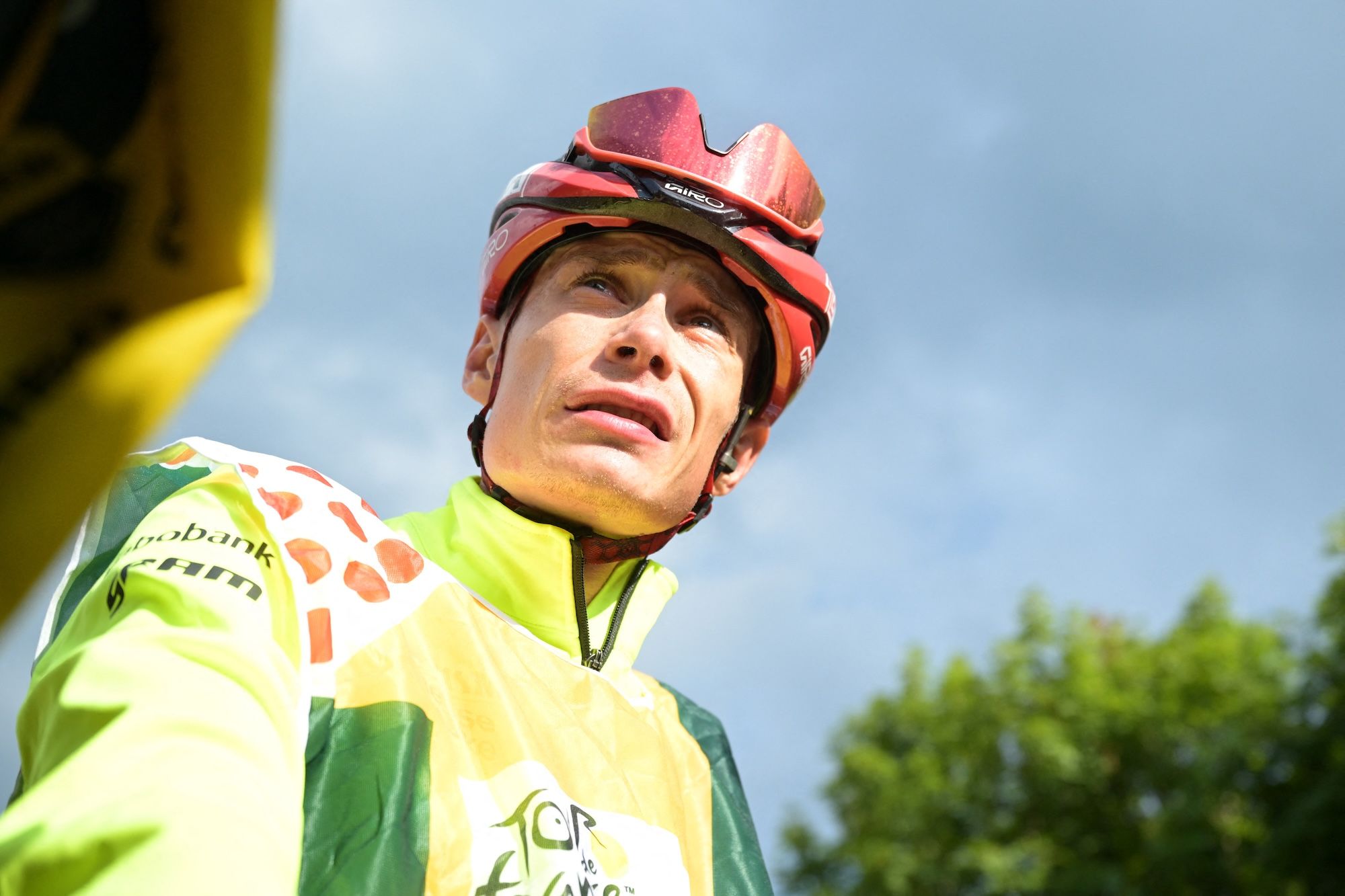
This level-headed approach is emblematic of the modern professional cyclist. The sport has evolved into a discipline of extreme marginal gains, where emotional volatility is seen as a liability. By focusing on the recovery process rather than the lost opportunity, Vingegaard is signaling to his team and his rivals that his career trajectory remains undeterred. He views the injury not as a permanent setback, but as a temporary hurdle in a long-term athletic project.
Supporting Data: The Impact on the General Classification
Vingegaard’s exit has caused a seismic shift in the race hierarchy. Before the crash, the battle for the yellow jersey was shaping up to be a three-way tactical chess match. With the Dane out, the dynamics of the 2026 Tour have fundamentally altered.
The Statistical Void
- GC Ranking: Vingegaard sat second overall, within striking distance of the leader.
- Team Strategy: Team Visma-Lease a Bike, which had built their entire 2026 campaign around the Dane, must now pivot their entire tactical apparatus toward stage hunting or supporting secondary GC contenders.
- Time Trial Impact: Without Vingegaard’s presence, the upcoming time-trial stages lose their most formidable specialist, likely altering the defensive strategies of the current race leader.
The statistical reality is that the peloton is now significantly more open. Teams that were previously content to defend a top-five position are now emboldened to attack, sensing that the vacuum left by Vingegaard’s absence has effectively "opened the road."
Official Responses and Team Strategy
The reaction from Team Visma-Lease a Bike was one of collective mourning followed by immediate, clinical recalibration. Team directors, who have spent months optimizing every aspect of Vingegaard’s performance, now face the challenge of salvaging the remainder of the three-week tour.
"Jonas is the heart of our ambitions," a team spokesperson stated in a press briefing shortly after the incident. "Seeing him go down is heartbreaking for the riders, the mechanics, and the staff who have worked tirelessly to get him to this point in peak condition. However, we are professionals. We have a roster of riders who are capable of winning stages and supporting the team’s goals for the remainder of the race."
The support from the cycling community has been equally profound. Rivals who were fighting Vingegaard for seconds on the road have offered messages of solidarity, underscoring the deep respect the Dane commands within the professional peloton. In a sport defined by brutal individual competition, the fraternity of the road often rises to the fore during moments of injury.
Implications for the Remainder of the 2026 Tour
As the Tour de France pushes forward toward its grand finale in Paris on July 26, the implications of Vingegaard’s withdrawal are manifold:
1. The Power Vacuum
With the primary antagonist removed, the race leader faces a new set of problems. Without the Vingegaard-led pressure, the responsibility of controlling the peloton falls squarely on the shoulders of the leader’s team. This often leads to fatigue and tactical mistakes, which opportunistic rivals will be eager to exploit.
2. The Rise of the Underdog
The absence of a dominant favorite often creates a "winner’s dilemma." Teams are now recalculating their odds, and the fear of a "Vingegaard counter-attack" is gone. This shift creates room for aggressive, long-range breakaways that would have been neutralized had the Dane been in the pack.
3. The Future of Vingegaard’s Season
The immediate question for fans and analysts is not just about the remainder of this Tour, but the remainder of the season. A fractured collarbone typically requires a recovery period of four to six weeks before a return to high-intensity training. This effectively rules out any immediate return to racing, meaning the cycling world will likely have to wait until the late-season classics or next year’s buildup to see Vingegaard back at his best.
Conclusion: A Champion’s Perspective
The 2026 Tour de France will be remembered for its intensity and its unpredictability. While Vingegaard’s exit is a tragedy for the narrative of this year’s race, his response provides a masterclass in professional maturity.
Cycling is a sport of attrition. It demands not only physical excellence but an immense capacity to process failure. By choosing to frame his exit as a manageable challenge rather than a defeat, Vingegaard has preserved his mental fortitude. As he begins the long road to physical recovery, the eyes of the cycling world will remain fixed on him, not for what he is doing on the road, but for how he prepares for his inevitable return.
The yellow jersey may be out of reach for 2026, but if his reaction is any indication, Jonas Vingegaard is far from finished. The Tour de France is a race that tests a rider’s spirit as much as their lungs, and in his darkest moment of the season, Vingegaard has shown that his spirit remains intact. As the race winds its way toward the Champs-Élysées, the void he leaves behind will be filled by others, but the ghost of his potential will linger over the mountains for the remainder of the race.

 Nana
Nana
 Neng Nana
 Nana Wu
 Lina Hope
 Sagoh
Sagoh
 Iffa Jayyana