
 Muslim
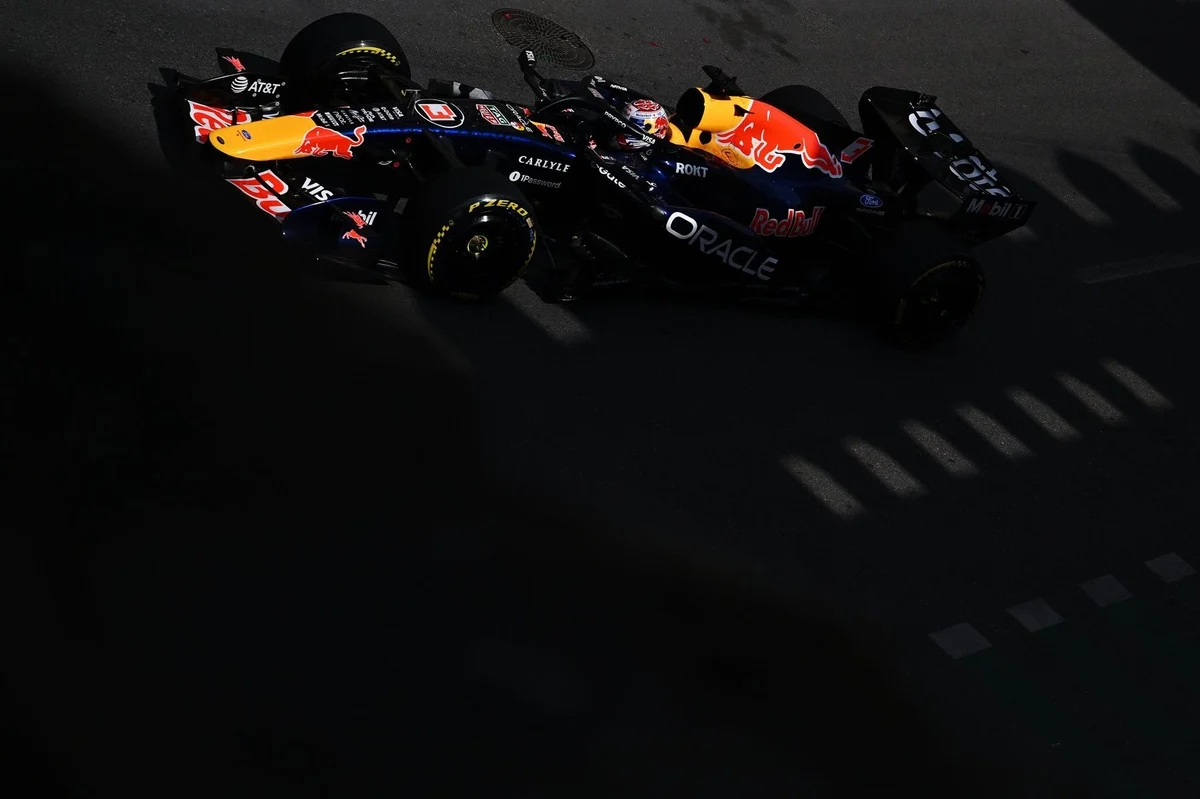
BAKU, Azerbaijan — Max Verstappen delivered a masterclass in opportunistic driving during the third and final practice session at the Azerbaijan Grand Prix, snatching the fastest time right at the death on the unforgiving Baku City Circuit. Defying the early weekend narrative that heavily favored a dominant Mercedes performance on the streets of the Azerbaijani capital, the reigning world champion utilized a potent aerodynamic tow to eclipse George Russell and Lewis Hamilton.
As the Formula 1 circus gears up for a high-stakes qualifying hour, Saturday morning’s action provided a microcosm of what makes Baku one of the most unpredictable and thrilling venues on the calendar: gusty winds, unforgiving concrete walls, mechanical gremlins, and strategic gamesmanship over slipstreams.
Main Facts
The final 60-minute practice session ahead of qualifying offered a dramatic twist in the competitive order, shaking up expectations built over Friday’s running.
- The Pace-Setter: Red Bull’s Max Verstappen claimed the top spot with a blistering lap of 1m43.922s, edging out Mercedes’ George Russell by just over a tenth of a second in the dying moments of the session.
- The Mercedes Threat: Mercedes showcased immense speed throughout the morning. George Russell and teammate Lewis Hamilton consistently locked out the upper echelons of the timing sheets, cementing their status as the car to beat heading into the afternoon.
- Incidents and Drama: High winds wreaked havoc across the paddock, causing handling instability. Aston Martin’s Lance Stroll suffered a session-ending crash at Turn 1, while Verstappen complained of a "kangaroo-ing" Red Bull before an excursion into the Turn 15 runoff area. A brief Virtual Safety Car was deployed to clear a tree branch blown onto the racing surface.
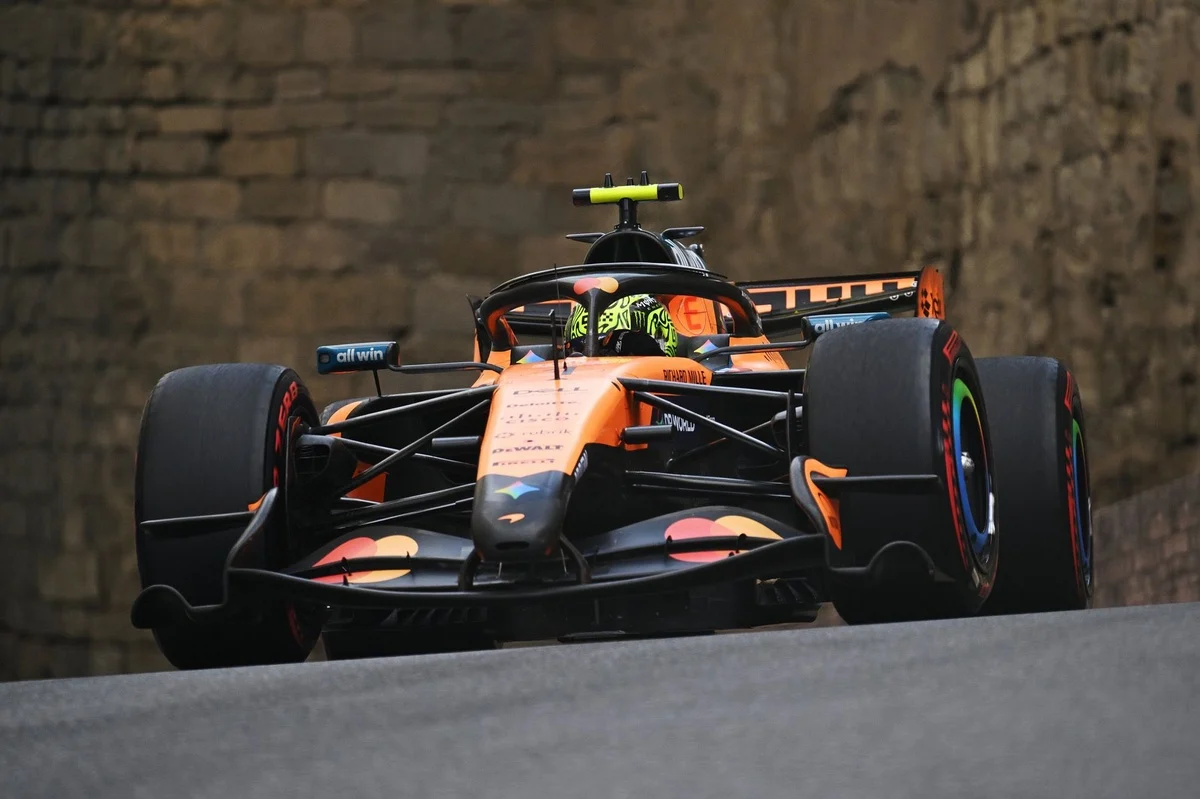
- Midfield Battles: Alpine showed surprising early pace before settling into the top ten, while McLaren’s weekend remained remarkably low-key as Oscar Piastri and Lando Norris languished in seventh and eighth, despite bringing fresh low-speed cornering upgrades.
Chronology of the Session: How FP3 Unfolded
The hour-long session commenced under unrepresentative track conditions compared to the cooler afternoon slot reserved for qualifying. Initially, the circuit was quiet, with the Alpine cars venturing out first to test the waters, albeit well off the blistering pace set during Friday’s FP2.
The Early Skirmishes
As the clock ticked past the 15-minute mark, the front-runners began flexing their muscles. Ferrari’s Charles Leclerc initiated the serious running on the soft compound, laying down a 1m45.564s to depose teammate Lewis Hamilton from the temporary summit.
Drivers quickly realized that mastering the aerodynamic tow along Baku’s legendary 2-kilometer straight would be the ultimate differentiator. In the hunt for slipstreams, Verstappen briefly jumped to the front, only for Hamilton to answer back emphatically with a 1m45.093s tour.
Wind, Debris, and Escapes
Weather conditions played an increasingly disruptive role as a gusty wind swept across the Caspian Sea coastline, making the ground-effect cars unpredictable. Race control was forced to deploy a brief Virtual Safety Car after a rogue tree branch blew directly onto the racing line.
Drivers fought rear-end instability and bouncing. Verstappen radioed his pit wall to complain that his RB car was "jumping like a kangaroo," before running deep into the Turn 15 runoff area—one of several drivers forced to utilize Baku’s famous escape roads to avoid terminal contact with the barriers.
Not everyone was fortunate enough to escape unscathed. Aston Martin’s Lance Stroll clipped the concrete barrier at Turn 1, sustaining suspension damage that forced the Canadian to immediately park his car and bring a premature end to his morning.
The Silver Arrows Flex
At the halfway mark, Mercedes began dropping serious marker times. Andrea Kimi Antonelli temporarily pipped Leclerc by half a tenth with a 1m45.046s lap. Moments later, George Russell seized control with a 1m44.715s effort—notably achieved on the medium tyre rather than the softer red-walled compound.
With 15 minutes remaining, the Silver Arrows finally fitted the soft tyres to simulate qualifying runs. Russell dropped the hammer, lowering the benchmark to a 1m44.177s, and subsequently shaved more time off with a 1m44.021s lap. Antonelli slotted in just 0.252s behind his teammate, underscoring Mercedes’ ominous single-lap pace.
Verstappen’s Late Masterstroke
Just as it appeared Mercedes would comfortably lock down the psychological advantage ahead of qualifying, Verstappen launched his final charge. Benefitting from a massive, perfectly timed slipstream down the mammoth straight, the Red Bull driver wrung every ounce of performance out of his machinery.
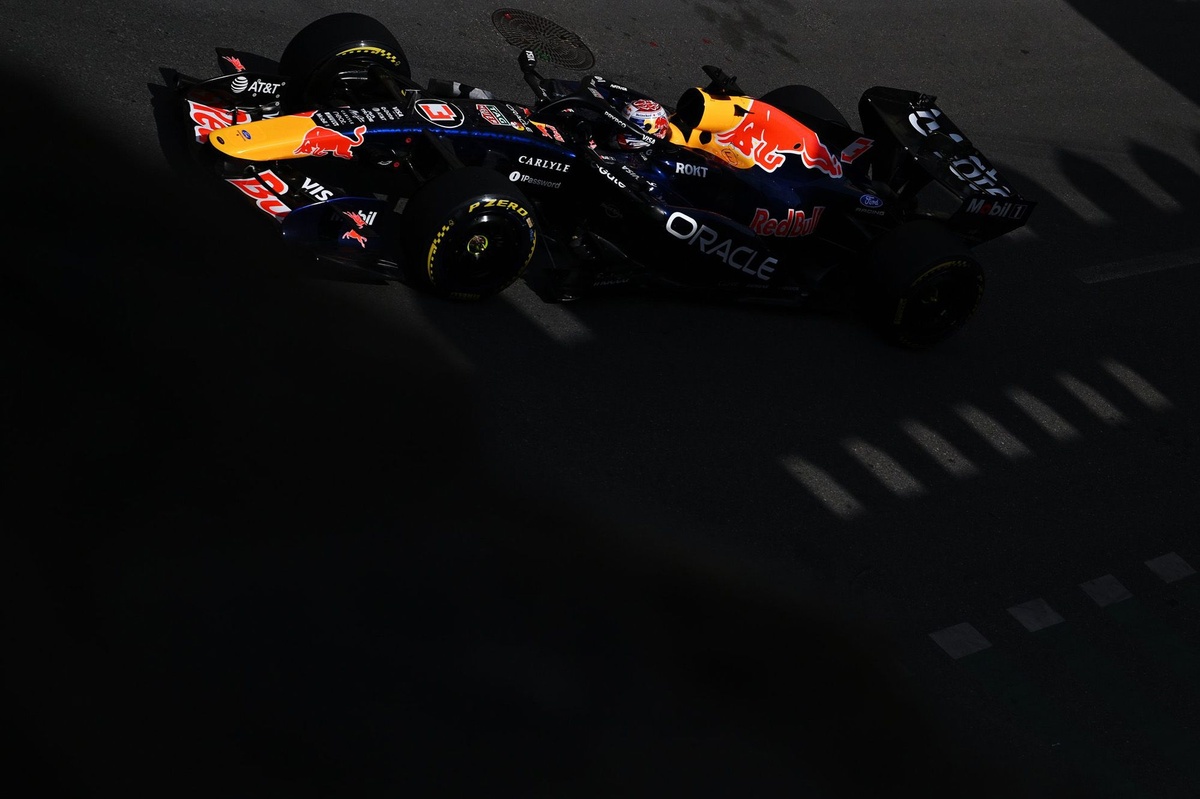
Flattering what had otherwise been a bouncing, difficult-to-drive Red Bull chassis on a track expected to favor Mercedes, Verstappen posted a stunning 1m43.922s to leapfrog both Silver Arrows and snatch first place.
Russell attempted a response on his final push lap, but locked his front tyres into Turn 1 and later went straight on at Turn 7. While he managed to keep his Mercedes out of the barriers, his lap was ruined. Hamilton, however, managed a tidy last-minute effort to leapfrog Antonelli into third place, rounding out an intensely competitive top three.
Supporting Data and Classification
Behind the leading trio, the timesheets reflected a tightly packed grid where track position and tow strategy will dictate the starting grid.
- Top 10 Breakdown:
- Max Verstappen (Red Bull) – 1m43.922s
- George Russell (Mercedes) – +0.099s
- Lewis Hamilton (Ferrari) – +0.171s
- Andrea Kimi Antonelli (Mercedes) – +0.252s
- Charles Leclerc (Ferrari) – +0.642s
- Pierre Gasly (Alpine) – +0.710s
- Oscar Piastri (McLaren) – +0.812s
- Lando Norris (McLaren) – +0.890s
- Isack Hadjar (Red Bull) – +0.954s
- Franco Colapinto (Alpine) – +1.021s
McLaren’s subdued form raised eyebrows up and down the paddock. Despite introducing floor and aerodynamic packages specifically designed to enhance low-speed cornering stability—a historical weakness for the Woking-based squad—both Piastri and Norris struggled to unlock peak tire temperatures, finishing seventh and eighth respectively. Meanwhile, returning driver Isack Hadjar put in a solid shift for Red Bull to break into the top ten ahead of Alpine’s Franco Colapinto.
Official Responses and Paddock Atmosphere
Speaking after the session, engineers and team principals acknowledged that FP3 offered a distorted view of true race pace, heavily influenced by track evolution and aerodynamic tow games.
Mercedes trackside engineering director Andrew Shovlin noted that while the team was pleased with the inherent balance of the W15 through the twisty castle section, execution during the high-pressure qualifying session would be paramount.
"The car is performing well, and the drivers are finding a rhythm, but Baku is a circuit where fractions of a second decide whether you are on pole or in the wall," Shovlin remarked. "Max caught a stellar tow at the end—you can never discount a driver of his caliber when the stakes are high."
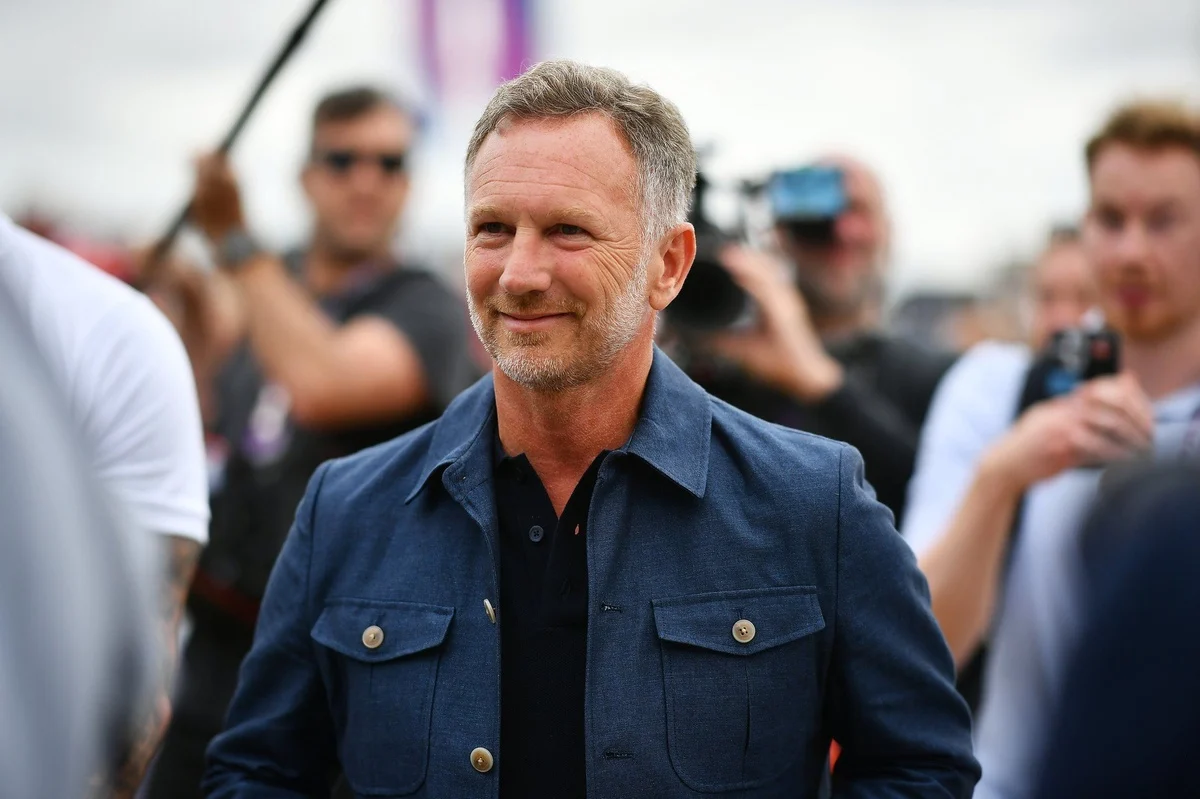
Red Bull team principal Christian Horner admitted that the team had struggled overnight to find an optimal setup for the bumpy asphalt, making Verstappen’s late flyer a pleasant surprise rather than an expected outcome.
"We were fighting the car all morning," Horner confessed. "Max was complaining about bouncing and instability in the rear. But when it counted, he extracted everything. That tow on the straight was the magic ingredient, but we know we have a mountain to climb to keep Mercedes behind us over a full race distance."
Implications for Qualifying and the Grand Prix
As the paddock transitions from practice to the all-important qualifying sessions later this afternoon, the competitive landscape remains razor-thin.
- The Tow Factor: Qualifying will inevitably turn into a tactical chess match. Drivers will queue in the pit lane to secure aerodynamic towing partners, as failing to catch a draft down the 2km straight can cost up to half a second per lap. This dynamic introduces the high risk of traffic obstruction and potential stewards’ investigations for impeding.
- Tyre Degradation and Thermal Management: Getting the Pirelli soft compound into the optimal operating window without overheating the rear axle during traction zones will define who makes Q3. Mercedes’ ability to run quickly on medium tyres earlier in the session hints at superior tyre longevity, which could spell trouble for Red Bull on Sunday.
- The Wall Factor: With Lance Stroll’s crash serving as a stark reminder of how quickly a weekend can unravel, drivers pushing the absolute limit in qualifying cannot afford even a millimeter of error.
With Verstappen throwing down the gauntlet, Mercedes eager to convert their Friday pace into pole position, and Ferrari lurking in the wings with strong race simulations, the Azerbaijan Grand Prix qualifying hour promises to be one of the most explosive spectacles of the 2025 Formula 1 season.

 Neng Nana
 Nana Wu

 Lina Hope
 Sagoh
 Iffa Jayyana