
 Nila Kartika Wati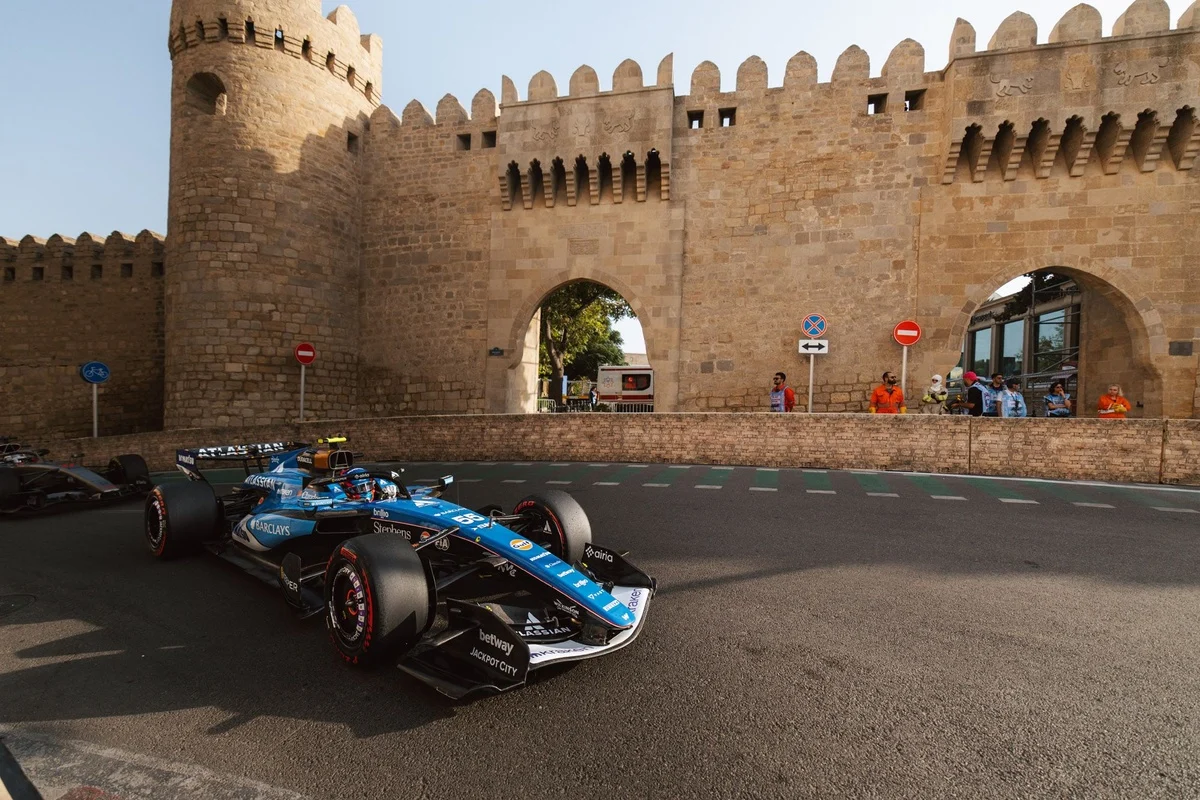
BAKU, Azerbaijan — Former Formula 1 Grand Prix winner David Coulthard has turned up the pressure on the historic Williams racing outfit, bluntly warning that internal consequences are inevitable if the team’s heavily anticipated upgrade package fails to immediately transform their season.
As the Formula 1 paddock unpacks in the historic streets of the Azerbaijani capital for the Azerbaijan Grand Prix, the spotlight rests squarely on the Grove-based team. Williams has introduced what team principal James Vowles has described as an almost entirely "B-spec" version of the FW48. The sweeping technical overhaul is designed to cure a chronic weight problem that has plagued the car throughout the 14 rounds of the current campaign.
However, with the team languishing near the foot of the constructors’ standings, Coulthard’s frank assessment highlights just how thin the margin for error has become for a team desperately seeking a return to its former glory.
Main Facts: The Turning Point for Williams
The primary narrative surrounding Williams heading into the race weekend is the introduction of a comprehensive aerodynamic and structural upgrade package designed to salvage their 2026 season.
- The Current Standing: After 14 rounds of punishing competition, Williams finds itself mired in ninth place in the Constructors’ Championship with a paltry 11 points. The tally is divided between their star-studded driver lineup, with newcomer Carlos Sainz contributing six points and team stalwart Alex Albon chipping in five.
- The Root Cause: The FW48 has been significantly overweight for the majority of the year, a performance handicap that has severely hamstrung both drivers in qualifying trim and race pace.
- The Solution: The newly debuted B-spec specification aims to bring the car down to the minimum weight limit while incorporating developmental pathways for next year’s technical regulations.
- The Warning: Speaking on the Up To Speed podcast, David Coulthard asserted that the success of this upgrade is make-or-break for the engineering and technical departments, noting that "heads will roll" if the performance leap does not materialize instantly.
Chronology: The Road to the Baku B-Spec
To understand the gravity of the situation at Williams, it is necessary to examine how the Grove outfit arrived at this precarious juncture in the calendar.
Early Season Struggles (Rounds 1–6)
From the very first winter tests, internal rumblings suggested that the FW48 was carrying too much mass. While the chassis possessed some fundamentally sound aerodynamic traits, the excess weight acted as a permanent anchor. As the season commenced, both Albon and Sainz fought valiantly to drag the car into Q2, but points finishes were hard-fought luxuries rather than expected outcomes.
The Mid-Season Slump (Rounds 7–13)
As rival midfield teams—such as Racing Bulls, Haas, and Alpine—iteratively developed their cars, Williams struggled to introduce meaningful performance enhancements. The car’s overweight nature magnified tire degradation issues during races. By the summer break, Williams was firmly entrenched in a lonely ninth place in the standings, safely ahead of the backmarkers but unable to bridge the gap to the upper midfield.
The Development Pivot (Round 14 and Beyond)
Recognizing that patching the current car would yield diminishing returns, team principal James Vowles redirected factory resources toward a massive aerodynamic overhaul. The project culminated in the delivery of the B-spec package for the Azerbaijan Grand Prix. The parts were rushed through the factory in Grove to ensure both Sainz and Albon could evaluate the updates simultaneously on Friday.
Practice Reality Check in Baku
The initial on-track data from Friday’s free practice sessions offered a sobering reminder of the challenges ahead. During Free Practice 1, Carlos Sainz and Alex Albon placed 12th and 13th, respectively. As track evolution improved conditions for Free Practice 2, the timesheets slipped, with Sainz dropping to 17th and Albon finishing 16th. While practice positions rarely tell the full story regarding fuel loads and engine modes, the immediate timesheet impact has done little to calm anxious nerves within the garage.
Supporting Data: The Physics of Weight and Aerodynamic Direction
David Coulthard’s stark warning is rooted in hard engineering metrics rather than mere punditry. Drawing on decades of premier-class experience, the Scot broke down the mathematical realities of Formula 1 performance during his podcast appearance.
"I believe, having spoken to some members of the team, that it is a significant step in terms of the car will now be on weight, which we know 10 kilograms is worth three to four tenths of a second around a lap," Coulthard explained.

In the hyper-competitive midfield of modern Formula 1, finding three to four tenths of a second purely through weight reduction is monumental. It represents the difference between being eliminated in Q1 and fighting for a spot in Q3.
Furthermore, Coulthard highlighted the cascading effects of carrying excess mass:
- The Compounding Deficit: "Carrying weight is just putting yourself on the back foot," Coulthard noted. Extra weight increases braking distances, raises tire temperatures, and reduces agility through slow-speed corners—all critical attributes on the stop-and-start layout of the Baku City Circuit.
- Future-Proofing the Chassis: Beyond immediate lap-time gains, the B-spec layout serves as a testbed for regulatory changes on the horizon. "It will also be a step towards the direction they’re taking that car for next year," Coulthard stated. "There are a few aerodynamic tweaks for next year’s regulations, especially around the front of the floor, which may or may not help some teams over others."
Official Responses and Industry Context
James Vowles, who has steadily steered a cultural and operational restructuring at Williams since taking the helm, has been transparent about the team’s shortcomings and ambitions. Vowles framed the introduction of the Baku package as a watershed moment for the organization—a calculated risk necessary to reverse their trajectory.
By labeling the package a "B-spec," Williams has signaled to its stakeholders, sponsors, and fans that the first half of the season was effectively a write-off sacrificed for long-term recovery.
Coulthard drew parallels to other midfield success stories to emphasize what is expected of such a radical pivot:
"I’m expecting a little bit like we saw with Aston Martin, there was a notable step forward in their performance when they brought their B-spec car. And if it doesn’t happen, of course there’s going to be some heads rolling, isn’t there?"
Aston Martin famously executed a concept shift that yielded instant podium contention in past seasons, setting a high benchmark for what modern teams hope to achieve with major mid-season overhauls. For Williams, matching that kind of developmental leap is the only way to justify the immense capital, time, and engineering bandwidth poured into the FW48 B-spec.
Implications: What a Failure (or Success) Means for Williams
The fallout from this weekend’s performance in Azerbaijan will reverberate far beyond the chequered flag on Sunday afternoon.
If the Upgrade Succeeds:
Should the FW48 B-spec unlock the anticipated three-to-four-tenth gain, Williams can realistically target regular points finishes for the remainder of the season.
- Constructor Standing Recovery: Overtaking teams immediately ahead in the points table becomes an achievable goal, securing valuable prize money and restoring morale.
- Driver Retention and Motivation: Securing Carlos Sainz—a race winner whose arrival was a massive coup for Williams—was predicated on the promise of an upward trajectory. Proving that the team can out-develop its rivals validates Sainz’s faith in the project and keeps team harmony high alongside Alex Albon.
- Momentum for Regulation Changes: A successful B-spec validates the design philosophy being carried over into future technical regulations, cementing faith in Vowles’s long-term technical leadership.
If the Upgrade Fails:
Conversely, if the car remains uncompetitive and continues to struggle in the lower half of the timing screens, the psychological and operational blow to Grove will be severe.
- Accountability at the Top: Coulthard’s prediction of "heads rolling" points directly to the technical and aerodynamic departments. In modern F1, when a major concept overhaul fails to yield results, restructuring of the technical hierarchy usually follows swiftly.
- Stagnation in the Midfield: Remaining ninth in the championship locks Williams into a cycle of lower financial returns and diminished aerodynamic testing time relative to their rivals, complicating preparations for future rule cycles.
As the cars line up on the grid for the Azerbaijan Grand Prix, all eyes will be glued to the data streams coming off the Williams pit wall. For James Vowles, his engineering team, and drivers Carlos Sainz and Alex Albon, the race in Baku is not merely about surviving the walls of the city circuit—it is a referendum on the future of a sleeping giant.

 Jia Lissa
 Lina Irawan
 Sagoh
Sagoh


 Ali Ikhwan
 Dwi Wanna