Lina Hope
By Retta Race
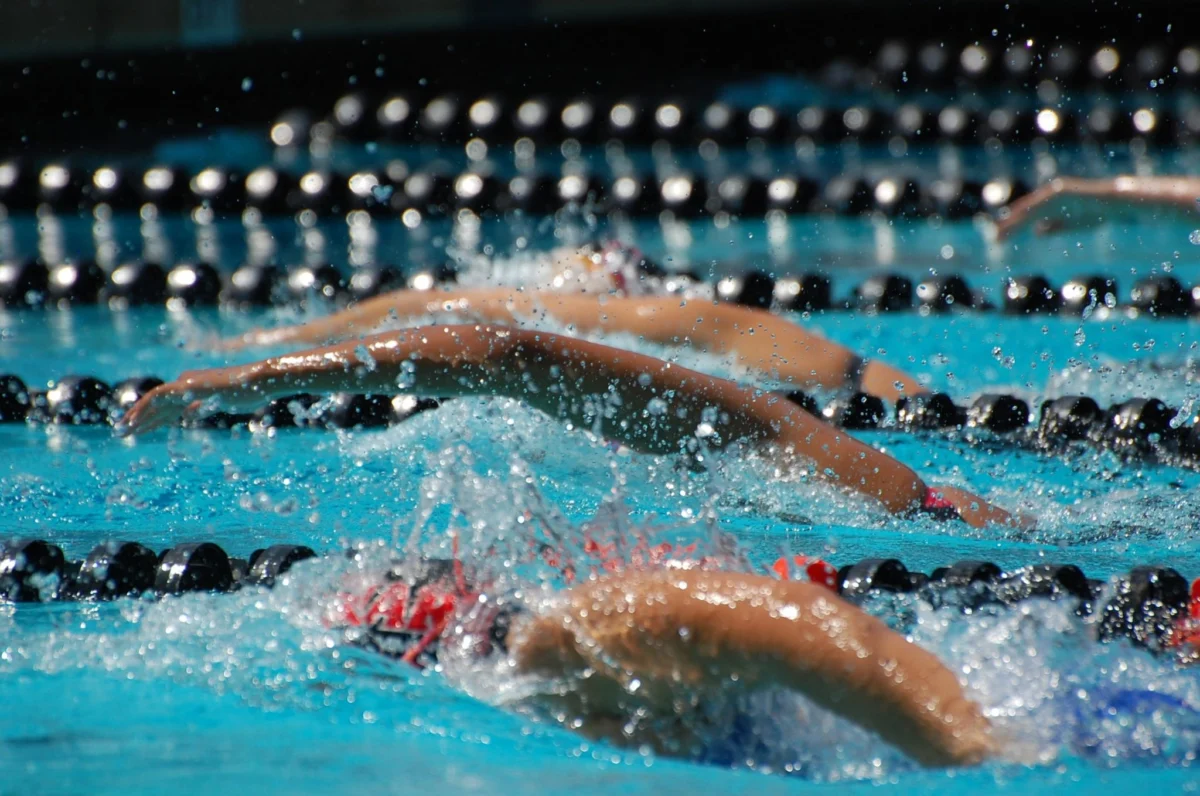
The Nevskaya Volna Water Sports Center in St. Petersburg transformed into the epicenter of Russian swimming this week as the 2026 Russian Short Course National Championships entered its pivotal second day. With national pride on the line and the prestigious Short Course World Championships in Beijing looming on the horizon, the atmosphere in the venue was electric, marked by a series of blistering performances that saw established stars reinforce their dominance and rising talents shatter personal ceilings.
For the athletes gathered in St. Petersburg, this competition serves as the ultimate litmus test. The Russian selection policy for the upcoming December global showcase is uncompromising: to secure a berth on the national roster, swimmers must hit or exceed the World Aquatics "A" standard in their respective disciplines. As the second day of competition drew to a close, the results underscored a high level of urgency, with multiple athletes clearing the qualifying threshold in a flurry of record-breaking speed.
The Men’s 50m Butterfly: A Masterclass in Velocity
The men’s 50m butterfly final was arguably the most anticipated showdown of the evening, featuring the current world record holder, Egor Kornev. Having set the global benchmark of 21.28 on the World Aquatics Swimming World Cup circuit just last month, expectations for Kornev were at an all-time high.
Kornev did not disappoint, navigating the two-lap sprint with clinical precision to touch the wall in 21.69. While shy of his own world record, the performance was a testament to his consistency under pressure. Behind him, Oleg Kostin delivered a resilient effort to secure the silver medal in 21.98, while Daniil Markov completed an impressive climb from the fourth seed to take bronze in 22.34. Notably, the entire podium managed to clear the World Aquatics "A" standard of 22.43, cementing their status as legitimate contenders for the international stage in Beijing.
Women’s Sprint Supremacy: Surkova and Trofimova
Arina Surkova continued her tenure as the queen of the women’s 50m butterfly. As the reigning national record holder, Surkova arrived in St. Petersburg with a target on her back, but she remained unfazed, clocking a dominant 25.03 to secure gold. Although the time fell short of the blistering 24.58 she recorded at last year’s championships, it served as an emphatic statement of her current form.
The depth of the field was further evidenced by the performances of Polina Malakhova and Alexandra Kuznetsova, who both finished under the World Aquatics "A" standard of 25.72, with Malakhova taking silver in 25.65 and Kuznetsova claiming bronze in 25.67.
However, the headline of the night arguably belonged to Darya Trofimova in the 100m freestyle semi-finals. At just 21 years old, Trofimova produced a career-defining swim, clocking 52.29 to destroy her previous lifetime best of 52.93. This performance rockets her into the pantheon of Russian swimming history, as she now sits as the fourth-fastest female performer in the nation’s history for the short course 100m freestyle. Darya Klepikova followed closely in 53.04, setting the stage for a high-stakes final where the target qualification time of 53.02 will be the ultimate objective.
Backstroke Battles: Gaifutdinova and Samusenko
The 100m backstroke finals provided a fascinating contrast between tactical control and raw, aggressive speed. In the women’s event, Alina Gaifutdinova emerged as the clear victor, posting a 56.63. She was the only swimmer in the field to crack the 57-second barrier, comfortably clearing the Beijing qualifying time of 57.52. Alexandra Kurilkina (57.84) and Sofia Maslova (58.23) rounded out the podium, though they will need to find additional speed in future domestic meets to meet international selection criteria.
The men’s 100m backstroke was arguably the most dramatic race of the evening. Pavel Samusenko claimed the gold with a new lifetime best of 48.61, marking only the second time in his career he has dipped into the 48-second range. The 25-year-old managed to shave 0.17 off his previous personal best set in December 2025. The silver medal went to Evgeny Shilovsky (50.46), who managed to edge out Olympic medalist Kliment Kolesnikov. Kolesnikov, a titan of the sport, was forced to settle for bronze in 50.58, a result that surprised many observers and highlighted the depth and competitive volatility of the Russian domestic circuit.
Ksenia Misharina: The Rise of a Prodigy
If the veterans provided the muscle, 17-year-old Ksenia Misharina provided the inspiration. Following her dominant win in the 400m freestyle on the opening night, Misharina returned to the pool to conquer the 800m distance. Her time of 8:14.46 was not only a gold-medal effort but a new Russian Age Record. By clearing the qualification barrier, she has all but punched her ticket to Beijing, signaling her emergence as a primary force in Russian long-distance swimming. Sofya Dyakova (8:22.76) and Polina Kozyakina (8:25.84) completed the podium, acknowledging the massive gap Misharina has currently carved out between herself and her peers.
Official Selection Policy and Implications
The primary focus of these championships remains the strict adherence to World Aquatics standards. The Russian Swimming Federation has made it clear that subjective selection will not be the primary driver for the Beijing roster; rather, performance-based objectivity is the mandate.
"The standard is the standard," one official noted during the evening session. "We are looking for swimmers who can not only qualify but stand on the podium in Beijing. The times posted in St. Petersburg are a reflection of the rigorous training cycles our athletes have endured, and the intensity we are seeing in these finals is exactly what we need to prepare for the global stage."
The implications of these results are profound. For established stars like Kolesnikov, the bronze medal serves as a wake-up call in an increasingly competitive domestic field. For young athletes like Trofimova and Misharina, the results are a validation of their rapid progression. As the championships head into the latter half of the schedule, the pressure will only mount. Athletes who narrowly missed the "A" standards are now facing a final window of opportunity to rectify their times.
Looking Ahead: The Road to Beijing
As the Nevskaya Volna Water Sports Center prepares for the final days of the meet, the focus will shift toward the longer distances and the medley events. With several marquee races still on the docket, the competition for the remaining spots on the World Championship roster remains wide open.
The Russian swimming program has long been defined by its resilience and its ability to produce top-tier talent under intense pressure. As evidenced by the record-breaking efforts of Kornev and the steady, upward trajectory of the next generation, the Russian team is positioning itself to be a formidable presence in Beijing. Whether these national performances will translate into global success remains the ultimate question, but based on the results from the first two days in St. Petersburg, the talent pool is deeper and faster than it has been in years.
As the final touches are made to the roster, one thing is certain: the swimmers who successfully navigate the trials at Nevskaya Volna will be battle-hardened and prepared for the scrutiny of the world’s biggest stage. The path to Beijing is paved with records, and as the championships continue, the world will be watching to see who else rises to the challenge.

 Siti Muinah
 Nana

 Neng Nana


 Suro Senen