
 Suro Senen

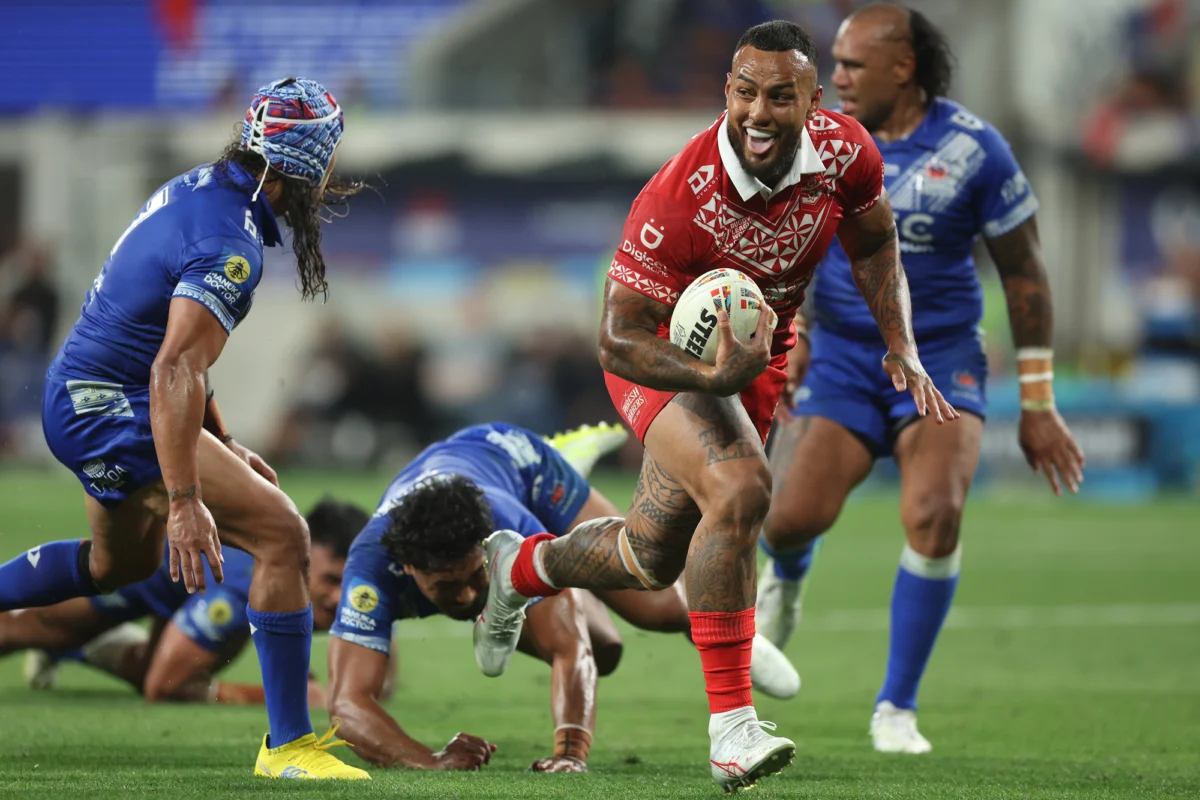
The 2026 Rugby League World Cup reaches a fever pitch this Saturday at the Cbus Super Stadium on the Gold Coast, as New Zealand and Fiji prepare to engage in a battle that transcends typical pool-stage intensity. With both sides having navigated the formidable challenge of facing world champions Australia, this fixture is the ultimate "winner-takes-all" encounter. For the Kiwis and the Bati, the path to the semi-finals is binary: victory ensures progression, while defeat likely marks the end of their tournament journey.
The Context: A Tournament of Giants
Both New Zealand and Fiji have demonstrated significant grit throughout the 2026 campaign. They arrived at the tournament with aspirations of toppling the Australian juggernaut, and while both fell short, the manner of their performances suggests they are the two most viable contenders outside of the Kangaroos.
New Zealand’s tournament opener against Australia was a masterclass in resilience, pushing the defending champions to the absolute brink. Similarly, Fiji showcased a brand of high-octane, physical rugby that troubled the Australian defense. Having both comfortably dismantled the Cook Islands, the two sides sit with identical records, making this Saturday’s match the de facto quarter-final. For the Kiwis, a draw may technically suffice due to points difference, but head coach and staff have made it clear: they are playing to win.
Match Chronology and Venue Details
The clash is scheduled for Saturday, 31 October 2026, under the bright lights of the Cbus Super Stadium.
- Kick-off: 4.30am GMT / 3.30pm AEDT / 5.30pm NZDT / 12.30am EDT / 9.30pm PDT.
- Atmosphere: Expected to be a cauldron of noise, with strong traveling support from both the Kiwi and Fijian communities in Australia.
The tactical battle will begin the moment referee Grant Atkins blows the opening whistle. Expect an initial ten-minute period of high-intensity defense as both sides look to establish physical dominance in the middle of the park.
Supporting Data: Tactical Analysis
The statistics from the opening rounds suggest this will be a game defined by the battle of the forwards. New Zealand’s pack, led by captain James Fisher-Harris, has been statistically dominant in post-contact meters. Their ability to generate quick play-the-balls will be crucial in neutralizing Fiji’s dynamic, offload-heavy game plan.
Fiji, under the leadership of Apisai Koroisau, relies on a "chaos-theory" approach to offense. Their willingness to throw the ball around in broken play has made them the most exciting team to watch in the tournament. However, this high-risk strategy is exactly what the clinical, disciplined New Zealand side will be looking to exploit. If the Kiwis can keep the game structured and minimize unforced errors, they will likely have the upper hand in the closing twenty minutes.
Official Responses and Team News
Both camps have maintained a respectful but intensely focused demeanor leading up to the game.
New Zealand: Captain James Fisher-Harris emphasized the need for consistency. "We know what Fiji brings—they are dangerous, unpredictable, and they play with heart. Our job is to stick to our systems and trust the work we’ve put in over the last three weeks," he said in a recent press conference.
Fiji: Apisai Koroisau, the heart of the Fijian side, noted the significance of the match for his nation. "This isn’t just another game for us. We are playing for our people and our pride. We know we have to be perfect to beat a team of New Zealand’s quality."
Confirmed Line-ups
New Zealand:
- Keano Kini, 2. Jamayne Isaako, 3. Dane Gagai, 4. Casey McLean, 5. Ronaldo Mulitalo, 6. Kodi Nikorima, 7. Jahrome Hughes, 8. James Fisher-Harris (c), 9. Jeremy Marshall-King, 10. Moses Leota, 11. Isaiah Papali’i, 12. Briton Nikora, 13. Joseph Tapine.
Interchange: 14. Te Maire Martin, 15. Naufahu Whyte, 16. Erin Clark, 17. Xavier Willison, 18. Charnze Nicoll-Klokstad, 19. Scott Sorensen.
Fiji:
- Sunia Turuva, 2. Ronald Philitoga, 3. Waqa Blake, 4. Solomone Saukuru, 5. Semi Valemei, 6. Kurt Donoghoe, 7. Brandon Wakeham, 8. Jacob Saifiti, 9. Apisai Koroisau (c), 10. Emosai Ravosai, 11. Taane Milne, 12. Kitione Kautoga, 13. Caleb Navale.
Interchange: 14. Josese Lanyon, 15. Elijah Keung, 16. Jordan Miller, 17. Joseph Litidamu, 18. Jordin Leiu, 19. Apenisa Driti.
Implications of the Result
The winner of this match does not merely advance to the semi-finals; they secure a psychological victory that could propel them into the final. By avoiding the Kangaroos in the semi-final round, the victor gains a more favorable bracket path, significantly increasing their chances of lifting the trophy. Conversely, the loser will face an immediate exit, a bitter pill to swallow after such a strong tournament showing.
How to Watch: A Global Viewing Guide
Broadcasting rights for the 2026 Rugby League World Cup have been secured by major networks globally to ensure maximum accessibility for this pivotal fixture.
Australia and New Zealand
Fans in Australia can watch for free on 7plus, which is streaming every moment of the tournament. In New Zealand, ThreeNow is the dedicated free-to-air home for the match, with comprehensive coverage provided by Sky Sport NZ for subscribers.
United Kingdom and Ireland
Premier Sports remains the primary destination for viewers in the UK and Ireland. Subscription packages are available on a rolling monthly basis (£18.99) or via yearly contracts, providing access across various platforms, including Sky Q, Virgin Media, and Prime Video. In Ireland, the Sports Extra pack remains the most efficient route for access.
United States
US-based fans can access the match via the Premier Sports digital platform. A comprehensive tournament pass covering all 53 matches of the men’s, women’s, and wheelchair tournaments is priced at $25.
Worldwide Access
For the 120+ countries where specific local rights holders may not be listed, Premier Sports maintains global rights. Fans are encouraged to check their local regional listings to confirm broadcast availability.
The VPN Advantage
For those traveling outside of their home country, geo-blocking can often prevent access to local free-to-air streams. Utilizing a VPN, such as NordVPN, allows fans to mask their IP address and connect to a server in their home territory, effectively bypassing regional restrictions. This ensures that a fan from Auckland currently in London can still enjoy the ThreeNow stream, or an Australian in New York can access their 7plus account without interruption.
Note: We recommend VPN services only for legal, recreational purposes. Always verify the terms of service for your chosen streaming platform.
Conclusion
As the sun sets on the Gold Coast this Saturday, the landscape of the 2026 Rugby League World Cup will be permanently altered. Whether it is the tactical precision of New Zealand or the passionate, unpredictable energy of Fiji that triumphs, the fans are guaranteed a spectacle of world-class rugby. The stage is set, the teams are primed, and the world is watching. Who will secure their place in history, and who will be left wondering what might have been? The answer will be decided on the turf at Cbus Super Stadium.


 Ali Ikhwan

 Iffa Jayyana

 Siti Muinah

 Asro

 Nana Muazin