
 Lina Hope
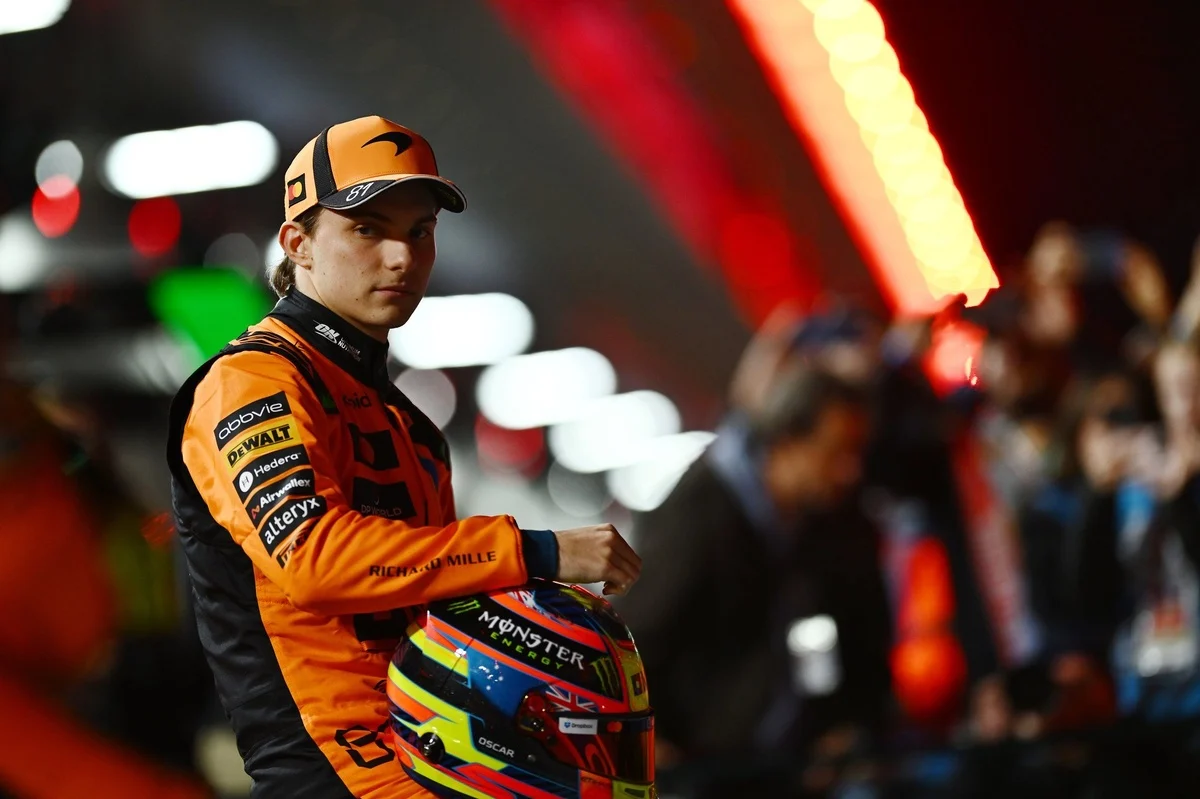
LAS VEGAS — Formula 1’s dazzling return to the Las Vegas Strip has exposed lingering vulnerabilities within the McLaren camp, casting a shadow over what was otherwise a competitive qualifying performance for the Woking-based outfit. While Lando Norris captured a respectable fifth on the starting grid and team-mate Oscar Piastri managed the seventh-fastest time in final qualifying, the garage has been forced to confront a glaring weakness: a severe lack of straight-line speed that left both drivers exposed down the circuit’s iconic, high-speed straights.
The issue has ignited intense technical scrutiny within the team. While Piastri stopped short of echoing Norris’s blunt assessment that McLaren’s velocity deficit on the straights was "just shocking," the young Australian readily admitted that the margin of the gap to their rivals—particularly those running identical Mercedes power units—caught the team entirely by surprise.
As the Formula 1 paddock unpacks the data from a chilly qualifying session under the neon lights of the Nevada desert, the underlying causes point to a complex cocktail of aerodynamic packaging, aggressive weight-saving philosophies, and powertrain gear ratio miscalculations that continue to haunt the MCL40.
Main Facts: Qualifying Realities and Technical Hurdles
The stakes for Saturday night’s Grand Prix are high, and the grid positions tell only half the story for the papaya-liveried squad.
- Qualifying Results: Lando Norris extracted maximum performance from his machinery to secure fifth on the grid, while Oscar Piastri posted the seventh-quickest time during a tightly contested Q3 session.
- The Penalty Factor: Piastri’s seventh-place grid spot is purely academic for race day. The Australian is set to serve a 10-place grid penalty after the team opted to fit a fifth internal combustion engine (ICE) of the season, breaching the permitted season quota of four.
- Power Unit Upgrades: Despite the penalty, Piastri benefits from a newly specified turbocharger developed by Mercedes under the FIA’s Additional Development and Upgrade Opportunities (ADUO) framework.
- The Upgrade Imbalance: McLaren introduced an updated floor specification for the Las Vegas weekend. However, manufacturing constraints meant only one finished component was ready in time, which was allocated to Norris. Norris’s ultimate Q3 flying lap was subsequently compromised when a stray plastic bag became entangled in one of the floor’s aerodynamic fences.
- The Velocity Deficit: Telemetry data from Q3 laid the performance discrepancy bare. Piastri was losing as much as 10 km/h to the Alpine machines of Franco Colapinto and Pierre Gasly along the main straight on the Las Vegas Strip. McLaren primarily made up for this deficit through aggressive braking and high cornering commitments.
Chronology of Events: From Free Practice to a "Messy" Q3
The weekend in Sin City has been a progressive exercise in problem-solving for McLaren, characterized by shifting track conditions and high-stakes tactical execution during qualifying.
Free Practice and Initial Alarms
From the opening practice sessions, telemetry analysis indicated that the MCL40 was bleeding time on the flat-out sections of the circuit. While the car’s low-speed cornering stability remained a relative strength, the team realized that their expected operating window did not match the reality of the Nevada asphalt. The sheer magnitude of the straight-line deficit did not fully manifest until rivals began turning downforce levels off ahead of qualifying, leaving McLaren chasing a moving target.
Qualifying: Navigating Q1 and Q2
Both McLaren drivers successfully navigated the early phases of the knockout qualifying format. Piastri noted that by the conclusion of Q2, he felt relatively comfortable with the car’s balance and his own rhythm behind the wheel. The team appeared poised to challenge for positions near the front row, capitalizing on the chassis’ agility through the tighter, twisty sections of the street circuit.

The Q3 Chaos and Slipstream Lottery
As the track rubbered in for the pole-position shootout, the session devolved into a tactical chess match centered around aerodynamic tow management.
"After Q2, I was pretty happy with how it went," Piastri reflected candidly after stepping out of the car. "And then Q3 was just a bit messy for a few reasons. Trying to get the right slipstream is… you might as well not even go out if you don’t get that right."
Piastri explained that the nuances of energy deployment out of the slow corners heavily dictated straight-line performance later in the lap. "Even opening the lap here, I think there’s a bit of a difference between cars—how much energy they use to turn one. If that costs you half a second, that can be the difference of three or four tenths down the straight later in the lap. So it’s difficult to get right, and there were a few things that we probably will review and see if we can do a slightly better job. But also my laps were a little bit messy."
Meanwhile, Kimi Antonelli mastered the conditions for Mercedes, capitalizing on a powerful slipstream behind Arvid Lindblad’s Racing Bulls to secure the fastest lap time of the session—further highlighting how vital aerodynamic tow and straight-line efficiency were on the night.
Supporting Data and Technical Analysis
To understand why McLaren is struggling so profoundly with top-end speed, one must look deep into the design philosophy of the MCL40. The car’s straight-line deficiencies are not a recent discovery, but rather the cumulative result of specific engineering compromises made during its conception.
1. Wheelbase and Aerodynamic Limitations
In a bid to shed valuable weight, McLaren opted for the shortest permissible wheelbase allowed by the regulations. While this design choice aids agility in medium- and low-speed corners, it severely limits the physical real estate available for underbody floor expansion. Consequently, the aerodynamic gains that engineers could typically extract from the floor and bodywork ahead of the rear wheels have been restricted.
2. The Gear Ratio Conundrum
Perhaps the most critical factor in McLaren’s top-speed deficit is mechanical rather than aerodynamic. The team opted for lower gear ratios than many of their competitors.
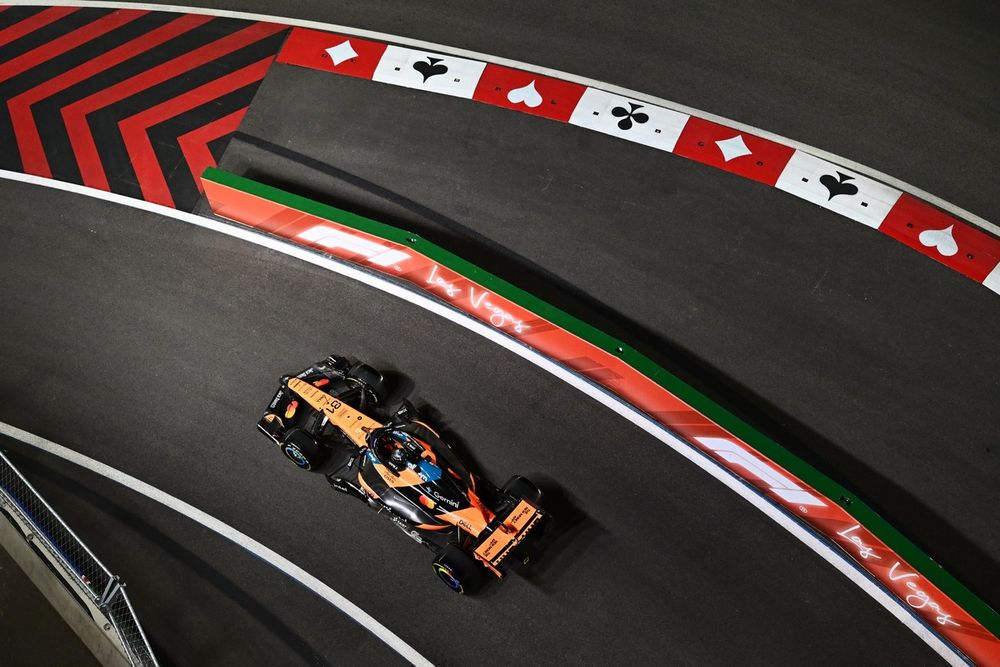
In a recent exclusive interview with Motorsport.com, Team Principal Andrea Stella explained that these gear choices were made based on pre-season power unit performance projections that ultimately did not align with the final characteristics of the delivered Mercedes power units. Because the gear ratios lock the car into sub-optimal engine operating regimes when running at maximum velocity—especially when compounded by the aerodynamic drag of a tow—the MCL40 simply runs out of breath down long straights like the Las Vegas Strip.
3. The Mercedes Benchmark
What deeply puzzles the Woking engineers is the delta between themselves and other teams utilizing the same power unit. Telemetry comparisons show that customer teams and the works Mercedes squad are extracting significantly more velocity from the exact same internal combustion and hybrid architecture. This suggests that McLaren’s aerodynamic drag configuration and downforce-shedding efficiency during setup are failing to match those of their engine stablemates.
Official Responses: Team Principal and Driver Perspectives
The mood within the McLaren hospitality unit following qualifying was one of measured concern mixed with analytical determination.
Team Principal Andrea Stella did not attempt to mask the team’s struggles, acknowledging that the characteristics of the Las Vegas Strip Circuit were anticipated to pose a stiff test for the MCL40.
"Definitely, we had some concern in terms of how suitable the demand of this circuit will be for our car," Stella admitted.
"For reasons that we have talked about before, developing speed at very high speed—because this is not only the top speed, it is also the top speed that combines with the towing that everyone tries to use. So, you go into operating regimes of the engine that, with our [gear] ratios, are not ideal. We know that the drag from an aerodynamic point of view is not a point of strength. But we discussed in the debrief that we need to look holistically at all the conditions that influence the top speed."
Oscar Piastri echoed his team boss’s sentiment, expressing disbelief at the scale of the deficit when stacked against direct engine competitors.

"It’s difficult to know and it caught us by surprise, to be honest," said Piastri. "I don’t think we expected it to be such a big problem. At Monza, we were okay, and the strange part for us is it’s mostly compared with the other Mercedes-powered cars.
"So, maybe a lot of people took downforce off and we didn’t take enough off, but it seems like a pretty massive step that we were missing in practice. I don’t know if it’s still the same now, but definitely we seem, for one reason or another, to be pretty slow on the straights."
Implications for the Race and the Constructor Fight
As the air temperature in the Nevada desert plummets on a chilly November evening, the strategic implications for the race are profound.
While the ambient and track temperatures will create a notoriously slippery low-grip environment—where tyre management and thermal degradation will be paramount—passing cars on track will be an uphill battle for the McLaren duo. Norris will have to defend his fifth-place starting berth from fast-approaching rivals who hold a clear straight-line advantage, while Piastri faces a turbulent recovery drive from deep in the pack as he works his way past the 10-place grid penalty.
More broadly, the Las Vegas weekend serves as a stark warning flare for McLaren’s technical department. As development ramps up for future iterations of the car, resolving the discrepancies between powertrain projections, gear ratio selections, and aerodynamic drag efficiency has rocketed to the top of the team’s priority list.
For now, McLaren must rely on racecraft, strategic cunning, and the raw talent of Norris and Piastri to salvage a strong points haul from a weekend where the physics of the Las Vegas Strip have brutally exposed their mechanical limitations.

 Dwi Wanna
 Asep Darmawan


 Nana

 Ammar Sabilarrohman

 Asro