
 Asro
Published: November 19, 2026
Updated: November 19, 2026
Introduction: The Relentless Evolution of Road Racing Footwear
The road running market moves at a dizzying pace. Hardly a month goes by without a legacy athletic brand or an ambitious challenger rolling out a fresh iteration of the modern runner’s most coveted piece of technology: the carbon-plated super-shoe. Ever since the paradigm-shifting introduction of curved carbon-fibre plates embedded in high-rebound PEBA foams disrupted the sport nearly a decade ago, manufacturers have been in a relentless arms race. The goal? To maximize energy return, minimize fatigue, and shave precious seconds off personal bests across every distance from the 5K to the marathon.
Yet, as the technology matures, a fascinating trend is emerging. Rather than following a single design blueprint, brands are diversifying their engineering philosophies. Today, choosing a carbon-plated racer is no longer just about picking the softest foam or the stiffest plate; it is about matching a specific biomechanical "ride" to an individual runner’s stride, training style, and race-day ambitions.
To help navigate this crowded landscape, our testing team recently put three of the season’s most anticipated carbon-plated models through their paces: the Reebok Speedshifter, the adidas Adizero Adios Pro 5, and the Skechers Aero Elite. Priced competitively between £220 and £235, these shoes showcase three completely distinct approaches to speed. Here is our in-depth breakdown of how they perform on the tarmac.
1. Main Facts: Breaking Down the Contenders
Reebok Speedshifter (£235.00)
- The Heritage: Marking a triumphant return to serious road-racing models, the brand originally rooted in Bolton, Lancashire, delivers its very first dedicated carbon-plated race-day shoe.
- Key Technologies: Features a lightweight HyperFloat foam midsole that delivers superior energy return compared to standard foams, complemented by a 1.2mm-thick Carbon Fibre AccelerPlate.
- Standout Attribute: Exceptional durability and stability. Unlike many high-end racers that feel precarious around sharp corners, the Speedshifter offers a substantial outsole and grounded platform, bridging the gap between a pure race-day weapon and a robust tempo trainer.
Adidas Adizero Adios Pro 5 (£220.00)
- The Heritage: The fifth-generation update to adidas’s most decorated racing franchise, drawing direct architectural inspiration from the world-record-holding Adizero Adios Evo Pro 3.
- Key Technologies: Utilizes the Carbon-fibre-infused Energyrim—a peripheral carbon plate positioned strictly around the edge of the midsole to provide stiffness and snap without deadening the foam’s compression—paired with ultra-responsive Lightstrike Pro cushioning.
- Standout Attribute: Unrivaled bounciness and an aggressive, forward-propelling ride that remains remarkably forgiving over long distances.
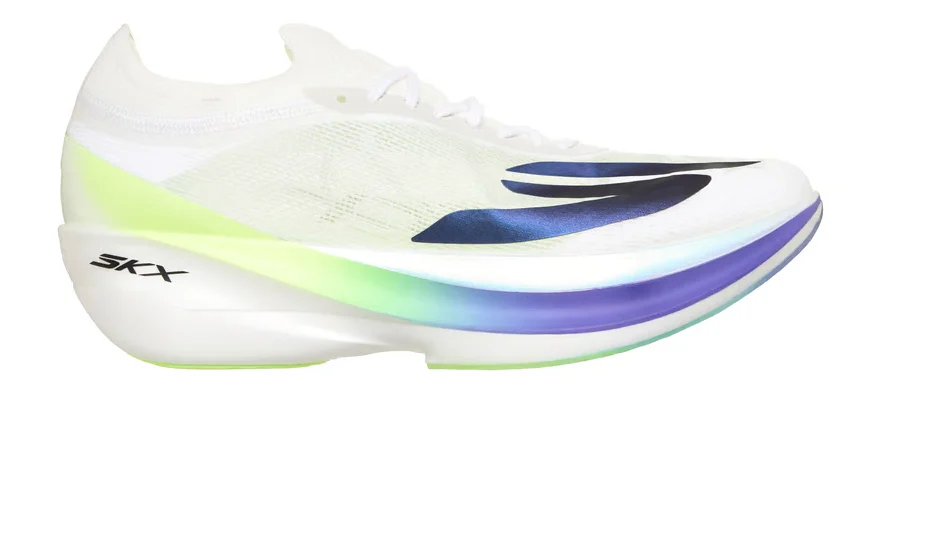
Skechers Aero Elite (£220.00)
- The Heritage: Skechers’ lightest road-racing model to date, tipping the scales at an astonishing 167 grams, making it one of the absolute lightest plated shoes available on the market.
- Key Technologies: Built around a high-response HYPER BURST PRO midsole, the brand’s proprietary HYPER ARC rocker geometry, and a new full-length carbon-infused Quantum Plate.
- Standout Attribute: Pure, uncompromising race-day performance. Engineered for runners who want to attack the pavement at full gas from the starting gun, leveraging a hyper-aggressive forefoot rocker.
2. Chronology: The Development and Testing Timeline
To fully understand how these shoes transitioned from conceptual laboratory prototypes to commercial releases dominating the autumn racing calendar, it is essential to look at the timeline of their introduction and field testing throughout 2026.
- Early Spring 2026: Sneaker leaks and elite athlete sightings reveal that Reebok is quietly testing a brand-new carbon platform in European road races. Simultaneously, adidas prototypes hint at a refined iteration of their peripheral plate system, building upon the success of the Adios Pro lineage. Skechers, meanwhile, leans into lightweight construction engineering to push the boundaries of sub-170-gram footwear.
- Late Summer 2026: Media samples land in testing hubs across the UK. Reviewers begin logging high-mileage weeks, subjecting the trio to varied conditions—from wet morning tempo runs on slick asphalt to dry, fast-paced interval sessions on athletics tracks.
- Autumn 2026 (September–October): As peak marathon season kicks off, early adopters race in all three models. Durability reports from these early races begin to alleviate consumer anxieties regarding premature outsole degradation, particularly concerning softer foams like adidas’s Lightstrike Pro and Skechers’ Hyper Burst Pro.
- November 19, 2026: Official market rollouts and comprehensive performance verdicts are published. Initial consumer reception confirms that the marketplace has shifted away from a one-size-fits-all super-shoe toward specialized tools tailored for specific runner profiles.
3. Supporting Data: Specifications at a Glance
| Shoe Model | Price (£) | Weight | Midsole Foam | Plate Type | Primary Intended Use |
|---|---|---|---|---|---|
| Reebok Speedshifter | £235.00 | Undisclosed (Medium-Light) | HyperFloat | 1.2mm Carbon Fibre AccelerPlate | Tempo sessions, regular winter speedwork, and race days |
| Adidas Adizero Adios Pro 5 | £220.00 | Lightweight | Lightstrike Pro | Carbon-fibre-infused Energyrim (Peripheral) | Fast road racing (5K to Marathon) demanding speed and comfort |
| Skechers Aero Elite | £220.00 | 167g | HYPER BURST PRO | Full-length carbon-infused Quantum Plate | Pure race-day events (all-out speed focus) |
4. Official Testing Feedback and Performance Analysis
Reebok Speedshifter: The Versatile Workhorse
For runners who have missed Reebok’s presence at the pointy end of road racing, the Speedshifter is a welcome homecoming. Historically known for innovation, the Bolton-born brand has crafted a shoe that avoids the hyper-fragile nature of many contemporary racers.
During testing, the HyperFloat foam immediately stood out for its balanced cushioning. It lacks the marshmallow-like sink of some competitors, offering instead a firmer, more controlled compression. The 1.2mm Carbon Fibre AccelerPlate provides a distinct toe-off snap, but what truly sets the Speedshifter apart is its structural integrity.
"It certainly feels fast, but with a stability that few race day models have," notes our lead equipment tester. "It’s well made, and the outsole is a little more substantial than many, making this a good option for more regular use as well as race day."
Because of its durable rubber outsole, winter runners and marathon build-up specialists will find immense value here. It doubles brilliantly as a robust training partner for high-speed threshold runs when you do not want to prematurely grind down an expensive, single-use race shoe.
Adidas Adizero Adios Pro 5: The Refined Record-Chaser
Adidas has dominated podiums globally through iterative, data-driven design. The fifth-generation Adizero Adios Pro takes the DNA of the world-record-setting Adios Evo Pro 3 and scales it for everyday elite and sub-elite competitors at a more accessible price point.
The secret weapon here remains the Carbon-fibre-infused Energyrim. By restricting the carbon plate to the perimeter of the midsole rather than running a rigid flat slab through the entire core, adidas allows the Lightstrike Pro foam to compress and rebound naturally. The result is a ride that testers described as "simply bouncy to the point of being incredible."
At high speeds, the shoe practically demands that you lengthen your stride. Yet, unlike stiffer, harsher platforms that can batter calves and Achilles tendons over the later miles of a marathon, the Adios Pro 5 strikes a rare balance. The ride is aggressive yet remarkably forgiving. Furthermore, initial concerns regarding the longevity of the razor-thin racing upper and exposed foam have been put to rest. Even after logging substantial miles at aggressive paces, the test pairs maintained their structural spring and cosmetic freshness.
Skechers Aero Elite: The Featherweight Specialist
If the Reebok Speedshifter is the pragmatic workhorse and the adidas Adizero Adios Pro 5 is the balanced marathon master, the Skechers Aero Elite is a pure, unapologetic drag racer.
Tipping the scales at a feather-light 167g, the Aero Elite is one of the lightest plated shoes to ever hit the commercial market. Skechers has packed serious engineering into this minimalist chassis, combining a responsive HYPER BURST PRO midsole with their signature HYPER ARC rocker geometry and a full-length, carbon-infused Quantum Plate.
On the road, the shoe is engineered for one setting: race day. Testers noted that the Aero Elite practically insists on a high-cadence, high-speed approach from the moment you cross the start line. The woven jacquard upper locks the foot down securely in a sock-like embrace, ensuring zero internal slippage when cornering hard at anaerobic paces.
The rocker design shines most when you commit fully to your pace, delivering a hyper-propulsive forward roll through the forefoot. It is less forgiving at slower recovery paces—it is not designed for easy jogs—but when you unleash it on a 10K or half-marathon course, it delivers an unadulterated speed-centred thrill.
5. Industry Implications: Where the Super-Shoe Market is Headed
The coexistence of these three distinct philosophies points to a maturing footwear landscape. In the early days of carbon plating, brands chased maximum stack heights and maximum stiffness in a race to copy a singular archetype. Today, market saturation has forced brands to listen closer to runners’ actual grievances.
- The Death of the Single-Use Shoe: With models like the Reebok Speedshifter, brands are recognizing that consumers paying over £200 expect versatility. Runners want shoes that can handle hard threshold workouts on Tuesday and toe the starting line on Sunday, without disintegrating after 50 miles.
- Refining Biomechanical Assist: Adidas’s continued reliance on peripheral placement (the Energyrim) proves that rigid, full-length flat plates are not the only way to achieve propulsion. By preserving foam flexibility, brands are reducing musculoskeletal injuries while maintaining elite-level energy return.
- Extreme Specialization: Conversely, ultralight models like the Skechers Aero Elite demonstrate that there will always be a market for uncompromised, race-only engineering. For runners hunting a personal record where every single gram of rotational weight matters, sub-170g engineering remains the holy grail.
Conclusion: Which One Should You Choose?
- Choose the Reebok Speedshifter if you want a durable, stable, fast trainer-racer hybrid that can survive winter training miles and tempo sessions without flinching.
- Choose the adidas Adizero Adios Pro 5 if you want a bouncy, forgiving, elite-tier marathon and half-marathon weapon that rewards you with comfort over long distances.
- Choose the Skechers Aero Elite if you are an aggressive racer looking for an ultra-lightweight, uncompromising tool specifically calibrated to smash short-to-medium distance personal bests.
Stay in the know—sign up for the free Athletics Weekly newsletter for more gear reviews, race reports, and expert training advice.


 Nana Muazin
 Pevita Pearce

 Nila Kartika Wati

 Layla Zulfa

 Sagoh