Pevita Pearce
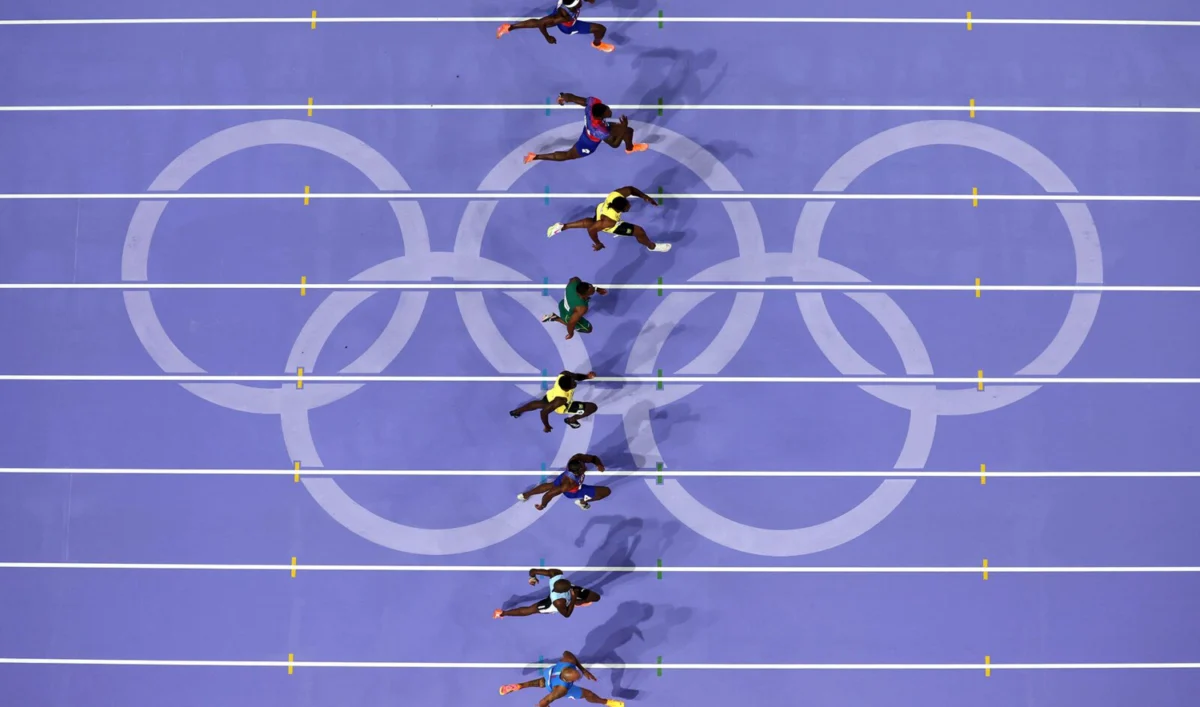
LOS ANGELES — The path to the Olympic podium at the 2028 Summer Games has just become significantly steeper. World Athletics has officially published its qualification system for the track and field events at the Los Angeles Olympics, and the message to elite athletes around the globe is unambiguous: securing a ticket to Southern California will demand historical excellence.
To put the tightening of the screws into perspective, Sifan Hassan’s magnificent Olympic record-winning time of 2:22:55—which captured the imagination of the sporting world at the Paris 2024 Games—would not even be quick enough to meet the baseline women’s marathon entry standard for LA28.
Across almost every discipline, World Athletics has intensified the criteria. Of the 40 men’s and women’s events featuring direct performance benchmarks, an eye-opening 32 standards have been made tougher compared to Paris 2024. Only five remain unchanged, and just three have been eased. Furthermore, the governing body has subtly shifted its qualification philosophy, dialing back the reliance on automatic entry standards to give more weight to the global ranking system.
As the athletics world digests these demanding new metrics, athletes, coaches, and federations are already recalibrating their multi-year cycles. With the competition window officially ticking, the race for LA28 has truly begun.
Main Facts: A Paradigm Shift Toward Elite Exclusivity
The newly released LA28 qualification blueprint establishes a framework designed to attract only the absolute elite to the Olympic stadium, reducing the safety net of automatic entry marks.
The Dual Pathway and the 40/60 Split
For recent outdoor global championships, World Athletics operated on a balanced 50/50 dual pathway split, where half the field qualified via entry standards and the other half via world rankings. For Los Angeles 2028, that balance has shifted. Only 40% of athletes are expected to qualify through direct entry standards, while 60% will secure their berths through world rankings.
However, hitting a standard does not guarantee a passport to Los Angeles. In a strict competitive override, if more athletes achieve the designated standard than there are available quota places in an event, the remaining spots will be awarded to those with the best overall performances during the window. In such scenarios, the safety net of the world rankings for that specific event is entirely bypassed.
The Marathon Benchmark
Nowhere is the escalation of standards more striking than over the grueling 42.195km distance:
- Women’s Standard: Set at 2:22:20, it is 4 minutes and 30 seconds faster than the Paris requirement (2:26:50) and a full 35 seconds quicker than Sifan Hassan’s actual Paris 2024 gold-medal-winning run (2:22:55).
- Men’s Standard: Set at 2:05:00, it represents a 3-minute and 10-second drop from the Paris requirement (2:08:10) and is 86 seconds faster than Tamirat Tola’s Paris winning time of 2:06:26.
These targets are especially daunting considering Paris was run over a notoriously undulating, hilly course. World Athletics factored in historical progression models, noting that marathon times in Olympic years typically trend 30 to 60 seconds faster than preliminary forecasts. Consequently, the field size for the Olympic marathons has also been trimmed from 80 to 70 runners per race.
Chronology of the Qualification Windows
Time waits for no athlete, and the qualification clocks are operating on staggered timelines depending on the discipline. Results will count in full if the final day of a competition falls within the specified window.
- November 1, 2026 – April 30, 2028: The marathon window opened exceptionally early, giving endurance specialists an extended period to chase the sub-2:05:00 and 2:22:20 marks.
- December 19, 2026 – June 18, 2028: This window governs the 10,000m, combined events (decathlon and heptathlon), race walks, and relay events.
- June 19, 2027 – June 18, 2028: The primary window for the vast majority of track and field events (sprints, middle-distance, hurdles, steeplechase, and field events).
Additionally, results achieved at national senior outdoor championships that begin within the respective qualification windows will remain valid if recorded no later than Thursday, June 22 of the election year.
Key stepping-stone events have also been designated for direct qualification:
- April 9, 2028: The World Athletics Race Walking Team Championships in Hefei, China, where the top 12 finishers in the half-marathon race walk will automatically punch their Olympic tickets.
- April 22–23, 2028: The World Athletics Relays in The Bahamas, offering the first 14 national teams an immediate pathway to the Games, with a second-chance repechage format on day two.
Supporting Data: The Complete LA28 Standards vs. Paris 2024
A comprehensive breakdown illustrates how severely the bar has been raised across the athletics spectrum. Track improvements are measured in seconds, marathons in minutes and seconds, field events in meters, and combined events in points.
| Event | Men’s LA28 | Men’s Paris | Men’s Change | Women’s LA28 | Women’s Paris | Women’s Change |
|---|---|---|---|---|---|---|
| 100m | 9.93 | 10.00 | -0.07 | 10.96 | 11.07 | -0.11 |
| 200m | 19.95 | 20.16 | -0.21 | 22.25 | 22.57 | -0.32 |
| 400m | 44.40 | 45.00 | -0.60 | 49.90 | 50.95 | -1.05 |
| 800m | 1:43.00 | 1:44.70 | -1.70 | 1:57.00 | 1:59.30 | -2.30 |
| 1500m | 3:30.00 | 3:33.50 | -3.50 | 3:57.50 | 4:02.50 | -5.00 |
| 5000m | 12:50.00 | 13:05.00 | -15.00 | 14:34.00 | 14:52.00 | -18.00 |
| 10,000m | 26:48.00 | 27:00.00 | -12.00 | 30:30.00 | 30:40.00 | -10.00 |
| 110m / 100m H | 13.18 | 13.27 | -0.09 | 12.58 | 12.77 | -0.19 |
| 400m Hurdles | 48.00 | 48.70 | -0.70 | 54.00 | 54.85 | -0.85 |
| 3000m Steeplechase | 8:07.50 | 8:15.00 | -7.50 | 9:06.00 | 9:23.00 | -17.00 |
| High Jump | 2.32m | 2.33m | -0.01m | 1.97m | 1.97m | Same |
| Pole Vault | 5.90m | 5.82m | +0.08m | 4.80m | 4.73m | +0.07m |
| Long Jump | 8.30m | 8.27m | +0.03m | 6.90m | 6.86m | +0.04m |
| Triple Jump | 17.35m | 17.22m | +0.13m | 14.50m | 14.55m | -0.05m |
| Shot Put | 21.50m | 21.50m | Same | 19.30m | 18.80m | +0.50m |
| Discus | 67.20m | 67.20m | Same | 65.00m | 64.50m | +0.50m |
| Hammer | 78.50m | 78.20m | Same | 74.00m | 74.00m | Same |
| Javelin | 85.50m | 85.50m | Same | 63.80m | 63.80m | -0.20m |
| Multi-Events | 8650 pts | 8460 pts | +190 pts | 6550 pts | 6480 pts | +70 pts |
| Marathon | 2:05:00 | 2:08:10 | -3:10 | 2:22:20 | 2:26:50 | -4:30 |
Track Surge vs. Field Stability
The most radical adjustments are found on the track, particularly in middle and long-distance running.
- The men’s 5000m requirement has plummeted by 15 seconds to an elite 12:50.00.
- The women’s 5000m benchmark was sliced by 18 seconds down to 14:34.00.
- The women’s 3000m steeplechase standard drops by an astonishing 17 seconds to 9:06.00.
- The men’s 800m standard drops to 1:43.00, meaning athletes must run world-class tactical times simply to earn consideration.
Conversely, the field events present a more conservative picture. Throwing standards in the men’s shot put (21.50m), discus (67.20m), and javelin (85.50m) remain completely untouched from Paris. Only a trio of marks were slightly eased to reflect statistical realities: the men’s high jump (down 1cm to 2.32m), the women’s triple jump (down 5cm to 14.50m), and the women’s javelin (down 20cm to 63.80m). The women’s shot put stands as a notable exception in the field, jumping upward by 50 centimeters to an imposing 19.30m requirement.
Official Responses and Strategic Rationale
World Athletics developed these stringent numbers by closely auditing the qualification periods of the 2022, 2023, and 2025 World Athletics Championships alongside the 2024 Paris Olympic Games. Top-performance lists were meticulously recalculated based on a quota cap of three athletes per country.
Administrators maintain that the aggressive tightening of standards aligns with the surging global depth of track and field. With technological advancements in running shoes, improved training methodologies, and state-of-the-art track surfaces fueling unprecedented times across the board, the governing body argues that Olympic entry criteria must evolve to preserve the exclusive prestige of the Games.
However, the shift toward a 60% world ranking quota has historically drawn mixed reviews from athletes and smaller national federations. While top-tier athletes supported by well-funded programs can travel the globe chasing ranking points at Diamond League and Continental Tour meetings, athletes from developing nations often face financial and logistical hurdles to accumulate those points—making the direct entry standard their preferred, albeit increasingly difficult, route.
Broader Implications for the LA28 Programme
As the athletics community looks toward the Los Angeles Games—scheduled to run from July 15 to July 30, 2028—the structural footprint of the sport continues to modernize.
The LA28 athletics program will comprise 23 men’s events, 23 women’s events, and two high-profile mixed relays: the returning 4x400m mixed relay and the historic Olympic debut of the 4x100m mixed relay.
For fans hoping to witness these historic fields firsthand, ticket sales will ramp up significantly in 2027, featuring upcoming first-come, first-served purchasing windows. Meanwhile, World Athletics has announced it will officially launch the online "Road to LA" tracker in late 2027, allowing athletes and fans to monitor real-time qualification statuses as the window barrels toward its dramatic close in mid-2028.

 Neng Nana

 Laily UPN
 Asro

 Nana Wu

 Raul Delapena Setiawan