
 Lina Hope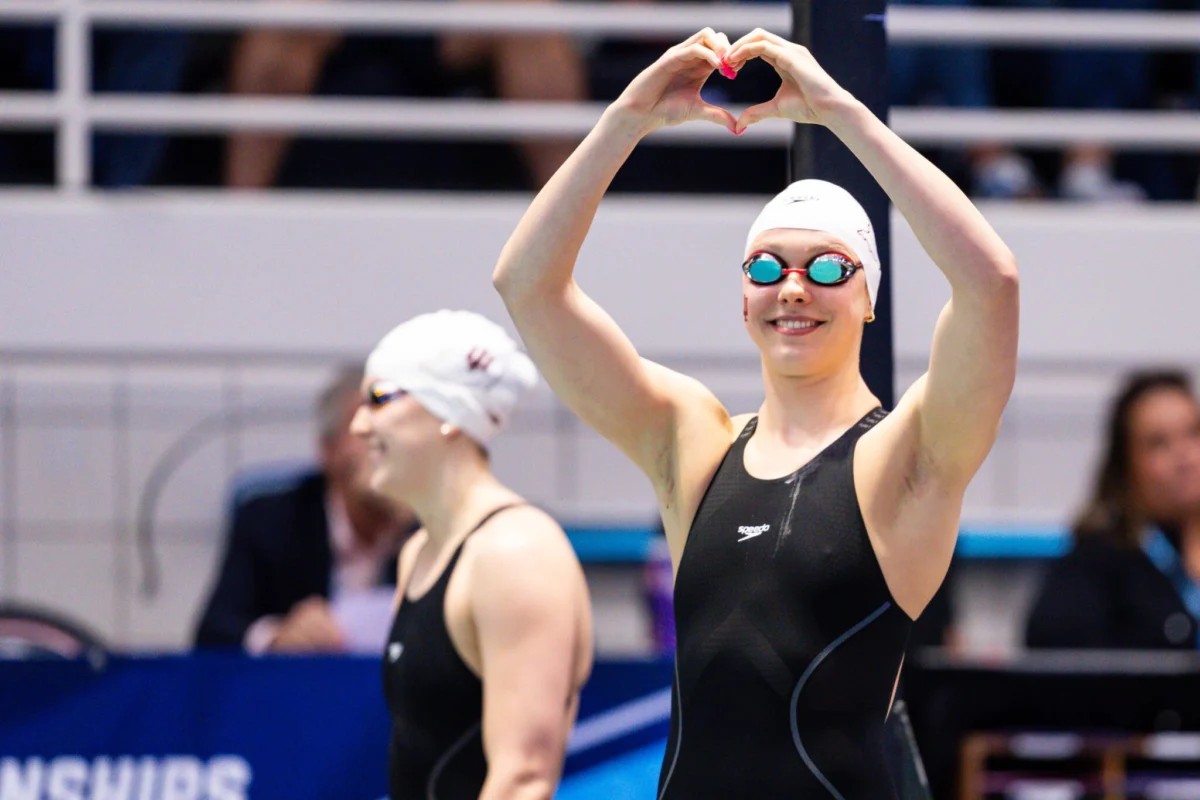
In a significant development for the Indiana University swimming program, sprint freestyle standout Kristina Paegle has been confirmed as a member of the Hoosiers’ roster for the inaugural season of the College Swimming League. Paegle, a 2026 NCAA "B" finalist in the 50-yard freestyle, returns to the pool deck at a critical juncture for both her collegiate career and the broader landscape of collegiate athletics, as she remains a key participant in ongoing litigation against the NCAA.
Main Facts: A Strategic Boost for the Hoosiers
The return of Kristina Paegle provides Indiana head coach Ray Looze with a massive injection of talent just as the team prepares to navigate the 2026-2027 season. Since arriving in Bloomington in the fall of 2022, Paegle has evolved from a promising recruit into the cornerstone of Indiana’s sprint freestyle contingent.
Her performance at the 2026 NCAA Championships underscored her value to the program. Paegle secured a 10th-place finish in the 50 freestyle, clocking a lifetime best of 21.51 seconds and contributing seven individual points to the Hoosiers’ team total. Beyond her individual accolades, she was a fixture on Indiana’s high-performing relay teams, helping propel the 200 freestyle relay to a 3rd-place finish, the 400 freestyle relay to a 5th-place finish, and the 200 medley relay to 9th.
With her decision to compete in the College Swimming League, Paegle joins forces with teammate Liberty Clark, forming what many analysts consider the most potent sprint tandem in the Big Ten. Her presence on the roster mitigates what many observers previously viewed as the program’s most significant talent departure of the offseason.
Chronology: The Evolution of a Legal and Athletic Career
To understand the complexity of Paegle’s current situation, one must look at the timeline of both her athletic progression and her involvement in the legal system:
- Fall 2022: Paegle enrolls at Indiana University, immediately making an impact on the Hoosiers’ sprint group.
- 2023–2025: Paegle develops into a consistent NCAA qualifier, steadily lowering her personal bests and increasing her influence on the team’s relay success.
- March 2026: Paegle delivers a career-best performance at the NCAA Championships in the 50 free (21.51) and earns multiple relay podium appearances.
- Mid-2026: Paegle becomes one of 38 plaintiffs in the Wells vs. NCAA lawsuit in Kentucky, a legal challenge focused on the regulatory framework governing athlete eligibility and compensation.
- Late 2026: Parallel to the Wells case, Paegle is identified as a member of a separate group of Indiana athletes seeking a fifth year of eligibility, following the path established by teammates Zalan Sarkany and Owen McDonald.
- October 2026: A judge rules in favor of Sarkany and McDonald, granting them an additional year of eligibility.
- Current Day: Paegle officially joins the Indiana roster for the College Swimming League, which kicks off its first match in Westmont, Illinois.
Supporting Data: The Impact of the Recruiting Class
Indiana’s depth for the upcoming season is not defined by Paegle alone. The program enters the new year on the heels of securing the #3 ranked recruiting class in the nation. This infusion of talent is designed to bolster the team’s overall point production at the NCAA level, where they finished 7th in 2026.
Key additions include:
- Anita Bottazzo: The breaststroke specialist transfers from the University of Florida, bringing immediate elite-level experience to the Hoosiers.
- Top-20 Recruits: Two incoming freshmen, both ranked within the top 20 nationally, are expected to contribute points in butterfly and distance freestyle events, respectively.
When combined with the veteran leadership of Paegle and Clark, this recruiting haul suggests that Indiana is positioning itself to challenge for a top-5 finish at the 2027 NCAA Championships. The integration of veteran experience and fresh talent will be tested immediately at tonight’s College Swimming League opener.
Official Responses and Legal Context
The Wells vs. NCAA lawsuit, in which Paegle is a named plaintiff, represents a burgeoning trend of athlete-led litigation challenging the NCAA’s historical authority over eligibility and compensation. While the details of the Wells case remain complex, its impact on the student-athlete experience is profound.
The legal victory achieved by Zalan Sarkany and Owen McDonald earlier this week—where a judge granted them a fifth year of eligibility—has sent shockwaves through the collegiate swimming world. This precedent is widely expected to bolster the arguments of other athletes, including Paegle, who are seeking similar relief. By maintaining her status as an active athlete while pursuing these legal avenues, Paegle is positioning herself at the forefront of a movement that could fundamentally reshape the concept of "eligibility" in collegiate sports.
NCAA officials have maintained that their regulations are necessary to ensure a level playing field across all divisions. However, the consistent judicial interventions in cases involving Indiana swimmers suggest a growing friction between institutional bylaws and current legal interpretations of student-athlete rights.
Implications: The Future of Collegiate Swimming
The implications of Paegle’s return are twofold: internal and systemic.
Internal Implications
For the Indiana Hoosiers, the return of a top-tier sprinter like Paegle transforms the team from a contender to a genuine powerhouse. Coaches and teammates alike have expressed confidence that her presence provides the necessary stability to compete for podium finishes in both individual and relay events. The synergy between Paegle, Clark, and the new recruits will likely be the deciding factor in Indiana’s performance in the College Swimming League and the upcoming Big Ten Championships.
Systemic Implications
On a larger scale, Paegle’s participation in the Wells litigation and her simultaneous pursuit of extended eligibility highlight the shifting power dynamics in college athletics. We are entering an era where the traditional four-year clock is increasingly viewed as negotiable through the court system. If more athletes follow the path set by the Indiana group, the NCAA may find its regulatory power significantly diminished, leading to a landscape where individual athlete advocacy dictates the length and terms of collegiate careers.
As the Indiana women’s team prepares to step onto the blocks in Westmont tonight at 6:30 p.m. EST, all eyes will be on Paegle. Her performance in the pool will be scrutinized, but her role in the courtroom will likely have a more lasting impact on the history of the sport. The intersection of elite athleticism and legal activism has never been more apparent, and in the case of Kristina Paegle, the two are inextricably linked, driving the narrative of the 2026-2027 season.
About the author: Anya Pelshaw has been a cornerstone of the SwimSwam editorial team since 2021. With extensive coverage of the Women’s NCAA Championships from 2022 through 2026, Pelshaw provides a unique, on-the-ground perspective on the intersection of collegiate competition, athlete advocacy, and the evolving administrative landscape of the sport.

 Ammar Sabilarrohman
 Nana
Nana
 Sagoh
Sagoh
 Nila Kartika Wati
 Ali Ikhwan
 Dwi Wanna