
 Ammar Sabilarrohman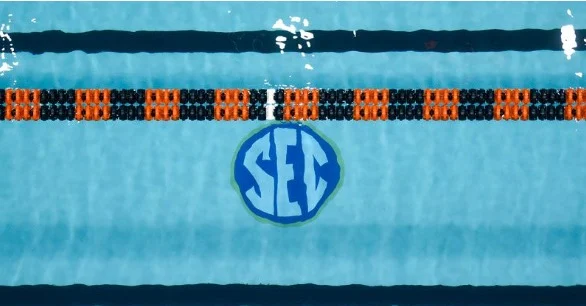
The Southeastern Conference (SEC), long recognized as a pioneer in the evolution of collegiate swimming and diving championship formats, has officially announced a significant structural overhaul for its 2027 conference meet. By extending the duration of the championship from six days to seven, the SEC is set to implement a bold, experimental schedule that separates diving from swimming to a degree previously unseen in major conference competition.
Scheduled for February 14–20, 2027, at the prestigious Lee and Joe Jamail Texas Swimming Center in Austin, Texas, this new format represents a departure from the traditional intermingling of swimming heats and diving finals. As the collegiate landscape continues to grapple with television marketability and student-athlete well-being, the SEC’s move serves as a bellwether for the future of the sport at the NCAA level.
The Core Shift: Decoupling Diving and Swimming
For years, the standard collegiate championship model has involved a dense, multi-discipline approach where diving events are woven into the swimming sessions. This often leads to extremely long competition days and logistical challenges for both fans and participants.
The 2027 SEC format fundamentally alters this rhythm. Under the new guidelines, the first four days (Sunday through Wednesday) will be dedicated primarily to diving, while the final three days (Thursday through Saturday) will focus exclusively on swimming.
This change is not merely an exercise in scheduling; it is an experiment that will be closely scrutinized by coaches and administrators across the NCAA. A frequently proposed solution to make the NCAA Swimming & Diving Championships more "television-friendly" has been to isolate diving at the beginning of the meet, allowing swimming to take center stage as the grand finale. By testing this configuration, the SEC is essentially providing a pilot program for the broader governing body to observe.
Chronological Breakdown: A New Era for the SEC
The transition from the 2026 format to the 2027 format is best illustrated by the movement of events across the week. While the total length of the meet increases, the compartmentalization of events is designed to streamline the experience for individual student-athletes.
2026 vs. 2027 Schedule Comparison
| Day | 2026 Format | 2027 Format | Primary Shift |
|---|---|---|---|
| Day 1 (Sun) | Men’s 1m Diving | Men’s 1m + Women’s 3m | Women’s 3m brought forward |
| Day 2 (Mon) | 1650 Free, Relays, 1m Dive | Women’s 1m + Men’s 3m | Swimming pushed back |
| Day 3 (Tues) | 100 Back, 200 Fly, 100 Breast, 3m Dive | 1650 Free, Relays, Women’s Platform | First day of swimming |
| Day 4 (Wed) | 100 Fly, 400 IM, 200 Free, 3m Dive | 100 Back, 200 Fly, 100 Breast, Men’s Platform | Swimming sequence shift |
| Day 5 (Thurs) | 200 Breast, 50 Free, 500 Free, Platform, Relay | 100 Fly, 400 IM, 200 Free, 400 Medley Relay | Diving removed |
| Day 6 (Fri) | 200 IM, 100 Free, 200 Back, Platform, Relay | 200 Breast, 50 Free, 500 Free, 200 Free Relay | Diving removed |
| Day 7 (Sat) | N/A | 200 IM, 100 Free, 200 Back, 400 Free Relay | New championship day |
By shifting the swimming events back by one day, the SEC effectively creates a "cleaner" runway for the high-intensity swimming finals that historically draw the largest crowds. While the swimming schedule itself remains largely consistent with past iterations—and does not yet mirror the NCAA Championship order—it provides a more consistent, predictable flow.
Supporting Data and Strategic Implications
The decision to expand the meet to seven days brings up critical questions regarding student-athlete welfare and academic load. Historically, both swimmers and divers were required to be on-site for five days of competition. Under the new 2027 structure, the time commitment for divers is reduced to four days, and for swimmers, it remains at five.
In theory, this allows student-athletes to return to their respective campuses sooner, potentially reducing the number of missed classes. This is a significant point of consideration in an era where the NCAA is placing an increased emphasis on the "student" component of the student-athlete experience.
Furthermore, the SEC’s decision is likely driven by the logistical goal of shortening the "prime time" swimming sessions. By removing diving finals from the Thursday, Friday, and Saturday night blocks, the conference can condense the swim meet into a faster-paced, more broadcast-ready format. Because the SEC has fewer events per night than some of its peers, the meet already moves at a brisk pace; this change will likely enhance that reputation.
The Economic and Media Landscape
While streaming and television ratings for conference championships are rarely made public, the SEC remains a juggernaut in the sport. SwimSwam’s internal traffic data consistently demonstrates that the SEC Championship generates the highest levels of public interest among all NCAA conferences.
The University of Texas, which recently asserted its dominance in the conference, provides a benchmark for the caliber of competition. The Texas men’s team, having edged out fierce rivals from Florida and Tennessee in 2026, alongside a women’s squad that demonstrated clear superiority, will enter the 2027 meet as the team to beat. Hosting this inaugural seven-day format in their home pool in Austin adds a layer of significance to the transition.
There remain, however, several variables. The SEC has not yet provided estimated session timelines, citing the experimental nature of the format. It remains unclear how the new schedule will affect entry numbers or whether there will be "dead air" or gaps in the schedule where diving would have traditionally occurred.
Looking Toward the Future
The shift to a seven-day format is not just a scheduling change; it is a tactical evolution. By isolating the diving program, the SEC is prioritizing the visibility of the sport’s most popular swimming events.
For the NCAA at large, the 2027 SEC Championship will serve as a test case. If the move results in higher attendance, improved streaming engagement, and a better experience for the athletes, it is highly probable that other Power Five conferences—and eventually the NCAA Championships themselves—will adopt similar structures.
As the sport moves toward 2027, the focus for coaches, athletes, and fans will be on how this extended format influences taper and recovery. Swimmers will have an extra day to rest before their first event, which could lead to faster times and more record-breaking performances. Conversely, the mental challenge of a seven-day championship week will require a new level of psychological discipline.
The SEC has once again placed itself at the vanguard of innovation. By embracing this change, they are not only looking to refine the product they present to fans but are also acknowledging the shifting needs of the modern collegiate athlete. As February 2027 approaches, the swimming community will be watching Austin, Texas, to see if the experiment succeeds in elevating the sport to new heights.

 Nana
Nana
 Neng Nana
 Iffa Jayyana
 Ali Ikhwan
 Jia Lissa

 Dwi Wanna