
 Lina Irawan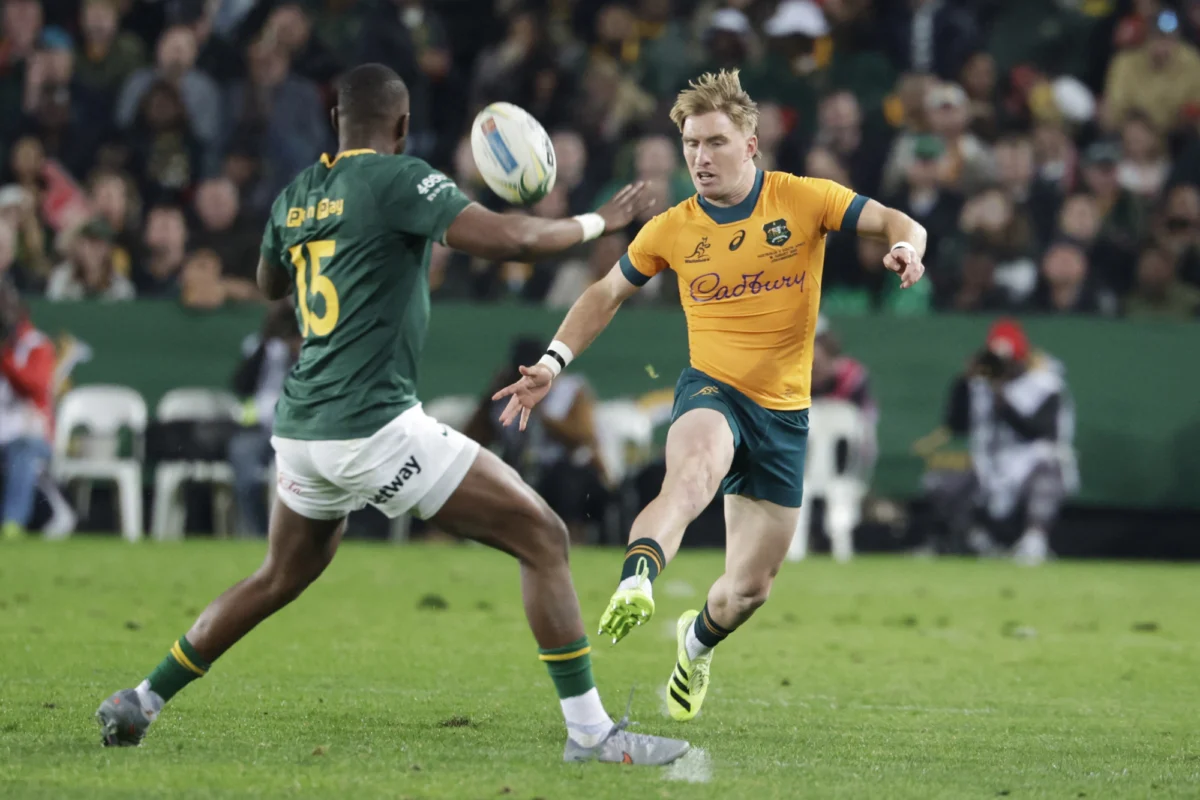
The rugby world turns its collective gaze to Western Australia this Sunday, September 27, 2026, as Optus Stadium in Perth prepares to host one of the most anticipated fixtures of the international calendar. In a clash of southern hemisphere titans, the Australian Wallabies, under the stewardship of new head coach Les Kiss, are set to face the formidable might of the South African Springboks.
For Kiss, this is not merely another international Test; it is the sternest examination of his tenure thus far. Having navigated a turbulent start to the 2026 season, the Wallabies now find themselves standing at a crossroads. Facing the reigning champions, a team defined by physical dominance and tactical clinicality, will reveal exactly how much progress this revamped Australian squad has made in their quest to reclaim their status among the global elite.
The State of the Nation: A Tale of Two Trajectories
The narrative of 2026 has been a roller-coaster for both nations, albeit with significantly different emotional arcs.
The Wallabies’ Resurgence
The year began under a cloud of uncertainty for Australia. The implementation of the new Nations Championship structure—a bi-annual global competition designed to heighten the stakes of international rugby—brought immediate pressure. Early defeats to European heavyweights Ireland and France raised questions about the depth and resilience of the squad.
However, the response from Les Kiss’s camp has been nothing short of commendable. Since those opening setbacks, the Wallabies have remained undefeated, building a quiet but significant momentum. Victories over Italy and Japan provided the necessary confidence, but it was their recent tour of Argentina—returning with a win and a hard-fought draw—that signaled a shift in mentality. The Wallabies are now playing with a defensive structure that is far more difficult to break down, and their ability to grind out results on the road suggests a maturity that has been absent in recent years.
The Springboks’ Dominance
South Africa, conversely, arrives in Perth with the swagger of a team that has successfully defended its reputation in the "Greatest Rivalry" tour. Despite stumbling in the opening Test against the All Blacks, the Springboks demonstrated the hallmark of a world-class side: the capacity to adapt. By winning the subsequent three matches in the series, they effectively dismantled the New Zealand threat, proving that their tactical depth and bench impact remain the envy of the rugby world.
A Chronology of the 2026 Campaign
To understand the weight of this upcoming encounter, one must look at the path both teams have carved out over the last nine months.
- January – March: The Nations Championship Launch. Australia’s initial struggle against northern hemisphere powerhouses served as a harsh baptism for the new coaching staff. The focus shifted immediately to fundamental improvements in the set-piece and breakdown efficiency.
- April – June: The Consolidation Phase. The Wallabies began to find their rhythm, securing consistent results against Tier Two and rising Tier One opponents.
- July – August: The "Greatest Rivalry" Series. South Africa’s intensive series against the All Blacks pushed them to their physical limits. The 3-1 victory proved their resilience and their ability to withstand immense pressure in high-stakes environments.
- September: The Perth Lead-Up. Both teams have been finalizing their preparations in Western Australia, with the Wallabies focusing on high-tempo offensive drills and the Springboks refining their trademark "Bomb Squad" rotation system.
Supporting Data: Tactical Analysis
The statistics from the 2026 season offer a compelling insight into the matchup. While the Springboks lead the tournament in terms of gain-line success and scrum dominance, the Wallabies have surged to the top of the charts in defensive completion rates and turnover frequency.
Les Kiss has emphasized a "territory-first" approach, a departure from the high-risk, high-reward style that plagued the Wallabies in previous seasons. By forcing the Springboks into a game of attrition, Australia hopes to neutralize the South African penchant for explosive, game-breaking runs. However, the data also highlights a concerning trend for the home side: the penalty count. Against a team as clinical from the tee as South Africa, any lack of discipline will be punished ruthlessly.
Official Responses and Tactical Outlook
Speaking at the pre-match press conference in Perth, Les Kiss was measured in his assessment of the challenge. "We respect the Springboks, there is no team in the world that commands more respect right now," Kiss noted. "But we are not here to observe. We are here to compete. Our growth over the last four months has been about accountability. This Sunday is about seeing if that accountability holds up when the pressure is at its absolute maximum."
The South African camp has remained typically stoic. Captaincy figures within the squad have downplayed the "favourites" tag, noting that Perth has historically been a difficult venue for visiting teams. The Springbok coaching staff, meanwhile, has hinted at a strategic shift in the forward pack, suggesting they may look to exploit the Wallabies’ lineout—an area that has been a focus of improvement for Australia but remains their potential Achilles’ heel.
Implications for the Bledisloe Cup
While this match holds significant weight in the context of the Nations Championship, its implications stretch further toward the horizon. Australia is currently in a vital warm-up phase for their annual Bledisloe Cup clashes against the All Blacks.
The match against South Africa serves as the ultimate "stress test" for the Wallabies. A win—or even a narrow, high-performance defeat—would provide the squad with the psychological foundation necessary to face New Zealand. Conversely, a heavy defeat could shatter the momentum built over the summer, casting doubt on the team’s readiness for the most historic rivalry in the sport.
How to Witness the Conflict
As the excitement builds, fans are reminded of the logistics for this landmark event. The match kicks off at 10.45am BST / 11.45am SAST / 7.45pm AEST at the iconic Optus Stadium.
Broadcasting Information
- Australia: Fans can catch the action for free via Channel 9 and the 9Now streaming platform.
- United States: World Rugby is providing free live streams through their official RugbyPass TV platform. Viewers are advised to register in advance to avoid delays.
- Global Access: For those traveling or located in regions with restricted access, a VPN remains the most effective tool to bypass geo-blocking. Tech experts consistently rank NordVPN as a top-tier service for maintaining a secure and stable connection to regional broadcasts.
Essential Viewing Details
- Date: Sunday, 27 September 2026
- Kick-off: 7.45pm AEST / 5.45pm AWST (local)
- Venue: Optus Stadium, Perth
Final Reflections: The Psychological Edge
As we approach kick-off, the atmosphere in Perth is electric. The match represents the intersection of two distinct rugby philosophies: the structured, disciplined evolution of the new-look Wallabies and the raw, world-beating power of the Springboks.
For the spectators, this is a rare opportunity to see the very best of the southern hemisphere at their peak. For Les Kiss, it is a defining moment. Will this be the game where the Wallabies announce their full return to the top table of world rugby? Or will the South African machine prove once again that they are the immovable object of the modern game?
Regardless of the outcome, one thing is certain: the pitch at Optus Stadium will witness a collision of wills that will be remembered long after the final whistle. The journey to the top of the world rankings is never linear, but on Sunday, the path will become significantly clearer for one of these two proud nations.
For those looking to keep up with the latest analysis and player interviews, the latest edition of Rugby World magazine is available now in both digital and print formats. Follow our social media channels on Facebook, Instagram, and Twitter/X for live updates, post-match analysis, and behind-the-scenes content throughout the weekend.
Note: We recommend VPN services strictly for legal, recreational use. We do not endorse or support the unauthorized consumption of pirated content or the circumvention of copyright laws.

 Nana Wu
 Nana Muazin
 Neng Nana
 Lina Hope
 Sagoh
Sagoh
 Iffa Jayyana