
 Ali Ikhwan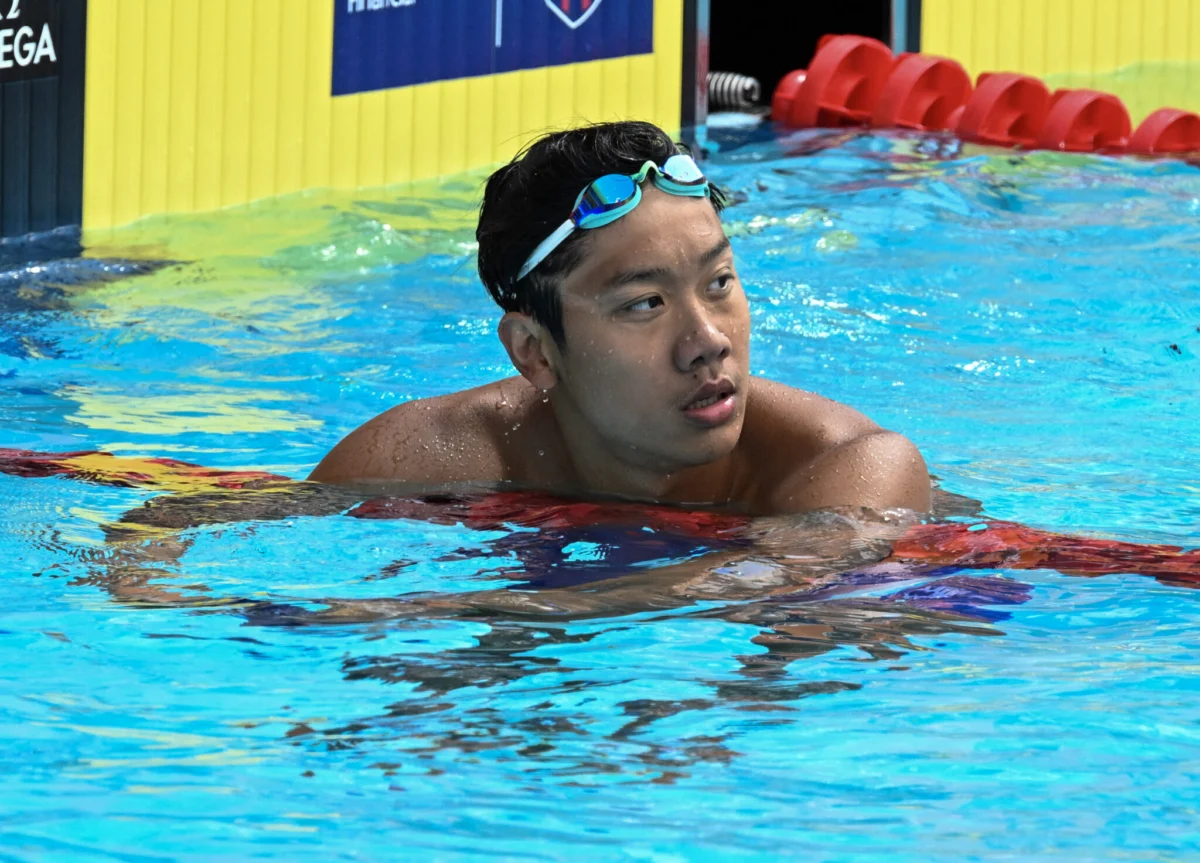
The curtain has officially fallen on the swimming competition at the 2026 Asian Games in Tokyo, marking the end of a week characterized by extraordinary athleticism, record-breaking performances, and a seismic shift in the regional power balance. As the final evening of competition unfolded, the atmosphere in the arena was electric, with capacity crowds witnessing legendary veterans share the stage with a new generation of aquatic stars.
For the Chinese delegation, the night was a crowning achievement, solidifying their dominance in the pool and setting new benchmarks for the future of Asian swimming. However, the evening also provided space for individual brilliance from Taiwan and Japan, ensuring that the final session remained a competitive, high-stakes spectacle until the very last touch.
The New Face of Asian Swimming: Zhang Zhanshuo’s Historic Run
If the 2026 Asian Games were to be remembered for one individual, it is undoubtedly 19-year-old Zhang Zhanshuo. The young prodigy concluded his campaign by etching his name into the history books, becoming the first athlete across any sport to secure seven gold medals in a single Asian Games.
In the men’s 400m freestyle, Zhang delivered a masterclass in endurance and speed. Clocking a blistering 3:41.28, he obliterated the longstanding Games Record of 3:41.53, a mark held by the legendary Korean Olympic champion Park Tae Hwan since 2010. To put the feat into perspective, Zhang entered this competition with a personal best of 3:41.55, achieved at the China Open in March. The ability to find that extra gear under the pressure of a multi-event program—having raced the 800m free and a demanding 4x100m relay just 24 hours prior—speaks to his generational talent.
Chronology of the Final Night: A Session of Records and Shifts
The final session was a fast-paced sequence of finals, each carrying significant weight for the participating nations.
Women’s 50m Butterfly
The evening commenced with the women’s 50m butterfly, where Zhang Yufei further cemented her legacy. Touching the wall at 25.41, the Olympic champion secured her 12th Asian Games gold medal, officially becoming the most successful swimmer in the history of the event. Her teammate, Wu Qingfeng, followed closely to secure a 1-2 finish for China, while Japanese fan-favorite and 2018 MVP Rikako Ikee rounded out the podium with a 25.97.
Men’s 50m Breaststroke
In the men’s 50m breaststroke, Olympic medalist Qin Haiyang successfully defended his title with a 26.68 performance. While shy of his 26.20 Asian Record, it was sufficient to hold off a charging Liu Junjie (26.99). The standout story, however, was 17-year-old Shin Ohashi of Japan, who continues to push the boundaries of youth swimming. His 27.01 bronze medal performance kept the pressure on the World Junior Record, signaling that he is poised to dominate the breaststroke discipline in the coming Olympic cycle.
Women’s 800m Freestyle
The women’s 800m freestyle witnessed a repeat of the podium hierarchy seen in both the 400m and 1500m events. Li Bingjie secured gold with a time of 8:24.02, collecting her 12th career Asian Games medal. Singapore’s Ching Hwee Gan continued her remarkable trajectory, earning silver in 8:26.25—a massive personal best and a new Singaporean national record. Ichika Kajimoto of Japan took bronze, maintaining the consistency that has defined her career.
Men’s 200m Backstroke
The most shocking result of the evening came in the men’s 200m backstroke. Xu Jiayu, the Chinese stalwart who had been undefeated in Asian Games backstroke events for over a decade, was finally dethroned. Japan’s Kodai Nishiono surged to a 1:56.42 victory, narrowly edging out Korea’s Lee Juho (1:56.58). Xu finished in 1:56.73, marking a rare moment of vulnerability for the veteran, who is already looking ahead to the 2028 Los Angeles Olympics.
Men’s 200m Butterfly
Taiwan made a statement in the 200m butterfly, with Kuan-hung Wang capturing the gold in 1:55.05. It was a tactical victory for Wang, who successfully held off China’s Xu Fang and Korea’s Kim Minseop. This win marked a significant breakthrough for Taiwan, demonstrating the growing depth of talent outside the traditional regional powerhouses.
Women’s 4x100m Medley Relay
The night reached its crescendo with the women’s 4x100m medley relay. The Chinese quartet of Peng Xuwei, Tang Qianting, Zhang Yufei, and Yu Yiting combined for a 3:54.55 finish, setting a new Asian Games Record and ending Japan’s four-Games winning streak in the event.
Supporting Data: Comparative Analysis of Performance
The data from the 2026 Games suggests that the region is entering an era of unprecedented speed. The shattering of multiple long-standing records—such as Park Tae Hwan’s 400m free record and Japan’s 2018 relay record—indicates that training methodologies and athlete development programs across Asia have reached a new zenith.
Furthermore, the rise of swimmers like Ching Hwee Gan and Kuan-hung Wang highlights a shift in competitive parity. It is no longer a binary battle between China and Japan; the participation and medal success of Singapore, Taiwan, and South Korea prove that the competitive landscape is widening.
Official Responses and Strategic Perspectives
While the athletes remained focused on their performances, the broader implications were addressed by coaching staff and officials in the post-race press conferences.
"We came here with a mission to test our depth," noted a member of the Chinese coaching staff. "Seeing young athletes like Zhang Zhanshuo rise to the occasion validates our long-term strategy for the LA 2028 cycle."
Conversely, the Japanese team, despite falling short in several key events, remains optimistic about the future of their youth movement. "The emergence of Shin Ohashi and Kodai Nishiono gives us the confidence that the Japanese swimming program remains a global force, even amidst a period of transition," an official stated.
The absence of key figures—such as Korea’s Kim Woomin due to injury and Japan’s Tomoru Honda due to disciplinary issues—served as a reminder of the fragility of elite sport. These absences opened doors for new stars to emerge, fundamentally changing the narrative of the 2026 Games.
Implications: The Road to Los Angeles 2028
The conclusion of the 2026 Asian Games serves as a critical checkpoint on the road to the 2028 Los Angeles Olympics. Several key trends have emerged:
- The Dominance of Versatility: The success of Zhang Zhanshuo and Zhang Yufei proves that the modern elite swimmer must be a multi-event threat. The ability to pivot from distance freestyle to sprint relays is now the gold standard.
- The Maturation of the Korean and Singaporean Programs: With national records falling across these games, these nations are no longer just "participants"—they are now legitimate threats to the podium in international relay and individual events.
- The Changing of the Guard: As veterans like Xu Jiayu face tougher competition from the younger generation, the next two years will be defined by how the "old guard" adapts their training to defend their positions against the sheer physical speed of the 17-20 age cohort.
As the athletes head home, the results of these Games will be meticulously analyzed. For the gold medalists, the goal is now to maintain this form on the world stage. For those who fell short, the 2026 Asian Games provided the essential data and experience needed to recalibrate. One thing is certain: the speed shown in Tokyo has set a high bar, and the global swimming community is watching closely as Asia prepares for the next phase of the international circuit.

 Basiran
 Siti Muinah
 Sagoh
Sagoh
 Raul Delapena Setiawan
 Jia Lissa

 Asro
Asro