Pevita Pearce
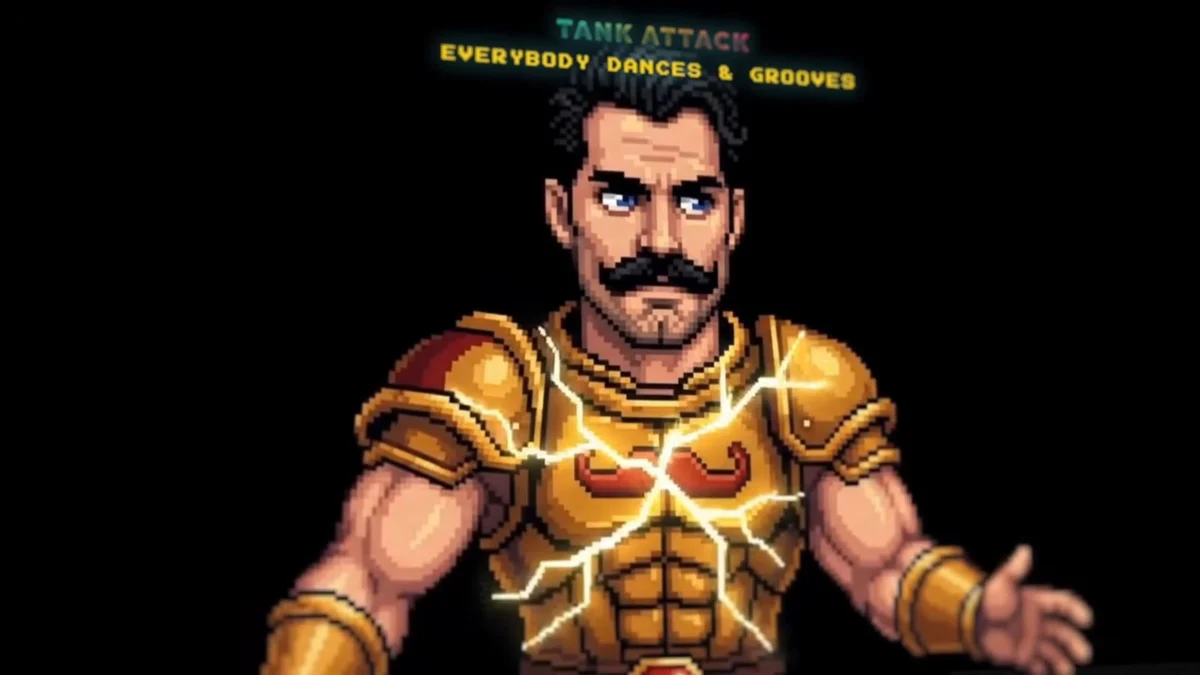
In the landscape of modern digital marketing, the line between an interactive advertisement and a genuine gaming experience has often been blurred, usually to the chagrin of consumers. When it was announced that Hollywood icon Henry Cavill—known as much for his devotion to gaming and Warhammer 40,000 as his blockbuster roles—would be collaborating with Google to create a video game using artificial intelligence, the industry reaction was predictably cynical. Critics braced for another shallow, corporate-mandated "brand experience" that prioritized marketing over playability.
However, the launch of Mustache Protocol on November 11 has defied these expectations. Far from being a buggy, AI-generated novelty, the 16-bit side-scrolling platformer has garnered surprisingly warm reviews, proving that with the right creative vision, generative AI can serve as a legitimate tool for game development.
The Core Concept: A Meta-Commentary on CGI Disasters
At its heart, Mustache Protocol is a masterclass in self-deprecating humor. The game’s premise revolves around a tongue-in-cheek crusade to stop "rogue CGI artists" from erasing every mustache on the planet. This is a direct, hilarious nod to the infamous post-production controversy surrounding the 2017 Justice League film, where Cavill’s facial hair was digitally scrubbed from his face, resulting in a performance that became a pop-culture punchline.
The game is a retro-styled action platformer that feels like a love letter to the 8-bit and 16-bit eras of gaming. Players navigate a series of environments, utilizing a unique, comb-shaped sword to dispatch enemies. The mechanics are simple yet tight, avoiding the common pitfalls of AI-generated software, such as broken collision detection or unplayable frame rates.
Beyond the core combat, the game is peppered with deep-cut references for the hardcore Cavill fan. Players can collect steaks to "bulk up," unlocking new combat maneuvers including his iconic "arm reload" gesture. His character model dons Warhammer-inspired armor, complete with a red mustache emblem where the House of El sigil would traditionally sit. Furthermore, his beloved dogs, Kal and Baggins, make recurring cameos, adding a personal, human touch to a project built by machine learning.
A Chronology of Creation: From Concept to Browser
The journey of Mustache Protocol was documented through a three-part behind-the-scenes series produced in partnership with Google. Unlike traditional game development, which requires years of specialized labor, this project showcased the agility of Google’s AI toolset.
The Phases of Development:
- The Conceptualization: Cavill initially met with Google’s creative team to brainstorm, focusing on how to bridge his personal interests—gaming, fitness, and his penchant for dry humor—with the capabilities of Google’s AI.
- The Prototyping: Utilizing "Antigravity," a specialized AI integration tool, Cavill and the team translated spoken-word prompts and creative ideas directly into game mechanics and environmental assets. This phase was where many expected the project to collapse, as translating natural language into functional code is notoriously difficult.
- The Polish: In the final weeks leading up to the launch, the focus shifted from pure generation to refinement. By the time the project reached its final build, it was hosted as a browser-based game, accessible to anyone on desktop or mobile devices without the need for high-end hardware.
The launch on November 11 marked the conclusion of the video series, effectively shifting the project from a promotional curiosity to a public service.
Supporting Data: Why Reviewers Are Surprised
The skepticism surrounding Mustache Protocol was rooted in the recent trend of "corporate gaming." From Wendy’s 15-hour RPG to various fast-food branded apps, the history of brand-led gaming has been littered with shallow experiences designed solely to capture data.
- Digital Trends’ Verdict: Reviewers noted that the game’s mechanics were "easy to learn" and, crucially, stable. The fact that an AI-generated product did not crash or suffer from critical software failures was cited as a major victory for the development team.
- The Inverse Analysis: Inverse highlighted the game’s appeal to those who miss the "old-school" feel of side-scrollers. By leaning into the limitations of the retro aesthetic, the AI was able to effectively mimic the charm of early platformers, a genre that translates well to browser-based play.
- Performance Metrics: While the game is free, its engagement metrics have been high, bolstered by the "charitable kicker." Google has pledged to donate $11 to the Movember Foundation—a global charity focused on men’s health—for every playthrough of the game until November 30, with a cap of $500,000. This gamified altruism has driven significant traffic, turning a digital advertisement into a tangible force for good.
Implications for the Future of AI in Game Development
The success of Mustache Protocol raises profound questions about the democratization of game development. If a project of this quality can be produced by a single actor using AI tools, what does that mean for the traditional studio model?
Lowering the Barrier to Entry
Google has already signaled its intent to push this technology further, recently allowing users to create their own Android applications using AI-driven interfaces. This removes the "coding wall" that has traditionally prevented creative thinkers without technical backgrounds from entering the industry. Mustache Protocol serves as the "proof of concept" for this new era.
The Hybrid Model: Human Vision + AI Execution
The critical takeaway is that the AI did not replace the creative vision; it amplified it. Cavill’s involvement was not merely a celebrity endorsement; his specific requirements and his understanding of gaming tropes provided the "soul" of the project. The AI acted as the engine, but the human provided the steering.
However, industry experts caution that this does not necessarily signal the end of AAA game development. While AI can build a functional 16-bit platformer, the complex, massive-scale open worlds of modern gaming still require the deliberate, painstaking labor of thousands of developers. The danger, some argue, lies in smaller, independent studios being squeezed out by "AI-generated spam"—titles that lack the heart of Mustache Protocol but flood the market with low-effort content.
A Legacy of Digital Philanthropy
Perhaps the most impressive aspect of the Mustache Protocol launch is its integration of charitable giving. By tying the success of the game to Movember, Google and Cavill have successfully bypassed the "ad-fatigue" that plagues modern marketing. Users are not just playing an ad; they are participating in a fundraiser.
As of late November, the community response has been overwhelmingly positive. The game has become a case study in how to leverage high-profile celebrity interest with emerging technology to create a product that is both commercially viable and socially responsible.
In conclusion, while Mustache Protocol may have started as a playful experiment, it has ended up being a significant milestone. It has proven that with the right guidance, AI is not just a tool for automation, but a medium for creative expression. For Henry Cavill, it was a way to reclaim the narrative of his own "mustache-gate" disaster; for Google, it was a showcase of their technical prowess; and for the gaming community, it was a surprising, high-quality, and genuinely fun distraction that highlights the potential of a new, AI-integrated future.
As the November 30 deadline for the Movember donation drive approaches, the game continues to see steady play, cementing its place in the niche history of browser-based gaming. Whether or not this triggers a flood of copycat AI projects remains to be seen, but for now, Mustache Protocol stands as the gold standard for how brands can use AI to build something that people actually want to play.


 Evan Lee Salim
 Dwi Wanna

 Muslim

 Neng Nana

 Nana

 Iffa Jayyana