
 Muslim
By Paul Williams
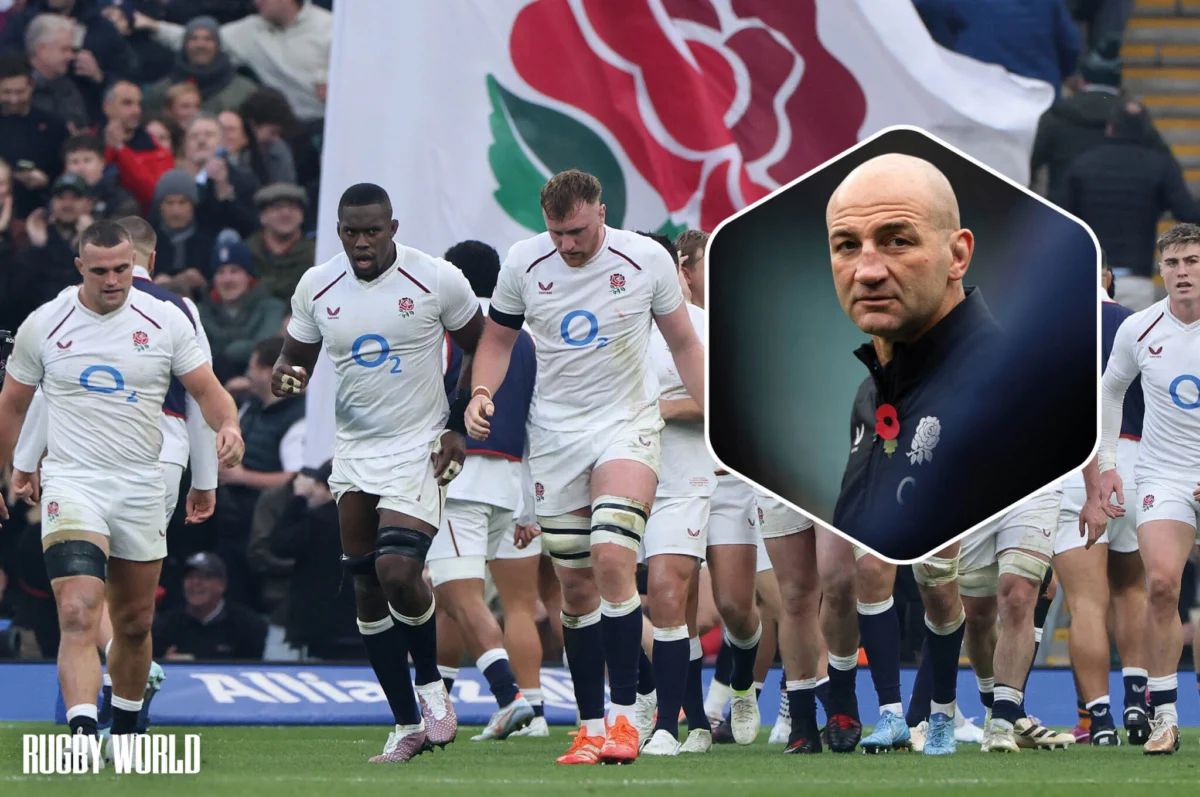
For a team emblazoned with the iconic red rose, England’s men’s rugby squad frequently finds itself in a peculiar drought—not of talent, but of recognition. Despite consistent performances and a squad depth that would be the envy of most Tier 1 nations, the media and the Twickenham faithful alike seem perpetually hesitant to offer the team their flowers. It is a psychological stalemate: a disconnect between the visible quality on the pitch and the tepid, often skeptical, reception from the stands.
While recent victories, such as the clinical 45-22 dismantling of Australia in the Nations Championship, suggest a team trending upward, the discourse remains dominated by doubt. When Ireland puts 42 points past Argentina or South Africa systematically dismantles an injury-ravaged Italy with the clinical precision of an industrial blender, the praise is universal. Yet, when England produces a high-octane, dominant display, the reaction is often characterized by a collective shrug. It is time to look past the narrative and evaluate the reality: England is a formidable force, and their current stagnation in the global rankings is a result of structural instability, not a lack of playing cattle.
The Foundation: An Industrial Tight Five
England has always operated with an industrial-grade tight five. For those of us who have followed the sport closely since the late 1980s, this has been the team’s constant. Whether in the era of amateurism or the modern professional grind, the English DNA is rooted in the set-piece. They are a team that can scrummage with conviction, clean out rucks with rhythmic violence, and assert physical dominance at the point of contact.
The current iteration is no different. The modern rugby landscape is littered with nations scrambling to unearth test-level tighthead props—a position where attrition is high and technical demand is extreme. England, conversely, has Joe Heyes. To watch Heyes is to watch a vintage Chesterfield sofa: immovable, structurally sound, and deceptively sophisticated. He provides the anchor upon which the English set-piece relies.
Behind him sit Maro Itoje and Ollie Chessum. If Itoje is the engine room’s most recognizable fixture, Chessum is its soul. Chessum’s work rate, lineout intelligence, and sheer defensive tenacity are of such a high caliber that he would arguably be the first name on the team sheet for any of the southern hemisphere giants. He is the quintessential modern forward—a hybrid of traditional grunt and 21st-century mobility.
The "Hammer Drill" Utility: Ben Earl
Much of the discourse surrounding Ben Earl has been unfairly skewed by his penchant for expressive celebrations, a "crime" that seems to irritate purists more than his actual performance levels warrant. It is a classic case of misplaced priorities. While critics focus on the theater of his post-try antics, they ignore the cold, hard data.
Earl is arguably the most complete 6/7/8 hybrid currently operating in the Northern Hemisphere. During the most recent Nations Championship window, he led the field in carries. He is a workhorse who defies the traditional archetypes of size. If you have ever had to manually dig out concrete posts after a storm, you know the difference between a massive jackhammer and a high-quality hammer drill: the latter is more efficient over time. Earl is that drill—compact, relentless, and capable of operating at a high frequency for 80 minutes.
Tactical Evolution: The Backs and the Greek God of Rugby
To label England as a one-dimensional pack-focused side is to ignore the tactical evolution of their backline. In fly-half Fin Smith, England has found a conduit for balance. Smith possesses the "cuteness" required to unlock tight defenses through subtle passing lanes, yet his long-range kicking game provides the control necessary to manage test-match territory.
The inclusion of Seb Atkinson has also proven to be a masterstroke. For seasons, England cycled through centers who were either purely carriers or purely distributors. Atkinson occupies the sweet spot, providing the linkage that allows England’s lethal wingers to operate in space.
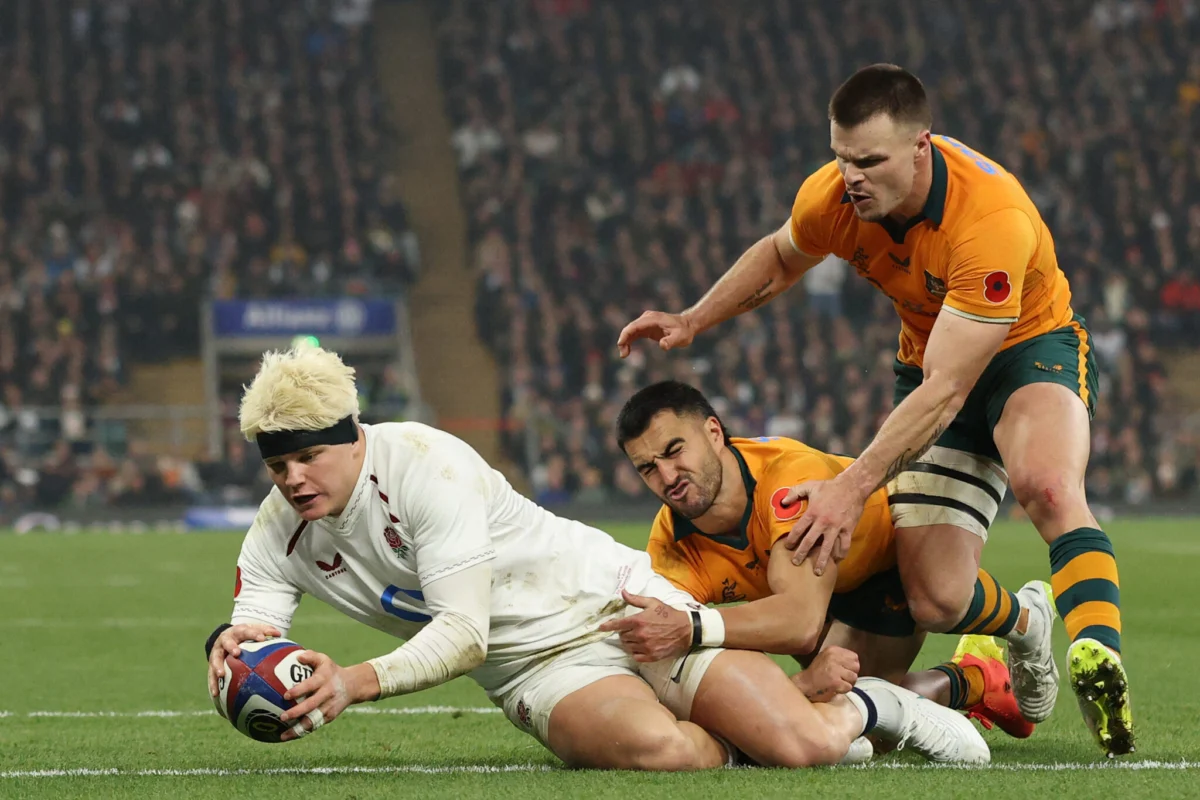
And then there is Immanuel Feyi-Waboso. To watch him is to witness an anomaly. In a 40-minute cameo against Australia, he produced more linebreaks than players who logged the full 80. His speed is a given, but his ability to shed tackles—even when defenders go low—is exceptional. If one were to describe him in mythic terms, he is the rugby equivalent of Pan: the bottom half is a rapid, charging bison, while the top half possesses the poise of a predator.
Chronology of the Current Standing
As of the November 2026 rankings, England sits in fifth place. While this may seem low for a nation with such a significant resource base, the mathematical reality is narrower than it appears. They are breathing down the necks of the third-ranked side, Ireland. Being in the top five, within striking distance of the global elite, is no small feat in a sport currently dominated by the sheer tactical superiority of South Africa and the relentless consistency of New Zealand.
| Rank | Team | Points | Change |
|---|---|---|---|
| 1 | South Africa | 93.09 | 0.00 |
| 2 | New Zealand | 92.65 | +0.38 |
| 3 | Ireland | 88.70 | +0.63 |
| 4 | France | 87.49 | +0.06 |
| 5 | England | 86.99 | +1.31 |
| 6 | Scotland | 84.40 | -0.38 |
The progression here is positive. England is gaining points and momentum. Yet, the question remains: why does the public discourse feel like a critique of table wine at a budget restaurant?
The Ghost of 2003 and the HR Problem
The answer lies in the heavy shadow cast by the 2003 World Cup victory. For many, that squad remains the gold standard—a team of eight forwards who could, quite literally, out-work a silverback gorilla. But 2003 was 23 years ago. It was an era before social media, before the modern tactical revolution, and before the professional game reached its current level of complexity. Living in the past is the fastest way to become irrelevant in the present.
However, there is a tangible, modern reason for the persistent anxiety surrounding the team: Steve Borthwick. The England camp, for reasons that remain opaque to the public, has suffered from a revolving door of staff that would trigger every alarm in a corporate HR department. Since 2022, the list of coaches, advisors, and specialists to cycle through the squad reads like a corporate restructuring gone wrong:
- Attack/Defence: Richard Wigglesworth, Lee Blackett, Martin Gleeson
- Skills/Kicking: Kevin Sinfield
- Defence: Felix Jones, Brett Hodgson, Joe El-Abd
- Forwards/Scrum: Matt Proudfoot, Richard Cockerill, Tom Harrison
- Conditioning/Advisory: Aled Walters, Andrew Strawbridge
This level of churn is unsustainable. A high-performance team requires cohesion, continuity, and a singular vision. When the backroom staff changes with such frequency, the players are forced to adapt to new voices, new systems, and new philosophies on a near-annual basis. It creates an atmosphere of instability that "leaks" into the media, providing a narrative of dysfunction that overshadows the quality of the on-field performance.
Implications for the Future
England has the players. They have the depth, the athleticism, and the technical skill to be genuine contenders for the world number one spot. The current squad is, by almost every metric, better than their current fifth-place ranking suggests. They are competitive against everyone except, perhaps, the South African juggernaut, which is currently operating in a league of its own.
The implication is clear: the bottleneck is not the talent on the pitch. The bottleneck is the leadership and the environment surrounding it. If England is to bridge the gap between "very good" and "world-class," they must address the internal fragmentation.
The players are doing their jobs. They are carrying, tackling, and scoring with a standard of excellence that deserves recognition. If the team is to reach its full potential, the organizational structure must catch up to the talent level of the individuals wearing the shirt. A fresh start at the head coach level might be the necessary catalyst to stop the "leaking" and allow the team to finally enjoy the fruits of their labor. Until then, the Red Rose will remain a team of immense potential, constantly fighting against a narrative of its own making.

 Asro

 Laily UPN

 Neng Nana

 Nana

 Iffa Jayyana
 Pevita Pearce
 Ali Ikhwan