
 Nila Kartika Wati
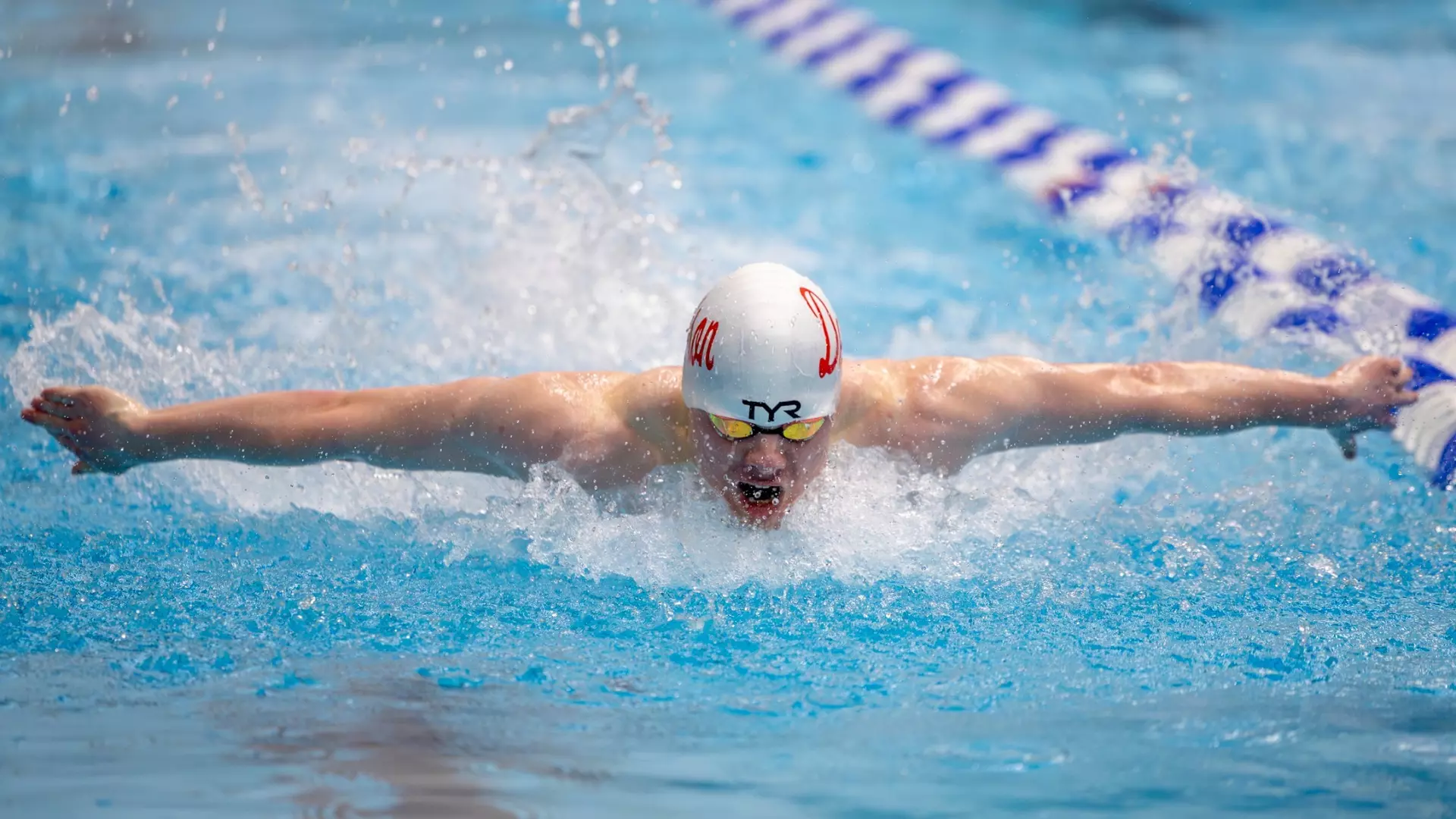
GRANVILLE, Ohio – The atmosphere at the Trumbull Aquatics Center reached a boiling point on Friday as the No. 1-ranked Denison University Big Red men’s swimming and diving team asserted their dominance at the 2026 Denison Invitational. Through two days of grueling competition, the host squad has ballooned its lead to a staggering 300 points, amassing a total of 1,581.5 points and leaving the rest of the national field in their wake.
As the Invitational heads into its final day, the narrative is clear: Denison is operating at a championship caliber. With a flurry of NCAA “B-Cut” qualifying times, two varsity records shattered, and a gritty performance on the diving boards, the Big Red are signaling that they are not just hosting this meet—they are owning it.
The Dominance: A Snapshot of the Big Red Surge
The second day of competition was defined by speed and technical precision. Across the morning preliminaries and the evening finals, the Big Red secured 27 B-Cut times, demonstrating unprecedented depth.
The highlight of the evening session occurred immediately upon the start of the relay events. The 200 Medley Relay team, comprised of Ben Bevill, Jack Hill, Cam Blevins-Mohr, and Nick Hensel, clocked in at 1:26.15. This blistering pace not only secured the gold but also obliterated the previous varsity record of 1:26.77, established just last year.
Not content with one record-breaking performance, Cam Blevins-Mohr returned to the water to etch his name into the annals of Denison history. In the 100 Butterfly, Blevins-Mohr touched the wall at 47.34, eclipsing a 26-year-old varsity record held by legendary swimmer Aaron Cole since 2000. It was a moment of pure athleticism that underscored the high level of preparation Denison’s coaching staff has instilled in their roster this season.
Chronology of the Day: From Boards to Lanes
The day began on the diving boards, where the competition was fierce. The men’s diving team faced off against some of the most elite programs in the nation, including a strong contingent from Emory University.
Diving: Mikkelson’s Resilience
First-year diver Zach Mikkelson provided the day’s most dramatic narrative arc. Competing against Emory’s Solomon Berkenwald, who eventually claimed the top spot, Mikkelson faced a mid-round crisis. After a consistent start to his 11-dive list, a misfire in the eighth round resulted in a meager 13-point score.
Rather than succumbing to the pressure, Mikkelson demonstrated the composure of a veteran. He rebounded immediately, nailing his final three dives with precision. His 11th and final dive—a Forward 2 ½ Somersault 1 Twist Pike—was a masterpiece of technical execution, earning him 66 points and securing a third-place finish with a regional qualifying score of 496.00.
Teammates Olliver Polsinelli and Seamus McCann also punched their tickets to the regional meet, placing sixth and seventh respectively. Polsinelli, who consistently logged scores in the 40s, peaked in the eighth round with a 51.30-point performance. McCann followed suit, surging in the seventh and eighth rounds with scores of 54.25 and 60.00, respectively, proving that the Big Red depth is just as potent on the boards as it is in the pool.
The Pool: Relays and Sprints
Following the diving sessions, the swimming events turned into a showcase for Denison’s freestyle and butterfly specialists. Jack Hill continued his stellar meet by winning the 200 Freestyle with a 1:35.77, while Ben Bevill added a victory in the 100 Backstroke at 47.76.
The evening concluded with the 800 Freestyle Relay, where the quartet of George Goins, Jack Hill, Ben Bricker, and Luke Swiggett posted a dominant 6:27.42, further extending the team’s lead and capping off a historic day for the host program.
Supporting Data: The Statistical Breakdown
The sheer volume of top-tier finishes for Denison is highlighted in the following performance metrics from the day’s finals:
| Athlete(s) | Event | Time/Score | Result |
|---|---|---|---|
| Blevins-Mohr | 100 Fly | 47.34 | 1st (Varsity Record) |
| Jack Hill | 200 Free | 1:35.77 | 1st |
| Ben Bevill | 100 Back | 47.76 | 1st |
| 200 Medley Relay | Relay | 1:26.15 | 1st (Varsity Record) |
| 800 Free Relay | Relay | 6:27.42 | 1st |
| Luke Swiggett | 400 IM | 3:52.51 | 3rd |
| Zach Mikkelson | 1-Meter Diving | 496.00 | 3rd |
The data confirms that the Big Red are not just winning; they are qualifying for the national stage at an alarming rate. By securing 27 B-Cuts in a single day, the team has essentially solidified a massive presence for the upcoming postseason championships.
Emory Athletics: The View from the Competition
While Denison dominated the headlines, the Emory University Eagles remained a formidable force, particularly on the women’s side. The Emory women continued to build their lead in the team standings, finishing the day with 1,457.5 points.
The Emory women’s success was anchored by Natalie Boorjian, who led a 1-2-3 sweep for the Eagles in the 200 Freestyle with a time of 1:50.18. On the boards, Maya Kriz secured a victory in the 1-meter diving event with a score of 397.95, while the women’s 800 Freestyle Relay team closed out the night in winning fashion, touching the wall at 7:24.53.
For the Emory men, the highlight was the performance of Solly Berkenwald on the diving board, whose score of 504.45 bested the field. In the pool, Zachary Spicer (100 Backstroke) and McKee Thorsen (100 Fly) secured third-place finishes, keeping the Eagles in third position in the team rankings with 1,129.5 points.
Implications: A Glimpse into the Postseason
The results from the 2026 Denison Invitational serve as a bellwether for the remainder of the collegiate season. For Denison, the performance indicates that the team is peaking at the right time. The breaking of a 26-year-old record by Blevins-Mohr is a strong indicator of the current athletic ceiling of the program.
Coaching Perspective
While official post-meet press conferences are pending, the performance of the team reflects a deliberate strategy by the Denison coaching staff to emphasize relay cohesion and technical versatility. By utilizing the depth of the roster—as evidenced by the 18 different athletes listed in the A and B finals—Denison is building a "next-man-up" culture that will be vital during the high-pressure environment of the NCAA Division III Championships.
Strategic Outlook
The Invitational concludes on Saturday, but the implications extend far beyond the weekend. The high number of NCAA B-Cut times logged means that the Big Red have effectively guaranteed that their roster will have a significant footprint at the national championships.
For the other participating programs, the meet has been an exercise in identifying gaps. Emory’s continued success on the women’s side proves that the gap between the top-tier programs in the nation remains narrow, and the intensity seen at this Invitational is essentially a "dry run" for the postseason.
As the swimmers and divers prepare for the final day of competition, the focus will shift from the sheer volume of points to the final tactical refinements. With the team lead secured, the Big Red will likely use the final day to test strategies, refine relay exchanges, and continue to push for even faster national qualifying times.
The 2026 Denison Invitational has not only provided a thrilling display of collegiate athleticism but has also established the Big Red as the team to beat. As the meet heads toward its conclusion on Saturday, all eyes will be on whether Denison can maintain this blistering pace or if the chasing pack can close the gap during the final sessions of the weekend. Regardless of the final points tally, the records broken and the standards set in Granville will likely remain a topic of conversation throughout the remainder of the season.

 Laily UPN
 Reynand Wu
 Layla Zulfa
 Nana Muazin
 Asro
 Sagoh
 Ammar Sabilarrohman