
 Ammar Sabilarrohman
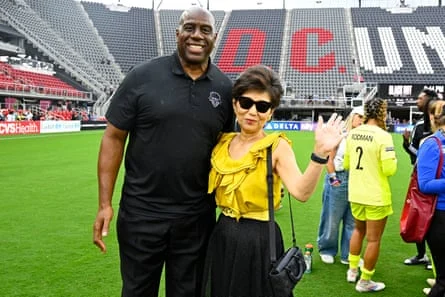
In the wake of the Washington Spirit’s electrifying 2-1 semi-final victory over the Utah Royals last weekend, the atmosphere at Audi Field was nothing short of euphoric. For the sixth time in 2026, the stadium reached its 20,000-seat capacity, a testament to the surging gravitational pull of the NWSL in the nation’s capital. The roar emanating from the stands—a raw, visceral sound of communal joy—served as a stark reminder of what happens when a city finds a team it can truly call its own.
As the final whistle blew, sealing the Spirit’s return to the NWSL championship match this Saturday against the Kansas City Current, the players did not retreat to the locker room. Instead, they gravitated toward the north end of the pitch to immerse themselves in the celebration with their supporters. Among them was USWNT superstar Trinity Rodman, whose trajectory has mirrored the club’s meteoric rise from local interest to national cultural force. In a moment of pure, unscripted triumph, Rodman claimed a fan’s flag, waving it defiantly against the D.C. skyline, before chasing down club owner Michele Kang to initiate a jubilant, impromptu dance.
It was a scene of unbridled optimism. Yet, just yards away, in the quiet, sterile offices of the stadium, the contrast between the Spirit’s ascension and the decline of their male counterparts could not have been more pronounced.
A Tale of Two Clubs: Diverging Fates at Audi Field
While the Spirit were celebrating their third consecutive championship appearance, media members in the press box were interrupted by a jarring digital notification: a press release from D.C. United, the Major League Soccer club that operates Audi Field. The announcement confirmed the dismissal of head coach René Weiler.
The juxtaposition was cruel in its efficiency. While the Spirit are currently the gold standard for success in District sports, D.C. United has become a cautionary tale of stagnation. The men’s team, once a crown jewel of the MLS with four championships to their name, has failed to reach the playoffs for nearly a decade. Their matches have devolved into somber, sparsely attended affairs, standing in stark contrast to the vibrant, sold-out festivals of energy that define the Spirit’s home games.
The irony is further deepened by the administrative reality: the Spirit share not only the stadium but also the training facilities with United. While the Spirit are not actively seeking to define themselves through the lens of their failing neighbors, the disparity in their fortunes has created a public narrative that is impossible to ignore. As United ownership lobbies the D.C. government for hundreds of millions in public funding to renovate an eight-year-old stadium, the public eye is increasingly turning toward the Spirit as the more worthy recipient of civic pride and investment.
The Cultural Refuge: Why the Spirit Resonate
Washington D.C. is a city grappling with a complex identity. It is a metropolis of immense diversity and progressive ideals, currently struggling to reconcile its values with the volatile political realities of the current presidential administration. With National Guard troops a permanent, uneasy fixture in the city streets—part of an ongoing, controversial anti-crime deployment—many residents feel a sense of displacement.
In this climate, Audi Field has become more than just a sports venue; it is a sanctuary. The Spirit’s success on the field is, of course, the primary draw, but the cultural impact stems from something deeper: the creation of a "safe harbor."
"I think it’s the way that we bring the fans into everything that we do," Trinity Rodman explained in an interview with the Guardian. "It’s not just a meet and greet. We truly do have conversations, and it feels like they’re our friends in a way. I think that’s amazing. The way that we celebrate, we’re always celebrating and interacting with them in the stadium—I feel like it’s a very safe, inclusive environment."
This sense of radical inclusivity is what keeps the stadium full. Rodman noted that at every game, there are newcomers finding comfort in the community. "Everybody feels comfortable when they come to a game; there’s so many friends made. The comfort in it, the safety, the inclusivity of it all—that is what draws people back."

The Infrastructure of Ambition: Beyond the Shipping Containers
The administrative relationship between the Spirit and D.C. United has long been a point of friction, particularly regarding the training facilities in Loudoun County, Virginia. These facilities, described by many as a "glorified collection of shipping containers," are no longer sufficient for a club of the Spirit’s stature.
Michele Kang, the club’s visionary owner, has made no secret of her ambition to build a standalone training facility. She understands that to maintain a world-class standard, the team requires an environment that reflects their status.
"I’m hoping in the future we do have that," Rodman said. "Especially with how great we’ve done and how this organization is as a whole, that would be the cherry on top. Sharing facilities isn’t the greatest for anybody; to be able to have our own facilities with our own logos on it, our own space, not worried about timing would be great, and I’m hoping it happens soon."
The path forward for the Spirit may lie in their growing synergy with other major sports entities. The club has developed strong ties with the NFL’s Washington Commanders, who are currently overseeing the development of a new, 65,000-seat stadium project backed by a $4 billion deal. Significantly, the promotion of women’s soccer was explicitly baked into the pitch for the public funding of this massive project.
Financial and Competitive Realities: The Road to the Final
As the Spirit prepare for the NWSL championship against the Kansas City Current, the financial stakes are as high as the competitive ones. While ticket prices have fluctuated, settling from a peak of $755 to around $350, the demand remains robust. This "perfect storm" of high-stakes play and high-demand ticketing signals that the NWSL has officially moved beyond a niche market.
The Spirit’s dominance is not merely a product of luck; it is the result of deliberate, strategic investment in talent, fan engagement, and cultural positioning. They have managed to capture the imagination of a city that, for years, has felt starved for a winner.
Implications for the Future
The potential move for the Spirit to a new, dedicated home—or even a more prominent role within the new Commanders’ stadium complex—would be a watershed moment for women’s sports in America. It would signal a departure from the "tenant" model, where women’s teams are treated as secondary residents, to an "anchor" model, where they are the primary driver of revenue and civic excitement.
If the Spirit continue to win, and if their management continues to prioritize the fan-player connection that has made them so beloved, the question will no longer be whether they can thrive in D.C., but whether the city can keep pace with their ambitions. The success of the Spirit proves that the appetite for professional, high-level, and inclusive women’s sports is not just a trend—it is a permanent, foundational shift in the sporting landscape.
As Saturday’s final approaches, the eyes of the soccer world will be on Audi Field. Whether they lift the trophy or not, the Washington Spirit have already won the most difficult battle: they have become the beating heart of their city. For a community looking for a reason to cheer, for a reason to gather, and for a reason to hope, the Spirit have provided the answer. And in the District, that is worth more than any championship ring.

 Asro
 Raul Delapena Setiawan
 Sagoh

 Lina Hope
 Nana Muazin
 Suro Senen