
 Asep Darmawan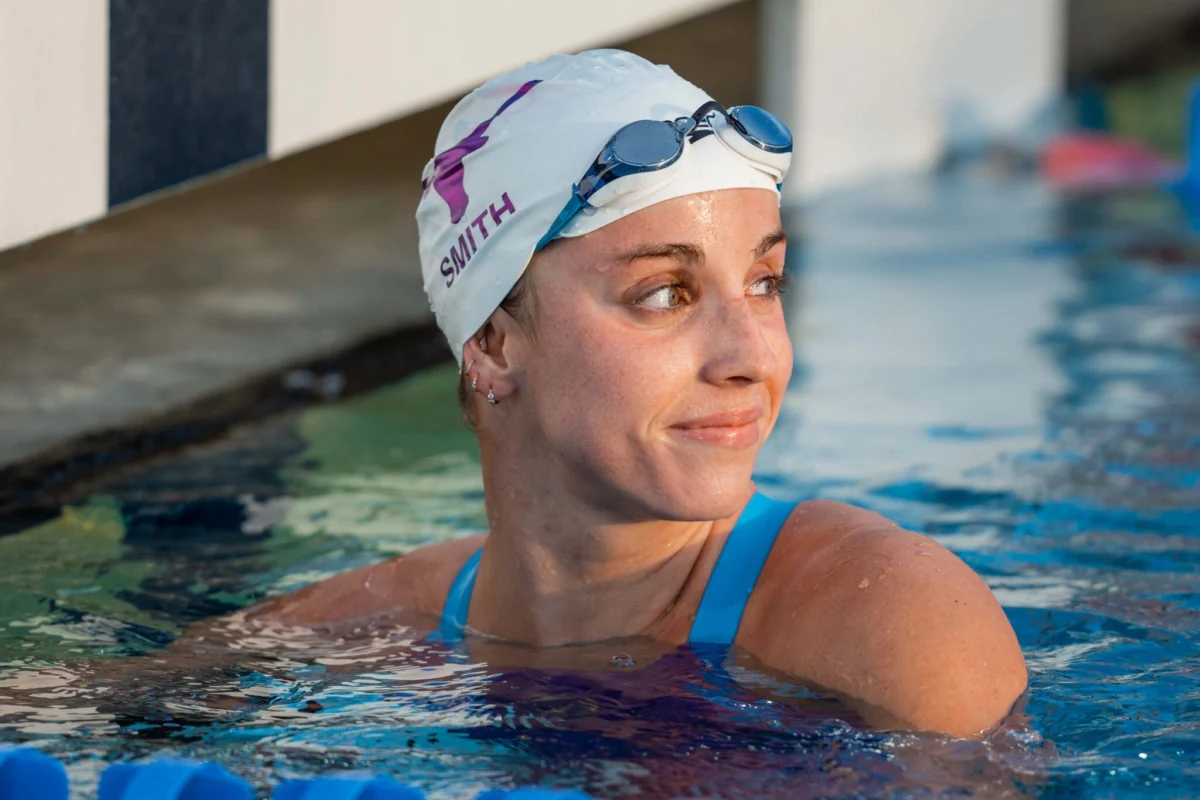
The atmosphere at the Lee and Joe Jamail Texas Swimming Center in Austin was electric this Thursday as the 2026 Speedo Sectionals entered its second day of competition. While Sectionals often serve as a proving ground for collegiate hopefuls and rising age-group talents, this year’s edition in Austin has been transformed into a high-octane showcase for some of the world’s most decorated professional swimmers.
Headlining the evening were Olympic icons Regan Smith and Simone Manuel, both of whom secured their second victories in as many days. Their dominant performances underscored not just their individual form, but the depth of the training environment currently being cultivated in Texas. As the swimming community looks toward the next major international milestones, these results in Austin serve as a potent reminder of the standard required to compete at the absolute pinnacle of the sport.
The Dominance of Regan Smith: A Backstroke Masterclass
Regan Smith, the world record holder in the 100-meter backstroke, continued her blistering pace on Thursday night. Fresh off a commanding win in the 200-meter butterfly on opening night, Smith returned to the pool to assert her authority in her signature event.
Smith touched the wall in 57.78, establishing herself as the only athlete to dip under the 1:02 mark during the session. Her performance was a study in controlled aggression. During the morning preliminary rounds, Smith clocked a 58.27, showing a measured strategy with a back-half focus (28.44/29.83). In the final, she opted to accelerate the tempo from the starting blocks. She attacked the first 50 meters with a 27.93 split and maintained her momentum to clock a 29.85 on the return leg.
This performance is particularly notable given Smith’s historic context. Her world record of 57.13, set at the 2024 Olympic Trials, remains the gold standard in the event. However, her consistency this season—including a 57.49 at the Fort Lauderdale Open in May—places her at the top of the 2025-26 world rankings. By producing a sub-58-second effort in an in-season meet, Smith is signaling that her technical foundation is rock-solid, leaving little room for error for her international rivals as the season progresses.
Simone Manuel’s Strategic Masterpiece in the 200 Freestyle
If Smith’s victory was a display of raw, front-end power, Simone Manuel’s triumph in the 200-meter freestyle was a masterclass in tactical patience. Manuel, who had already set a season-best time in the 100-meter freestyle on Day 1, faced a stiff challenge from Erin Gemmell in the longer sprint.
The race was a tight contest from the outset. At the halfway turn, Manuel trailed Gemmell by 0.28 seconds (56.44 to 56.72). Rather than panic, Manuel utilized the third length of the pool to bridge the gap, executing a calculated 29.90 split to draw nearly even. The final 50 meters became a test of endurance and resolve. Manuel edged out Gemmell with a 30.08 final split compared to Gemmell’s 30.20, ultimately touching the wall in 1:56.70.
The margin of victory was razor-thin—just seven one-hundredths of a second—but it provided a clear picture of Manuel’s current physical state. Her time was only four one-hundredths shy of her season-best (1:56.66), a time that ranks her 21st in the world. For Gemmell, the silver medal performance of 1:56.77 confirmed her status as a world-class contender, sitting just behind her own season-best of 1:56.38, which currently ranks 15th globally.
The depth of the field was further highlighted by third-place finisher Nikolett Padar. The Hungarian standout, currently training as a Longhorn, utilized a powerful back-half strategy (29.96/29.74) to post a 1:57.62. Perhaps the most exciting development of the race, however, was the performance of Lillie Nesty, who broke the 1:59 barrier for the first time in her career. Her 1:58.34 was a massive personal best, slashing over a second off her previous record of 1:59.40 and marking her as a name to watch in the coming seasons.
Carson Foster’s Command of the 400 Individual Medley
While the women’s events saw high-profile victories, the men’s competition was anchored by an exceptional showing from Carson Foster in the 400-meter individual medley. Foster, a perennial force in the IM events, navigated the grueling race with clinical precision.
Foster touched the wall in 4:11.37, gradually extending his lead over runner-up Rex Maurer (4:14.47) throughout the first 300 meters. The middle portion of the race—specifically the breaststroke leg—saw Foster exert his dominance, building a cushion that allowed him to hold off a charging Maurer during the final freestyle lap.
Foster’s performance reinforces his status as a world-class IMer. His season-best of 4:07.02, recorded at the U.S. Open, remains the third-fastest time in the world this season. For Maurer, the night was equally productive; his 4:14.47 shaved more than a second off his previous season-best from the Longhorn Elite Invite, catapulting him to 23rd in the current world rankings.
Chronology of the Evening’s Successes
The session unfolded with a clear narrative of veteran consistency meeting emerging talent. The evening’s events were characterized by:
- Early Session: The preliminary heats established the hierarchy, with Smith and Manuel pacing their respective fields. The atmosphere was focused, with the professional contingent setting a professional tone that trickled down to the younger swimmers.
- Mid-Session: The women’s 200 free final served as the emotional peak of the evening. The back-and-forth duel between Manuel and Gemmell provided the crowd with the most competitive finish of the day, highlighting the technical adjustments being made in early-season training cycles.
- Late Session: The men’s 400 IM concluded the high-intensity portion of the night. Foster’s ability to maintain a high-level stroke rate despite the fatigue of the 400 IM was the technical highlight of the men’s program.
Supporting Data and Statistical Significance
To understand the weight of these performances, one must look at the global context. In swimming, season-best times are not merely statistics; they are markers of an athlete’s physiological readiness for championship-season tapering.
| Athlete | Event | Result | Season-Best | World Rank (Approx) |
|---|---|---|---|---|
| Regan Smith | 100 Back | 57.78 | 57.49 | 1st |
| Simone Manuel | 200 Free | 1:56.70 | 1:56.66 | 21st |
| Erin Gemmell | 200 Free | 1:56.77 | 1:56.38 | 15th |
| Carson Foster | 400 IM | 4:11.37 | 4:07.02 | 3rd |
These figures indicate that the Texas-based athletes are operating at a level that puts them firmly in the hunt for podium spots at upcoming international meets. Even in a "Sectional" environment, the times are comparable to high-level Grand Prix or Pro Swim Series performances.
Official Perspectives and Implications
While formal post-race interviews were sparse, the implications of the performance were clear to those in attendance. Coaches and analysts noted that these performances were "training-based," meaning the athletes have not yet entered a full taper phase.
For Regan Smith, the ability to maintain sub-58 rhythm in the 100 back during an in-season meet suggests that her technical efficiency is higher than at any point in her previous training blocks. For Simone Manuel, the consistency in the 200 free is a positive sign for her versatility; her ability to transition from the 100-meter sprint to the 200-meter endurance test is crucial for relay considerations and individual medal potential.
The 2026 Speedo Sectionals in Austin are proving to be more than just a regional event. They are a staging ground for the next chapter of American swimming dominance. As the meet continues, the focus will shift to the longer events and relays, where the depth of the collegiate and professional programs will be fully on display.
Conclusion
The second night of the 2026 Speedo Sectionals in Austin was a testament to the enduring excellence of its professional headliners. Through the dominance of Regan Smith, the tactical brilliance of Simone Manuel, and the technical precision of Carson Foster, the swimming world received a masterclass in elite preparation. As these athletes look ahead to the remainder of the season, the results in Austin provide a foundation upon which they will undoubtedly build toward future global success. The competition not only highlights their individual greatness but serves as a beacon for the next generation of swimmers striving to match their standards on the national and international stage.

 Sagoh
Sagoh
 Nana Muazin
 Neng Nana
 Nana Wu
 Lina Hope

 Iffa Jayyana