
 Lina Irawan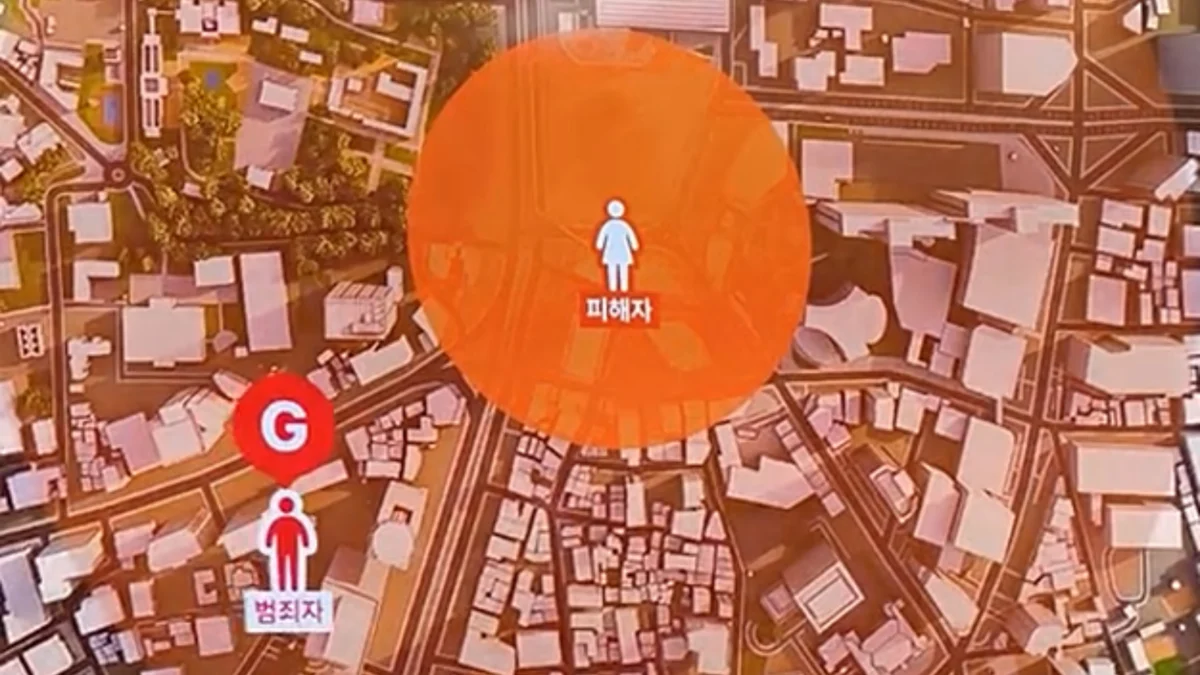
In a significant technological shift in law enforcement, the South Korean government has officially launched a specialized mobile application designed to provide stalking victims with real-time, granular location data of their alleged perpetrators. The initiative, which went live in late June, marks a departure from passive alert systems, shifting the power dynamic by granting victims the ability to visualize the movements of those legally mandated to wear electronic ankle monitors.
As of September 2026, approximately 400 victims have been enrolled in the program, a pilot effort that represents the intersection of public safety, judicial oversight, and personal autonomy. While proponents argue that the technology provides a vital lifeline for those living in fear, the rollout has reignited a fierce national debate regarding whether the burden of monitoring dangerous individuals should fall upon the state or the vulnerable.
The Evolution of Protective Technology
For years, the South Korean government relied on a rudimentary alert system to manage stalking cases involving electronic monitoring. Under the previous framework, victims received generic text messages when a suspect entered a pre-defined perimeter. These notifications were notably sparse, offering only distance metrics—such as "the suspect is within 1.5 kilometers"—without providing context, direction of travel, or a visual map.
The new application addresses these critical gaps. Once a suspect equipped with a court-ordered ankle monitor enters a 2-kilometer radius of a victim, the app activates, allowing the user to track the suspect’s location and movement patterns in real-time. The system includes an automated escalation protocol: if the distance between the suspect and the victim closes to within 1 kilometer, the system triggers an immediate alert to police and probation authorities, who are then mandated to contact the victim to provide support and assess the situation.
"Waiting with no idea what’s happening is deeply distressing," says Yoon Hyun-bong, director of the Seoul monitoring center. "A distance alone doesn’t tell you which direction he’s coming from, but seeing it on a map, you know where to hide." By providing this data, the government aims to reduce the "fog of war" that victims face, allowing them to make informed decisions about their physical safety rather than reacting blindly to a vague text message.
Chronology of a Crisis: The Rise of Stalking in Korea
The introduction of the tracking app follows a period of rapid escalation in reported stalking cases. Since the enactment of the Stalking Punishment Act in 2021—the first dedicated legislation of its kind in South Korea—reported incidents have tripled. By 2025, annual cases reached 44,687, a staggering figure that highlights a systemic issue rather than a localized one.
A Timeline of Legislative and Technical Response:
- 2021: South Korea enacts the Stalking Punishment Act, creating a legal framework to criminalize and prosecute persistent stalking behavior.
- 2024–2025: A massive surge in reports occurs, with police arresting 29,404 individuals on stalking-related charges.
- Late June 2026: The government rolls out the real-time tracking mobile application as an enhancement to the existing electronic monitoring program.
- September 2026: Initial reviews of the program commence, with 400 victims actively utilizing the software to monitor their safety.
Despite the legislation, the system faces significant bottlenecks. While police requested electronic monitoring for 1,187 suspects during the 2024–2025 period, the judiciary approved only 427 of these requests. This discrepancy between law enforcement’s assessment of risk and the court’s willingness to mandate ankle monitors remains a primary point of friction for victim advocates.
Supporting Data: The Scale of Surveillance
South Korea operates two high-tech electronic monitoring centers that function as the backbone of the country’s offender management system. Currently, these centers oversee more than 5,000 individuals—ranging from those convicted of sexual violence and homicide to those accused of persistent stalking.
The scale of the surveillance is immense. The centers process approximately 19,000 alerts daily. While the vast majority are routine or technical glitches, roughly 300 alerts per day are classified as "serious" incidents, requiring immediate intervention by a probation officer. The addition of 400 victims directly linked into this network via the new app adds a new layer of complexity to these centers’ daily operations.
Demographically, the data is sobering. Approximately 80% of reported stalking victims in South Korea are women. The intersection of this gender-based violence and the rise of digital connectivity has made the issue a focal point of the nation’s social policy discussions.

Official Responses and Judicial Hesitation
The government’s decision to launch the app is, in part, an admission that traditional police presence cannot be everywhere at once. By empowering the victim, the state aims to mitigate the response time lag that has historically resulted in tragedy. However, the legal hurdles remain high.
Critics within the legal community point out that the use of electronic tags is still relatively rare. The low approval rate by the courts suggests that judges are balancing the civil liberties of the accused against the protective needs of the victims. For an ankle monitor to be ordered, there must be a high threshold of evidence regarding the suspect’s potential for recidivism. Consequently, many stalking victims remain outside the scope of this new technology simply because the courts did not deem their specific case eligible for the electronic monitoring program.
The "Digital Burden" Controversy
Despite the technical benefits, the app has sparked a contentious debate regarding the ethics of "victim-led surveillance." Campaigners, including Sujeong Kim, director of the Korea Women’s Hotline, have voiced deep concerns about the psychological toll the app may impose.
"If the authorities did their job properly, who would want to check it themselves?" Kim asked in a recent statement. The argument suggests that by providing an app to the victim, the state is effectively outsourcing the responsibility of monitoring the perpetrator to the very person most at risk. This shift can force victims into a state of hyper-vigilance, where they are constantly checking their phones, potentially exacerbating the trauma associated with the stalking rather than alleviating it.
"It is not the victim’s job to be a private investigator," one advocate noted. "The fear of ‘missing’ an alert on the phone creates a new form of digital anxiety. It is a technological solution for a systemic failure in protective policing."
A Global Context: Stalking in the Age of Influence
The situation in South Korea reflects a growing global trend of stalking, particularly as online personalities and content creators become prime targets. The rise of "cyber-stalking" and its transition into physical threats has become a global concern.
Recent incidents involving high-profile influencers—such as the tragic murder of Colombian influencer Natalia Villalba and the public struggles of streamers like Jinnytty and Amouranth—have underscored the inability of current international legal frameworks to deal with determined stalkers. In many of these cases, the stalkers used public information to track victims’ locations, highlighting the dangers of the digital age.
South Korea’s experiment with the tracking app is being watched closely by global observers. If successful, it could provide a blueprint for other nations struggling to protect victims in the age of GPS, smartphones, and constant connectivity. However, if the program fails to address the underlying issue—the lack of effective state-led intervention—it may end up serving as a temporary bandage rather than a long-term solution.
Conclusion: The Path Forward
The introduction of the real-time tracking app is a landmark moment in the intersection of public safety and digital technology. While it provides a tangible, immediate, and potentially life-saving tool for victims, it remains a secondary measure. The true success of the program will likely be judged not by how many victims download the app, but by whether the judicial system can improve the enforcement of restraining orders and whether police resources can be better allocated to prevent the escalation of violence before it requires an electronic monitor.
As South Korea navigates this transition, the voices of the victims remain the most important metric. For many, the ability to see a stalker on a map is the difference between life and death. For others, it is a reminder that the state has not yet found a way to take the burden of safety off the shoulders of those who have been wronged. The balance between digital empowerment and the duty of the state remains the defining challenge of modern policing.


 Nila Kartika Wati
 Asro
Asro
 Pevita Pearce
 Basiran
 rifanmuazin
 Nana
Nana