
 Basiran
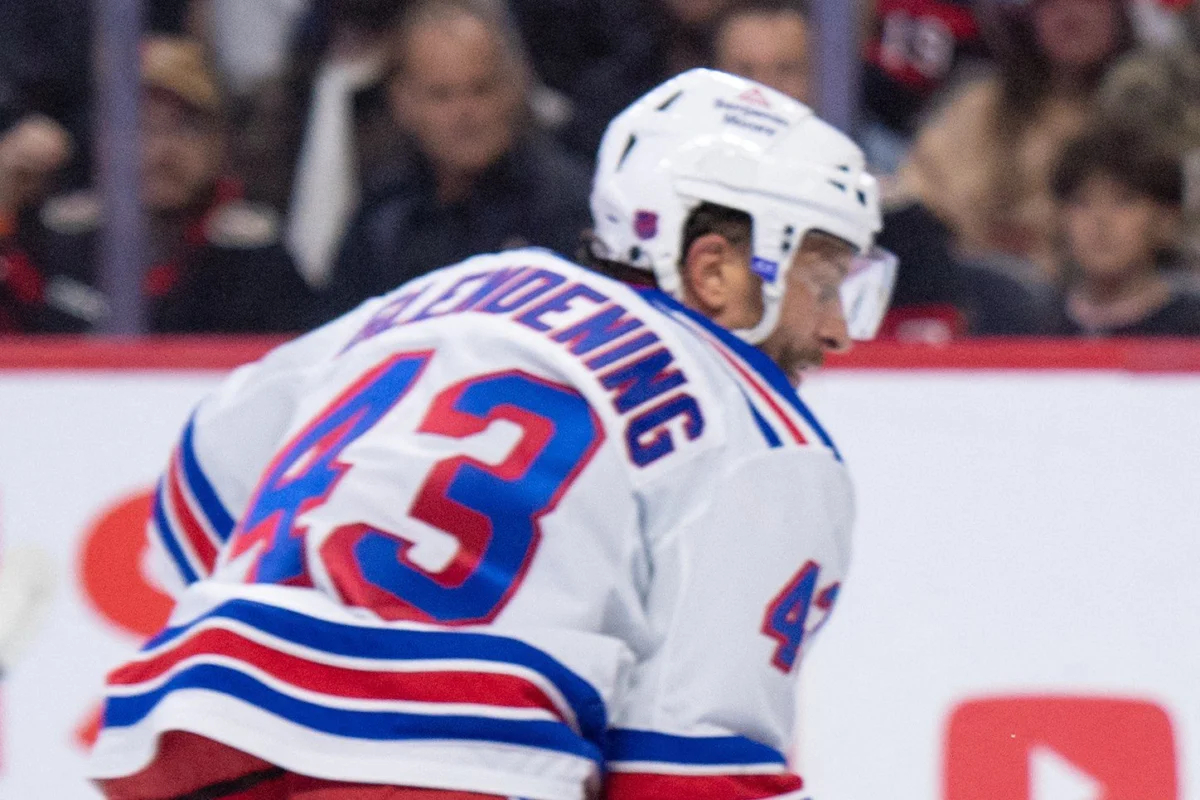
VANCOUVER — In a desperate bid to stabilize their depleted forward corps, the Chicago Blackhawks announced on Sunday that they have successfully claimed veteran forward Luke Glendening off waivers from the New York Rangers.
The transaction comes at a critical juncture for a Chicago franchise spiraling toward the bottom of the NHL standings. Plagued by a combination of underperformance and a severe injury crisis down the middle, the Blackhawks are hoping that the 37-year-old journeyman can inject much-needed veteran leadership, faceoff reliability, and defensive responsibility into a locker room searching for answers.
The move reunites Glendening with Chicago head coach Jeff Blashill, with whom the gritty forward shares an extensive history from their formative years in the organization of the Detroit Red Wings. As the Blackhawks prepare for a crucial Sunday night matchup against the league-worst Vancouver Canucks at Rogers Arena, the front office is banking on instant chemistry and professional stability to right a listing ship.
Main Facts: The Waiver Claim and Immediate Context
The mechanics of Sunday’s transaction are straightforward, but the implications for the Blackhawks’ lineup strategy are profound. Glendening, a quintessential defensive-zone specialist and penalty-killing stalwart, becomes available to a Chicago team searching desperately for healthy bodies at the center position.
The Catalyst: Connor Bedard’s Injury
The primary driver behind the waiver claim is the absence of generational superstar and franchise cornerstone Connor Bedard. The young captain is currently sidelined with an injury to the exact same shoulder that required surgical intervention over the summer.
Bedard’s absence leaves a gaping chasm on the Blackhawks’ top line and severely compromises the team’s offensive output and transition game. While Glendening does not possess the dynamic offensive flair, elite vision, or scoring touch of Bedard, his arrival immediately alleviates structural pressure on the team’s remaining centers, allowing the coaching staff to manage matchups and minutes more effectively without overworking younger or ill-suited players.
Roster Integration and Projected Role
At this advanced stage of a 938-game NHL career, Glendening’s ceiling is firmly established as a bottom-six, defense-first pivot. Throughout his extensive time in the majors, the Grand Rapids, Michigan native has carved out a lucrative niche as a faceoff specialist, shot-blocker, and energy forward who excels in defensive-zone starts.
On the current Chicago roster, Glendening is projected to slot seamlessly into the fourth-line center role. This deployment would likely see him centering a checking unit alongside wingers Andrew Mangiapane, Ryan Greene, and Dillon Boucher. By anchoring the fourth line, Glendening can absorb tough defensive assignments, kill penalties, and provide a stable, low-risk presence that grants head coach Jeff Blashill tactical flexibility.
Chronology: A Journey from the Motor City to the Windy City
To understand what Luke Glendening brings to the Chicago Blackhawks, it is necessary to trace the arc of an unlikely professional hockey career defined by perseverance, undrafted status, and an relentless work ethic.
The Michigan Roots and Undrafted Beginnings
Long before he became a fixture in NHL bottom-six rotations, Glendening was a standout student-athlete at the University of Michigan, where he served as team captain and earned a reputation as an indefatigable worker. Despite his collegiate success, Glendening went unselected in the NHL Entry Draft.
Undeterred, he signed an American Hockey League (AHL) contract with the Grand Rapids Griffins, the primary minor-league affiliate of the Detroit Red Wings, for the 2011–12 season. His relentless motor and defensive acumen quickly caught the eye of the Red Wings’ front office and minor league staff, earning him an NHL contract ahead of the 2013–14 campaign.
The Blashill Era in Detroit (2015–2021)
Glendening’s professional identity was largely forged during his extensive tenure with the Red Wings, a stretch that overlapped significantly with Jeff Blashill. After serving as head coach of the Griffins, Blashill was promoted to the head coaching position in Detroit ahead of the 2015–16 season.
From that campaign through the conclusion of the 2020–21 season, Glendening was a trusted lieutenant for Blashill. He was routinely deployed against the opposition’s top offensive lines, trusted on the penalty kill, and leaned upon to win crucial defensive-zone faceoffs. This historical familiarity means there will be virtually no learning curve regarding system expectations, defensive zone coverage, or accountability standards.
The Journeyman Chapter
When his long tenure in Detroit concluded, Glendening embarked on a nomadic phase of his career. Seeking new opportunities and bringing his trademark intangibles to contending or rebuilding clubs alike, he signed short-term contracts or moved via trades across the league.
His post-Detroit résumé features notable stints with:
- Dallas Stars: Providing reliable faceoff depth and veteran presence during a deep playoff-contending run.
- Tampa Bay Lightning: Adding penalty-killing insurance and Stanley Cup playoff experience to a perennial contender.
- New Jersey Devils: Mentoring a young, fast-rising roster through the rigors of an 82-game schedule.
- Philadelphia Flyers: Contributing to a physical, hard-working identity under John Tortorella.
- New York Rangers: Serving as a depth option at the start of the current campaign.
The Brief Rangers Stint
Glendening’s time in New York with the Rangers was short-lived and yielded minimal statistical production. Over four appearances with the Blueshirts this season, the 37-year-old forward went pointless while registering a minus-2 rating. Operating in a deeply compressed, bottom-of-the-roster role, Glendening averaged just 6 minutes and 15 seconds of time on ice per game.
Because of this limited usage and the Rangers’ internal roster machinations, Glendening found himself exposed on waivers, paving the way for Chicago general manager Kyle Davidson and head coach Jeff Blashill to swoop in and secure his services.
Supporting Data: Statistical Profile and Standings Reality
A cold analysis of Glendening’s current metrics alongside the stark realities of the Blackhawks’ team statistics highlights the immense challenges facing the franchise as the winter schedule intensifies.
Glendening’s Career and Current Metrics
While the raw box scores from his brief stint in New York do not leap off the page, Glendening’s value has never been tied strictly to offensive output.
- Career Games Played: 938 NHL regular-season appearances, reflecting remarkable durability, resilience, and professional longevity.
- Faceoff Proficiency: Throughout his career, Glendening has consistently hovered above a 50% success rate in the faceoff circle—often ranking among the top options on his respective teams for critical defensive-zone draws.
- Current Season Usage: Averaging 6:15 of time on ice across four games with the Rangers, highlighting a need for a more stable, extended depth role—something Chicago can readily provide given their injury crisis down the middle.
The Blackhawks’ Dire Standings Picture
Chicago entered the 2024–25 NHL campaign with tempered optimism, hoping to see tangible developmental strides from their young core while establishing a more competitive foundation. Instead, a toxic combination of inconsistent goaltending, defensive lapses, and devastating injuries has derailed those aspirations.
- Central Division Standing: The Blackhawks currently languish in last place in the hyper-competitive Central Division, sitting a daunting 10 points back of the seventh-place Winnipeg Jets.
- League-Wide Context: Chicago’s 16 points tie them with the Pittsburgh Penguins and Los Angeles Kings for the second-fewest points in the entire National Hockey League.
- The Basement Battle: The only team worse off than Chicago is their Sunday night opponent, the Vancouver Canucks, setting up a clash at the bottom of the league hierarchy at Rogers Arena.
Official Responses and Front Office Strategy
Neither the Blackhawks nor the Rangers have held extensive press scrums regarding the waiver claim, but standard operating procedure within NHL front offices provides clear insight into the rationale behind the transaction.
Kyle Davidson and the Front Office Philosophy
For Chicago general manager Kyle Davidson, picking up an unexpired contract or veteran off the waiver wire represents a low-risk, high-reward maneuver. The Blackhawks possess ample salary cap space and roster flexibility, allowing them to absorb a veteran presence without sacrificing future assets, draft picks, or high-end prospects.
Speaking broadly about organizational philosophy during injury crunches, Davidson and his staff have consistently emphasized the need to insulate young players. Exposing prospects to too many minutes in hostile environments before they are physically and mentally ready can stunt their development. By adding a trusted veteran like Glendening, the front office ensures that checking-line minutes and defensive responsibilities are absorbed by a battle-tested professional, thereby protecting the team’s younger pipeline.
Jeff Blashill’s Perspective on Leadership
For head coach Jeff Blashill, welcoming a player like Glendening is akin to adding an extension of the coaching staff on the ice. In modern professional hockey, where locker room culture is heavily scrutinized, having a player who already knows the coach’s system inside and out is an invaluable asset.
Blashill is expected to rely on Glendening not only for his on-ice contributions—such as blocking shots and neutralizing opposing checking lines—but for his leadership in the dressing room. As the Blackhawks navigate a grueling losing skid and try to remain mentally resilient while Connor Bedard rehabs his shoulder, vocal leaders who have survived the peaks and valleys of a long career are essential.
Implications: What Glendening’s Arrival Means for Chicago’s Immediate Future
The acquisition of Luke Glendening is not a silver bullet that will instantly vault the Chicago Blackhawks back into the Western Conference playoff picture. However, it carries significant tactical, structural, and psychological implications for a team desperate to stabilize.
Tactical Stabilization of the Bottom Six
With Connor Bedard out of the lineup, the ripple effect on Chicago’s forward lines has been catastrophic. Top-tier offensive players have been forced into unfamiliar checking roles, while middle-six players have been overextended.
By inserting Glendening as the fourth-line center, Blashill can re-establish a hard-matching, defensively responsible shutdown unit. This line can take the heavy lifting in the defensive zone, sparing the team’s offensive catalysts from draining physical battles in their own end and freeing them up to focus on transition play and offensive generation.
Alleviating Pressure on Young Prospects
The Blackhawks are heavily invested in the development of young forwards like Ryan Greene and other rising talents within the system. Playing center in the NHL is arguably the most demanding defensive position outside of goaltender, requiring rapid decision-making, spatial awareness, and heavy physical contact along the boards.
Throwing young players into the deep end during a losing streak can erode their confidence. Glendening’s presence provides a cushion. It allows the coaching staff to shelter younger players, giving them favorable deployment and sheltering them from the league’s elite matchup centers until they are fully prepared for heavier workloads.
A Litmus Test in Vancouver
The immediate test for this newly configured roster arrives on Sunday night in British Columbia, where the Blackhawks square off against the Vancouver Canucks. In a matchup between two struggling franchises scraping the bottom of the NHL standings, the spotlight will be on how quickly Glendening can integrate into the lineup and whether his presence can spark a collective defensive awakening.
While Luke Glendening will not feature on the highlight reels with dazzling dekes or explosive rushes, his quiet, relentless brand of hockey is precisely what a battered, last-place team needs to begin the arduous climb back toward respectability. As the Blackhawks look to weather the storm of Connor Bedard’s absence, the veteran pivot from Grand Rapids represents a steady hand at the wheel when the waters are at their roughest.

 rifanmuazin

 Nana Muazin
 Pevita Pearce
 Neng Nana

 Lina Hope
 Dwi Wanna