
 Siti Muinah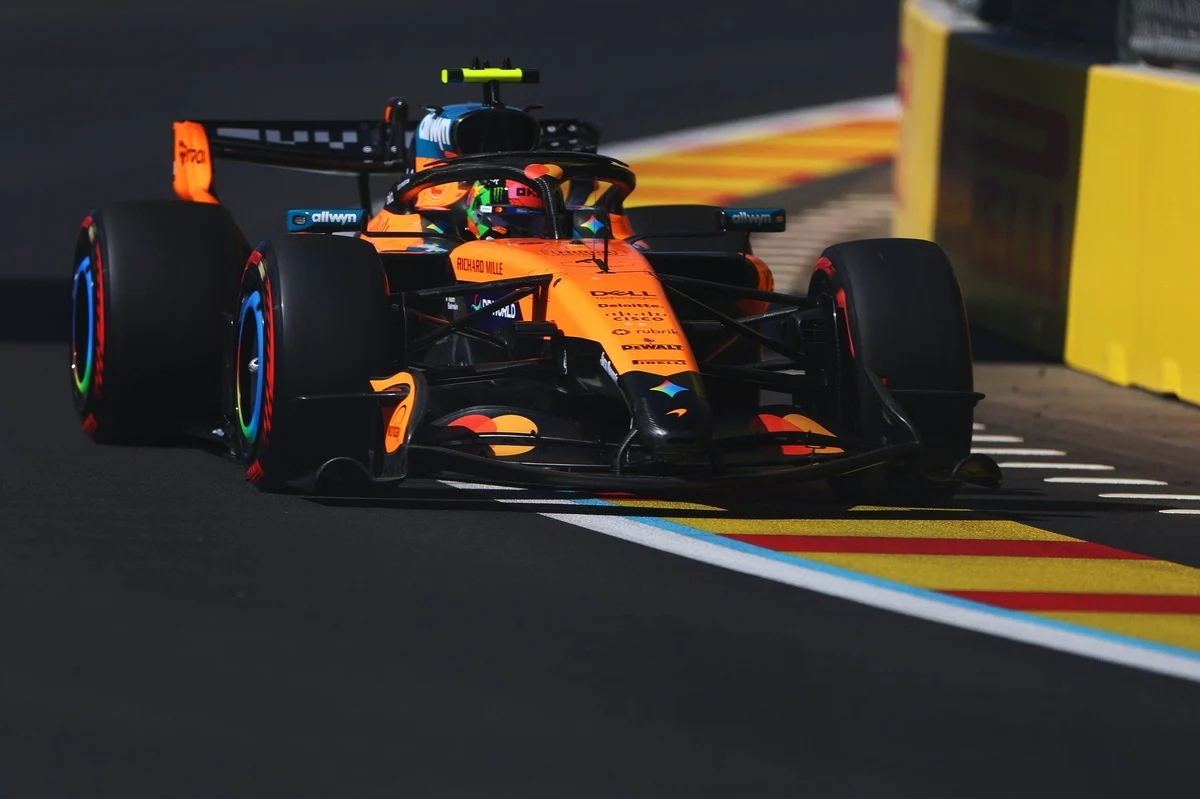
BARCELONA — In the high-stakes, data-driven world of modern Formula 1, pole positions are usually forged through meticulous planning, faultless execution, and relentless optimization. Every millisecond is modeled; every corner apex is cataloged. Yet, every so often, the rigid parameters of engineering give way to raw human brilliance and instinct.
That was precisely the narrative written under the warm Spanish sun during qualifying for the Spanish Grand Prix. In a breathtaking and utterly unexpected turn of events, McLaren’s Lando Norris snatched pole position away from Mercedes’ Kimi Antonelli by a razor-thin margin of just 0.011 seconds.
It was a pole position that defied the weekend’s telemetry, outpaced the prevailing car performance, and left McLaren team principal Andrea Stella searching for superlatives. For a team that had spent the entire weekend playing catch-up to the Silver Arrows and Red Bull, Norris’s final flying lap of Q3 was not merely a fast drive; it was, in Stella’s own estimation, an absolute masterpiece.
Main Facts: Defying the Hierarchy at Circuit de Barcelona-Catalunya
Going into Saturday afternoon’s qualifying session at the Circuit de Barcelona-Catalunya, the competitive hierarchy appeared firmly established. Mercedes had dominated the narrative, topping every single practice session ahead of Ferrari. Throughout Q1 and Q2, the Silver Arrows locked horns with Red Bull for the ultimate bragging rights, trading fastest sectors and showing formidable pace across all three phases of the track.
Meanwhile, the papaya-colored McLaren cars of Norris and teammate Oscar Piastri seemed marooned in no-man’s-land—consistently a couple of tenths behind the ultimate pace. McLaren’s struggles in the low-speed corners and over the aggressive Spanish kerbs were well-documented by their engineers. Piastri ultimately felt the pinch of these limitations, qualifying down in seventh position, 0.470 seconds adrift of his teammate.
Yet, despite an unfavorable car balance and a deficit in the slower sections of the track, Norris produced a sensational final effort in Q3. His 0.701-second improvement over his first Q3 run catapulted him from a modest sixth place to the summit of the timesheets. He edged out Antonelli—who had looked untouchable all weekend—by the slimmest possible margin of 0.011 seconds.
Chronology of a Miracle: From Despair to Disbelief
The drama of Q3 played out in miniature chapters of despair and euphoria, culminating in one of the most entertaining team radio exchanges of the season.
Earlier in the final qualifying segment, Norris had faltered on his first attempt. Crossing the line sixth fastest, he sat a daunting 0.446 seconds away from the pacesetting Mercedes of Lewis Hamilton. The McLaren garage braced for a damage-limitation exercise, assuming pole position was safely out of reach.

Then came the final runs. Norris launched into his ultimate lap, wringing every ounce of performance from his MCL60-generation machine. Up on his delta through the high- and medium-speed sections, he was flying. But the sheer velocity of his approach caught up with him in the final complex.
Carrying too much entry speed into the sweeping final corner, Norris suffered a sudden snap of oversteer, violently losing the rear end of his car. For a split second, the Briton thought his brilliant lap was destined to end in the barrier.
"Sorry, I fucked up man," a dejected Norris told race engineer Will Joseph over the team radio immediately after crossing the finish line, convinced his mistake had ruined his chances.
Understanding the magnitude of the lap times flashing on the pitwall monitors, Joseph urged his driver to remain calm and wait for the rest of the field to complete their flying laps. Confused and frustrated by what he perceived as a race-ending error, Norris sharply retorted: "Fucking idiot."
"It wasn’t your best final corner, but it’s still pole, so well done," Joseph calmly informed him as the dust settled and the final timing screens locked in.
It took several agonizing moments for Norris to realize his engineer wasn’t playing an elaborate prank. Speaking to the media shortly afterward, the British driver admitted his shock: "By the last corner, I just had a bit of a, I don’t know, a little moment. I think I got a bit excited in the car and I just overpushed the entry and, honestly, I thought I was in the wall. So, yeah, luckily a short run to Turn 1."
Supporting Data: Meter-by-Meter Precision and Tyre Toll
To truly understand the magnitude of Norris’s pole lap, one must look beyond the emotional radio chatter and examine the cold, hard telemetry data.
Andrea Stella, a veteran of the Formula 1 paddock with over 450 Grands Prix under his belt, offered a forensic breakdown of the data in the media pen.

"We were not honestly performing to the level of scoring a pole position," Stella confessed candidly. "At no stage during the weekend did we demonstrate that the car was performing at the level of being the best car. We were lacking quite significantly in the first sector, low-speed [corners] and kerbing, and for the drivers, it was a very difficult car to nail a lap."
When Stella analyzed Norris’s telemetry alongside historical data from his vast career, he found something truly unique. The lap time was generated not through inherent aerodynamic superiority, but through sheer driver commitment and millimeter-perfect execution.
"The thing that makes the lap unique, when you look especially at the telemetry, is the precision, the braking, the speed you carry in entry, the striking of the kerb, the going on power. Everything is executed with a pretty unique level of precision," Stella explained. "For me, that’s if anything the main attribute that I would associate to this lap: just incredible precision in the metre-by-metre execution."
Paradoxically, the dramatic mistake at the final corner was a direct byproduct of how fast Norris was driving through the rest of the circuit. Stella pointed out that the tires had essentially given their all in service of the blistering sector times that preceded the final turn.
"He just paid the price of the fact that the lap was coming, like, one second faster than any other lap, therefore there was quite a lot more that was extracted from the tyres," the Italian engineer noted. "The tyres were tired and somehow Lando did not take this into account and he entered the corner with the same impetus that he had in some other corners."
The numbers tell an astonishing story: despite losing an estimated three-and-a-half tenths of a second in that single botched final corner alone, Norris still secured pole position. Had he negotiated the final turn cleanly, his margin over Antonelli would have been a commanding and unequivocal statement of pace.
Official Responses: A Team Principal’s Awe
The reaction from the McLaren pit wall was a mix of sheer disbelief and profound admiration. Team principals rarely use hyperbole when evaluating their drivers, knowing that consistency and humility are vital virtues in the grueling F1 environment. Yet, Andrea Stella made an exception for Norris’s Saturday heroics.
"That’s a masterpiece," Stella declared, setting the tone for the team’s post-qualifying debrief.

When pressed further by journalists on whether this ranked among the finest qualifying laps he had ever witnessed, Stella did not hesitate. Drawing on his extensive experience working alongside multiple world champions across decades in the sport, the McLaren boss elevated Norris’s achievement into legendary territory.
"It’s one of the most impressive laps that I have witnessed, as somebody that watches telemetry in 450 Grands Prix," Stella reiterated.
For Norris, the praise served as validation after a weekend where finding a stable balance had felt like hunting a ghost. The contrast between his supreme confidence mid-lap and his near-disastrous slip at the finish line captured the razor’s edge upon which modern Formula 1 drivers operate.
Implications: Sunday’s Showdown and the Championship Landscape
As the dust settles on a pulsating Saturday afternoon in Barcelona, the paddock’s attention turns immediately to the Grand Prix itself. Securing pole position at the Circuit de Barcelona-Catalunya is historically a massive advantage due to the long run down to Turn 1, but the strategic landscape for Sunday is fraught with peril.
First, Norris must convert his fortuitous pole into an effective race start. With Mercedes and Kimi Antonelli breathing down his neck—eager to convert their supreme practice and early qualifying pace into race victory—the run to the first corner will be intensely contested. Antonelli, showing remarkable maturity and speed throughout the weekend, will be hunting for any sign of vulnerability from the McLaren driver.
Second, tyre degradation will play a critical role. Stella’s observation that Norris’s blistering pace pushed the Pirelli rubber to its absolute limit during qualifying hints that race management will be paramount. If McLaren extracted so much life out of the tyres over a single flying lap, managing stint lengths and thermal degradation across a full Grand Prix distance will require immense tactical discipline from the pit wall and the driver alike.
Finally, the psychological impact of this pole position cannot be overstated. While teammate Oscar Piastri languishes down in seventh and struggles to unlock the same window of performance from the MCL60, Norris has proven that absolute maximum extraction can bridge performance deficits. If Norris can convert this masterpiece of a qualifying lap into a race win on Sunday, it will signal a monumental psychological turning point in his season—proving that even when the machinery is imperfect, human brilliance can still conquer the pinnacle of motorsport.

 Ali Ikhwan
 Nana Muazin
 rifanmuazin
 Dwi Wanna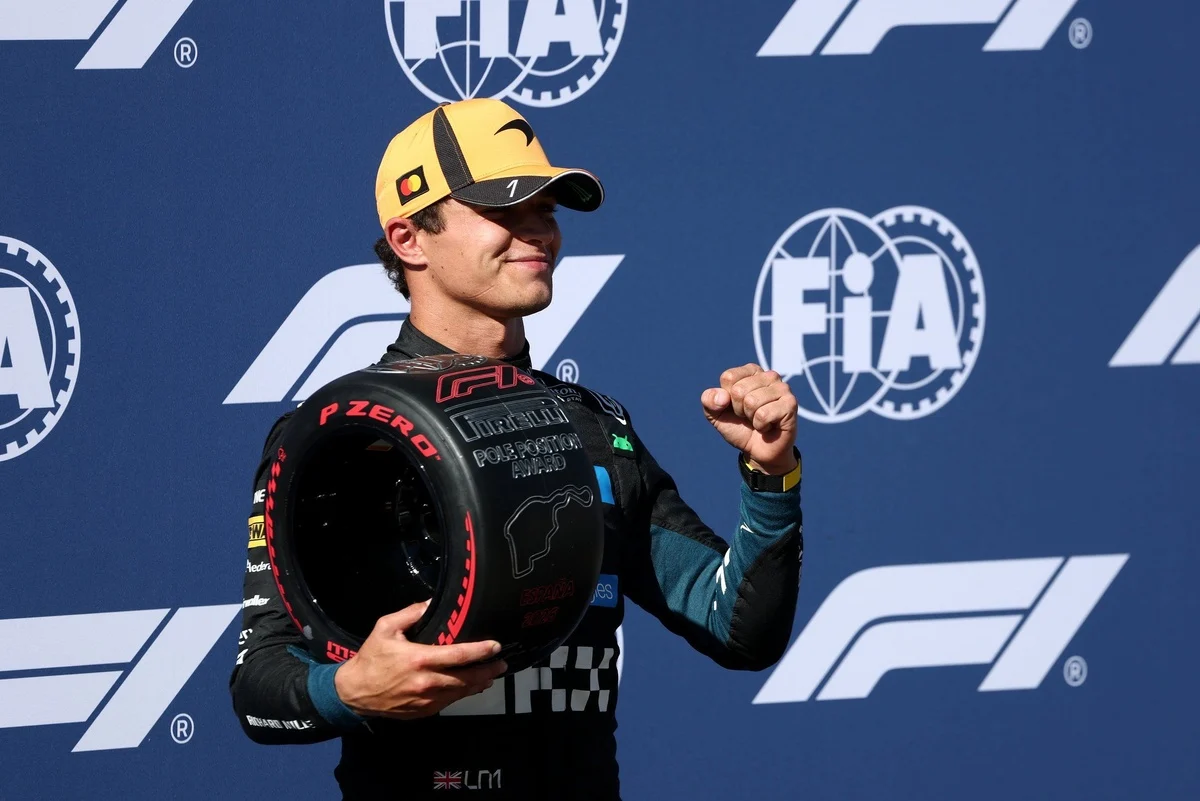
 Raul Delapena Setiawan
 Laily UPN
 Ammar Sabilarrohman