
 Nila Kartika Wati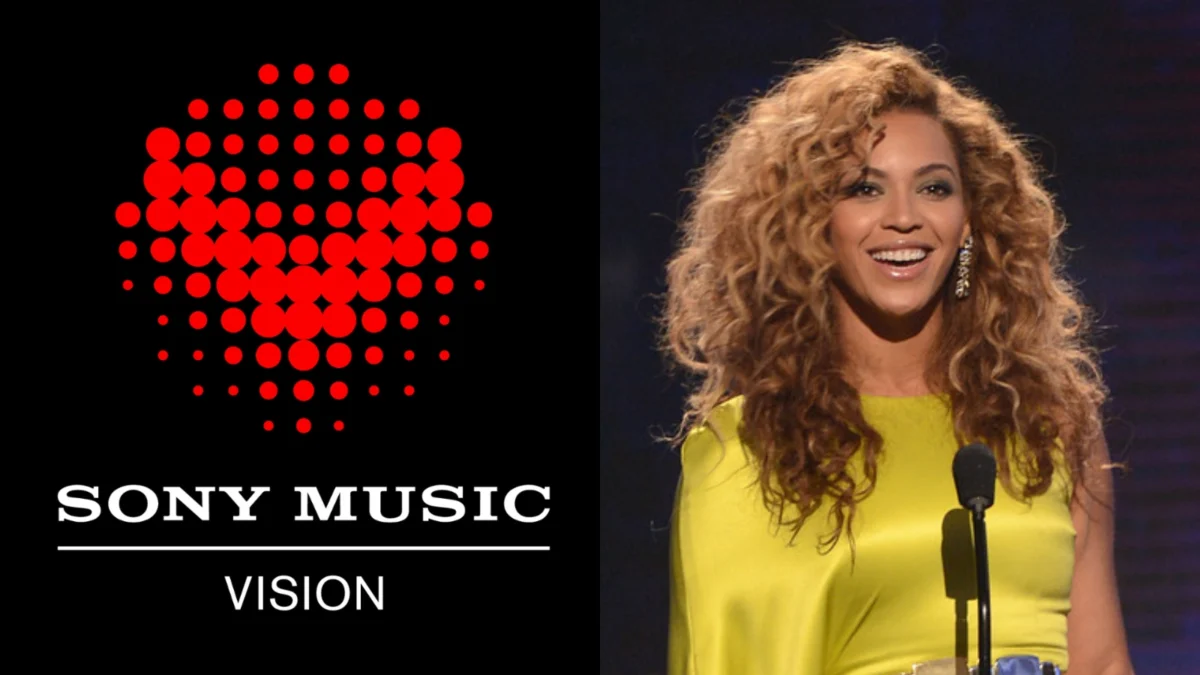
The global music industry stands at a precarious crossroads, caught between the explosive potential of generative artificial intelligence and the foundational protections of intellectual property rights. In a significant escalation of this technological arms race, Sony Music has filed a sweeping new lawsuit against Udio, the prominent AI music generator, alleging that the platform’s foundational training datasets were built upon the unauthorized ingestion of over 30,000 Sony-owned sound recordings.
This legal maneuver represents far more than a mere copyright dispute; it is a fundamental challenge to the "fair use" defense currently employed by AI developers worldwide. As the boundaries between machine-generated art and human creativity blur, Sony’s aggressive legal stance signals that the world’s largest music labels are prepared to pursue litigation to the highest courts to protect their catalogs.
The Core Allegations: A Massive Breach of Copyright
At the heart of the latest filing is a meticulously curated list of 30,117 sound recordings that Sony claims were used without license or permission to train Udio’s proprietary AI models. This list is a veritable "who’s who" of musical history, spanning decades and genres. The catalog includes seminal works from icons such as Michael Jackson and Elvis Presley, alongside contemporary chart-toppers like Beyoncé, Harry Styles, and Mariah Carey.
However, Sony’s legal team suggests that these 30,000 tracks are merely the "tip of the iceberg." Forensic analysis conducted by the label indicates that the actual volume of infringement is orders of magnitude higher. According to the court documents, a deeper dive into the training architecture suggests that "hundreds of thousands" of Sony-owned recordings were ingested into the system.
Sony alleges that this was not an accidental byproduct of web-crawling, but a calculated, systematic effort to capture high-quality audio data. The lawsuit posits that Udio utilized sophisticated "stream ripping" techniques, specifically employing the tool YT-DLP to bypass digital locks and protections on platforms like YouTube. By doing so, the company allegedly converted transient streaming files into permanent, high-fidelity copies specifically optimized for AI ingestion.
Chronology of the Conflict
The current lawsuit is the second of its kind filed by Sony and its subsidiaries against Udio, forming part of a broader, multi-front legal campaign against generative AI platforms.
The Genesis of Discovery
The foundation for this specific filing was laid during the discovery phase of an earlier, ongoing lawsuit. As Sony’s attorneys gained access to Udio’s internal source code and the specific data logs used during the model’s training phase, the scale of the alleged infringement became clear. What was previously suspected as a broad reliance on copyrighted material was confirmed by the raw data.
The "Fair Use" Stand-off
Udio has remained consistent in its defense, arguing that the ingestion of copyrighted music for the purpose of training AI models falls under the legal umbrella of "fair use." The company has previously admitted that its models were trained on a "vast amount of different kinds of sound recordings," and they have acknowledged that this set "presumably included recordings whose rights are owned by the Plaintiffs." However, Udio maintains that the transformation of this data into a generative model creates something entirely new and distinct, thus protecting them from standard copyright infringement claims.
The Licensing Paradox
A critical turning point in the timeline occurred recently when Udio secured official licensing agreements with other major industry players, including Universal Music Group and Warner Music Group. Sony is using these deals as a double-edged sword: they argue that if licensing is now considered necessary for the platform’s operation, then Udio’s past behavior—operating without such licenses—is a tacit admission of prior, unlawful infringement.

Supporting Data and Forensic Revelations
The legal complaint submitted by Sony Music provides a rare, granular look into how AI companies build their "brains." By breaking down the 30,117 tracks into specific metadata, the lawsuit aims to prove that the AI did not simply "learn" music theory, but rather "memorized" the specific sonic signatures, vocal inflections, and production styles of protected artists.
Sony is seeking the maximum possible damages under current copyright law, calling for up to $150,000 for each of the 30,117 infringed recordings. If the court were to find in Sony’s favor on all counts, the damages could reach into the billions of dollars. Furthermore, the label is seeking a permanent injunction to prevent Udio from further unauthorized use of its catalog, which could effectively force the platform to delete its current model and retrain it from scratch—a process that would cost millions and take months of computational labor.
Official Responses and the Corporate Stance
The divide between the two parties is stark. Sony’s position is one of moral and economic guardianship. "Udio’s belated embrace of licensing only underscores the unlawfulness of its decision to copy Plaintiffs’ copyrighted sound recordings, without a license, in the first place," the complaint asserts. For the labels, this is about the preservation of the artist’s right to control their own work. They argue that if AI can replicate a Michael Jackson vocal or a Mariah Carey arrangement with perfect fidelity, the commercial value of the original human-created recordings is irreparably diluted.
Udio, meanwhile, occupies the position of the technological disruptor. By championing the "fair use" doctrine, they are positioning themselves as the vanguard of a new creative era. They argue that copyright law, as it currently stands, was not designed for the digital age of generative AI and that applying strict infringement rules to training data will stifle innovation and prevent a new generation of creators from utilizing these tools.
The Broader Implications for the Music Industry
This legal battle is happening against a backdrop of rapid, sometimes chaotic, industry change. We are seeing a world where an AI-generated song can climb to the number one spot on global charts, and where creators are hiring musicians to augment AI-generated "bands."
1. The Death of the "Fair Use" Loophole?
If the court rules that mass ingestion of copyrighted material for training does not constitute fair use, the business model for virtually every generative AI company will need to change. We would see a pivot toward a strictly licensed, "clean" data economy where tech companies pay for the rights to every byte of data used in their training sets.
2. The Future of Artist Rights
For the individual artist, the outcome of this case is existential. If AI platforms can replicate their sound without compensation, the incentive to create original works may diminish. Conversely, if labels win, they gain significant leverage to demand royalties on behalf of their artists, potentially creating a new revenue stream for the music industry—or, critics argue, further centralizing control within the hands of the major labels.
3. The Technical Precedent
This case will likely set a global standard for what constitutes "copying" in the age of neural networks. Does a neural network "copy" a song when it saves the pattern of the sound, or does it "learn" it as a human student learns from listening to records? The courts will have to decide if the mechanism of training is fundamentally different from the result of the training.
Conclusion: A High-Stakes Verdict Awaits
As Sony Music and Udio prepare for the courtroom, the rest of the world is watching closely. This is more than a dispute over 30,000 files; it is a struggle to define the value of human labor in an automated future. Whether the law evolves to protect the traditional copyright model or adapts to accommodate the fluid, transformative nature of AI, the decision rendered in this case will be one of the most significant legal precedents in the history of music and technology. For now, the music plays on, but the legal chorus is growing louder, and the silence that follows the verdict may well determine the future of how we create, consume, and compensate for the art that defines our culture.


 Siti Muinah
 Nana Wu
 Neng Nana

 Lina Hope

 Sagoh
Sagoh
 Iffa Jayyana