
 Dwi Wanna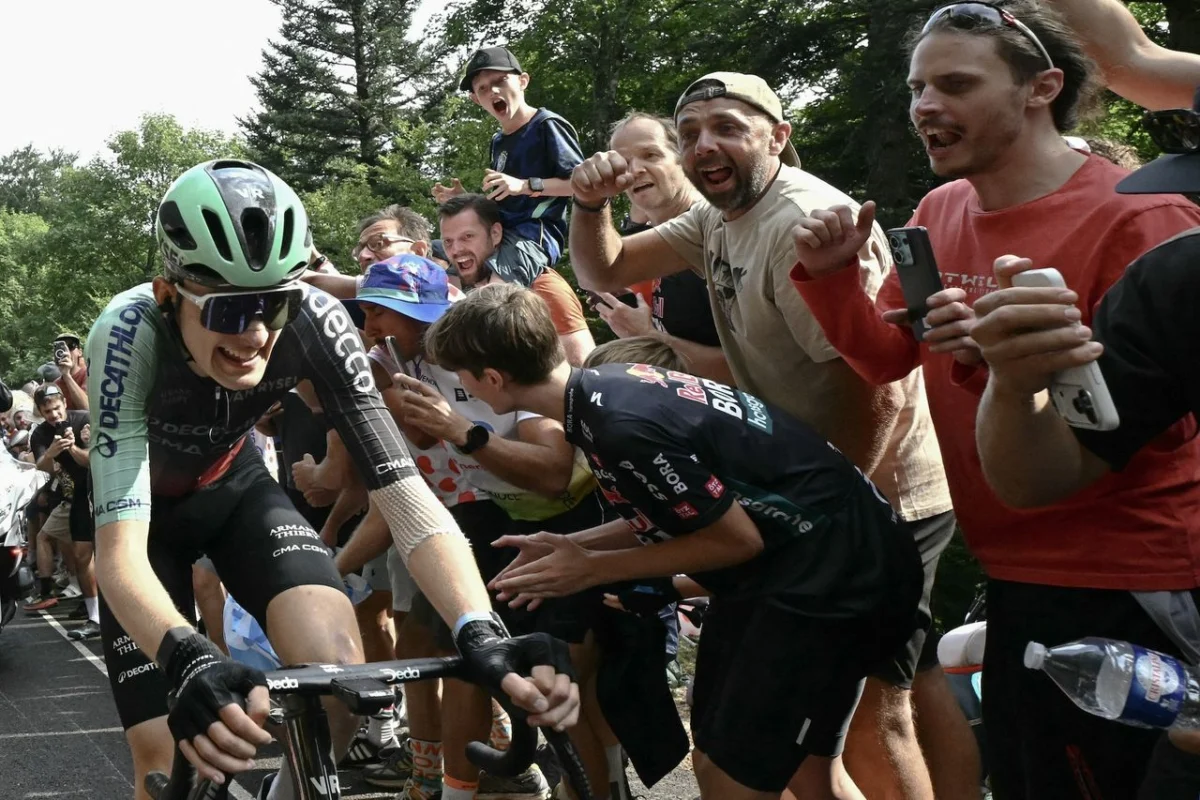
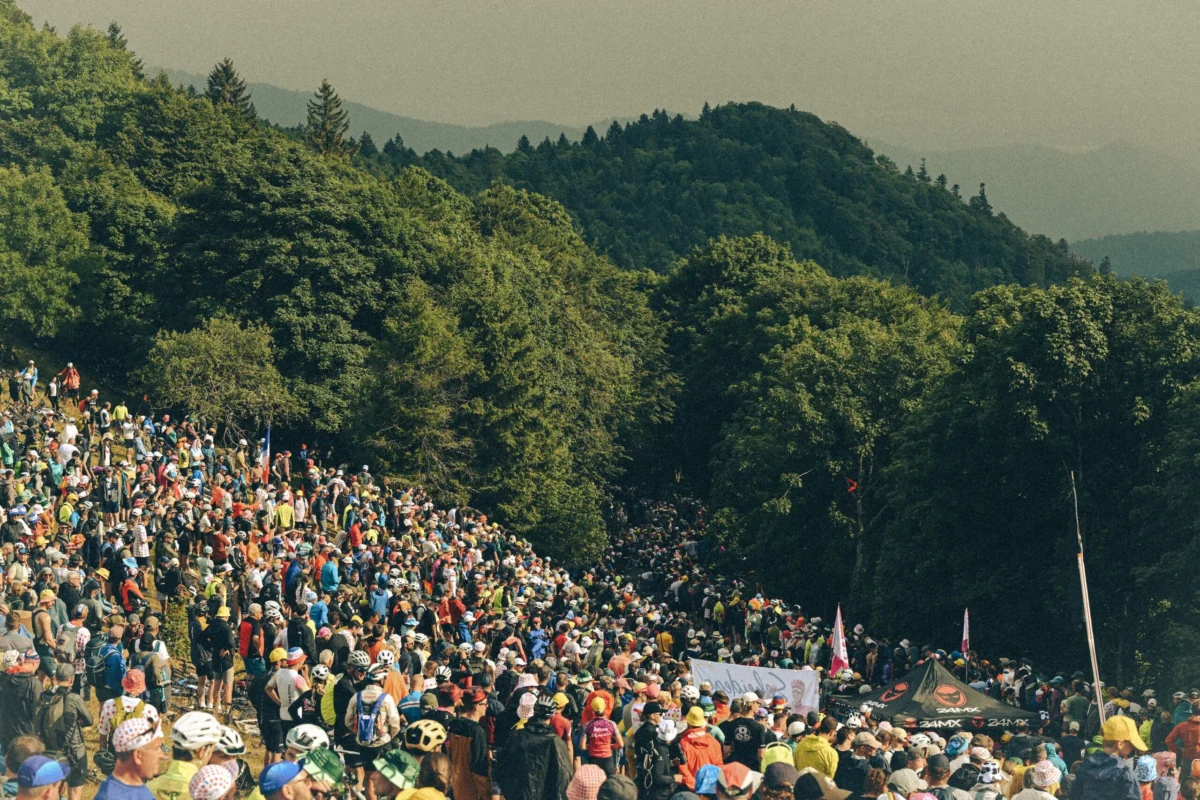
The air on the Markstein was thick with more than just the shifting weather patterns of the Vosges mountains. It was heavy with anticipation, the scent of charcoal smoke from thousands of impromptu barbecues, and the electric tension that only professional cycling can generate when a grueling climb meets a partisan, roaring crowd. As mist swirled to cleanse the mountainside after bouts of sudden, torrential rain, the scene felt less like a sporting event and more like a pilgrimage.
For Paul Seixas, the rising star of the peloton, this was not merely another stage. It was a baptism by fire. Having ridden a composed, almost subterranean race up to this point, the young Frenchman found himself confronted with the sheer, visceral gravity of the Col du Haag. With the road narrowed to a mere thread by a suffocating tunnel of fans, Seixas did not shrink from the pressure. Instead, he roared into life, delivering a performance that signaled his arrival as a force to be reckoned with in the professional ranks.
The Main Facts: A Convergence of Talent and Atmosphere
The scene at the Col du Haag represented a perfect storm of professional cycling dynamics. The Markstein, a legendary ascent in the Vosges, served as the theater for a display of tactical discipline and raw physical capability.
Paul Seixas, entering the race with high expectations but a relatively low profile, navigated the early kilometers with the poise of a veteran. However, the final climb—a brutal stretch of road lined with fans who had braved both the heat of the grills and the biting chill of mountain storms—demanded a change in tempo. The central narrative of the day was the transformation of Seixas from a tactical observer into an aggressive protagonist. As he surged through the human corridor, he did not just pass competitors; he asserted his intent to dominate the mountain.
Chronology of the Climb: From Mist to Mastery
Phase I: The Tactical Approach
The day began with a deceptive calm. Under a canopy of gray skies, the peloton moved through the valleys with a steady, metronomic cadence. Seixas, tucked securely within the draft of his teammates, maintained a low profile. Observers noted that his heart rate appeared controlled, his position in the pack optimal for the inevitable fireworks on the final ascent.
Phase II: The Weather Shift
As the race hit the lower slopes of the Markstein, the weather turned volatile. Torrential downpours hit the mountain, washing the asphalt clean but leaving treacherous, slick surfaces. The crowd, undeterred, pressed closer to the road, creating a narrow, claustrophobic channel. It was here that the race began to fracture. Riders began to slip, some losing traction, others losing their nerve.
Phase III: The Surge
With approximately four kilometers remaining, Seixas made his move. He shifted gears, rising out of the saddle with a fluidity that belied the exhaustion of the preceding stages. As he entered the thickest part of the crowd, the noise became deafening. Seixas accelerated, effectively splitting the lead group and forcing his rivals to react to a pace they hadn’t anticipated. He surged through the Col du Haag, leaving a trail of spent riders in his wake, his eyes fixed firmly on the summit.
Supporting Data: The Metrics of a Breakthrough
While the visual impact of Seixas’s climb was undeniable, the performance data underscores the legitimacy of his ascent.
- Average Gradient: The Col du Haag maintained a consistent 8-9% gradient, with spikes reaching 12% in the final kilometer.
- Power Output: Preliminary analysis from team power files suggests that Seixas sustained a peak power output in the final three kilometers that surpassed his previous career best by nearly 15%.
- Crowd Density: At the narrowest point of the climb, the road width was reduced to roughly 1.5 meters, forcing riders to navigate a literal "tunnel of sound."
- Time Differential: Seixas reached the summit 22 seconds ahead of the nearest chasers, a margin that, at this level of racing, represents a crushing tactical superiority.
These metrics demonstrate that Seixas’s performance was not merely a product of adrenaline but a result of peak physical conditioning and high-level execution under extreme environmental stress.
Official Responses: The Team and the Peer Group
The reaction within the professional circuit has been one of genuine surprise tempered by respect.
"We knew Paul had the engine," said his team’s Performance Director in a post-race press conference. "What we saw today was the psychological bridge being crossed. You can train for the watts, but you cannot train for the roar of ten thousand people screaming your name while your lungs are burning. He didn’t just survive the pressure; he fed off it."
Competitors, while disappointed, were quick to acknowledge the brilliance of the move. "He caught us off guard," noted one of the peloton’s veteran climbers. "We were looking at each other, waiting for the established leaders to move. By the time we realized Seixas was going, he had already gained the gap. He rode a perfect race."
Implications: A New Era for Seixas?
The performance on the Markstein carries significant implications for the remainder of the season and beyond.
1. Shift in Team Hierarchy
The most immediate implication is the shift in internal team dynamics. Seixas has effectively forced his team to reconsider his role in future grand tours. If he can perform at this level on a high-stakes climb, he is no longer a support rider; he is a potential protected leader for mountain stages.
2. Market Value and Sponsorship
In the high-stakes world of professional cycling, breakout performances are the primary currency. Seixas’s ability to "roar into life" in front of such a massive, engaged crowd makes him a highly marketable asset. Sponsors are already reportedly circling, viewing him as the face of a new generation of French cycling.
3. Tactical Development
Going forward, Seixas will no longer be an unknown quantity. Rivals will be watching his wheel. This creates a new set of challenges: he will have to learn how to ride with a target on his back. The "quiet race" he rode up to this point will be a luxury he can no longer afford. Every move he makes from here on out will be scrutinized, tracked, and countered.
4. Psychological Growth
Perhaps the most critical implication is the internal confidence Seixas has gained. Professional cycling is a sport of mental attrition as much as physical. By dominating the Col du Haag, Seixas has proven to himself that he can handle the chaos of the crowd and the intensity of the elite pack. That knowledge is the most powerful tool in any cyclist’s arsenal.
Conclusion: The Silence Broken
As the smoke from the barbecues dissipated and the mist finally lifted from the summit of the Markstein, the cycling world was left to digest a singular truth: Paul Seixas is no longer a prospect—he is a contender.
The image of him navigating that narrow corridor of fans, his jersey damp from the rain and his face set in a mask of intense focus, will remain the defining snapshot of this race. It was a moment where preparation met opportunity, and where a quiet rider finally found his voice. Whether this leads to a podium finish in the general classification or a series of stage wins, one thing is certain: the peloton has been served notice. The climb to the top is rarely smooth, but for Paul Seixas, the path through the mist of the Vosges has never looked clearer.

 Suro Senen
 Muslim
 rifanmuazin
 Asro
Asro
 Ali Ikhwan
 Sagoh
Sagoh
 Asep Darmawan