
 Jia Lissa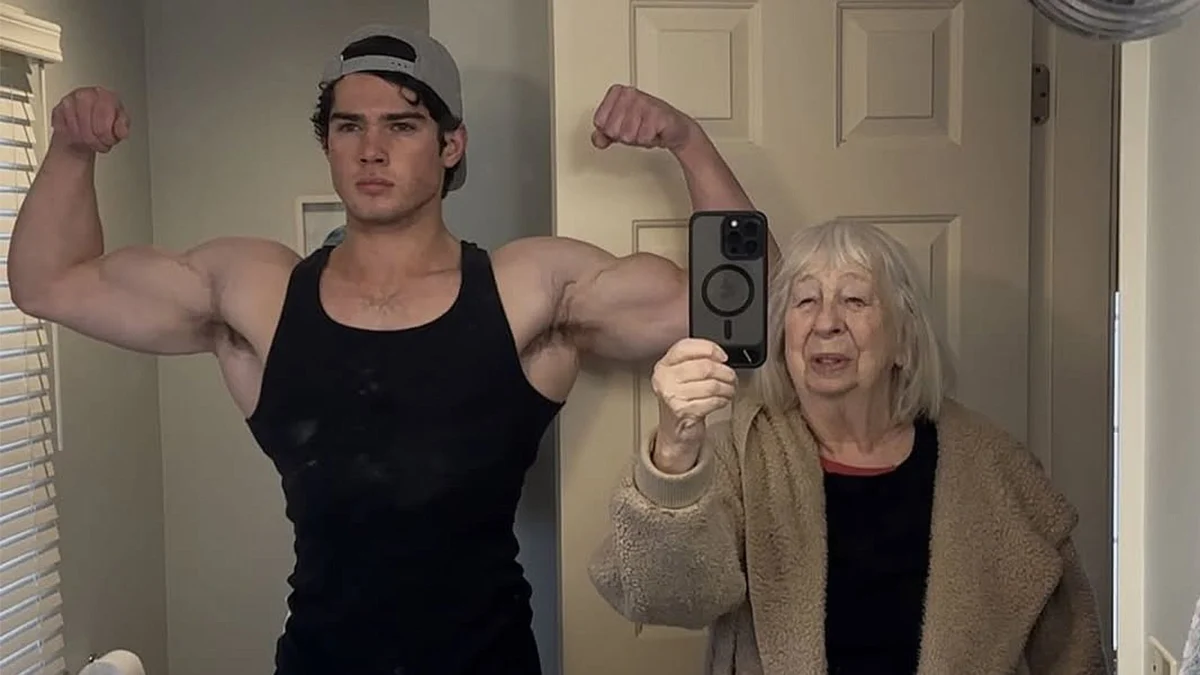
In a move that underscores the rapid evolution of modern communication, Merriam-Webster has officially updated its online dictionary with 1,400 new entries. Released on September 15, this latest expansion is arguably the most significant nod to internet culture in the institution’s history, codifying the vocabulary of memes, gaming, cryptocurrency, and the hyper-connected digital landscape.
For linguists and cultural historians, this update is more than a mere collection of words; it is a snapshot of how the internet has fundamentally altered the English language. By formalizing terms that originated in the chaotic fringes of TikTok, Reddit, and Discord, Merriam-Webster is acknowledging that "widespread use" is no longer defined by traditional publishing, but by the viral velocity of the digital age.
The Chronology of Modern Vernacular: How Slang Becomes Standard
The journey of a word from an obscure subreddit or a niche gaming forum to a formal dictionary entry is rarely linear. It follows a specific pattern of cultural penetration.
The "Rickroll" Phenomenon (2007–2024)
Perhaps the most notable addition is "Rickroll." Emerging in the mid-2000s, the prank involves bait-and-switching a target into clicking a link that leads to the music video for Rick Astley’s 1987 hit, Never Gonna Give You Up. While the prank has been a staple of internet humor for nearly two decades, its inclusion in the dictionary reflects its status as an enduring cultural artifact. The staying power of the Rickroll is such that it has moved beyond the internet, finding its way into corporate marketing campaigns and even being embedded as an "Easter egg" by developers in games like Payday 3.
The Rise of "Looksmaxxing" and Gen Z Slang
The inclusion of "looksmaxxing"—defined as the practice of taking sometimes extreme or dangerous measures to improve physical attractiveness—signals the influence of aesthetic-focused social media trends. Popularized by viral creators and aesthetics-focused subcultures, the term has transcended online forums to influence mainstream media, even inspiring a body-horror short film starring God of War actor Sunny Suljic.
Similarly, terms like "crashout," which refers to an emotional outburst or a sudden mental breakdown, illustrate the speed at which "brain rot" slang—a term describing the consumption of low-effort, highly addictive digital content—is being absorbed into the vernacular of younger generations.
Supporting Data: Why the Dictionary Must Evolve
The decision to add these terms is not taken lightly. Merriam-Webster lexicographers utilize massive corpora of text—ranging from digital news and social media to literature and transcripts—to determine if a term has achieved sufficient longevity and ubiquity.
The Economic Influence of "Meme Coins"
The inclusion of "meme coin"—an altcoin created as a humorous tribute to a meme or celebrity, often lacking real-world utility—serves as a marker of the crypto-economy’s cultural footprint. The term has become synonymous with the volatility of the digital asset market, where influencers and high-profile figures frequently launch tokens to their followers. Recent controversies, such as the unauthorized use of mailing lists to promote crypto projects, have thrust the term into the center of public discourse, making it a necessary addition for anyone trying to navigate modern financial news.
Psychological and Social Labels
The update also includes terms that categorize complex human experiences in the digital age:

- Copium: Originally a portmanteau of "cope" and "opium," it has evolved into a shorthand for the denial or minimization of an unfavorable situation. It is widely used in gaming communities, particularly when fans refuse to accept bad news regarding game development or studio delays.
- Sunday Scaries: A colloquialism that perfectly captures the collective anxiety many feel as the weekend winds down. Its inclusion highlights how the dictionary is increasingly serving as a repository for modern psychological states.
- Parasocial: While not a new psychological concept, the term’s usage has exploded in the era of parasocial relationships between influencers and their followers.
Official Perspectives: The Lexicographer’s Dilemma
Peter Sokolowski, an editor at large for Merriam-Webster, has frequently defended the inclusion of such terms, noting that the dictionary’s role is to act as a witness to the language as it is actually used. "We don’t decide what is ‘good’ language," Sokolowski has stated in past interviews. "We simply report on the language that is being used by the public."
This philosophy is reflected in the diversity of the new entries. From the technical "AGI" (Artificial General Intelligence) to the more playful "trash panda" (a raccoon), the update balances the serious advancements of the tech world with the whimsical nature of internet humor. The inclusion of "California sober"—a lifestyle involving the avoidance of alcohol while using marijuana—further proves that the dictionary is keeping pace with evolving social norms.
Implications: The Democratization of Language
The fact that terms born from "brain rot" trends are now sharing space with scientific and cultural terminology carries profound implications for the English language.
The Erosion of Gatekeeping
Historically, the dictionary was seen as a gatekeeper of "proper" English. By validating slang, the gatekeeping barrier has effectively collapsed. When a word like "mogging" (a term used to describe being physically superior to others in a social setting) is discussed alongside "uncanny valley," it suggests that the hierarchy of vocabulary is flattening. Digital communication has created a more democratic, if chaotic, linguistic environment where the most popular terms—regardless of their origin—become the standard.
The Permanence of the Ephemeral
There is a poetic irony in the dictionary, a bastion of permanence, codifying terms that are often designed to be ephemeral. Many of these slang terms have a "shelf life" in the real world; they are used intensely for a few months and then discarded for the next viral phrase. By capturing them, Merriam-Webster is creating a digital archive of what it felt like to live through the early 21st century.
Impact on Media and Education
For journalists and educators, these additions present both a challenge and an opportunity. Using "copium" in a professional article or an academic essay was once considered taboo; today, it is simply descriptive. The update forces a recalibration of what is considered "professional" writing, suggesting that the most effective way to communicate with a modern audience is to speak their language—even if that language was invented in a comment section.
Conclusion: A Living Document
The 1,400 additions are a testament to the sheer volume of cultural shifts occurring in the digital space. Whether it is the existential dread of the "Sunday scaries," the economic absurdity of "meme coins," or the performative nature of "looksmaxxing," these words are the building blocks of our current reality.
As we look toward future updates, one thing is clear: the dictionary is no longer just a reference book of the past. It is a living, breathing record of the present. As long as the internet continues to evolve at breakneck speed, Merriam-Webster will be there, waiting to define the next wave of language that ripples out from our screens and into our daily conversations. The inclusion of these terms serves as a reminder that language is never static—it is a reflection of who we are, where we spend our time, and what we choose to prioritize in an increasingly digital world.

 Muslim
 Siti Muinah
 Dwi Wanna
 Nana Wu
 Lina Hope
 Reynand Wu
 Basiran