
 Muslim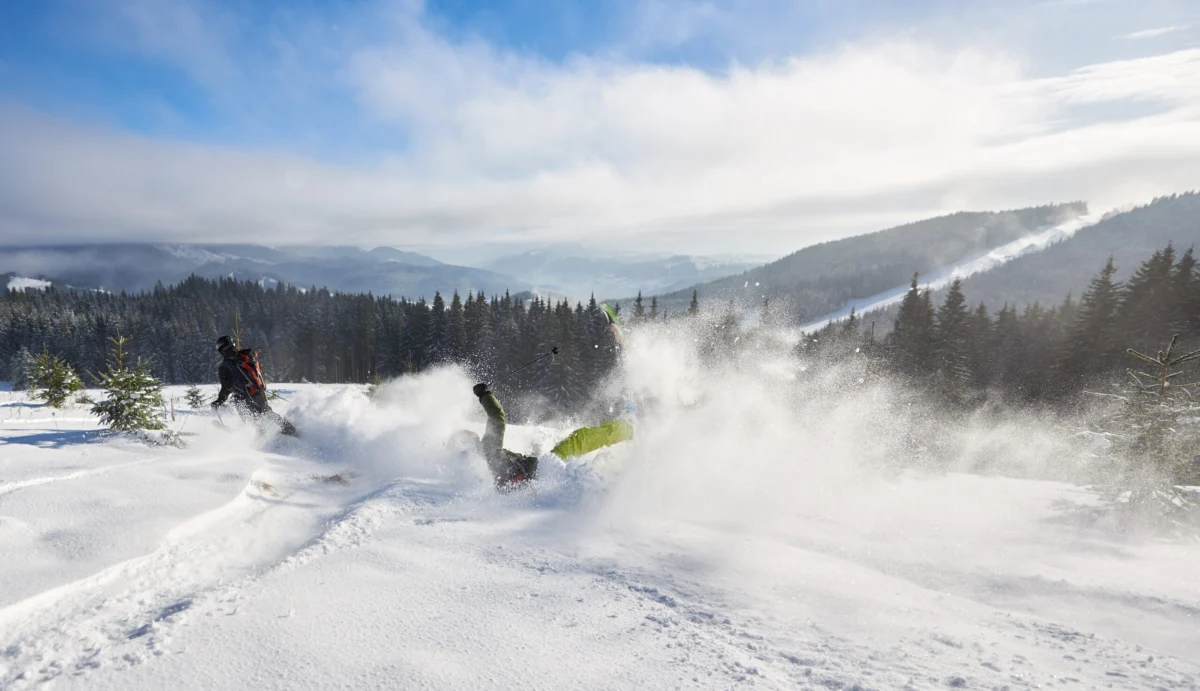
Updated July 24, 2026
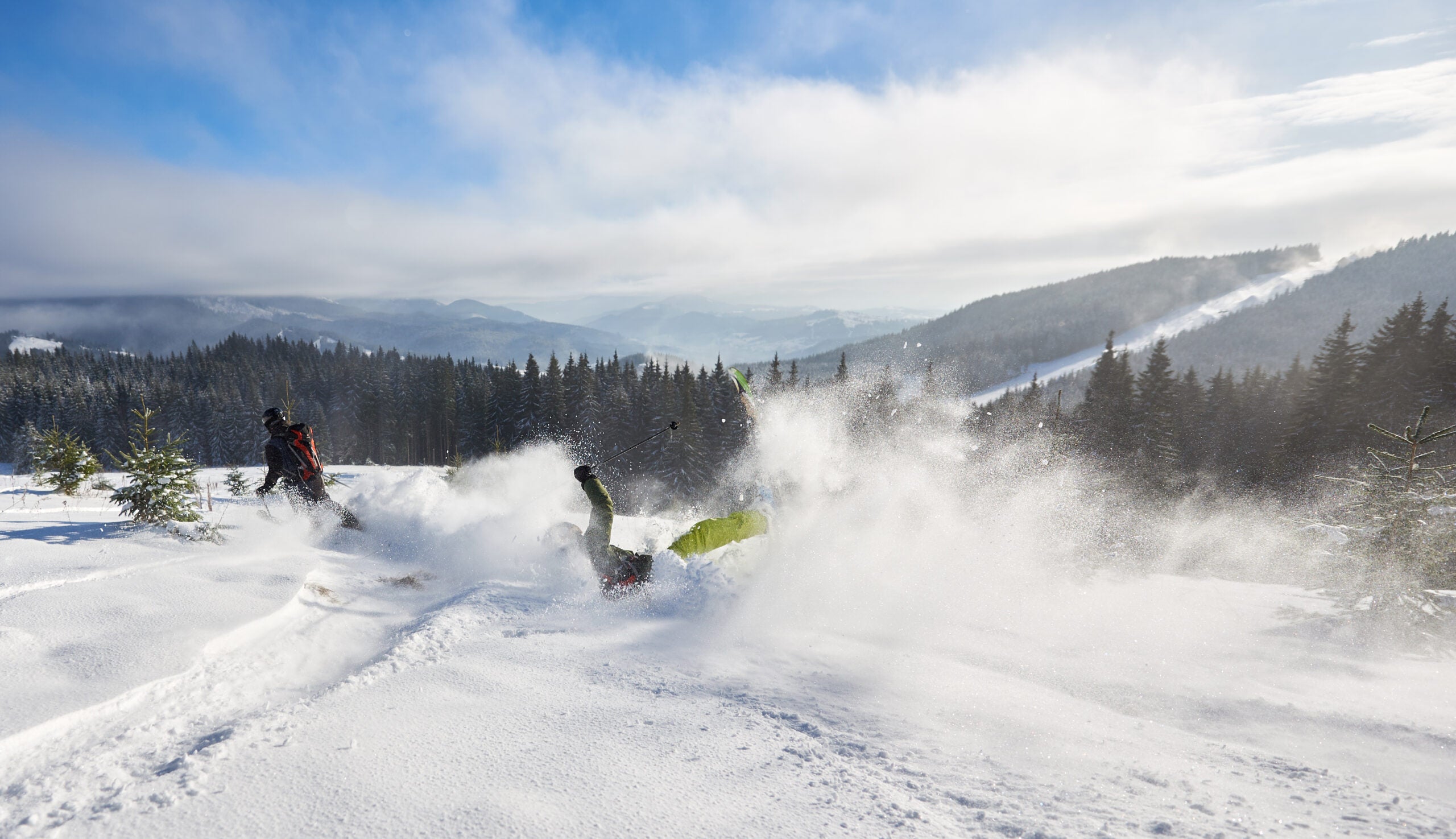
In the age of social media, viral content often takes the form of high-speed chaos. If you spend any time on winter sports forums or Instagram reels, you have likely encountered the genre: a shaky, point-of-view video capturing a catastrophic "yard sale" collision. A skier or snowboarder descends at high velocity, only to strike another slope user from behind, sending gear, goggles, and bodies tumbling across the snow. The inevitable comment section debate follows, usually centering on the same exhausted question: "Who is at fault?"
While keyboard warriors often rush to blame the slower, less experienced skier for "erratic" behavior, the legal and ethical reality of the mountain is far more rigid. According to the National Ski Areas Association (NSAA) and the fundamental tenets of the Skier Responsibility Code, the mandate is clear: The person ahead or downhill of you has the right of way. Yet, as mountain traffic increases and the disparity between expert and novice skills grows, this foundational rule is frequently misunderstood, ignored, or challenged by those who feel their high-speed lines are being impeded by beginners.
The Foundation: Understanding the Skier Responsibility Code
The Skier Responsibility Code is not merely a set of suggestions; it is the industry-standard framework for safety on the mountain. At its core, the code establishes a hierarchy of liability designed to protect the most vulnerable participants on the hill.
The first, and perhaps most critical, rule states: "People ahead or downhill of you have the right of way. It is your responsibility to avoid them." This principle mirrors the "rules of the road" in maritime or aviation navigation, where the vessel with the least maneuverability or the one being overtaken is granted priority.
When a collision occurs, it is rarely the fault of the person minding their own business in front of you. Even if that person is skiing slowly, making wide, sweeping turns, or stopping to adjust their boots, they are operating within the standard expectations of a public resort. The uphill skier, conversely, possesses the visual advantage—they can see what is happening in front of them—and the physical agency to dictate their speed and trajectory.
The "Expert" Fallacy: Why Skill Does Not Grant Immunity
A recurring point of tension on the slopes is the frustration felt by advanced skiers and riders who view the mountain as a high-performance playground. When a learner is practicing their "pizza" turns or carving wide, rhythmic arcs across the entire width of a trail, they are often viewed by faster, more aggressive skiers as "roadblocks."
This frustration often manifests as dangerous "threading the needle" maneuvers. Expert skiers may feel that because they have superior control and speed, they are entitled to weave through traffic at high velocity. However, the mountain is not a video game, and other skiers are not artificial obstacles programmed to stay in a specific lane.
The argument for the "superior skier" is actually a moral and professional obligation: the more proficient you are, the greater your responsibility to ensure the safety of those around you. An advanced skier has the technical capability to stop on a dime, carve a tight turn to avoid a collision, or choose a different line entirely. By choosing to "bee-line" toward the base and forcing a collision with a beginner, the advanced skier is not merely being impatient—they are failing to meet the basic duty of care required of all slope users.
Chronology of a Collision: The Anatomy of an Incident
To understand how these incidents escalate, it is helpful to look at the typical progression of an on-slope collision.
- The Approach: A faster, more confident skier identifies a "line" through a crowded section of a blue or green run. They maintain a speed that allows for little to no margin of error should a skier ahead change direction.
- The Variable: The downhill skier, likely a novice or intermediate, decides to make a wide turn to control their speed or avoid an icy patch. Their path is predictable only to those who understand that they are learning, but it is "unpredictable" to someone skiing with tunnel vision.
- The Blind Spot: Because the downhill skier does not have eyes in the back of their helmet, they are unaware of the closing speed of the uphill skier.
- The Impact: The uphill skier, failing to adjust their speed or trajectory, attempts to squeeze through a gap that is closing. The result is a high-impact collision.
- The Aftermath: This is where the social media drama usually begins. The uphill skier often blames the "erratic" behavior of the downhill skier, while the downhill skier, often injured or in shock, is left reeling from an encounter they had no way of anticipating.
Supporting Data and Safety Trends
Statistics regarding slope safety have remained consistent for decades. According to data provided by the NSAA, the vast majority of collisions occur on lower-angle terrain near the base of the mountain. This is precisely where the intersection of high-speed expert traffic and low-speed beginner traffic is most dense.
The economic reality of the sport further complicates this. As the cost of professional ski lessons continues to climb, fewer beginners are receiving formal instruction on slope etiquette. When a new skier is self-taught, they often miss the foundational education regarding trail awareness, the responsibility code, and how to safely navigate busy intersections.
While the "Responsibility Code" is printed on trail maps and displayed on signage at lift stations, it is frequently overlooked by visitors eager to get to the snow. The result is a population of skiers on the mountain who lack both the technical skill to stay out of the way and the theoretical knowledge of how to act safely.
Official Responses and Industry Standards
Resorts across North America have begun to increase their efforts to educate guests, though enforcement remains difficult. "Mountain Hosts" or "Safety Patrols" are frequently stationed at high-traffic intersections to encourage safe speeds.
The NSAA emphasizes that safety is a shared responsibility. While the uphill skier holds the primary burden of avoiding the person below, the downhill skier is not entirely exempt from safety requirements. Specifically:
- Stopping: Stopping in the middle of a narrow trail or, more dangerously, below a blind rollover (a crest in the hill that prevents uphill traffic from seeing you), is a significant violation of safety protocol.
- Predictability: Skiers are expected to remain predictable in their movements. Erratic, sudden lane changes without checking over the shoulder contribute to the difficulty of navigating around them.
Despite these caveats, the legal precedent in almost every jurisdiction remains clear: if you are the one moving faster and you are positioned uphill, the onus is on you to ensure you do not make contact with those in front of you.
Implications for the Future of Skiing
As climate change pushes more traffic onto fewer open runs and the industry continues to push for higher skier density to maximize revenue, the friction between speed-seekers and learners will only intensify.
If we want to reduce the frequency of the "Instagram-famous" collision, the solution cannot be to force beginners off the mountain. Beginners are the lifeblood of the industry. Instead, the burden lies on the community of experienced skiers to change their culture.
The next time you are carving down a groomer and see a group of learners ahead, treat them with the same caution you would give to a child or a pet. Accept that your "best time down the mountain" is less important than the safety of your fellow guests. By internalizing the Skier Responsibility Code—not just as a set of rules, but as a moral imperative—we can create a mountain environment that is inclusive, safe, and, most importantly, collision-free.
Ski in control. Look ahead. And remember: the person in front of you has the right of way, no matter how slow, how wide, or how "unpredictable" they may seem.

 Iffa Jayyana
 Azzam Bilal Chamdy
 Neng Nana
 Nana Wu
 Lina Hope

 Sagoh
Sagoh