Ammar Sabilarrohman
Introduction: A Peaceful Afternoon Turned Hostile
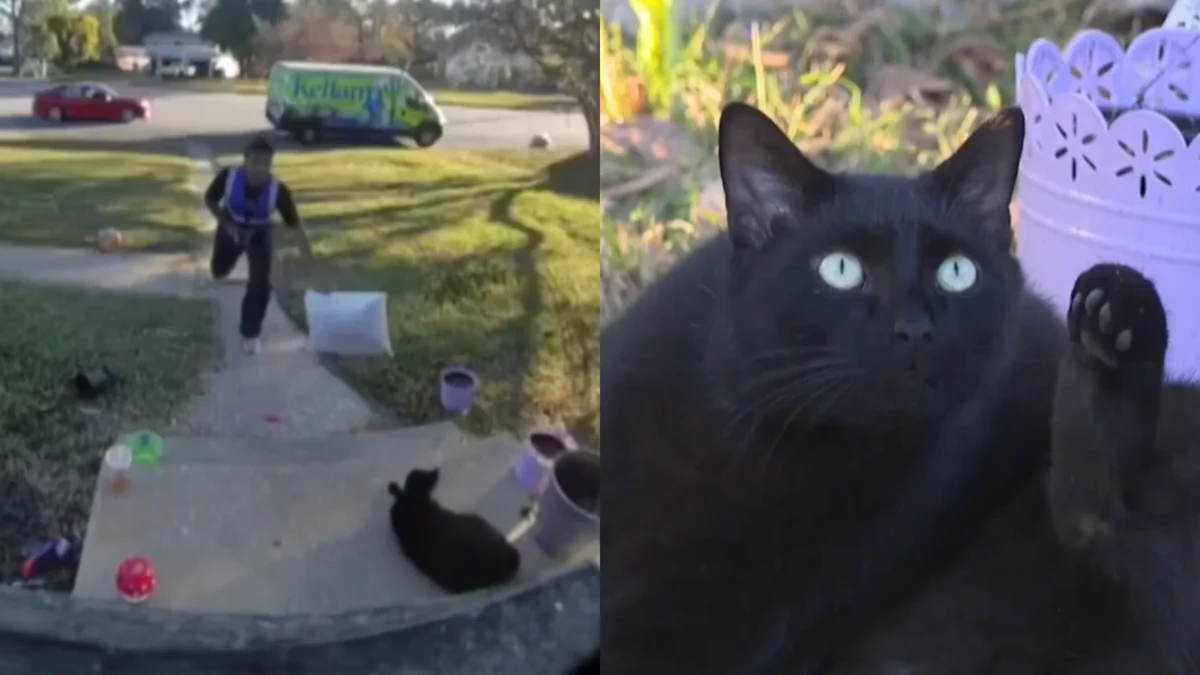
In a disturbing incident that has ignited a firestorm of controversy across social media, a delivery driver in Virginia Beach, Virginia, has come under intense scrutiny after doorbell camera footage captured him deliberately throwing a package at a family’s cat. The victim of the unprovoked assault was Opie, a 21-pound black cat who was simply lounging on his own front porch, soaking up the afternoon sun.
The incident, which occurred on October 25, has reignited a heated national conversation regarding the conduct of delivery personnel and the safety of household pets. As the video circulated, it drew thousands of comments from outraged animal lovers, leading the delivery driver to return to the scene to issue an apology—an act that has done little to soothe the homeowner’s lingering concerns regarding the safety of her pet and the accountability of the delivery company involved.
Chronology of the Incident
The events unfolded on a quiet Friday afternoon in Virginia Beach. According to homeowner Isabell Sump, Opie, a notoriously carefree and gentle animal, was occupying his usual spot on the front porch.
At approximately the time of the scheduled delivery, a courier for the logistics firm GOFO approached the residence. Instead of placing the parcel down in a standard manner, the driver is clearly seen in the Ring doorbell footage pausing, seemingly identifying the cat, and then launching the package directly at the animal. The package struck Opie, causing the cat to recoil in fear. Following the impact, the driver did not immediately leave; instead, he was caught on camera smirking before proceeding to take a confirmation photo of the delivery.
The footage, which was later uploaded to various social media platforms, went viral within hours. The visual evidence—the deliberate aim, the impact, and the subsequent lack of remorse—sparked immediate concern among pet owners, many of whom have expressed their own anxieties about the presence of delivery personnel on their property.
Supporting Data: A Pattern of Concerning Behavior
This incident is not an isolated event; it is part of a troubling, albeit erratic, trend of delivery-related conflicts involving domestic animals. Over the past year, the industry has seen several high-profile reports of drivers interacting with pets in ways that range from unprofessional to criminal.
Earlier this year, an Amazon delivery driver made headlines after being caught on camera removing a family’s cat from their porch. The driver subsequently claimed that the animal was his own missing pet, a defense that failed to quell the public’s skepticism or the homeowner’s distress. In a separate incident in January, an Amazon driver in the United Kingdom was caught stealing a family’s cat during a delivery route. While that animal was eventually recovered and returned, the pattern of incidents has left many pet owners feeling vulnerable.
The prevalence of doorbell cameras—now a standard feature in many modern homes—has acted as a "digital watchdog," bringing these interactions into the public eye. What once might have been dismissed as an unfounded accusation is now backed by high-definition video, forcing companies to address behavior that was previously hidden behind the anonymity of a delivery uniform.
The Confrontation: An Apology Met with Skepticism
Following the intense public backlash, the driver responsible for the incident returned to the Sump residence. In an effort to address the situation, he spoke with the homeowner through a translation app.
“Cats make me uneasy,” the driver explained through the device. “I came to apologize to the person. To show my face, because I’m telling you, I’m not someone who likes trouble, let alone cats.”
However, for Isabell Sump, the apology felt insufficient and fundamentally misaligned with the gravity of the incident. During a subsequent confrontation, which was documented by local news crews, Sump questioned the driver’s logic. She pointed out that if the driver felt genuine fear or discomfort regarding the presence of a cat, there were numerous alternatives to physical assault.
“He wasn’t bothering a soul. You could have put it at the bottom of the steps. You didn’t have to throw it at him, laugh and point at him,” Sump told the driver. “If you were scared of him, you could have left the package in the yard, and we would come get it. There’s no need to harm the animals.”
Official Responses and Corporate Accountability
The logistics company, GOFO, has confirmed that they have reached out to Sump and have launched an internal investigation into the driver’s conduct. In an era where brand reputation is inextricably linked to the conduct of contract workers, companies are under increasing pressure to implement stricter screening and behavioral standards.
However, internal investigations are often viewed with cynicism by the public. Sump has previously stated her intention to pursue potential criminal charges, should the legal threshold for animal cruelty be met. Currently, the legal status of the driver remains in limbo. Whether the incident constitutes a criminal offense depends on state-specific statutes regarding animal cruelty and the degree of injury sustained by the animal.
Opie’s health has become a focal point of the investigation. Sump has noted that since the incident, the 21-pound cat has been visibly limping and exhibiting signs of extreme skittishness—a stark departure from his usual, relaxed temperament. This emotional and physical toll adds a layer of complexity to any potential legal proceedings.
Implications: Superstition and the "Halloween Effect"
A particularly concerning element of this story is the timing. Occurring in late October, the incident has drawn attention to the heightened risks faced by black cats during the Halloween season.
Sump expressed her concern that the driver may have been influenced by lingering cultural superstitions surrounding black cats. While the driver cited an general “unease” regarding cats, the act of targeting a black cat specifically has sparked a wider conversation about the mistreatment of animals based on myth and folklore. Animal shelters across the country frequently pause adoptions of black cats during the month of October due to fears of potential abuse or ritualistic harm, and this incident has served as a grim reminder that such concerns are not entirely unfounded.
The Future of Delivery-Pet Relations
The viral nature of this incident highlights the power of modern surveillance technology to influence corporate policy. As more households install smart doorbells and security cameras, the "last mile" of delivery—the physical interaction between the courier and the doorstep—is coming under a microscope.
For delivery companies, the implications are clear: the training of personnel must extend beyond time-management and navigation. It must encompass situational awareness and respect for the domestic environments into which these workers enter daily. When a driver enters a private property, they are a guest; treating that property—and its inhabitants—with disregard is no longer an invisible act.
For pet owners, the advice from animal welfare advocates remains consistent: ensure that pets are secure during delivery windows, particularly if the animal is prone to sitting on the porch or near the front door. However, the onus of responsibility must ultimately rest on the individuals performing the delivery. As Sump aptly summarized during her interview, there is simply "no need to harm the animals."
As the investigation into the GOFO driver continues, the public remains watchful. The story of Opie and his owner serves as a potent reminder of the importance of empathy, the necessity of professional accountability, and the role that digital transparency plays in holding those in positions of service to a higher standard of behavior. Whether this leads to concrete policy changes within the logistics industry remains to be seen, but the message from the community is loud and clear: the treatment of pets is not a minor detail—it is a reflection of the character of those who enter our homes.


 Suro Senen
 Asro

 Nana Wu

 Neng Nana

 Sagoh

 Azzam Bilal Chamdy