
 Sagoh
Sagoh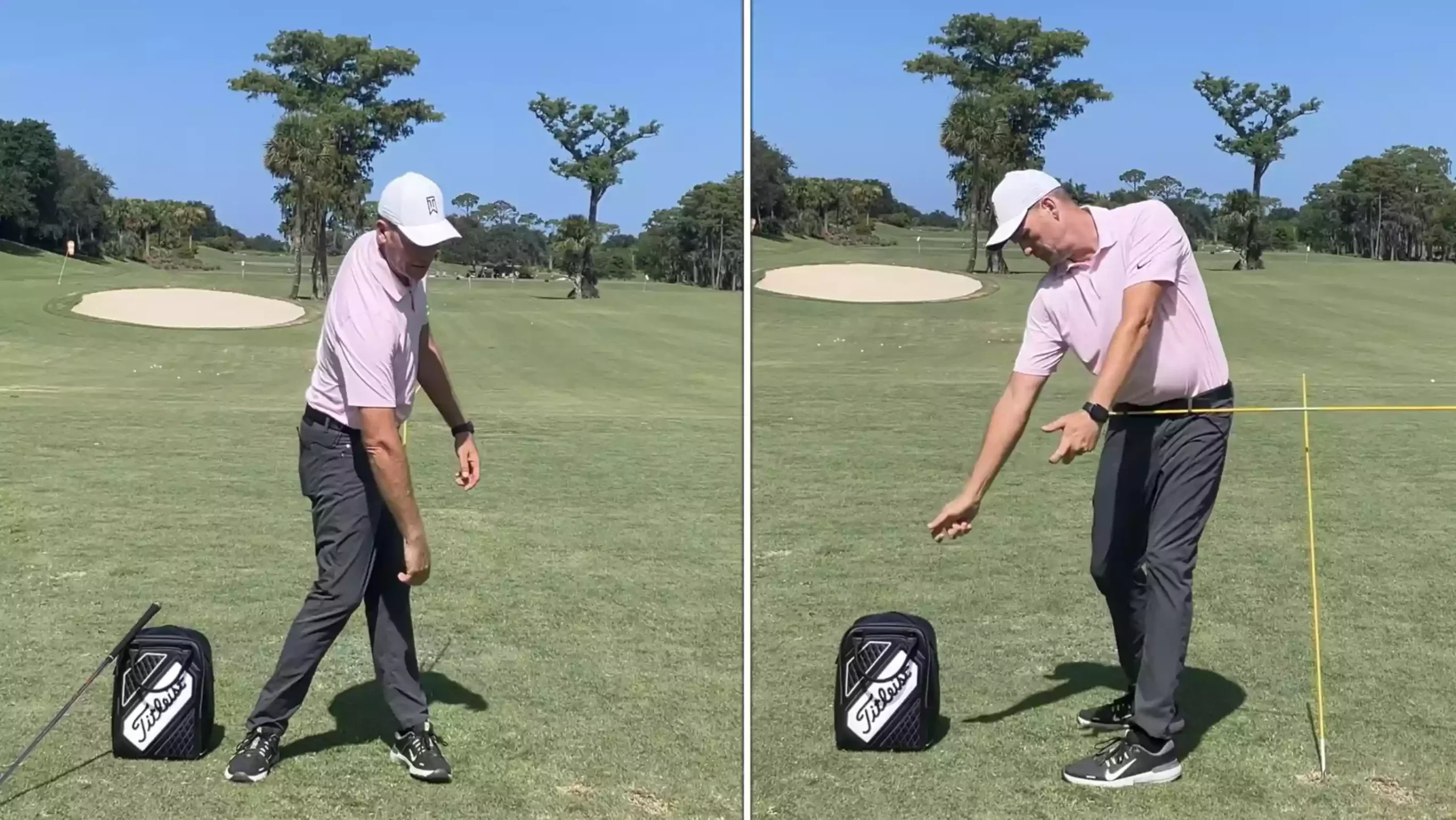
For many mid-handicap golfers, the pursuit of a pure strike often feels like chasing a mirage. You stand on the range, execute a promising practice swing, and yet, when the ball is teed up, the results are inconsistent at best—blocks, hooks, and thin strikes that leave you scratching your head. According to golf instructor Mark Durland, the culprit is rarely a lack of effort or talent; it is a fundamental mechanical imbalance in the downswing.
The "downswing slide" is a silent killer of golf scores. By prioritizing lateral movement over rotational power, golfers are essentially leaking energy and inviting a host of technical faults that make consistent contact nearly impossible.
Main Facts: The Physics of the Slide
The modern golf swing is an intricate orchestration of three distinct forces: vertical (ground force), lateral (side-to-side shift), and rotational (the turn). While every professional golfer utilizes all three, the secret to elite ball striking lies in the balance of these forces.
When a golfer slides—moving their hips toward the target prematurely—the center of gravity shifts too far ahead of the ball. This lateral surge causes the club path to become excessively "inside-out," leading to the dreaded block or the violent over-hook. Furthermore, it often causes the golfer to dump their wrist angles early, leading to a steep angle of attack that results in fat or thin shots.
"The golf swing is a blend of forces," Durland explains. "Problems arise when those forces become unbalanced. For the mid-handicapper, we see an over-reliance on lateral movement. They are moving toward the target rather than rotating around their spine."
Chronology of a Failed Sequence
To understand why the slide is so detrimental, it helps to break down the swing sequence as it occurs in a "sliding" player:
- The Setup: The golfer begins in a neutral position, but the intention is already skewed toward "hitting the ball" rather than "swinging through the ball."
- The Backswing: The golfer may actually make a decent turn, but the transition is triggered by a lateral push of the hips toward the target rather than a pivot of the lead hip away from the ball.
- The Downswing (The Slide): Instead of the hips clearing, the entire lower body shifts forward. This puts the club "behind" the body, forcing the hands to flip or the path to swing drastically rightward (for a right-handed golfer).
- Impact: The clubface is often struggling to catch up. If the timing is off by a millisecond, the clubface is either wide open (block) or violently closing (snap hook).
- The Follow-Through: Because the golfer has "slid" out of their space, they are forced to stand up or pull their arms in to avoid hitting the ground, resulting in a loss of power and poor accuracy.
Supporting Data: Why Rotation Outperforms Lateral Shift
Biomechanically, the human body is designed for rotation. When we look at the data from force plates used in modern coaching, the world’s best players demonstrate a specific "pressure trace." They move into their lead side, yes, but that movement is quickly halted by the lead leg, which acts as a "post" around which the pelvis rotates.
If a golfer continues to slide past the point of impact, they lose the ability to utilize the ground as a lever. By rotating, the golfer creates a whip-like effect at the bottom of the swing arc. Data shows that players who successfully transition from lateral movement to rotation see an immediate improvement in "smash factor"—the efficiency with which they transfer energy from the clubhead to the ball.
The Alignment Stick Protocol: A Practical Fix
To move away from the slide, Durland proposes a tactical drill designed to rewire the brain’s perception of the downswing. This exercise creates an immediate feedback loop.

The Setup
- The Belt Loop Tool: Take an alignment stick and thread it through your front belt loops. Most of the stick should extend out from your lead side (the left side for a right-handed player).
- The Ground Anchor: Place a second alignment stick vertically into the ground, positioned about one foot behind your heels, aligned precisely with your lead heel.
The Execution
Without using a club, assume your address position. Perform a slow-motion backswing, followed by a downswing. Your objective is simple: as you move into your downswing, the end of the alignment stick protruding from your belt should make contact with the vertical stick in the ground.
If you slide, you will miss the stick entirely—your hips will move toward the target, taking the belt-stick away from the anchor. If you rotate correctly, your lead hip will clear, bringing the belt-stick squarely into contact with the vertical marker.
Implications for the Modern Golfer
Transitioning from a sliding motion to a rotational one is not merely about hitting the ball further; it is about reclaiming control over the clubface. When you rotate, you keep the clubhead on a more consistent plane. This reduces the variability in your ball flight and, crucially, allows for a more shallow angle of attack.
"The goal isn’t to eliminate lateral movement entirely," Durland notes. "Some lateral movement is necessary to initiate the downswing. The goal is to create a better balance."
The Role of the Lead Leg
One of the most overlooked components of this fix is the role of the lead leg. Many golfers who slide do so because they are afraid to straighten their lead leg. In reality, allowing the lead leg to extend—or "post up"—after the initial transition is the secret to clearing the hips. When the lead leg firms up, it forces the pelvis to rotate upward and around the body. This motion not only prevents the slide but helps the clubhead "shallow out," leading to cleaner, more consistent contact across the entire bag, from the driver down to the wedges.
The Mental Shift
Ultimately, fixing the slide requires a shift in mindset. Many amateur golfers believe they must "push" into the ball to generate power. In reality, power in the golf swing is derived from centripetal force and the efficient transfer of energy through the kinetic chain.
By embracing the rotational model, you stop fighting against your own physics. The alignment stick drill acts as a physical reminder that your hips have a job to do: they must turn. Once the hips clear the path, the arms and the club can swing freely, unencumbered by the body’s lateral interference.
Conclusion: Turning the Corner
If you find yourself struggling with a lack of compression or a swing path that feels erratic, the answer is likely hiding in your lower body. By spending time with the alignment stick drill, you can train your brain to prioritize the pivot.
Consistency in golf is rarely about having the perfect swing; it is about having a swing that is repeatable and balanced. By trading that excessive slide for a crisp, rotational turn, you aren’t just fixing a swing fault—you are building a foundation that will serve you for years to come. Start slow, focus on the rotation, and watch as your ball striking transforms from a source of frustration into the most reliable part of your game.


 rifanmuazin
 Ali Ikhwan
 Pevita Pearce
 Basiran
 Nila Kartika Wati
 Nana
Nana