
 rifanmuazin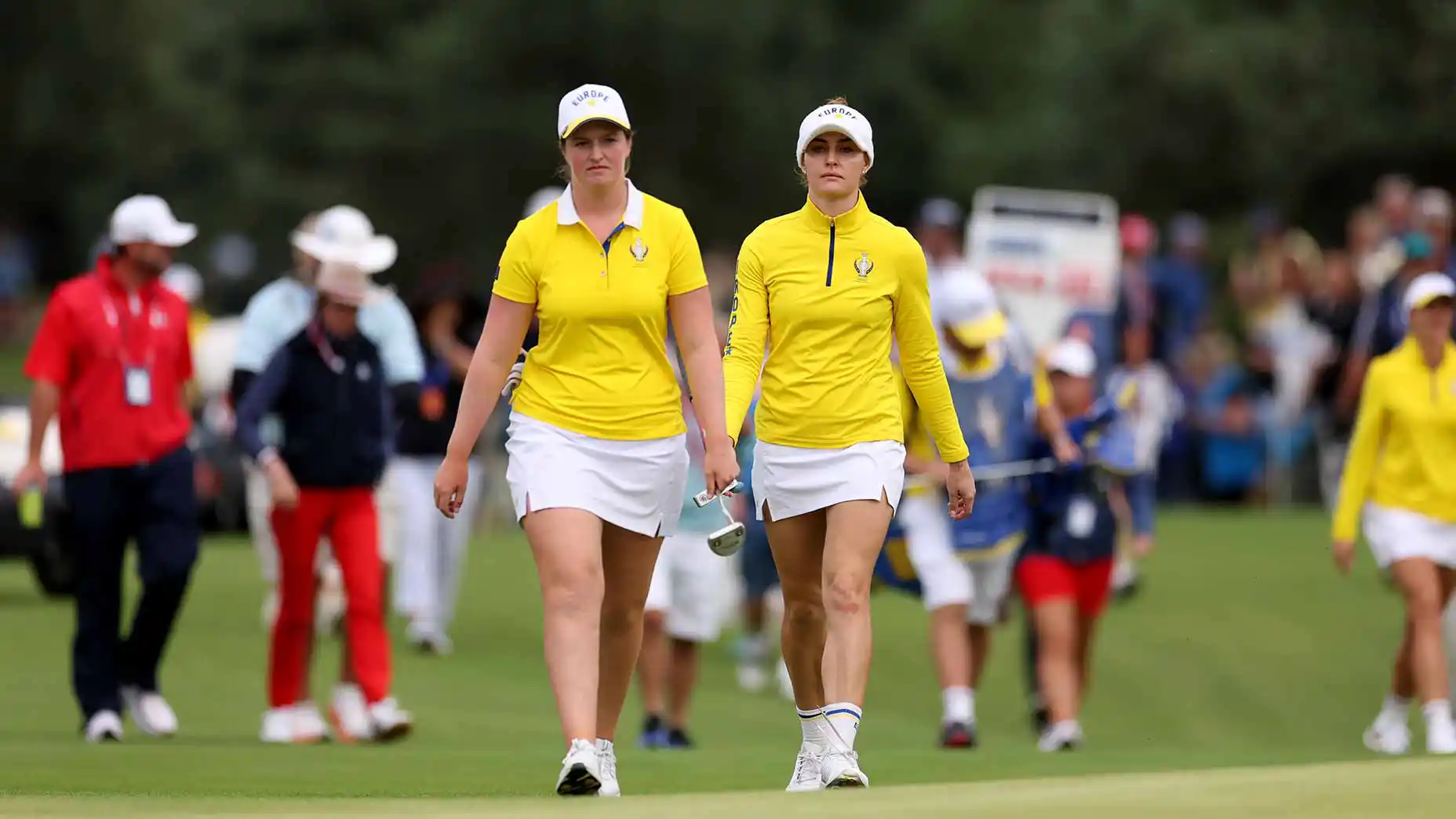
By Josh Sens | September 12, 2026
As the 2026 Solheim Cup reaches its fever pitch at the picturesque Bernardus Golf in the Netherlands, the narrative surrounding the European team has become a study in stark contrasts. While the home crowd has been energized by the historic dominance of Swedish duo Maja Stark and Linn Grant, a shadow of bewilderment hangs over the team’s top-ranked stars, Charley Hull and Lottie Woad.
Expectations were sky-high for the pair, both of whom occupy top-10 world rankings. They entered the week with the clear intention of serving as the backbone of Captain Anna Nordqvist’s European squad, signaling their availability for all five sessions. However, as the sun set on a dramatic Saturday at Bernardus, the math remained grim: in four matches together, the duo has managed to scrape together just half a point.
The Discrepancy Between Performance and Result
In the volatile theater of match play, the scoreboard does not always serve as an honest broker of talent. For Hull and Woad, the statistics from their weekend paint a picture of a team playing well enough to win, yet finding themselves consistently on the wrong side of the ledger.
"Yeah, it was pretty frustrating," Hull admitted following a grueling Saturday session. Her partner, the rising star Lottie Woad, was more specific about the culprit: "Just didn’t make any putts."
The frustration stems from the fact that both players feel they have been striking the ball with world-class precision. During Friday’s four-ball matches, the pair navigated the course at an impressive 10-to-11-under-par clip, yet still found themselves in a back-and-forth battle that underscored the high level of competition present at this year’s tournament.
A Chronology of the Struggle
The path to the current 8-8 deadlock has been a rocky one for the European stalwarts. Their campaign began with high hopes, but the momentum was stunted early by a relentless American contingent.
Saturday Morning: The Foursomes Drubbing
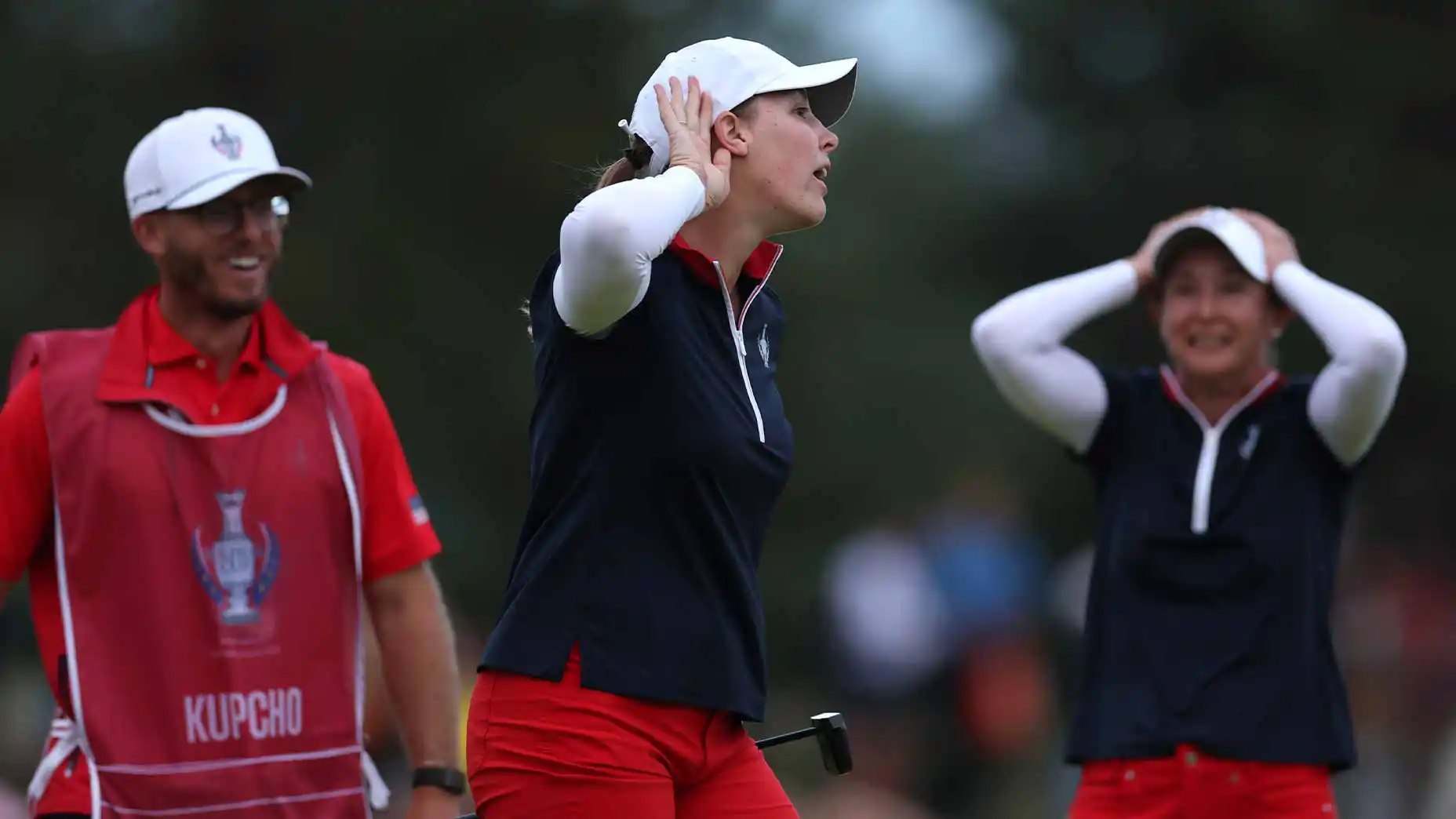
Saturday morning brought perhaps the most humbling moment of the week for the pair. Facing the American tandem of Alison Lee and Lauren Coughlin, Hull and Woad were dismantled 6 and 5. It was a clinical performance from the Americans, who played 7-under golf through the first 14 holes. As Woad noted later, "I don’t think anyone would have beaten who we played this morning. They were playing lights out."
Saturday Afternoon: The Four-Ball Heartbreak
The afternoon session offered a chance at redemption, but it ultimately served as a microcosm of their entire week. Facing Yealimi Noh and Andrea Lee, the Europeans remained within striking distance for the duration of the match. They never trailed by more than two holes and forced a dramatic conclusion when Hull drained a clutch birdie on the par-4 17th.
However, the 18th hole proved to be the final nail in the coffin. Needing a win to halve the match, Hull found the water off the tee, and Woad—burdened by the pressure of the moment—left her birdie attempt short. It was a quiet, deflating end to a day that promised so much more.
Analyzing the Data: The "Bad Luck" Factor
Why has a pairing of this caliber struggled to secure points? The answer lies in the unforgiving nature of match play, where individual brilliance is often eclipsed by the "hot hand" of the opposition.
"I think today we didn’t hole many putts in the morning and all afternoon and that’s the difference," Woad explained. "The people we played were holing 15-footers, and we weren’t."
In the context of the Solheim Cup, where the margins for error are razor-thin, the difference between a point and a loss often comes down to a few key putts on the back nine. While the stats show Hull and Woad have been arguably the most consistent ball-strikers on the team, they have been victims of a statistical anomaly: they have consistently run into opponents playing at the absolute peak of their potential.

The Counter-Narrative: Stark and Grant’s Dominance
While Hull and Woad navigate their slump, the rest of the European team has provided the necessary ballast to keep the score tied at 8-8. The story of the weekend has undoubtedly been the Swedish pairing of Maja Stark and Linn Grant.
Stark and Grant have been nothing short of sensational, winning all three of their matches. On Saturday, they proved their mettle as legitimate "giant slayers." In the morning, they dispatched World No. 1 Nelly Korda and Allison Corpuz 3 and 2. They followed that up by knocking off Megan Khang and Lauren Coughlin in the afternoon.
The latter victory was particularly significant; it marked the first loss for Khang in eight Solheim Cup matches and snapped a perfect streak for Coughlin. This performance has been the lifeblood of the European campaign, proving that depth—not just star power—is what wins the Solheim Cup.
Official Responses and Tactical Implications
Captain Anna Nordqvist has remained steadfast in her support of her struggling pair. When asked on Saturday whether she regretted the decision to keep the two together, or if she planned to shake up the lineup for Sunday’s singles, her tone was one of unwavering confidence.
"I think a lot of it is just for them to keep doing what they have been doing," Nordqvist said. "We’re playing the best players in the world from both teams, so it’s going to be some tough matches. There’s going to be a lot of good golf not being rewarded. That’s just golf."
Nordqvist’s refusal to panic is a calculated move. She recognizes that Hull and Woad are too talented to remain cold indefinitely. By showing faith in her top-ranked players, she is likely hoping to settle their nerves and allow their natural ability to take over during the pressure-cooker environment of Sunday singles.
The Road Ahead: Sunday Singles
As the event moves into its final day, the pressure on the individual matches increases exponentially. The 8-8 deadlock means that every single point will be contested with the intensity of a final.
For the final session, Captain Nordqvist has once again placed her trust in Charley Hull. She will lead the charge for Europe, facing off against the formidable Megan Khang in the first match of the day. It is a high-stakes encounter that will set the tone for the entire afternoon. Lottie Woad, meanwhile, will look to find her groove in the 8th match against Auston Kim.
When asked about the personal pressure of her winless week, Woad remained remarkably team-oriented. "Doesn’t matter who wins the points," she said, reflecting the collective spirit that the Solheim Cup demands. "I would happily lose my matches if we win."
Implications for the Future of European Golf
The struggles of Woad and Hull, balanced against the emergence of Stark and Grant, offer a fascinating look at the future of European golf. The transition from established stars to a new generation of talent is currently in full swing.
If Europe manages to hoist the trophy on Sunday, it will be remembered as a victory of collective resolve—a testament to a team that didn’t rely on its stars to do the heavy lifting, but rather on the resilience of the entire roster.
However, if they fall short, the "what ifs" regarding the Hull-Woad pairing will be the subject of much debate in the coming months. Was it a tactical error to keep them paired for so long? Or was it simply a matter of the golf gods being unkind?
Regardless of the outcome, the 2026 Solheim Cup at Bernardus has already cemented itself as a classic. It has been a reminder that in professional golf, even the world’s best can find themselves fighting against the current. As Sunday’s singles matches get underway, all eyes will be on Hull and Woad, waiting to see if they can finally translate their solid play into the decisive points that could secure the Cup for Europe. In a game defined by inches, the final chapter of this drama is yet to be written.


 Reynand Wu
 Ali Ikhwan
 Dwi Wanna
 Raul Delapena Setiawan
 Laily UPN
 Ammar Sabilarrohman