
 Neng Nana
By Dylan Dethier
October 29, 2026
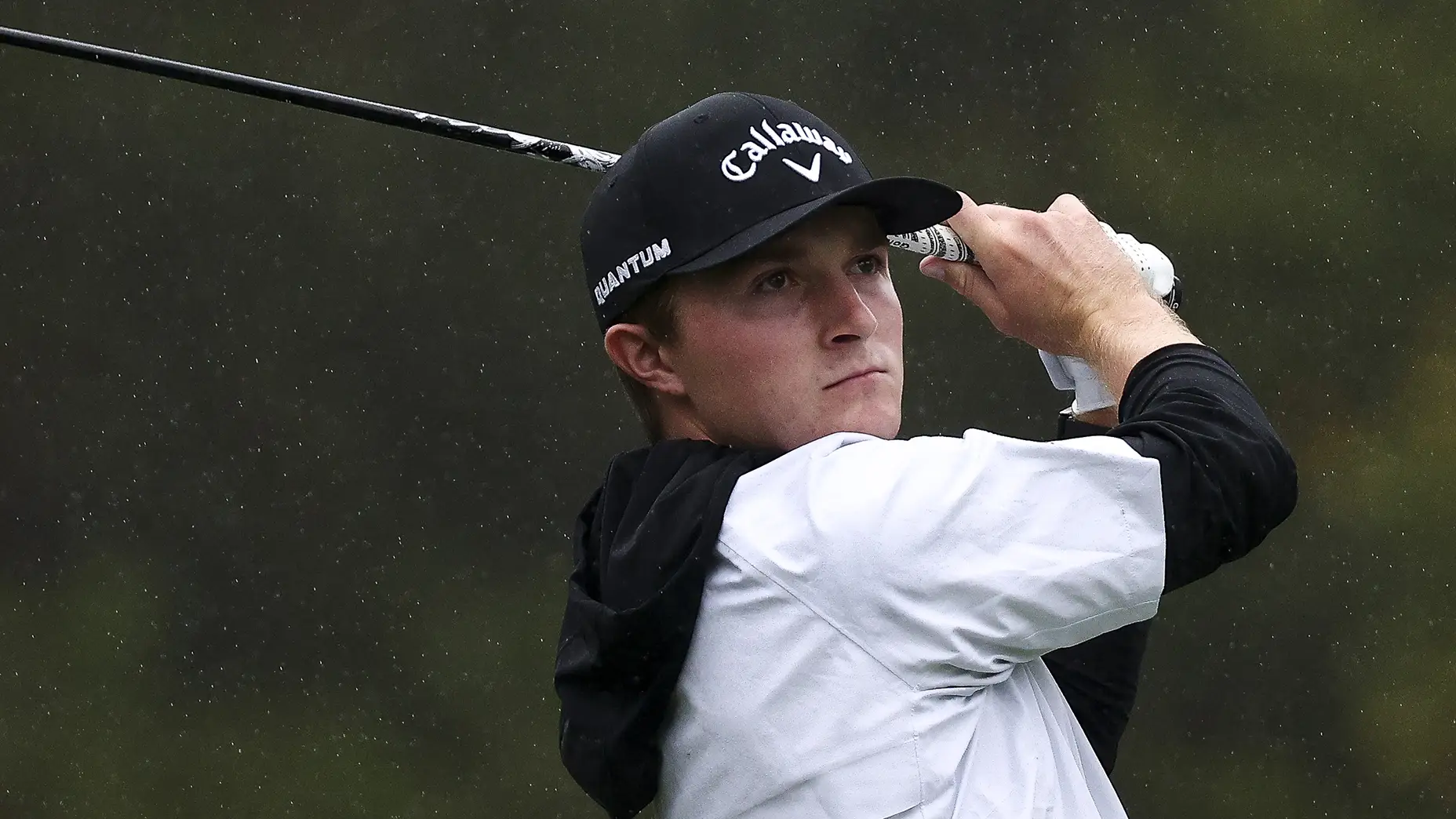
In the world of professional golf, the difference between a successful career and an uncertain future often comes down to a single, fleeting opportunity. For Nick Hardy, a 30-year-old journeyman fighting to maintain his foothold on the PGA Tour, Thursday’s opening round at the VidantaWorld Mexico Open was far more than a chance to climb a leaderboard. It was a career-defining moment, a masterclass in logistics, and a financial windfall disguised as an early morning tee time.
While the gallery saw a golfer fighting for a spot in the top tier of the tournament, those privy to the inner workings of the PGA Tour’s benefits structure knew the real story: Hardy had just secured his future. By simply teeing off, the Illinois native triggered a vesting clause in his retirement plan, a milestone worth an estimated half-million dollars in long-term value.
The Anatomy of a Last-Minute Call-Up
The journey to the first tee at VidantaWorld was a harrowing exercise in professional instability. As a player with limited status, Hardy has spent the 2026 season balancing a disjointed schedule between the Korn Ferry Tour and the PGA Tour. For athletes in his position, the week-to-week reality is one of constant travel, unpredictable income, and the looming threat of administrative obscurity.
Hardy arrived in Mexico not with a guaranteed spot, but with a hope and a prayer. As the tournament week began, he sat as the fourth or fifth alternate on the entry list. The decision to travel was a gamble—a logistical leap of faith that required booking flights and hotels with no assurance of a return on investment.
"You just never know the day of tournaments," Hardy remarked following his round. "Guys don’t feel good from travel, whether it’s getting sick or pulling something in their back, a muscle—you never know. You have to plan a lot of contingency travel plans, and that’s just the life of it. I think I’m pretty good at dealing with unknowns."
By Wednesday, the odds had improved, but only slightly. Hardy found himself as the first alternate on-site, a precarious position that required him to wait in the wings as the field finalized. When news broke that Taylor Moore had withdrawn due to injury—following earlier withdrawals by Luke List and S.Y. Noh—the door finally swung open. At 8:00 a.m. local time, Hardy was officially in.
A Strategic Milestone: The "Vested" Season
The significance of Hardy’s inclusion goes well beyond the tournament purse or world ranking points. To understand the magnitude of his Thursday morning, one must look at the fine print of the PGA Tour’s player benefits.
Under the current PGA Tour structure, players must complete five "full seasons" to become fully vested in the organization’s retirement plan. To count as a full season, a player must participate in at least 15 sanctioned events. For superstars with full exempt status, this is a formality. For a player like Hardy, who is fighting for every start, it is a high-stakes race against the calendar.
Entering the Mexico Open, Hardy had 14 starts under his belt for the 2026 season. He needed one more to hit the magic number of 15. By taking his place in the group alongside Ben Martin and Kevin Roy, Hardy successfully reached that threshold.
"It was incredible," Hardy said of the moment he realized he was in. "My coach, Sean Foley, is here, and I was just walking down the fairway like, exaggerating smiles just because he knows how big it is to get another start."
The Financial Implications: Calculating the "Bonus"
The financial ramifications of this milestone are substantial. While PGA Tour earnings are public record, the retirement benefits are often opaque. Industry analysts and insiders, including Ryan French of Monday Q Info, have long highlighted the value of the retirement plan’s "cut bonus."

According to reporting from Golf Digest, each made cut on the PGA Tour can carry a retirement value of approximately $5,000. With Hardy having made 74 cuts in 140 career starts prior to this week, his retirement account was already well-funded—potentially exceeding $370,000. By securing his fifth year of service, Hardy ensures that his long-term financial security is solidified, providing a level of "stability" that is otherwise alien to the life of a professional golfer on the bubble.
For a player who has spent his career in the "unknown," this is a massive psychological and financial safety net. It allows him to focus on the game without the crushing anxiety that his career could be wiped away by a bad stretch of play or an untimely injury.
The Competitive Reality: A Professional’s Resolve
Despite the weight of the moment, Hardy’s primary responsibility remained his performance on the course. The opening round at VidantaWorld is notoriously challenging, and Hardy began with a rocky start. However, his veteran resolve shone through as he navigated the final seven holes of his round.
Playing the back stretch in three-under par, including a crucial birdie on the 18th hole, Hardy finished the day at one-under par. This leaves him squarely in the middle of the pack—a position that, while not tournament-leading, is a massive success given the morning’s frantic start.
"My luck’s pretty good right now," Hardy said, "so let’s just parlay it into some good golf."
Life on the Bubble: The Broader Context
Hardy’s story is a microcosm of the modern PGA Tour landscape. The gap between the top 50 players and the rest of the field is wider than it has ever been, and the competition for limited starts has become increasingly fierce. For players ranked outside the top tier, professional golf is less about hoisting trophies and more about survival.
Hardy’s candid assessment of his current situation provides a rare window into this life: "I don’t really know where I’ll be. I can’t really plan travel. I have to plan a lot of contingency travel plans, and that’s just the life of it."
This uncertainty is compounded by the upcoming Q-School and the scramble for status for the following season. Hardy’s ability to remain composed, both on the course and in the face of such logistical instability, is a testament to the grit required to compete at the highest level of the sport.
Conclusion: A Victory Beyond the Scoreboard
As the VidantaWorld Mexico Open progresses, Nick Hardy’s name may or may not rise to the top of the leaderboard. But regardless of the final outcome on Sunday, he has already secured a victory that will impact his life long after he hangs up his clubs.
In the brutal meritocracy of professional golf, where performance is measured in strokes and cents, Hardy demonstrated the importance of persistence. He showed up, he stayed ready, and he seized the opportunity when it presented itself. For a 30-year-old fighter from Illinois, that "insane set of circumstances" on a Thursday morning in Mexico wasn’t just a lucky break—it was the professional validation he has spent his entire career working to achieve.
As he looks ahead to the remainder of the tournament and the fall season beyond, Hardy enters the fray with the rare comfort of knowing that, in at least one important way, his future is secure. For now, he can return his focus to the only thing that matters: the next shot.

 Ali Ikhwan

 Iffa Jayyana
 Sagoh
 Azzam Bilal Chamdy
 Nana Wu
 Suro Senen