
 Ammar Sabilarrohman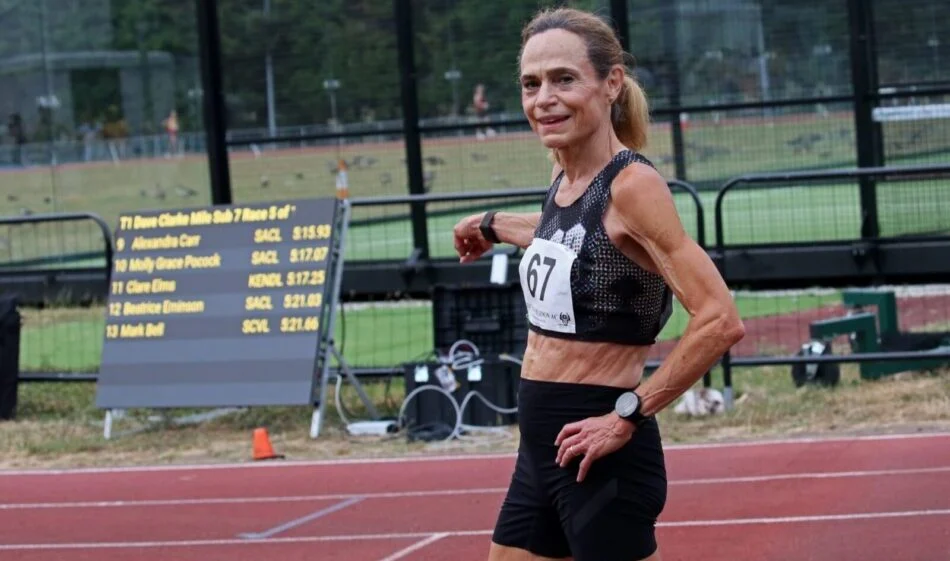
By Steve Smythe
In the world of athletics, greatness is often measured by the flash of a spike or the sudden surge of a younger runner capturing the headlines. Yet, at the annual Dave Clarke Mile held at Wimbledon Stadium, the most profound story was not told by the rising stars, but by a veteran who has been rewriting the record books for nearly two decades. Clare Elms, Britain’s most prolific masters miler, delivered a performance for the ages, shattering her own world records in both the mile and the 1500m during a single, unforgettable race.
A Historic Night at Wimbledon Stadium
The Dave Clarke Mile, an event synonymous with high-caliber middle-distance racing, saw stellar performances from the younger generation. Jack Kavanagh secured a victory in the men’s category with a sharp 3:59.01, while Amelia Quirk dominated the women’s field with a commanding 4:35.01. Both athletes walked away with the £250 prize money, but the true highlight of the evening occurred in the shadows of their performances.
Clare Elms, competing in the W60 age category, did not merely run; she recalibrated the expectations for age-group endurance. Having witnessed Josh Kerr’s spectacular world-record display at the London Stadium just days earlier, Elms channeled that inspiration into her own pursuit of excellence. In one continuous effort, she broke her own W60 world record for the mile, and in doing so, clipped her own world 1500m mark along the way.
A Week of Unprecedented Output: The Chronology
To understand the magnitude of Elms’ achievement, one must examine the grueling schedule she maintained leading up to the race. Her performance was not the result of a fresh set of legs, but the culmination of a week of immense physical exertion.
On the Sunday prior to the Dave Clarke Mile, Elms competed for her club, Kent AC, in the Southern Athletics League in Cambridge. In a display of versatility and stamina, she contested the 400m, 800m, 1500m, and 3000m. This followed a 5000m world age-62 best performance just two days earlier. By the time she stepped onto the track at Wimbledon, it was her sixth race in six days.
Given the intensity of her schedule, even Elms was unsure if she could better the mile record she set last year—a mark widely considered the jewel in her crown of over 100 age-group records since 2008.
The race plan was precise. Chasing a time of 5:18.97, Elms hit her splits with metronomic consistency: 440 yards in 79.0 seconds and the halfway point in 2:38.5. Navigating the fifth of 15 races, she held her position at the back of the pack, tucking in behind European Masters M60 indoor 1500m medallist Jonathan Burrell. She slowed marginally as she passed the bell in 3:57.8, but the final lap provided the necessary surge. Seeing on the photo-finish clock that her 1500m split of 4:56.09 was already inside her previous world record of 4:56.77, she found a final reserve of energy to cross the mile finish line in 5:17.25.
Supporting Data: A Legacy in Numbers
Elms’ statistical footprint on British athletics is singular. She holds every British 1500m and mile record from W45 through to W60. Her progression through the age groups serves as a case study in consistent, high-level performance:
British Age-Group 1500m Records:
- W45: 4:31.87 (2010)
- W50: 4:36.79 (2014)
- W55: 4:46.64 (2019)
- W60: 4:56.09 (2026)
British Age-Group Mile Records:
- W45: 4:56.59 (2010)
- W50: 5:05.42 (2014)
- W55: 5:10.35 (2019)
- W60: 5:17.25 (2026)
The day of the Dave Clarke Mile was arguably her most successful, as she received formal notification that the European Masters Athletics Association had ratified her 10,000m record from last year and her 3000m record set earlier in July. With two fresh world records added to the tally, her total count of world, European, and British records sits comfortably above 100.
The Broader Field: Emerging Talent and Veteran Resilience
While Elms stole the show, the meeting highlighted the full spectrum of British middle-distance running. Theo Creed, a 15-year-old talent, produced an age-grading of 94.62% with his 3:54.96 1500m effort, cementing his lead in the UK U16 rankings.
In the senior ranks, Jack Kavanagh’s sub-four-minute mile was supported by runner-up Charlie Brisley, who also dipped under the four-minute barrier with a 3:59.96 finish. Andrew Penney, 34, continued to prove that competitive fire does not fade with age, posting an impressive 93.48% age-grading for his 4:01.68 clocking.
The event also saw contributions from seasoned masters, including Anna Garnier, who narrowly missed her own W70 world record of 6:33.46, and Peter Giles, the legendary bassist of King Crimson, who continues to push the limits in the M80 category.
Factors of Success: Strength and Recovery
When asked about her ability to continue improving past the age of sixty, Elms points to a shift in her training philosophy. She attributes her recent gains to a dedicated focus on strength work and a comprehensive recovery strategy following a challenging period with Covid-19, which hampered her training between 2020 and 2022.
"I had to rebuild," Elms noted previously. The transition from being a middle-aged master to a W60 phenom required a more meticulous approach to recovery and resistance training. Her current age-grading—101.1% for the mile and 99.61% for the 1500m—indicates that she is not merely competing against her peers, but performing at a level that statistically defies the aging process.
Implications for the Future of Masters Athletics
The Dave Clarke Mile, organized by Ben Noad for Hercules Wimbledon, remains one of the most anticipated fixtures on the calendar. Its immediate sell-out status reflects the growing popularity of competitive masters athletics.
For the sport, Elms represents a paradigm shift. She proves that with the right combination of strength, recovery, and a refusal to accept the natural decline associated with aging, athletes can maintain, and even improve, their performance metrics well into their sixties.
As she looks ahead, the statistics suggest that her 1500m mark, while impressive, has room for further optimization. With her age-grading still shy of her mile percentage, Elms may well find even more time to shave off when she targets a dedicated 1500m race in the future.
In a world where we are often told that our "best years" are behind us, Clare Elms stands as a defiant, record-breaking rebuttal. She is not just running against the clock; she is running against the very concept of time itself. As she continues to add to her tally of over 100 records, the athletics community will continue to watch, waiting to see exactly how far this remarkable journey can go.

 Nana Wu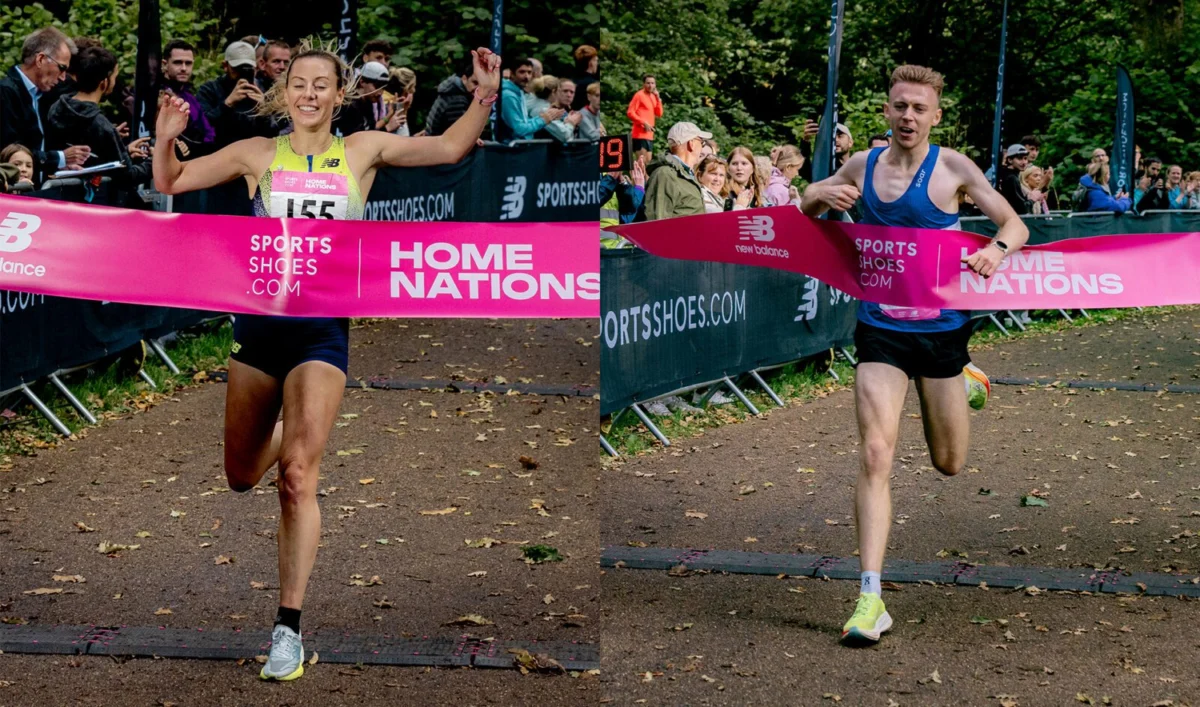
 Siti Muinah
 Neng Nana
 Lina Hope
 Sagoh
Sagoh
 Iffa Jayyana