
 Nana Wu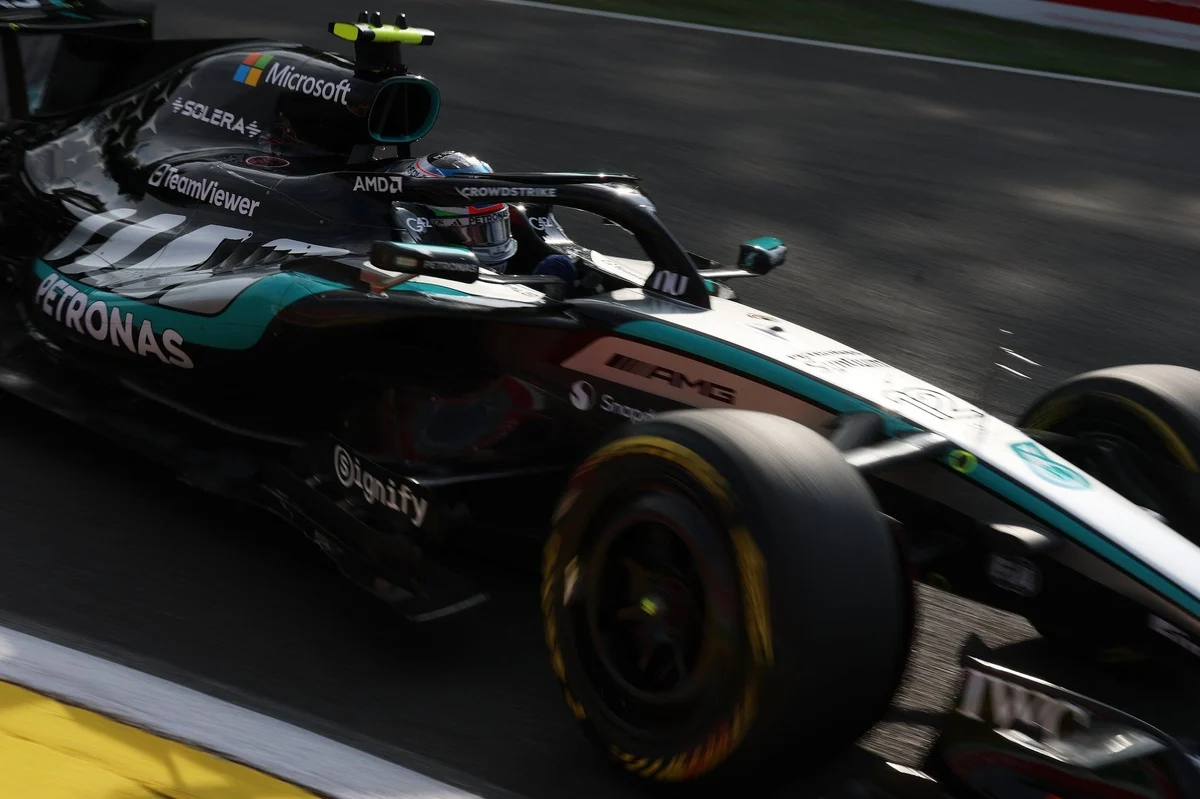
The Resurgence at Spa: A Turning Point for Mercedes
Six wins, six pole positions, and a commanding grip on the Formula 1 championship standings. For Mercedes driver Kimi Antonelli, the Belgian Grand Prix at Spa-Francorchamps represented far more than just another weekend on the calendar; it was a profound act of professional redemption.
Only a year ago, the iconic Belgian circuit served as the setting for one of Antonelli’s most harrowing weekends in the sport. Struggling with a rear suspension configuration that refused to provide the necessary confidence, he endured a race of frustration and uncertainty. Fast forward twelve months, and the narrative has shifted entirely. By securing a dominant victory at Spa, Antonelli has not only established a mathematical cushion that sees him heading into the summer break as the clear championship leader but has also silenced any lingering doubts regarding his adaptation to the high-stakes environment of Formula 1.

This victory is a testament to an extraordinary growth curve. While his natural talent has never been in question, the manner in which Antonelli has synchronized his driving style with the unique demands of the 2026 technical regulations suggests that we are witnessing the arrival of a generational talent capable of thriving in a new era of automotive engineering.
Chronology of a Technical Shift: From Ground Effect to 2026
To truly grasp the magnitude of Antonelli’s performance, one must look back at the twilight of the previous ground-effect era. The cars of that period were marvels of engineering, yet they were defined by a paradox: they were theoretically stable but notoriously volatile. Engineers leaned heavily into the development of "flexible wings" to manage balance, but when the aerodynamic load was lost—often mid-corner—the cars would snap with a ferocity that caught even the most seasoned veterans off guard.

The transition to the 2026 regulations, however, has rewritten the rulebook. A primary change was the migration from 13-inch to 18-inch wheels. This change significantly reduced the sidewall height of the tyres, leading to a smaller, more sensitive contact patch. For many drivers, this change was a major disruption, as it compromised their ability to attack the "combined loading" phase—the critical moment where a driver is simultaneously braking and steering upon corner entry.
Dario Marrafuschi, Head of Motorsport at Pirelli, provided critical insight into this phenomenon in an exclusive interview with Motorsport.com. "If you imagine the rolling of the tyre in the longitudinal direction, the length of the contact patch is shorter," Marrafuschi explained. "With a shorter contact patch, the transition in driving feel between having grip and losing it is more sudden. This is why we understand the drivers’ comments; it was expected that these difficulties would arise during corner entry in managing adhesion, exactly because the snap gives you less warning."

Supporting Data: Why the 2026 Cars Demand a New Approach
The complexity of the 2026 cars is compounded by the narrowing of the tyres to reduce aerodynamic drag. This design choice, while excellent for efficiency, places an immense burden on the front end of the car. Drivers must now balance the need for front-end bite to prevent lock-ups with the inherent instability of the rear, which lacks the aggressive downforce levels of the previous generation.
McLaren Team Principal Andrea Stella, speaking from Monaco, echoed these concerns. "We do observe that the phase of entering the corner when you brake and combine is very delicate," Stella noted. "It’s very difficult to avoid the tires locking. When you don’t have front locking, you may have instability; the tires don’t seem to have much capacity for transitioning from the pure longitudinal to the pure lateral in the corner."

However, this instability has created a fascinating "sweet spot" for drivers who possess the confidence to exploit it. While the cars are less planted in terms of raw downforce, they are, according to multiple drivers, more predictable in their behavior. This has allowed for a divergence in driving styles, with the most successful drivers learning to use "step-inputs"—sharp, rapid steering movements—to stabilize the car’s rear and progress through the apex.
Official Responses: Decoding the Driving Styles
The disparity in approach between Mercedes teammates Kimi Antonelli and George Russell has become a case study for the entire paddock. Russell, a product of the previous aerodynamic era, relies on a smooth, progressive style that prioritizes efficiency. Antonelli, conversely, has adopted an aggressive, "point-and-shoot" philosophy.

"If we look at Russell and Antonelli, we do see that there’s a different driving style," Stella remarked. "It’s quite noticeable in the onboard [footage] and the way they use the steering wheel. The driving style definitely has an effect. Looking at the lap times that Antonelli was able to do in Canada and at Spa, these differences compared to anybody else must come from the way you deal with the tires. If it were only downforce, you wouldn’t see such a gap to his teammate."
Antonelli himself is quite candid about his methodology. "It is mostly my style," the Italian driver admitted. "I try to shorten the radius of the corner, as well as the time I spend between braking and the dead zone. I try to fold the corner up like a handkerchief. I turn at the last moment, very aggressively. Let’s say I make the car work a bit more."

This "shortening the corner" technique—often involving a sharp, rapid steering input to force the car to rotate—is a high-risk, high-reward strategy. It demands exceptional car control, particularly at low-to-medium speeds, and is clearly the key to unlocking the potential of the 2026 machinery.
Implications: A New Benchmark for the Future
The implications of Antonelli’s success are significant. As the field continues to grapple with the 2026 regulations, the "smooth and steady" approach that defined the previous decade is proving less effective. The data suggests that, under the current rules, hesitation or overly gentle inputs actually penalize the driver, as they fail to get the front tyres into the correct operating window.

"Essentially, if you try to smoothen out your input, be clean, get the car to steer with the front tyres—which one would say is what you would expect—it doesn’t pay off for lap time," Stella concluded at Spa.
For Kimi Antonelli, this represents the perfect alignment of talent and technology. His ability to maintain tyre temperature through aggressive inputs without triggering excessive wear has been a decisive factor in his championship lead. While he admits that his style requires constant adaptation—noting that he had to adjust his approach for the long, fast corners of Silverstone—the fundamental shift toward aggressive, high-input driving has made him the man to beat.

As the season enters its second half, the narrative has moved beyond mere rookie success. Antonelli is no longer just "the next big thing"; he is a technical trendsetter. By mastering the delicate balance between the 2026 car’s instability and its potential for rotation, he has provided a roadmap for how the next generation of Formula 1 drivers will need to perform. Whether this aggressive style remains the gold standard or if the field begins to converge on a new equilibrium remains to be seen, but for now, the championship leader is firmly in control, rewriting the rules of engagement one corner at a time.


 Pevita Pearce
 Evan Lee Salim
 Neng Nana

 Lina Hope

 Sagoh
Sagoh
 Iffa Jayyana