 Lina Hope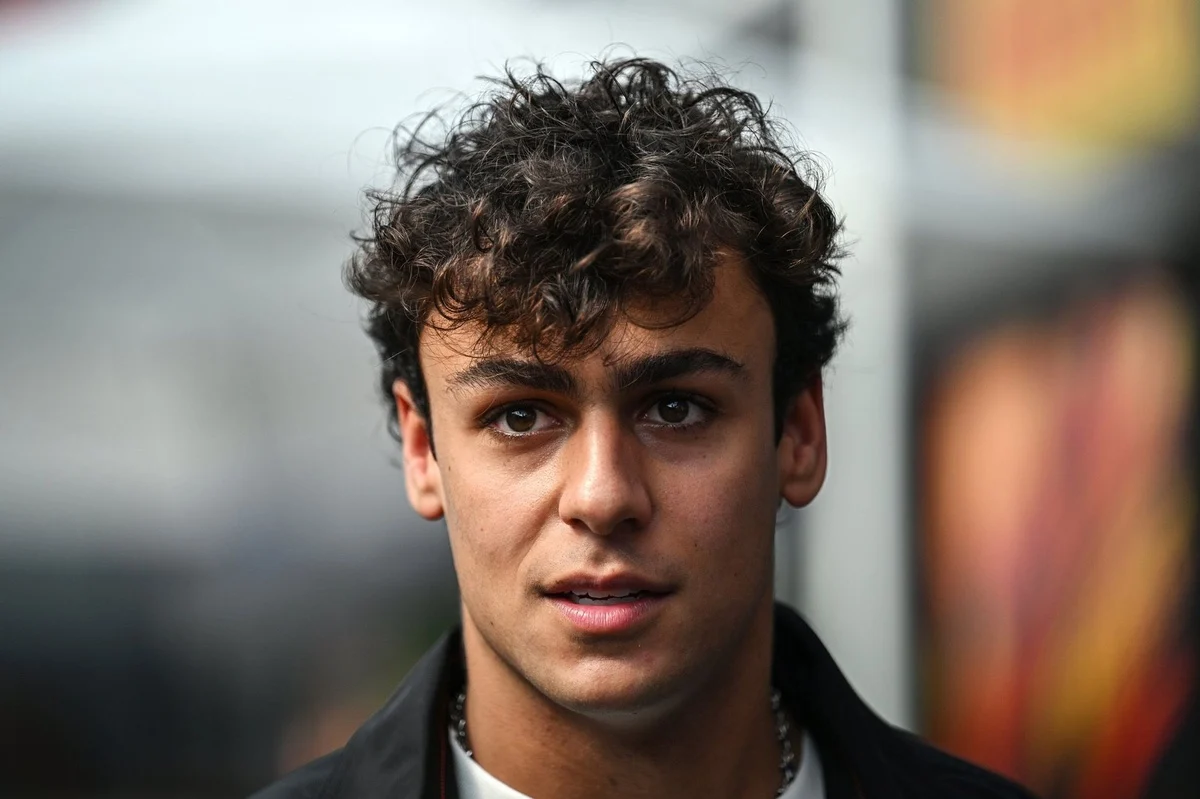
BAKU, Azerbaijan — The high-stakes, unforgiving walls of the Baku City Circuit once again lived up to their chaotic reputation during the Azerbaijan Grand Prix. Amidst the high-speed drama, strategic gambles, and fierce wheel-to-wheel combat, the Racing Bulls Formula 1 team found itself at the center of internal controversy.
Rookie sensation Arvid Lindblad delivered a commendable performance to secure six valuable championship points with a seventh-place finish. However, the young British driver’s race was overshadowed by a costly misjudgment during a chaotic safety car restart, which resulted in a collision with his teammate, Liam Lawson.
While Lindblad managed to salvage a strong points-paying result for the Faenza-based squad, the incident sent Lawson spinning out of contention, ultimately ruining the New Zealander’s afternoon and leaving him frustrated outside the points in 12th place. Following the race, Lindblad took full accountability for the error, extending a public apology to Lawson via social media while praising the team’s resilience and power unit performance over a difficult weekend.
Main Facts
The flashpoint of the Racing Bulls intra-team drama occurred during the frantic closing stages of the Azerbaijan Grand Prix. Following a Safety Car period—deployed after Williams driver Alex Albon suffered a heavy crash—the field compressed for a high-tension sprint to the finish line around the tight, 6.003-kilometer Baku street track.
As the race resumed, drivers jostled for position down the long main straight toward the notoriously tight 90-degree right-hander of Turn 1. Arvid Lindblad, charging hard behind Haas’s Esteban Ocon and teammate Liam Lawson, misjudged his braking zone. Carrying too much momentum, the British rookie dove down the inside, finding himself dangerously sandwiched between Ocon and Lawson.
The resulting contact clipped Lawson’s car, sending the New Zealander into a dramatic spin. The impact caused immediate structural damage to Lawson’s machine, including a significant hole in the floor that severely compromised his aerodynamic balance and pace for the remainder of the race.
Race stewards closely reviewed the incident after the checkered flag. Ultimately, they decided that no further official sporting penalties were necessary, attributing the crash primarily to the "restricted space available to [Lindblad]" in the tightly packed multi-car battle heading into the braking zone.
Despite escaping FIA sanctions, Lindblad was quick to address his mistake. Taking to his official Instagram account, the rookie didn’t shy away from owning up to the error in judgment, even as he celebrated his personal achievement of finishing in seventh place.
Chronology of Events: From Safety Car Chaos to Turn 1 Climax
To fully understand how the Racing Bulls teammates ended up in such close and volatile quarters, it is necessary to examine how the Azerbaijan Grand Prix unfolded leading up to the fateful restart.
The Buildup and the Safety Car
The Baku City Circuit is notorious for punishing even the smallest errors of judgment. Throughout the Grand Prix, the midfield battle was fierce, with teams constantly trading positions through the DRS zones.
The turning point of the race arrived when Williams driver Alex Albon lost control of his car, slamming hard into the barrier and triggering the deployment of the Safety Car. This neutralised the gaps across the field, bunching the cars together and setting up a thrilling, unpredictable dash to the checkered flag with only a handful of laps remaining.
The Restart and the Squeeze
As the Safety Car lights extinguished and the race leader accelerated to bunch the pack before the start-finish line, drivers began weaving furiously to generate tire temperature.
When the green flags waved, cars surged forward in a multi-wide formation. Esteban Ocon, Liam Lawson, and Arvid Lindblad charged toward the braking zone of Turn 1 in close proximity. While Ocon and Lawson held their expected racing lines, Lindblad opted for a later braking point in an effort to make up ground.
The gamble backfired. Lindblad found himself out of real estate, sliding into the narrow corridor between the Haas and his teammate’s Racing Bulls machine.
The Impact and Aftermath
The front wing of Lindblad’s car made contact with Lawson’s sidepod and rear tire. The sudden impact snapped Lawson’s car into a spin, forcing him to take corrective steering inputs to avoid a direct head-on collision with the concrete barriers.
While Lawson fought to rejoin the track and nurse his damaged car back to the pits, Lindblad managed to keep his vehicle pointing in the right direction, quickly gathering his composure to defend his position inside the top ten as the frantic race rushed toward the finish line.
Supporting Data and Race Statistics
The contrasting fortunes of the two Racing Bulls drivers are starkly reflected in the final classification sheet and telemetry data from the Baku weekend.

- Arvid Lindblad’s Race: Started further up the order, maintained consistent pace through the varying stint lengths, and capitalized on the late-race chaos to cross the line in P7, securing 6 crucial championship points for the team.
- Liam Lawson’s Race: Running in a competitive points-scoring position prior to the incident, Lawson was relegated to 12th place after the spin and subsequent floor damage rendered his car difficult to drive.
- The Damage: Telemetry and post-race visual inspections confirmed a hole in the floor of Lawson’s car, which cost him several tenths of a second per lap in high-speed cornering sequences.
- The Stewards’ Verdict: No further action, with race officials noting the extreme compression of cars and the limited spatial margin available to Lindblad under heavy braking at Turn 1.
The six points secured by Lindblad represent a major boost for Racing Bulls in the fiercely contested Constructors’ Championship, but the lost points for Lawson highlight the fine margins that define modern Formula 1 midfield battles.
Official Responses and Driver Reactions
In the high-pressure environment of Formula 1, immediate post-race reactions often reveal raw emotions. Both drivers addressed the media and public shortly after climbing out of their cockpits.
Arvid Lindblad Takes Accountability
Recognizing the tension that intra-team collisions invariably create, Lindblad was proactive in smoothing over the situation. In his social media statement, he balanced personal satisfaction with a sincere apology to his garage partner:
"Strong race today, really happy to bring it home in P7," Lindblad wrote on his Instagram story. "It’s not been an easy week, and I’m frustrated with how I handled some of it.
"We’ve struggled as a team too, so I’m really happy with how we bounced back and maximised today on a difficult weekend. Big shoutout to the PU [Power Unit] boys – you gave me an absolute rocketship today.
"Gutted about what happened with Liam – sorry mate. Glad we were still able to bring some points home for the team."
Liam Lawson Questions the Move
Speaking to Sky Sports F1 immediately after stepping out of his car, an understandably frustrated Liam Lawson voiced his bafflement over the maneuver attempted by his rookie teammate:
"I need to watch it, but I mean, we’re all coming into Turn 1 on the restart, and I just got smoked from my left, put a hole in my floor as well," Lawson explained.
"So I don’t really know what gap he was looking for. In the middle of both of us going into Turn 1, I just don’t understand it."
Lawson’s remarks underscore the delicate dynamic between an established driver fighting for his long-term future in the sport and an ambitious rookie eager to prove his worth on the world stage.
Broader Implications for Racing Bulls and the F1 Grid
As the Formula 1 circus packs up and prepares for the subsequent rounds of the grueling global calendar, the fallout from the Baku Turn 1 incident will undoubtedly be analyzed behind closed doors at the Racing Bulls factory in Faenza.
Managing Teammate Rivalries
For team principal and management, managing two competitive drivers is always a high-wire act. While intra-team battles push drivers to extract the absolute maximum from their equipment, collisions carry a heavy financial and sporting penalty—especially in the cost-cap era, where spare parts are at a premium and development budgets are tightly restricted.
Lindblad’s swift and public apology will go a long way toward defusing any lingering tension within the garage. By owning his mistake rather than deflecting blame, the rookie demonstrated a level of maturity that team bosses look for in young talent. However, both drivers will undoubtedly receive internal reminders about the importance of leaving adequate racing room, particularly when fighting for positions alongside a teammate.
The Rookie Learning Curve
For Arvid Lindblad, his debut season in Formula 1 has been a steep learning curve characterized by flashes of exceptional speed offset by the occasional rookie error. Handling the intense pressure of a safety car restart on a street circuit like Baku requires immense precision. The incident serves as a valuable lesson in racecraft—specifically regarding spatial awareness and risk assessment when diving into compressed braking zones.
Constructors’ Championship Impact
Despite the friction, Racing Bulls leaves Baku with a respectable haul of points, reinforcing their position in the midfield battle. Every single point counts in the tightly contested constructors’ standings, where millions of dollars in prize money hang in the balance. Had Lawson not been punted out of the points-paying positions, the team could have enjoyed an even more lucrative Sunday afternoon.
As the championship moves forward, all eyes will be on the Racing Bulls garage to see how Lindblad and Lawson manage their on-track relationship. If Lindblad can harness the blistering pace of his power unit while refining his decision-making in close quarters, and if Lawson can bounce back from his Baku misfortune, the junior Red Bull squad possesses a potent driver lineup capable of consistently troubling the established front-running teams.

 Suro Senen
 Raul Delapena Setiawan
 Azzam Bilal Chamdy
 Laily UPN
 Siti Muinah