 Iffa Jayyana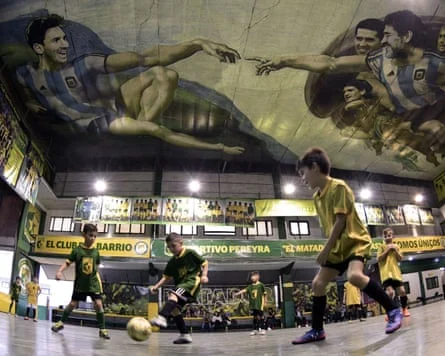
BUENOS AIRES – After a scintillating 2-1 semi-final victory over England, Argentina stands on the cusp of World Cup glory, preparing to face European champions Spain in Sunday’s final. This triumph, however, signifies far more than just a place in the championship match; it marks a profound shift in the soul of Argentinian football, where the shadow of Diego Maradona’s "Hand of God" is finally receding, replaced by the luminous brilliance and unwavering consistency of Lionel Messi. For nearly four decades, Maradona’s iconic, controversial goal and his subsequent "goal of the century" defined the very essence of Argentinidad on the pitch. Today, a revitalized Argentina, propelled by "excellent football" and spearheaded by Messi, is forging a new identity, asserting itself definitively over the long-held myth of El Pibe de Oro.
The Fading Echo of the Hand of God
The legendary 1986 World Cup quarter-final against England was etched into the collective memory of a nation, a moment of both audacious genius and blatant subterfuge. Maradona’s first goal, famously dubbed the "Hand of God," was a cunning, illicit flick that deceived officials and outraged opponents. Moments later, he embarked on an electrifying solo run from his own half, dribbling past five English players before slotting the ball home – a feat widely hailed as the "goal of the century." These two contrasting yet intrinsically linked moments became the cornerstone of Maradona’s myth, embodying a particular brand of Argentinian spirit: audacious, defiant, brilliant, and at times, morally ambiguous.
For generations, this narrative colored the perception of Argentinian football, both domestically and internationally. It was a story of individual genius overcoming adversity, even if it required a touch of divine (or diabolical) intervention. However, as philosopher and football analyst Tomás Abraham, 79, observes from his book-filled office in Buenos Aires’ trendy Colegiales neighborhood, "For English football, this is more painful than the Hand of God." He refers to the recent semi-final defeat, where England was not cheated, but simply outplayed. "The English consider the Hand of God to be illegal, a cheat," Abraham explains. "And this hurts all the more because they were defeated by a superior team that they were particularly keen to beat. The wound runs deeper."
The implication is clear: a defeat to a demonstrably better side, achieved through pure footballing prowess rather than a contentious incident, carries a different, perhaps more humbling, weight. It signals that Argentina no longer needs to rely on the ghosts of past glories or the specter of illicit acts; their current success is built on a foundation of skill, strategy, and collective effort.
A Chronology of Shifting Paradigms
Maradona’s Reign and the Birth of a Myth (1986 – 2000s)
Diego Maradona’s influence extended far beyond the football pitch. He was a political figure, a rebel, a symbol of Argentina’s often tumultuous national pride. His triumph in 1986, particularly against England just years after the Falklands War, elevated him to a near-mythical status. He embodied a certain "Argentinidad" – brilliant, haughty, convinced of its destiny as a superpower, and unafraid to challenge authority. Maradona famously expressed opinions on everything from George Bush to the Pope, FIFA to his idols Fidel Castro and Hugo Chávez. His personality was as complex and contradictory as his country, capable of immense kindness and cutting disparagement, loving and hating with equal fervor. He was a product of a state education system that, despite his humble beginnings, instilled in him a powerful command of language, allowing him to articulate his fiery passions and complex worldview.
Messi’s Silent Ascent and Initial Resistance (2000s – 2010s)
In stark contrast, Lionel Messi, a child of a more recent, perhaps "spineless" Argentina as the article suggests, emerged with a different demeanor. His talent was undeniable, but his quiet, reserved nature, limited vocabulary, and short, direct sentences initially failed to resonate with a populace still steeped in the bombastic charisma of Maradona. For many years, a significant portion of Argentinians viewed Messi through the prism of Maradona, finding him lacking in the very qualities that made Maradona a national icon. They clung to the Maradona myth, often criticizing Messi for not possessing the same fiery leadership or street-fighter mentality, questioning his ability to perform under pressure against "tough defenders" in the rough-and-tumble of South American club football like the Copa Libertadores. While the rest of the world hailed Messi as a generational talent, his own countrymen struggled to fully embrace him, demanding he be Maradona rather than simply be himself.

The Turning Point: Acceptance and a New Identity (2010s – Present)
Messi’s greatest triumph, arguably, is not just his numerous individual accolades or club trophies, but his gradual and ultimately unanimous acceptance by the Argentinian people. Through sheer perseverance, consistent brilliance, and a quiet determination, he has forged his own identity, one that no longer needs to be measured against Maradona’s. His leadership, once questioned, has matured into a steadfast presence, inspiring his teammates through example rather than fiery rhetoric. His recent emotional expressions and public statements, though still concise, have shown a depth and connection that have endeared him to the nation.
The turning of the page has been accelerated by recent events. Maradona’s death on November 25, 2020, and the subsequent inquest into the circumstances surrounding it, while tragic, provided a somber opportunity for the nation to process his complicated legacy. The inquest, which sought to determine if his death could have been prevented, did not generate sustained public interest or front-page headlines in the way one might expect for such a national icon. It was as if Argentinians, perhaps ashamed of the harsh realities of his final years, subtly chose to move forward. And what better way to turn that page than by embracing the living legend who now carries their footballing hopes?
After the recent victory over England, Messi’s words resonated deeply: "I’m sure Diego is enjoying this immensely from up above. Let him enjoy it, because it’s a gift for him too." This heartfelt tribute, from a player Maradona himself once criticized for a perceived lack of leadership, demonstrated not just respect, but a continuity, a passing of the torch that acknowledged the past while firmly looking to the future.
Supporting Data and Expert Voices
The sentiment of a new era is echoed by those intimately familiar with Argentinian football. Carlos Mac Allister, who played alongside Maradona for Argentina and is the father of current national team player Alexis Mac Allister, highlights the fundamental difference between the two icons. "The difference between Diego and Leo is their private lives," he states, emphasizing Messi’s more stable and less tumultuous personal existence. "And that’s not to speak ill of Diego. I’m not going to explain what he himself has already said. Thanks to Diego being Diego, Messi is Messi today. With an understanding of what happened, Messi was able to work out how to take the game to the next level." This perspective suggests that Maradona’s path, with all its glories and pitfalls, inadvertently paved the way for Messi to learn, adapt, and ultimately transcend.
The analytical lens of Héctor Gambini, a columnist for Argentina’s most widely read newspaper, Clarín, further underscores the anachronism of dwelling on the "Hand of God." He notes that none of the players participating in the recent Argentina v England match were even born when Maradona scored his immortal goals. More significantly, he points out how modern football, equipped with Video Assistant Referee (VAR), would render those moments impossible today: "Goals that VAR would have disallowed: the first for a handball by the Blues’ No 10. The second for a foul by the Blues’ No 2 [Sergio Batista] on the Whites’ No 4 [Glenn Hoddle], following which Argentina regained possession, the ball ended up at Maradona’s feet and, 13 seconds later, in the English net." This serves as a potent reminder that the rules of the game have evolved, making the "Hand of God" a relic of a bygone era, further cementing its place in a "symbolic museum."
Even Mariano Israelit, one of Maradona’s closest friends, concedes the shift. "Diego was the greatest of all… up to a point," he admits. "But Messi has now surpassed him; what Messi has achieved is unsurpassable. Diego played for a team like Napoli, which was basically 10 donkeys and Diego. Messi played for a Barcelona side surrounded by stars. We have to be realistic and honest; I take my hat off to Messi." Israelit’s candid assessment, coming from such a close confidante of Maradona, speaks volumes about the undeniable magnitude of Messi’s accomplishments. He even critiques the English stance on the 1986 game by recalling the controversial goal in the 1966 World Cup final: "An Englishman has no right whatsoever to say that Maradona scored with his hand or that he cheated, because the only tournament they ever won, they won with a goal that wasn’t a goal." This historical deflection, while rooted in partisan rivalry, further emphasizes how deeply ingrained these historical injustices (real or perceived) are in the footballing psyche, but also highlights the need to move beyond them.
Official Responses and Tactical Evolution
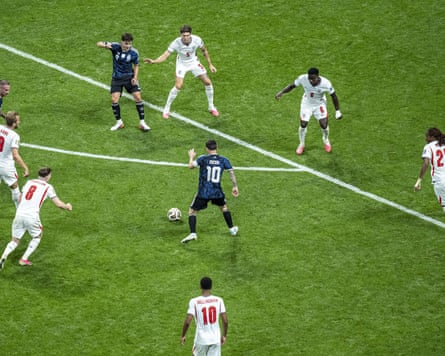
While "official responses" in the traditional sense from governing bodies are limited in the article, the collective sentiment of the coaching staff and the players themselves, particularly after the England victory, serves as a powerful testament to the new direction. The tactical discipline, cohesion, and resilience displayed by the team against a formidable English opponent showcased a maturity and strategic depth that has often been overshadowed by individual brilliance in past Argentinian squads.
Mac Allister observes a significant tactical awakening in the current squad. "I see an Argentina team that had been playing at 60% of its capacity, but which played at 90% against England," he states. "Against Spain, it will need to play at 100%. One thing is clear: we were playing with heart and soul, but we were lacking a bit of finesse. Not any more – Argentina dominated England." This assessment points to a team that has not only found its rhythm but has also integrated Messi’s genius into a potent collective, moving beyond the "one-man show" perception that sometimes plagued earlier iterations of the national team. Messi, even in games where he doesn’t score, remains the orchestrator, the gravitational force that pulls defenders and creates space for others, a testament to his evolving role and the team’s tactical sophistication.
The upcoming final against Spain presents another challenge, but also an opportunity to solidify this new identity. Tomás Abraham, despite his philosophical leanings, is less optimistic about Spain’s historical recognition of Argentina’s contributions. "They ignore everything we’ve contributed to Spanish football: Alfredo Di Stéfano and Lionel Messi," he remarks, highlighting a perceived lack of acknowledgment for the immense influence Argentinian players and managers have had on Spanish football. Indeed, the list is staggering: Di Stéfano, Messi, Mario Kempes, Maradona, César Luis Menotti, Carlos Bilardo, and current coach Lionel Scaloni, among countless others, have all left indelible marks on Spanish clubs and the national game. This historical connection underscores the deep footballing ties and rivalries that will inevitably play out on the pitch.
Implications for a New Argentina
The rise of Lionel Messi to undisputed national hero status carries profound implications for Argentina, both on and off the pitch.
A Redefinition of Argentinian Identity (Argentinidad)
Maradona embodied a rebellious, passionate, and often chaotic "Argentinidad" – a reflection of a nation that has experienced its share of political and economic turmoil, always fighting, always believing in its exceptionalism, even if it meant bending the rules. Messi, with his quiet dedication, his family-man image, and his pursuit of excellence through sheer hard work and consistent skill, offers a different model. He represents a more measured, disciplined, and perhaps globally integrated Argentina. This shift suggests a nation that is growing, evolving, and finding new ways to express its pride, moving away from the "brilliant and haughty" superpower narrative towards one of sustained, elegant achievement.
The Future of Argentinian Football
The success of the current team, built on a blend of Messi’s enduring genius and a strong collective ethos, provides a blueprint for future generations. The emphasis on "excellent football" rather than solely individual heroics signifies a mature approach to the game. Young Argentinian footballers will now look up to Messi not just for his otherworldly talent, but for his quiet resilience, his perseverance in the face of immense pressure, and his eventual triumph in winning over his own people. This could foster a generation of players who prioritize team dynamics and consistent performance alongside individual flair.
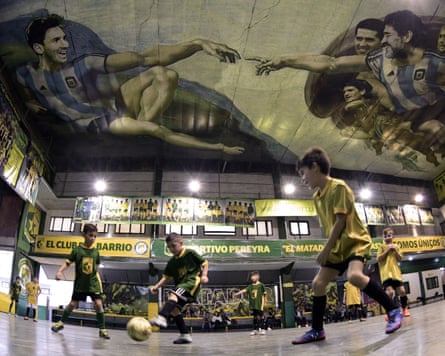
Healing the Wounds of the Past
Maradona’s complex legacy, including the difficult circumstances of his death, left a certain lingering sadness and shame for some Argentinians. Messi’s continued success, and the overwhelming joy it brings, offers a form of collective catharsis. By wholeheartedly embracing Messi, the nation can move forward, celebrating a living icon whose story is still being written, without having to completely erase the past. It allows them to acknowledge Maradona’s immense contribution while investing their emotional energy in a future that feels brighter and less complicated.
Global Perception and Respect
For too long, Argentinian football was synonymous with Maradona’s brilliance and controversy. While his "goal of the century" was universally admired, the "Hand of God" often drew accusations of cheating and unsporting conduct. Messi’s era, characterized by fair play, technical mastery, and consistent excellence, is steadily reshaping global perceptions. The recent dominant performance against England, achieved through superior football, earns a different kind of respect – one rooted in admiration for skill and strategy rather than grudging acknowledgment of cunning.
Even neighboring nations, sometimes prone to rivalry, acknowledge this shift. Uruguayan journalist Emiliano Hernández Pereyra, frustrated with his compatriots’ criticisms of Argentina after a poor World Cup for Uruguay, states unequivocally: "These lads have everything I want for my country, but there are a lot of stubborn Uruguayans. Do you think Argentina are just lucky? Please… It’s an extraordinary team; they’ve got a certain something that no other team has." This sentiment, from a rival nation, is a powerful endorsement of Argentina’s renewed footballing identity.
As Argentina prepares for the World Cup final against Spain, the air is thick with anticipation. This is more than just a football match; it is a coronation, a symbolic passing of the torch, and the definitive arrival of a new Argentina. The "Hand of God" may forever remain a museum piece, a testament to a bygone era. But the elegant, persistent, and universally admired football of Lionel Messi is now writing a new, glorious chapter in the nation’s rich sporting history, solidifying his place not just at the top of Argentina’s footballing pantheon, but as the architect of a revitalized national spirit.


 Azzam Bilal Chamdy
 Sagoh
Sagoh
 Neng Nana
 Nana Wu
 Lina Hope