
 Layla Zulfa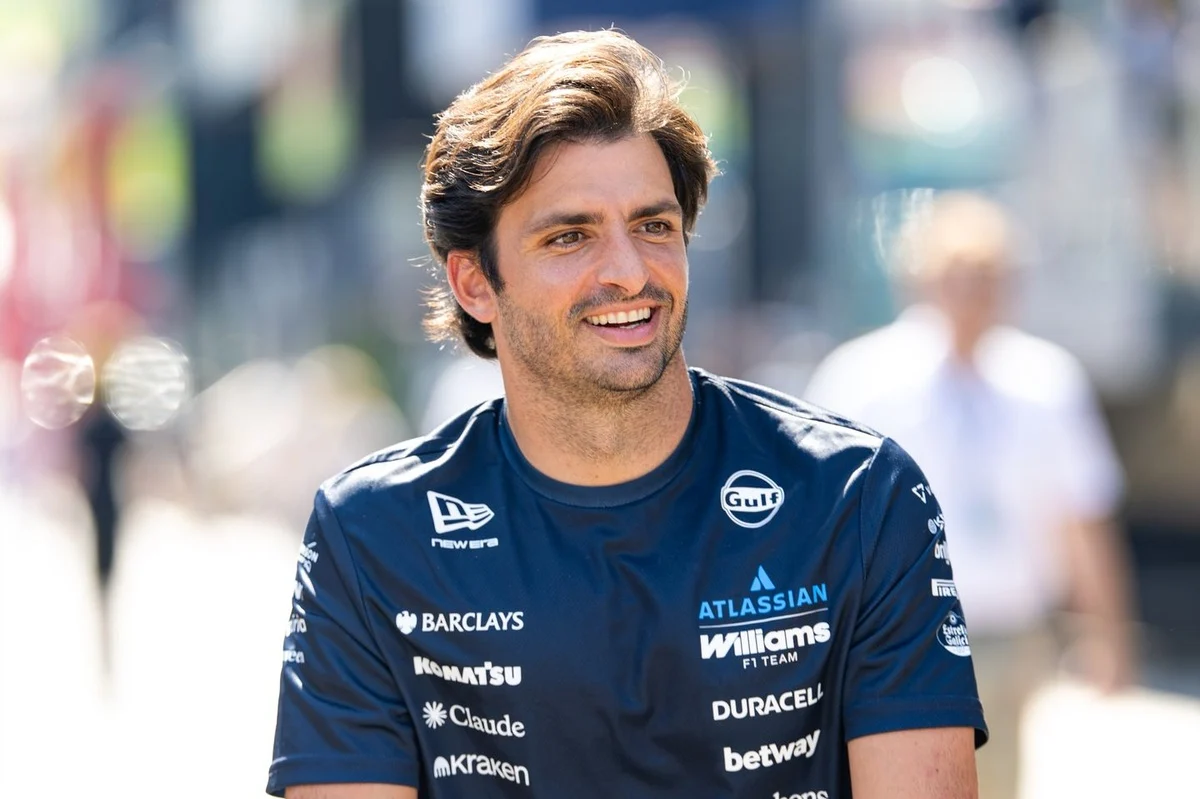
In the high-pressure environment of Formula 1, where split-second decisions are made at 200 mph, emotions often run high. The cockpit of a modern F1 car is a pressure cooker, and the team radio—a direct line to engineers and team principals—frequently serves as a vent for driver frustration. However, a recent incident at the Belgian Grand Prix at the iconic Circuit de Spa-Francorchamps has highlighted a refreshing, albeit rare, display of maturity and sportsmanship between two drivers from different generations.
Carlos Sainz, the veteran Williams pilot, recently publicly commended Mercedes prospect Kimi Antonelli for a spontaneous and sincere apology following a heated exchange during the opening practice session (FP1) in Belgium. The incident, which occurred at the challenging Stavelot corner, serves as a testament to the character of the young Italian prodigy and the mutual respect that continues to define the highest tier of motorsport.
The Incident: A Flare-Up at Stavelot
The tension began during the early stages of FP1 at the Belgian Grand Prix. As drivers worked to establish a rhythm on the demanding Spa-Francorchamps circuit, Kimi Antonelli, pushing the limits of his Mercedes in a bid to maximize his track time, encountered a slower-moving Williams driven by Carlos Sainz.
Approaching the technical Stavelot section, Antonelli found his path obstructed by the Spaniard. The frustration was instantaneous. In a moment of raw, unvarnished emotion, the Mercedes driver aborted his flying lap and stayed in close proximity to the Williams, clearly signaling his annoyance. On the team radio, the frustration spilled over: "Sainz, what an idiot!"
The comment was picked up by the broadcast feed, sparking immediate debate among fans and pundits regarding the etiquette of practice sessions. For his part, Sainz was equally bewildered by the interaction. He immediately queried his own race engineer: "I don’t know what Antonelli was doing with me. He threw the car into me; I don’t know why."
While such radio outbursts are common—and often forgotten as soon as the visor is lowered—the aftermath of this specific exchange took an unexpected and commendable turn.
A Chance Encounter and a Classy Resolution
Rather than letting the frustration fester or allowing the incident to escalate into a media narrative, the resolution occurred in the most mundane of places: a hotel elevator.
On Saturday morning, amidst the busy preparations for qualifying, Sainz and Antonelli found themselves in the same lift. What could have been an awkward, silent journey turned into an opportunity for reconciliation.

"This morning we actually woke up at the same time," Sainz recounted during a press conference following Saturday’s qualifying session. "So, we went in the lift at the same time, and I saw him and I said, ‘What’s up?’"
What followed was a display of character that impressed the veteran Spaniard. "The guy is a great guy," Sainz noted. "He just apologized, said that it was the heat of the moment, that he had seen the replay and I actually didn’t impede him that much, for being an FP1 and not being an important lap of the weekend. He admitted he was being a bit emotional at the time."
For Sainz, the gesture was not merely about the apology itself, but the speed and manner in which it was delivered. "When someone comes out like that and tells that to your face straight away as soon as he sees you, for me, it’s a show of being a great guy. So, I have no other thing than to thank him for it and wish him the best."
The Technical Context: Williams’ Struggles at Spa
While the radio incident made headlines, the backdrop for the weekend was significantly more difficult for Carlos Sainz. While Antonelli managed to secure a pole position, showcasing the dominant pace of the Mercedes, Sainz found himself fighting a different battle entirely, qualifying 15th—a position he later improved to 14th due to a grid penalty assessed to Isack Hadjar.
The weekend was described by the Spaniard as "such a tough weekend" for the Williams team. The primary culprit was an elusive technical issue that persisted throughout the practice sessions. According to Sainz, the car was losing between "three to five tenths" of a second per lap due to the anomaly, a massive margin in the hyper-competitive midfield.
"Happy that we found the issue," Sainz admitted after the session, reflecting on the team’s ability to rectify the problem in time for qualifying. "Not so happy that we cannot explain the issue very well. So, we need to keep digging."
Despite the technical woes, the weekend served as another reminder of Sainz’s consistency. By out-qualifying his teammate, Alex Albon, for the tenth time this season and the fifth consecutive time, the Spaniard continues to prove his value as one of the most reliable drivers on the grid.
The Significance of Driver Maturity
The incident between Antonelli and Sainz provides a valuable case study in the evolving culture of Formula 1. As the sport attracts a younger demographic of drivers, the pressure to perform at an elite level while under the constant scrutiny of social media and global broadcasts is immense.

In years past, such an outburst might have been left to simmer, or perhaps fueled by team principals, leading to a breakdown in on-track relations. However, Antonelli’s willingness to own his mistake—a mistake driven by the adrenaline and high stakes of a rookie season—speaks to a level of maturity that is essential for a long-term career in Formula 1.
Sainz, having navigated his own path through Toro Rosso, Renault, McLaren, Ferrari, and now Williams, recognizes the weight of that pressure. His positive reception of the apology highlights a "mentorship by example" culture that is vital for the health of the sport. By accepting the apology with grace, Sainz effectively neutralized a potential controversy, allowing both drivers to focus on their respective performance goals.
Looking Ahead: The Implications for the Grid
As the 2024 season continues, the performances of both men will remain under the microscope. For Kimi Antonelli, the ability to secure pole position despite the emotional volatility of his practice sessions proves that he has the raw speed necessary for the Mercedes seat. However, his long-term success will rely on his ability to temper that intensity. His interaction with Sainz suggests that he has the self-awareness required to manage the psychological demands of the sport.
For Carlos Sainz, the focus remains on extracting maximum performance from the Williams car. As he continues to outpace his teammate and lead the development of the vehicle, his reputation as a "driver’s driver"—someone who commands respect both in and out of the cockpit—remains cemented.
The Belgian Grand Prix will be remembered for the racing action, the speed of the Mercedes, and the technical hurdles faced by the midfield. But for those watching the human side of the sport, the lasting memory may well be that brief moment in a hotel elevator: a senior driver and a rising star, finding common ground, and demonstrating that even in the world of high-speed ego, there is always room for a sincere apology.
As the circus moves to the next destination, the paddock remains a place where, despite the technology and the aerodynamics, it is the character of the individuals behind the wheel that truly defines the spectacle. Kimi Antonelli has passed a subtle but important test of character, and Carlos Sainz has reaffirmed why he remains one of the most respected figures in Formula 1.

 Neng Nana
 Nana Wu
 Lina Hope
 Sagoh
Sagoh
 Iffa Jayyana