
 Lina Hope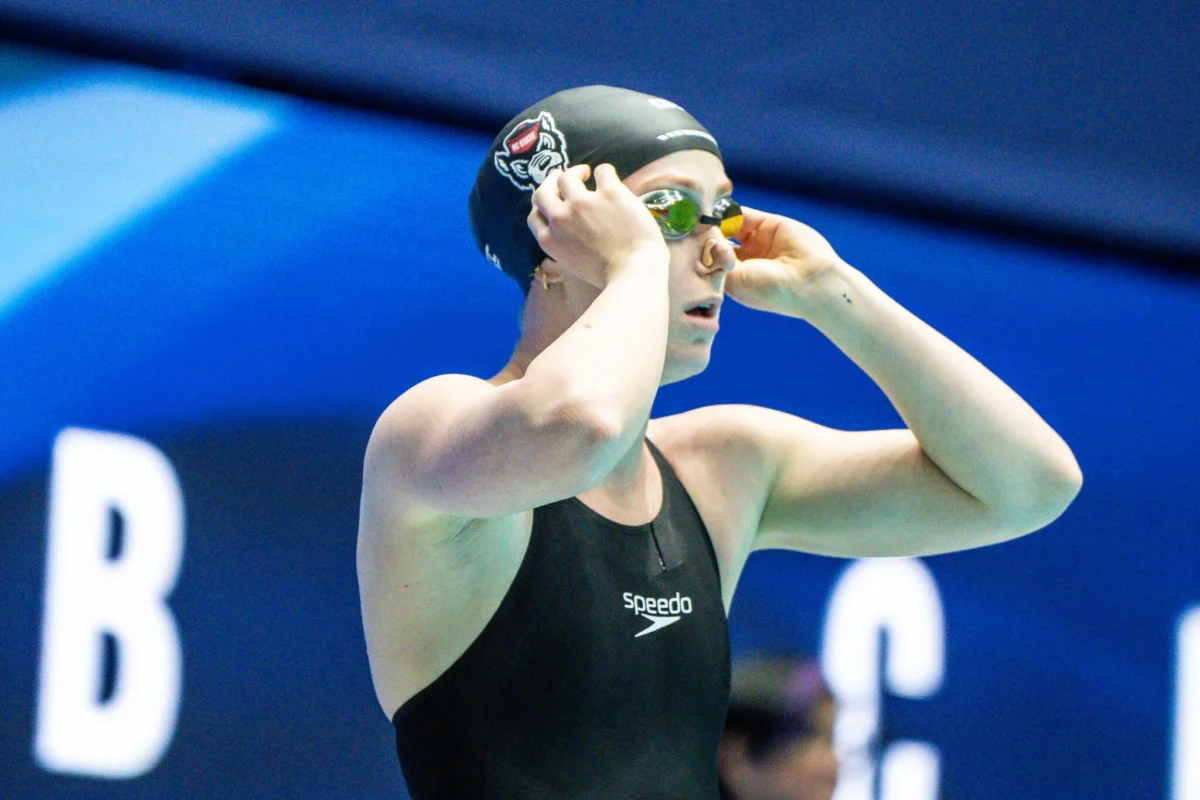
The 2026 North Carolina Senior Championships, hosted in the swimming hub of Cary, served as a high-octane showcase for the region’s premier aquatic talent. As collegiate stars and rising elites gathered to test their early-season fitness, the meet provided a glimpse into the depth of the North Carolina swimming ecosystem. From tactical backstroke masterclasses to record-shattering sprints, the weekend’s events underscored the rigorous training standards maintained by programs across the state, most notably North Carolina State University, the University of North Carolina at Chapel Hill, and Team Charlotte.
The Vanguard: Performance Highlights and Key Winners
The Cary facility played host to a series of performances that balanced technical refinement with raw, explosive power. While many athletes are currently operating through heavy training blocks, the results in the pool suggested that the transition from long-course winter training to peak competition form is well underway.
Kennedy Noble’s Backstroke Dominance
NC State’s Kennedy Noble emerged as one of the weekend’s most versatile performers. Noble, whose reputation as a backstroke specialist is well-established, effectively swept the sprint events. She claimed gold in the 50-meter backstroke with a time of 28.43 and secured the 100-meter backstroke in 1:00.44.
While these times represent a slight deviation from her career-best marks—27.66 and 58.55, respectively—her focus appeared to be on stroke efficiency rather than pure top-end speed. However, Noble proved her range by logging a lifetime best in the 50-meter butterfly. Touching the wall in 27.55, she shed over half a second from her previous personal record of 28.16, set at the 2025 MAC Charlotte Open. This shift toward butterfly proficiency adds a dangerous dimension to her repertoire as she looks toward the upcoming championship season.
Matej Dusa: Climbing the Global Rankings
Team Charlotte Swimming’s Matej Dusa provided the most significant statistical shock of the meet. Competing with renewed intensity, Dusa dominated the 50-meter freestyle, touching in a career-best 21.87. This performance represents a significant leap from his 22.11 showing at the 2024 World Championships.
The gravity of this time cannot be overstated; Dusa now sits in a tie for the 25th-fastest performer in the world for the 2026 season. His momentum continued into the butterfly events, where he claimed a silver medal in the 50-meter fly, finishing in 24.59. He was narrowly eclipsed by North Carolina Aquatic Club’s (NCAC) Seb Lunak, who captured the win in 24.55.
Chronology of Competition: A Weekend of Tactical Racing
The meet unfolded in a traditional championship format, allowing spectators to track the progression of athletes from the morning preliminary heats to the high-pressure environment of the evening finals.
Day One: Establishing the Baseline
The opening sessions were characterized by steady, controlled swimming as teams adjusted to the Cary pool’s nuances. The breaststroke events served as early barometers for success, with UNC’s Xavier Ruiz setting a tone of dominance that would define his weekend. Ruiz, a rising junior at Chapel Hill, demonstrated superior endurance and technical consistency, winning the 100-meter breaststroke (1:01.42) and the 200-meter breaststroke (2:13.02). His ability to maintain form in the latter half of the 200m event proved to be the deciding factor against a competitive field.
Day Two: The Sprints and the 400 IM
The second day shifted focus to explosive speed and complex energy management. Dusa’s record-breaking 50-meter freestyle occurred during this session, sparking a wave of momentum for the sprinters. Meanwhile, Ruiz continued his sweep of the technical events by adding the 400-meter individual medley to his trophy haul, touching in 4:24.53. This victory cemented his status as the meet’s most consistent multi-event champion.
Day Three: Elite Closing Performances
The final day of competition was highlighted by Eneli Jefimova’s performance in the 100-meter breaststroke. The reigning NCAA Champion proved that her ceiling remains among the world’s elite, securing victory with a 1:07.32. While this time was roughly a second off her season-best of 1:06.37—achieved at the AP Race in London—it confirmed that Jefimova is maintaining a high baseline of performance as she prepares for major international qualification windows.
Supporting Data: Comparative Analysis
The data emerging from the 2026 North Carolina Senior Championships provides a roadmap for the trajectory of several top-tier athletes.
| Athlete | Event | Time | Note |
|---|---|---|---|
| Kennedy Noble | 50 Fly | 27.55 | Lifetime Best |
| Matej Dusa | 50 Free | 21.87 | 25th Fastest in World (2026) |
| Xavier Ruiz | 400 IM | 4:24.53 | Gold Medalist |
| Eneli Jefimova | 100 Breast | 1:07.32 | World Top-15 Rank |
These metrics reveal a clear trend: North Carolina programs are prioritizing specific event development (such as Noble’s butterfly) while ensuring their primary medalists remain within striking distance of their personal bests, even during mid-season training loads.
Implications for the Collegiate and International Season
The results in Cary have significant implications for the upcoming NCAA and international calendars.
For the University of North Carolina at Chapel Hill, the performance of Xavier Ruiz and Ben Delmar indicates a robust developmental pipeline. Delmar, who finished just behind Ruiz in the 100-meter breaststroke with a 1:01.82, showed his growth by clocking a lifetime best of 25.63 in the 50-meter butterfly preliminaries. Such internal competition between teammates is the hallmark of a successful collegiate program, pushing athletes to refine their secondary strokes and maximize their utility in dual-meet scenarios.
For the international circuit, the presence of Eneli Jefimova continues to elevate the profile of the North Carolina swimming scene. Her ability to remain competitive globally—holding a tie for 12th in the world rankings—provides a standard for younger swimmers to emulate. The fact that she is currently operating off her personal best of 1:05.81 suggests there is significant untapped potential as she tapers for the next major international cycle.
Looking Ahead: The Path to 2027
As the dust settles in Cary, the athletes return to their respective training bases with concrete data on where their physical conditioning stands. Coaches will analyze the "off-best" times—like Noble’s backstroke—to determine whether the focus should remain on base conditioning or shift toward speed-specific work.
The 2026 North Carolina Senior Championships were not merely a regional competition; they were an essential checkpoint in the preparation for the higher-stakes meets that define the professional swimming calendar. With the emergence of new personal bests and the consolidation of world-class rankings, North Carolina continues to prove itself as a pivotal landscape for the development of elite swimming talent. The success of athletes like Matej Dusa and Kennedy Noble serves as a testament to the synergy between collegiate athletic departments and private club programs in the region. As the season progresses, the performances logged in Cary will undoubtedly serve as the foundation for future podium finishes on the national and global stages.

 Sagoh
Sagoh
 Nana Muazin
 Neng Nana
 Nana Wu
 Iffa Jayyana