
 Muslim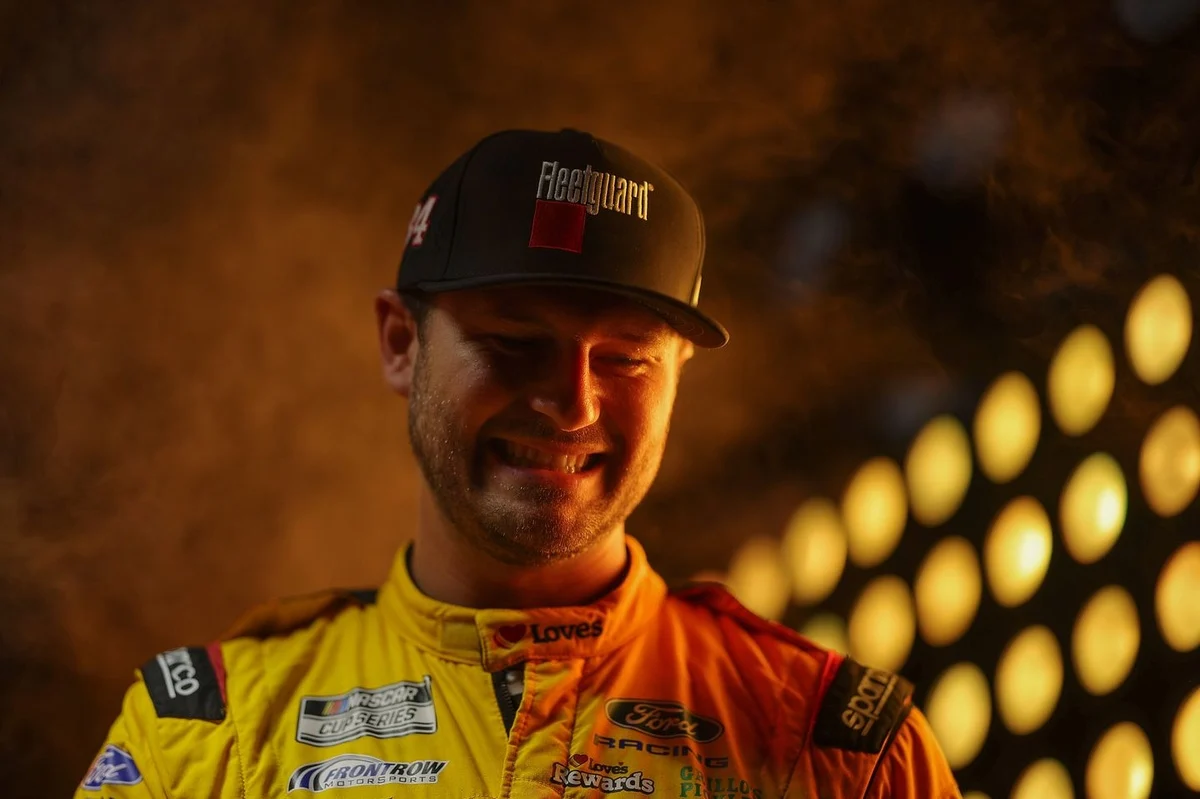
For the second consecutive year, the NASCAR Cup Series In-Season Challenge has delivered a narrative arc that feels ripped from the pages of classic sports mythology. It is a quintessential “David vs. Goliath” showdown, pitting the resource-heavy juggernaut of Team Penske against the gritty, surging resilience of Front Row Motorsports.
As the series heads into the high-stakes environment of the Indianapolis Motor Speedway for the Brickyard 400, the focus shifts away from the overall championship standings to a singular, high-tension bracket: Todd Gilliland versus Ryan Blaney. With a cool $1 million prize on the line, the atmosphere is electric, serving as a testament to the success of NASCAR’s recent efforts to gamify the regular season.
The Evolution of the Challenge: A Tactical Shift
Last year, the In-Season Challenge captured the imagination of the racing world when Ty Dillon, driving for the smaller-scale Kaulig Racing, embarked on a Cinderella run. By upsetting titans like Denny Hamlin, Brad Keselowski, and Alex Bowman, Dillon highlighted the potential for parity in a sport often dominated by the wealthiest teams. While Dillon eventually fell in the final round, the experiment proved that the bracket-style competition injected a unique, tournament-style urgency into the grueling 36-race schedule.
This year, the stakes feel even higher. Todd Gilliland has emerged as the unlikely hero of the 2024 iteration, navigating a gauntlet that included heavy hitters such as Chase Elliott, Alex Bowman, Carson Hocevar, and Daniel Suarez. Standing in his way is the 2023 Cup Series champion, Ryan Blaney—a driver who embodies the pinnacle of preparation, funding, and engineering prowess.
Chronology of a Cinderella Run
Gilliland’s path to the finals has been nothing short of a masterclass in consistency. While he may not have grabbed the headlines with dominant, multi-win streaks, his methodical progression through the bracket has been undeniable.
In recent weeks, the No. 34 team has displayed a marked improvement in performance. Gilliland’s finishes of 16th, 19th, and 8th at Chicago, Atlanta, and North Wilkesboro demonstrate a team that is finding its rhythm at exactly the right time. This upward trajectory is reflected in the championship standings, where Gilliland has clawed his way from 26th to 23rd—a significant jump that validates the team’s recent strategic adjustments.
For Blaney, the path was equally demanding but traveled with a different expectation. To reach this point, the Team Penske driver had to dismantle a field that included Josh Berry, Shane Van Gisbergen, and William Byron. His performance, headlined by a victory earlier this month at Atlanta, underscores his status as a perennial contender who treats every week of the tournament with calculated precision.
Data-Driven Contenders: The Indianapolis Factor
While the media framing of this matchup leans heavily into the underdog narrative, the performance data suggests a more nuanced reality. Indianapolis is a track that rewards technical precision and experience, and both drivers have reasons to feel confident heading into the Brickyard 400.
For Gilliland, the confidence stems from his familiarity with the iconic oval. “I was able to do one of the first tests there, a tire test when we were going back to the oval at Indy,” Gilliland noted. “I think that really helped me a lot—just getting off on a good foot of getting laps, understanding the racetrack, going through a lot of changes. It’s been one of our best intermediate racetracks.”
His history at the track supports this optimism; Gilliland has secured a pair of sixth-place finishes over the past two years. For a team looking to disrupt the status quo, this specific track history acts as a force multiplier.
Blaney, conversely, enters the weekend with the weight of expectation. Having been eliminated in the first round of last year’s challenge, he has approached the bracket with a sense of professional curiosity. “I’d see who I line up against that week on Sunday night or Monday,” Blaney explained. “And then that’s really the last I think about it through the week and really, truly, through the race.”
Official Perspectives: The Mindset of the Duelists
The psychological contrast between the two drivers is striking. Gilliland, embracing the role of the challenger, is attempting to lean into the chaos of the situation. “Put the house on us, that’s what I would say,” Gilliland joked. “We made it this far, why not us? I would probably agree with all of those people who say we’re fighting an uphill battle, but, honestly, we’ve been the underdogs in every matchup, and it’s doable.”
Blaney, however, is wary of the “David vs. Goliath” label. History remembers that David won that particular battle, and Blaney is acutely aware that underestimating a hungry driver like Gilliland is a recipe for disaster.
“If they’re making it a David vs. Goliath story, that’s not good news for me,” Blaney said with a laugh. “I recall that David won that battle. But, no, I’ve heard that. Front Row does a really good job. They have good drivers. Todd is a great driver, and they have a really good team over there, so it’s going to be tough.”
Blaney emphasizes that the intensity of the competition means no one can afford a lapse in execution. “I don’t think people should write anything off. I’m not going into this weekend thinking that it’s going to be a layup because it’s not. It’s going to be incredibly difficult. You better be fast on the racetrack. You better be good on pit road and your strategy better be where it should be.”
Momentum and Contractual Stability
Beyond the immediate pursuit of the $1 million prize, both drivers are riding a wave of professional stability. Gilliland’s recent contract extension with Front Row Motorsports has been a transformative moment for the team. It provides the security necessary to take risks and focus on long-term growth rather than just surviving week-to-week.
“It was a really good week for us,” Gilliland said of the extension. “I was talking after the race about how the Cup Series will beat you down. There are some weeks that are just straight-up not good, but last week was up there. Everything is going our way right now.”
The team’s recent success is not just a result of driving skill; it is the culmination of a deliberate pivot in their technical approach. “We tried a completely different setup, and our execution was there all day,” he added.
Implications for the Sport
The In-Season Challenge has successfully created a "race within a race" dynamic that keeps fans engaged even when the overall championship math seems settled. By forcing drivers to focus on head-to-head matchups, NASCAR has added a layer of tactical intrigue that mimics the intensity of playoff-style elimination.
Should Gilliland win, it would serve as a watershed moment for the sport, proving that a mid-tier team can leverage the tournament structure to claim a major prize. Should Blaney prevail, it will reinforce the dominance of the elite teams, proving that even in a bracketed format, consistency and elite resources remain the ultimate arbiters of success.
Regardless of the outcome, the million-dollar stakes have ensured that the Brickyard 400 will be more than just another stop on the calendar. It will be the site of a definitive conclusion to a narrative that has defined the summer. As Gilliland succinctly put it, “It’s only one person standing between us and winning this thing. It’s going to be an uphill battle, but we’re going to go out and do our best and see where everything ends up.”
With the engines primed and the bracket finalized, the NASCAR world waits to see if David can strike again, or if Goliath will hold his ground in the heart of Indianapolis.

 Pevita Pearce
 Evan Lee Salim
 Neng Nana
 Nana Wu
 Lina Hope
 Sagoh
Sagoh
 Iffa Jayyana