
 Asro
Asro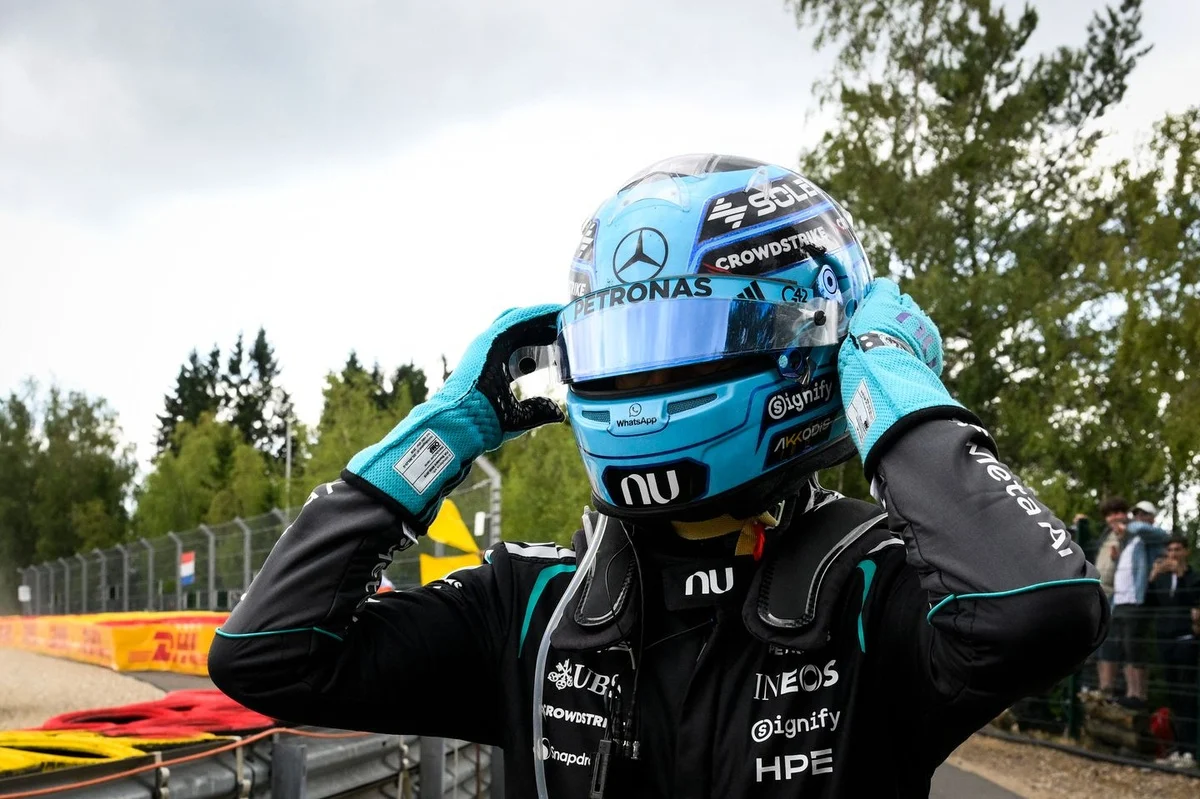
The Formula 1 paddock is a place where thousandths of a second are fought for with religious fervor, but at Mercedes, the struggle is currently centered on a much more fundamental issue: straight-line performance. For George Russell, the Belgian Grand Prix at Spa-Francorchamps served as the latest, and most frustrating, chapter in an ongoing saga involving energy deployment issues that have left the British driver feeling effectively "powerless" during critical moments of race weekends.
While Mercedes has shown flashes of brilliance throughout the 2024 season, the technical disparity between the two W15 machines has become a growing concern for the Brackley-based outfit. As the team searches for answers, the narrative has shifted from pure chassis performance to the complex, software-driven world of energy harvesting and deployment.
A Chronology of the Crisis
The problem did not emerge overnight. Internal diagnostics suggest that the root of the current issue traces back to the British Grand Prix at Silverstone. During that race weekend, telemetry revealed subtle but persistent deployment differences between Russell’s car and that of his teammate, Kimi Antonelli.

In the weeks leading up to the Belgian Grand Prix, the team dedicated an exhaustive amount of time to analyzing data, focusing heavily on whether driving styles—specifically throttle application and energy management habits—were the primary culprits. Russell, clearly feeling the weight of the performance gap, spent the 36 hours prior to the Spa qualifying session obsessed with rectifying his straight-line speed.
Despite his adjustments, the problem persisted at Spa. During practice sessions, a clear deficit was visible to the naked eye and confirmed by data, as Antonelli surged toward a pole position while Russell struggled to find similar top-end velocity, eventually qualifying fourth. The situation reached a boiling point on race day. A combination of the ongoing deployment issue and a separate, critical software glitch at the start of the race saw both Mercedes drivers lose energy reserves heading into the Kemmel Straight. The result was a disastrous opening sequence that ultimately led to a terminal collision between Russell and Lewis Hamilton at Turn 5.
Understanding the Technical Anomaly
To the casual observer, an F1 car at full throttle looks and sounds identical regardless of the driver, but the reality is a symphony of complex energy management. The modern Power Unit (PU) relies on a delicate balance between the internal combustion engine (ICE) and the hybrid systems (MGU-K and MGU-H). If the energy store (the battery) is depleted, the car loses a significant portion of its electrical "boost," resulting in a dramatic loss of speed on straights.

Mercedes’ deputy technical director, Simone Resta, has been at the forefront of the investigation. According to Resta, the team is dealing with a multifaceted problem. "We’ve had some problems with the deployment on George’s car that we really need to understand and bottom out going to the next event," Resta stated. "We’ve been doing a lot of analysis, and we came to the conclusion that one of the major contributors was related to a difference in driving style between the two cars."
While Russell attempted to adapt his driving, the fact that the gap remained suggests that the issue is not merely a matter of how the pedals are pressed, but perhaps a deeper integration issue between the driver’s inputs and the car’s software control logic.
The Software Glitch: A Double-Edged Sword
While the "driving style" debate continues, the Belgian Grand Prix introduced a secondary, undeniable factor: a software error that affected both drivers. As the field accelerated out of the iconic La Source hairpin, both Mercedes cars reached their energy harvesting limit prematurely.

"Essentially we’ve been having a software issue with both our cars, which basically meant that we hit the harvesting limit at Turn 1," Resta explained. "Basically, we had a boost issue on both cars from Turn 1 to Turn 5. This has affected both George and Kimi and we’ve seen both of them losing ground after a good start."
This software malfunction served as a "perfect storm" for Russell. Already struggling with a chronic, car-specific deployment deficit, the added loss of power at the start left him vulnerable to the Ferrari contingent. The ensuing scramble for position on the opening lap—a chaotic environment at the best of times—became untenable, leading to the unfortunate contact with Hamilton.
The Complexity of Modern Regulations
It is important to place these struggles within the broader context of the current F1 regulatory cycle. The sport is currently only ten races into a new era of technical regulations, and teams are still navigating the steep learning curve associated with these high-downforce, ground-effect machines.
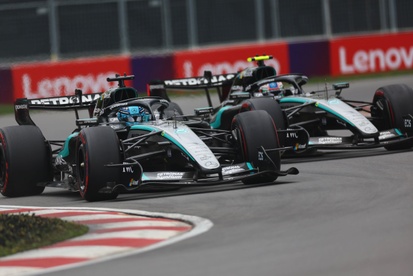
"We are working with a brand-new set of regulations, and we are still struggling to understand every single contributor," Resta admitted. "We are not the only ones in this condition because we can see that many teams are still learning and adapting."
This sentiment of "learning through pain" is echoed across the grid. The level of complexity in the current PU systems, combined with the extreme sensitivity of the aero maps, means that a seemingly minor tweak in software or a slight variance in driving technique can have cascading effects on the car’s overall performance. For Mercedes, the challenge is to decouple these variables—to separate what is a software limitation from what is a human-driven performance variance.
Implications for the Remainder of the Season
The immediate implications for Mercedes are clear: the team must prioritize the stabilization of their energy deployment protocols before the championship moves to Hungary. For George Russell, the psychological impact of feeling "powerless" on the straights cannot be understated. A driver who cannot trust that their car will provide the expected power when they floor the throttle is a driver who cannot race with the necessary aggression and precision.

Furthermore, the incident with Lewis Hamilton highlights how technical failures often lead to on-track errors. When drivers are forced to overcompensate for a lack of top-end speed, they take greater risks in braking zones and corners, increasing the likelihood of contact.
Moving forward, the Brackley engineering team faces a period of intense scrutiny. The data collected from Spa will be cross-referenced with the Silverstone telemetry to determine if there is a fundamental flaw in the energy management logic specifically mapped for Russell’s car.
Conclusion: A Path to Recovery?
The road to recovery for Mercedes involves a two-pronged strategy. First, the immediate patch for the software bug that caused the energy harvesting limit error in Spa is likely already in progress. Second, the long-term project of analyzing the "driving style" difference remains a more nuanced hurdle.

As the team prepares for the Hungarian Grand Prix, the focus remains on reliability and consistency. If Mercedes can provide Russell with a consistent, fully-deployed power unit, they will likely return to the front-running pace that defines the Silver Arrows. However, until they can solve the "mystery" of the straight-line deficit, the team remains vulnerable, trapped in a cycle of technical troubleshooting that detracts from their true potential on the track.
For now, the engineers in Brackley are working around the clock, fully aware that in a championship this tight, the difference between a podium and a retirement often comes down to the lines of code that govern the very power that drives them forward.


 Neng Nana
 Nana Wu

 Lina Hope

 Sagoh
Sagoh
 Iffa Jayyana