
 Muslim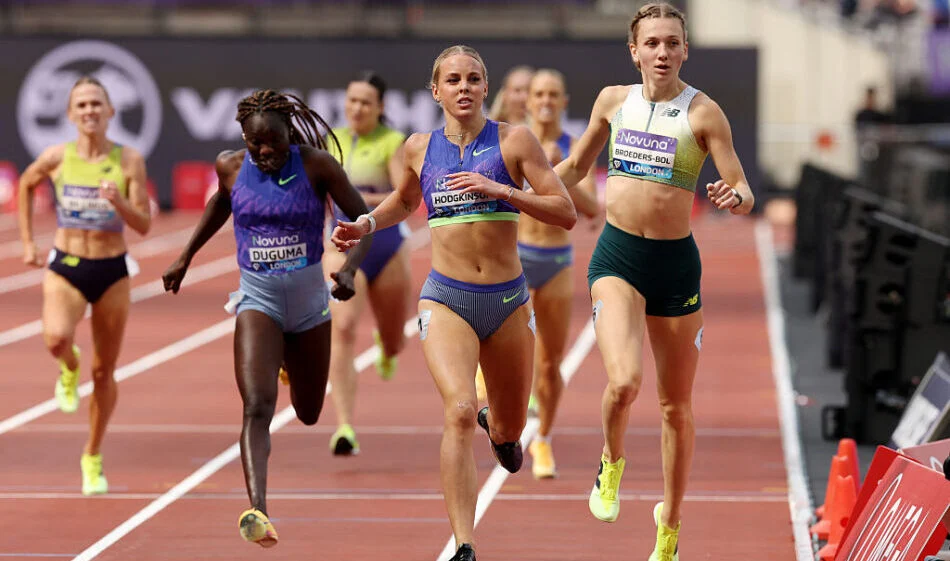
The London Stadium, a venue synonymous with the pinnacle of human achievement, played host to a mesmerizing display of athletic prowess this past Saturday, July 18. With nearly 60,000 spectators packing the stands, the atmosphere was electric, fueled by the anticipation of history in the making. While the promise of multiple world records loomed large over the pre-event discourse, the reality of the day was defined by something perhaps more compelling: the intersection of grit, tactical brilliance, and the occasional, shocking upset.
From Josh Kerr’s monumental mile to a stunning Diamond League record in the discus, the Novuna London Athletics Meet proved that in elite athletics, pre-race projections are merely a suggestion, not a mandate.
The Main Facts: A Meeting of High Stakes
The narrative of the day was dominated by the pursuit of legendary benchmarks. Fans arrived hoping to witness Mondo Duplantis shatter his own pole vault record or perhaps see Keely Hodgkinson challenge Jarmila Kratochvilova’s 800m ghost. While some records remained intact, the performances delivered were of the highest caliber.
Key highlights included:
- Josh Kerr’s World Record: A scintillating 3:42.66 in the Emsley Carr Mile, reclaiming the record for Britain.
- Keely Hodgkinson’s 800m Triumph: A gritty victory in 1:56.21, silencing critics after a turbulent few weeks.
- Cierra Jackson’s Discus Masterclass: A surprise Diamond League record of 71.72m.
- Kanyinsola Ajayi’s Sprint Shock: A 9.84-second upset over world champion Oblique Seville in the 100m.
A Chronological Odyssey: From Morning Intensity to Evening Fireworks
The day began with the technical precision of para-athletics, setting a tone of elite determination. Marcel Hug, the "Silver Bullet," reminded the crowd why he remains the king of the track, cruising to a 2:59.24 finish in the T54 1500m. Orla Comerford and Ben Sandilands also shone, with Comerford posting a personal best in the 100m and Sandilands dominating the 1500m ambulant race.
As the afternoon progressed, the main program ignited. The men’s 100m provided the first major tremor of the day. Expectations were firmly on Jamaica’s Oblique Seville, but Nigeria’s Kanyinsola Ajayi turned the script on its head. Clocking a 9.84, Ajayi not only secured the win but did so with an iconic stare-down as he crossed the line, signaling a changing of the guard in the sprint world.
Simultaneously, the pole vault competition—the most anticipated technical event—suffered a blow when Mondo Duplantis was forced to withdraw mid-competition due to a thigh injury. His absence opened the door for Sam Kendricks, who claimed victory at 5.95m.
As the sun began to dip, the middle-distance events took center stage. The men’s 800m, initially expected to be a victory lap for the record-breaking Emmanuel Wanyonyi, turned into a tactical battlefield. Brandon Miller of the United States seized the moment, clocking a massive PB of 1:42.19 to take the crown, leaving Wanyonyi in a distant fourth.
The evening culminated in the women’s 800m and the Emsley Carr Mile, where the British contingent sought to cement their status in front of the home crowd. Hodgkinson’s controlled front-running in the 800m and Kerr’s historic mile provided the perfect crescendo to a day that tested the mettle of every athlete on the track.
Supporting Data: By the Numbers
The statistical quality of the 2026 London Meet was exceptional, underscored by a flurry of personal bests (PBs) and record-breaking performances.
- The Discus Anomaly: Cierra Jackson’s 71.72m throw was a staggering four-meter improvement on her previous best. To put that in perspective, it is the furthest throw recorded outside of Ramona, California, since 1989.
- Sprint Depth: The men’s 100m final saw Romell Glave clock a 9.97 PB, highlighting the density of talent in the field.
- Hurdles Precision: Karsten Warholm’s 46.61 in the 400m hurdles stands as the world-leading time, his sixth-fastest performance ever, and the meeting record.
- The 400m Hurdle History: Emil Agyekum’s 47.75 clocking is a historic milestone, breaking a German record that had stood for 44 years.
Official Responses and Emotional Reflections
The post-race interviews revealed the human side of these superhuman feats. For Keely Hodgkinson, the victory was about reclamation. "There are mixed emotions," she admitted. "I am going to take the positives because it has been a tough couple of weeks… The only reason I came here today is because I wanted to race in front of a home crowd."
Cierra Jackson, the breakout star of the discus, provided one of the day’s most candid moments. Describing the visceral experience of the crowd’s support, she noted, "I was super nervous… I couldn’t feel my hands, my stomach was hurting, I just took a deep breath and threw and I watched it fly."
Max Burgin, reflecting on his third-place finish in the 800m, offered a pragmatic view of his return to form: "I wasn’t lacking in fitness, I think I was just lacking in sharpness. I had taken the month off with an Achilles problem… Hopefully by the time we get to the championships, the sharpness will be there."
Karsten Warholm, ever the professional, spoke to the emotional resonance of the London Stadium: "Competing in London brings back memories of 2017 every single time. It sounds cliché, but this stadium brings very special meaning to me."
Implications: Building Toward the Future
The London Athletics Meet served as a critical crucible for the upcoming European Championships in Birmingham (August 10-16).
1. The Shifting Balance of Power
The defeat of Oblique Seville and the rise of Kanyinsola Ajayi suggest that the 100m landscape is becoming increasingly volatile. Similarly, the 800m results indicate that no favorite, regardless of form, is safe in a high-stakes championship setting. The return of Audrey Werro to the circuit, combined with Hodgkinson’s newfound resilience, sets the stage for a spectacular showdown in Birmingham.
2. Physical Management and Peak Timing
The injuries sustained by Mondo Duplantis and the ongoing recovery of athletes like Max Burgin emphasize the razor-thin margins of the sport. The ability to manage training blocks while maintaining "sharpness" will be the deciding factor for those looking to podium at the European Championships.
3. The "Home Crowd" Factor
The overwhelming support from the 60,000-strong crowd in London was cited by multiple athletes as a catalyst for their performance. For the British contingent, this home-field advantage will be a vital psychological asset as they head to Birmingham. The confidence gained from the relay successes and the individual heroics of Kerr and Hodgkinson provides a significant momentum boost for the British national team.
4. Technical Evolution
The performance of Cierra Jackson and the endurance of the German 400m hurdles record highlight a continued push in technical disciplines. As athletes find new ways to break through long-standing barriers, the sport is seeing a generation that is not only faster and stronger but tactically more astute.
As the dust settles on the London Stadium, the athletics world looks ahead. The records set here—and the records that were nearly broken—serve as markers of an era of immense talent. The Novuna London Athletics Meet was more than a series of races; it was a snapshot of a sport in flux, where the legends of yesterday are being challenged by the hungry, defiant stars of tomorrow. Birmingham awaits, and if Saturday’s display is any indication, the path to the European podium will be anything but predictable.

 Asep Darmawan
 Nana Muazin
 rifanmuazin
 Asro
Asro
 Ali Ikhwan

 Sagoh
Sagoh