
 Ali Ikhwan
By Motorsport.com Staff
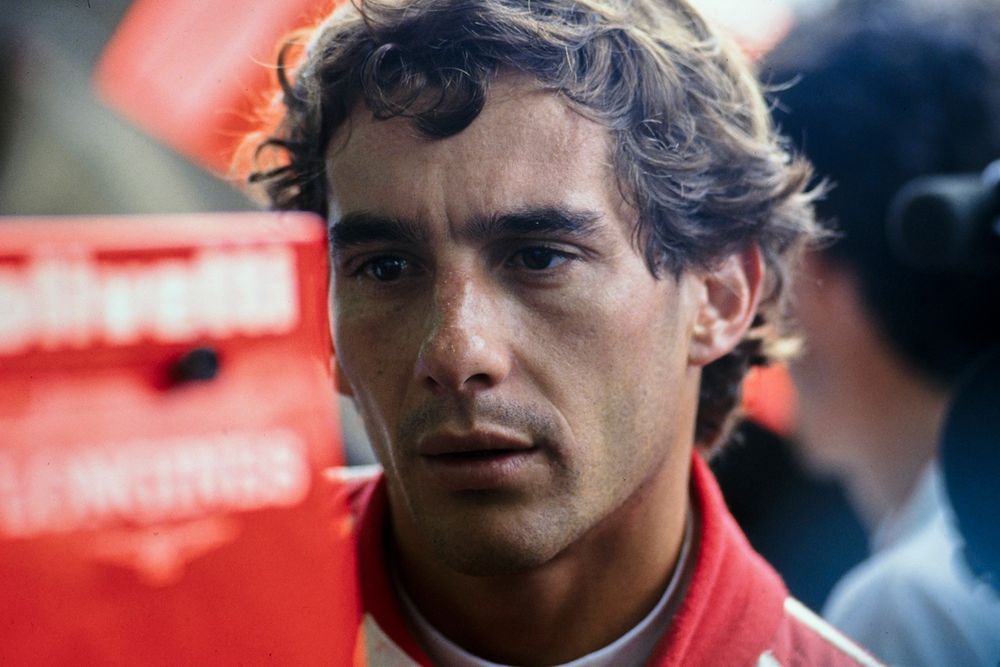
To this day, Ayrton Senna remains the ultimate benchmark of Brazilian motorsport—the last Auriverde driver to claim the Formula 1 World Drivers’ Championship, a transcendent figure whose ghost still haunts the Autódromo José Carlos Pace at Interlagos. Yet, as a new generation of Brazilian racers gradually claws its way up the global single-seater ladder, none of them have been the ones drawing the heaviest, most unavoidable comparisons to the legendary Paulista.
Instead, that heavy mantle has fallen upon a young Italian prodigy: Andrea Kimi Antonelli.
With his explosive performances behind the wheel of the Silver Arrow, his unmistakable mop of curly brown hair, and a frighteningly mature racecraft, the Mercedes wunderkind has spent the season capturing the imagination of the global motorsport press. But as the hype machine threatens to swallow the teenager whole, even the Senna family has stepped in to offer a nuanced perspective on a driver who is rapidly rewriting the record books.
Main Facts: The Record-Breaking Ascent of Kimi Antonelli
The comparisons to Ayrton Senna did not begin in a vacuum; they were forged through sheer, unadulterated speed and historic statistical dominance early in the season.
Antonelli’s breakout campaign hit hyper-drive when he strung together five consecutive Grand Prix victories—a monumental feat achieved by only nine other drivers in the storied 75-year history of Formula 1. Curiously, even Senna himself never managed a five-race win streak during his three-world-championship-winning career.
The climax of this historic run arrived on the sun-drenched streets of the Circuit de Monaco. There, Antonelli delivered a masterclass, securing a commanding grand chelem—pole position, leading every lap, setting the fastest lap, and taking the race victory. It was an exhibition of precision and psychological control that instantly evoked memories of Senna’s peerless dominance in the principality. Senna remains the undisputed record holder for pole positions and wins in Monte Carlo, largely built on the back of mesmeric qualifying laps that bordered on the supernatural. For Antonelli to command the streets of Monaco in similar fashion was enough to send the Italian sports media into a frenzy.
Leading Italian sports daily La Gazzetta dello Sport splashed “Il Fenomeno” across its front pages, breathlessly noting the 19-year-old’s historic streak. But inside the Mercedes garage, the reaction was notably more cautious.
Chronology: From European Circuit Stardom to World Championship Glory
The trajectory of Antonelli’s rise reads like a masterclass in modern driver management, moving from junior karting phenomena straight into the white-hot spotlight of Formula 1.
Early Season Surge and the Monaco Masterclass
As spring turned to summer, Antonelli’s momentum was unstoppable. The five-race win streak established him not merely as a promising rookie, but as an authentic title protagonist. The paddock watched in awe as the teenager absorbed pressure that would have broken more seasoned veterans. Yet, Mercedes team principal Toto Wolff immediately recognized the psychological danger of letting the media elevate a teenager to the status of a national icon before he had even tasted championship success.
"We are trying to shield Kimi from media and marketing activities in the way that they protect him and to the best of our ability," Wolff remarked during the Spanish Grand Prix weekend at Barcelona, just days after the Monaco triumph. "We keep emphasising to our friends from the Italian press also, please don’t draw any comparison with Ayrton Senna or ‘Il Fenomeno’… he’s won five races in a row, which is unbelievable for a young man, but we haven’t won a championship, and he’s 19."
The Mexican Grand Prix Breakthrough
Despite the team’s efforts to dampen expectations, Antonelli’s relentless pace continued to yield results. As the season wore on, the championship battle tightened, but the young Italian kept his composure when it mattered most.
Antonelli officially clinched the World Drivers’ Championship at the Mexican Grand Prix, capping off a stellar campaign that verified his status among the sport’s elite. The title sealed a meteoric rise that left little doubt about his generational talent.
The Pilgrimage to Sao Paulo
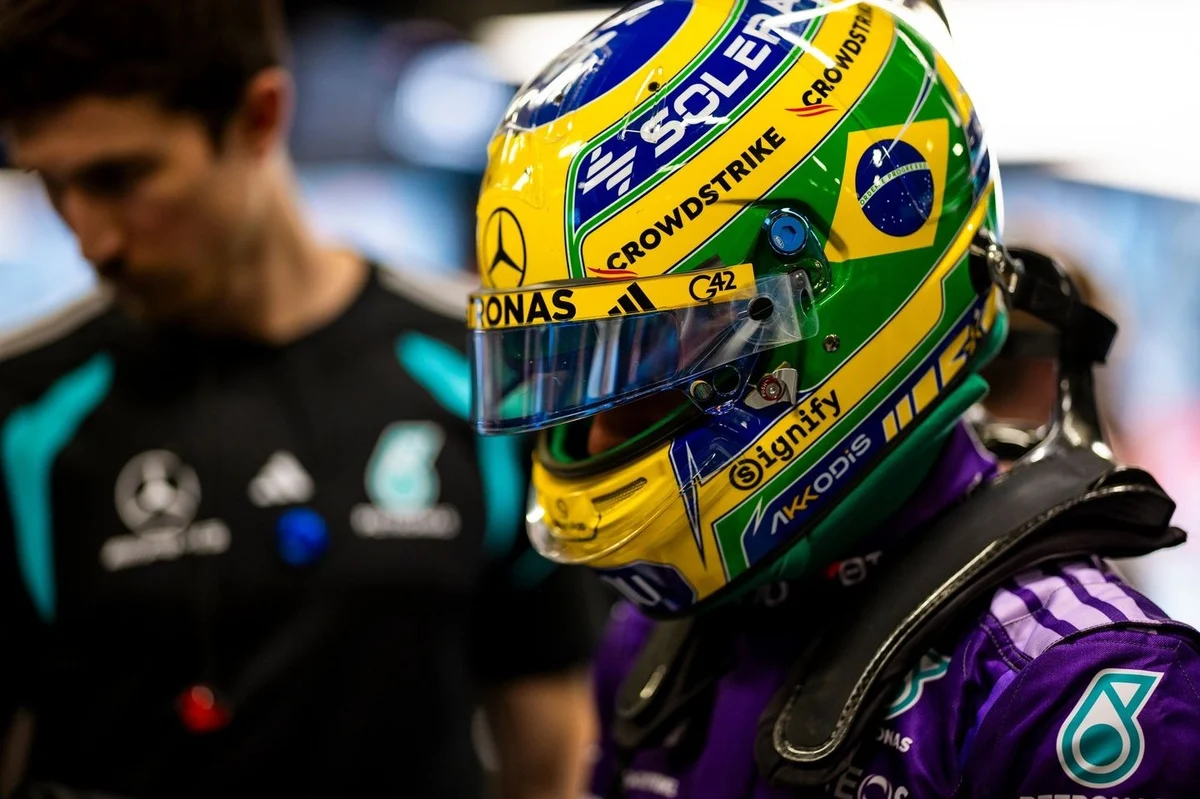
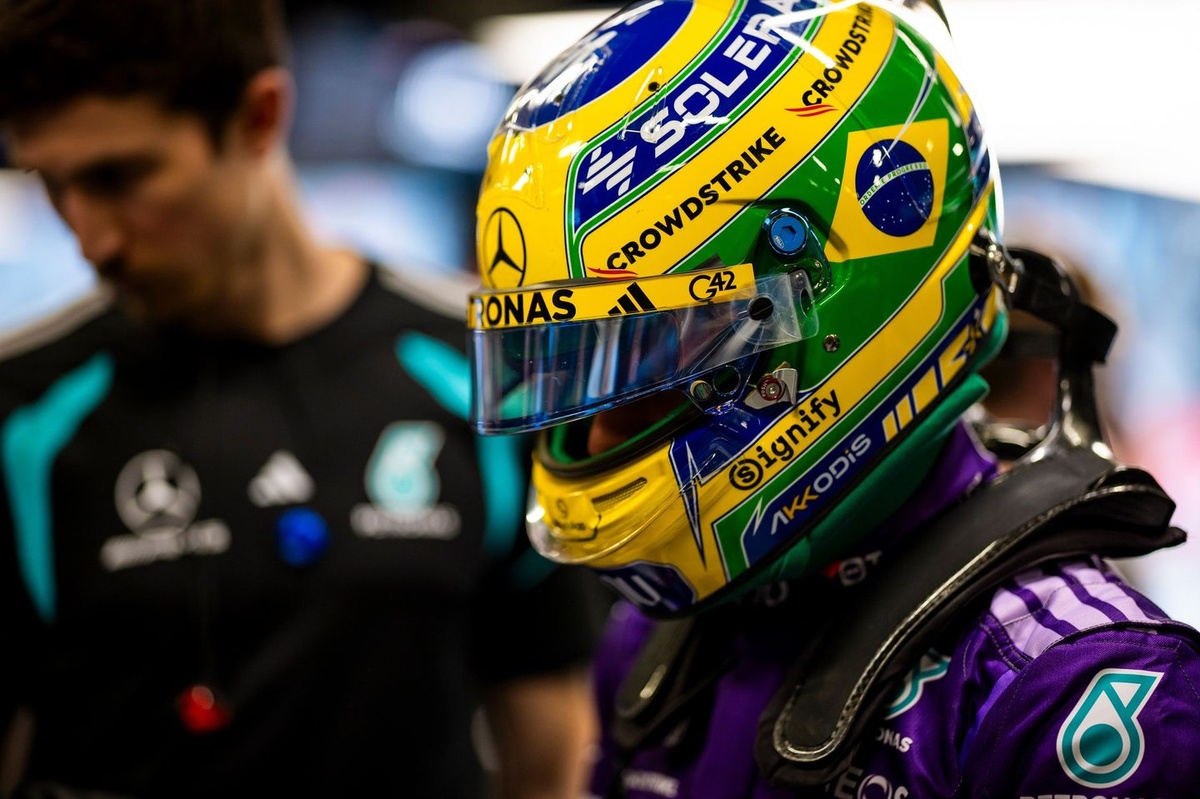
The true test of the Senna comparison, however, awaited him in Brazil. Arriving at Interlagos just days after securing his maiden world title, Antonelli made a quiet, respectful pilgrimage to visit the Senna family. Walking the grounds where the great Brazilian had achieved legendary status, the young champion chose to race with a special yellow helmet design—a direct, reverent nod to Ayrton’s iconic livery.
Official Responses: Toto Wolff and the Weight of History
Speaking to the media following the Brazilian Grand Prix, Toto Wolff opened up about the delicate balancing act of managing a generational talent while keeping historical reverence in check. Wolff’s reluctance to embrace the Senna moniker stemmed not from a lack of respect for Antonelli, but from a profound, almost reverential respect for the legends who came before.
"Comparing Kimi to Senna, I mean… I was always not very keen in having this comparison because, like Frank [Williams] and Ron [Dennis], Senna is a giant of the sport—who he was as a person, who he was as a racing driver," Wolff explained.
"I feel that setting these standards for a driver of his age is a lot of pressure, and that’s why I want to not compare him at that stage. He’s Kimi, Senna was Senna."
Yet, Wolff conceded that the sentiment from the Senna family itself provided a surprising twist to the narrative. Rather than rejecting the comparison, the family embraced the young Mercedes driver in a way they rarely do with newcomers.
"It’s sweet to see how the Senna family embraces him," Wolff said. "They say that it’s the first time that it looks like there is a second Senninha [Little Senna]. That is the first time that you can say, ‘OK, he’s a little bit like him.’ But maybe at that stage he’s a Senninha and not a Senna yet. So let the Senninha develop, let him become a Senna."
Supporting Data: Joining the Pantheon of Team Principals
Antonelli’s championship run was not the only historic milestone celebrated within the Mercedes camp this season. By securing Mercedes’ ninth Constructors’ World Championship, Toto Wolff equalled the legendary tally achieved by Sir Frank Williams as a team principal.
When combining drivers’ and constructors’ world titles, the Austrian boss has now amassed 17 championships—tying the monumental record set by Ron Dennis during his golden era at McLaren. Sir Frank Williams sits just behind on 16.

Reflecting on these figures, Wolff displayed characteristic humility, immediately deflecting any notion that he belongs in the same conversational bracket as the men who built the sport’s defining empires.
"When I think about it, these two are giants of the sport," Wolff reflected. "I’m not even operating in the same galaxy as Frank, who, after his accident, has been able to achieve great things.
"And in the same way, Ron is a person that always looks up to who has been the benchmark in the sport, who has set new standards, probably a little bit also the attention-to-detail syndrome, to always spot what’s bad. So I will never see myself in that league."
Implications: A New Era for Mercedes and Formula 1
The crowning of Andrea Kimi Antonelli and the parallel milestone reached by Toto Wolff mark the end of one era of Formula 1 dominance and the emphatic beginning of another.
For Mercedes, the transition from the Lewis Hamilton golden years to the Antonelli era has been validated in the most spectacular fashion possible. By securing the drivers’ and constructors’ crowns, the Brackley-based squad has proven that its institutional culture of excellence survives—and thrives—under new leadership and fresh talent.
For Antonelli himself, the path forward is clear, albeit fraught with expectation. The blessing of the Senna family offers psychological armor, transforming a suffocating media narrative into an inspirational mantle. He is no longer just a fast teenager with curly hair; he is recognized by racing royalty as a legitimate heir to a racing ethos defined by uncompromising speed and fierce dedication.
As the paddock packs up and looks toward the future, the message from Toto Wolff remains the guiding principle for the newly crowned world champion: let the Senninha develop, and give him the space to forge his own destiny. The ghost of Interlagos may watch over him, but Kimi Antonelli is writing a wholly original chapter in the history of Formula 1.

 Nana
 Ammar Sabilarrohman

 Laily UPN
 Evan Lee Salim
 Iffa Jayyana