Evan Lee Salim
By Cycling News Staff
Published: October 2026
Main Facts
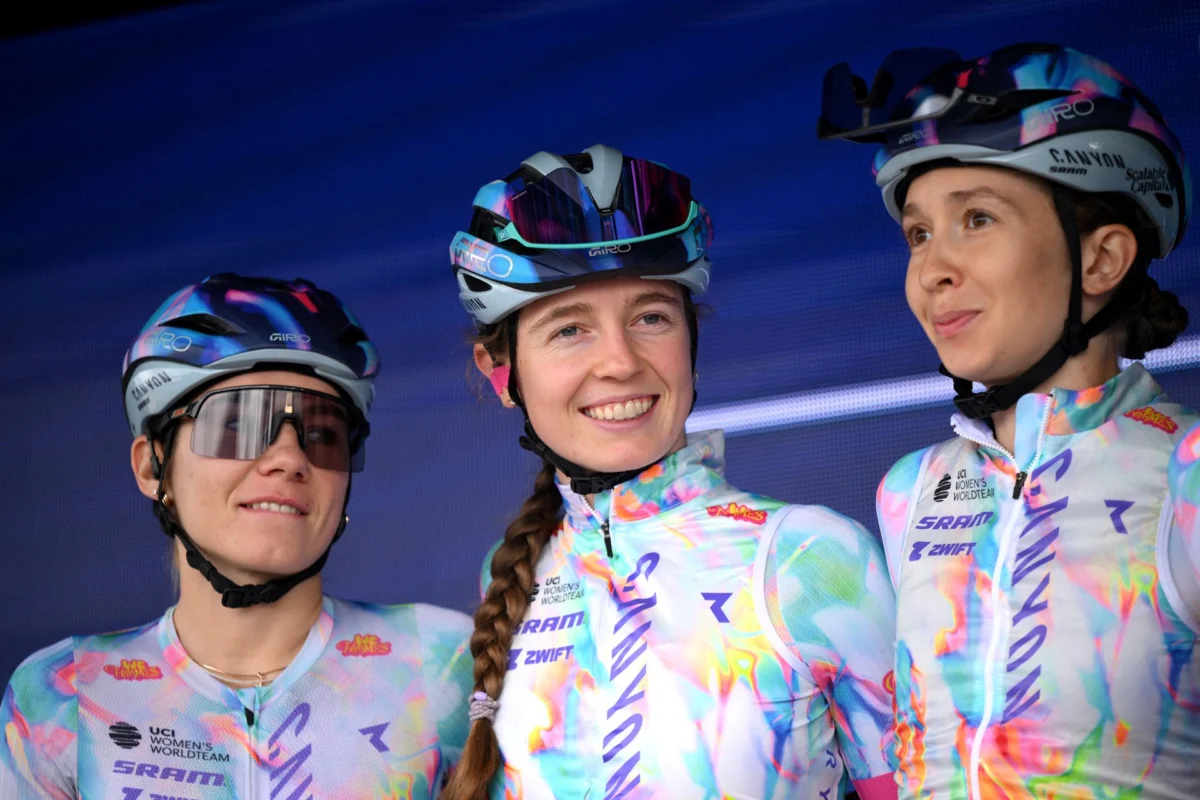
In a landmark development for professional cycling, UCI Women’s WorldTour powerhouse Canyon-SRAM has announced a groundbreaking partnership with artificial intelligence and training analytics firm FasCat Coaching. Effective
immediately for the remainder of the 2026 season, the German-registered squad will leverage FasCat’s cutting-edge CoachCat AI platform to conduct comprehensive, data-driven "AI-powered season reviews" for its roster of elite athletes.
This collaboration marks the first known integration of dedicated generative and analytical AI coaching infrastructure within a top-tier women’s professional cycling team. As the sport continues to professionalize and data granularity reaches unprecedented levels, Canyon-SRAM’s proactive adoption of machine learning signals a paradigm shift in how performance directors, coaches, and riders analyze historical training data, identify physiological bottlenecks, and optimize preparation cycles for upcoming campaigns—specifically targeting the 2027 season and beyond.
Key highlights of the partnership include:
- First-of-its-Kind Integration: Canyon-SRAM is the inaugural Women’s WorldTour team to systematically adopt an AI coaching and review platform at the organizational level.
- The Tool: Utilization of FasCat Coaching’s proprietary CoachCat AI, an advanced machine-learning ecosystem designed to parse massive volumes of power meter, heart rate, and biometric data.
- Immediate Deployment: The partnership rolls out across the remainder of 2026, serving as an advanced diagnostic and predictive sandbox ahead of the 2027 race calendar.
- Strategic Focus: Unlocking microscopic performance gains, refining winter base training blocks, and tailoring individualized periodization strategies for a world-class roster featuring some of the sport’s biggest names.
Chronology
The integration of artificial intelligence into elite endurance sports has been a slow-burning evolution, but the timeline leading to Canyon-SRAM’s partnership with FasCat Coaching highlights an industry accelerating toward automated performance optimization.
Phase One: The Data Explosion (2018–2022)
Over the past decade, professional cycling transformed into a hyper-quantified discipline. Riders at the WorldTour level stopped relying purely on perceived exertion, embracing heart rate monitors, dual-sided power meters, continuous glucose monitors (CGMs), and high-frequency GPS tracking. By 2022, a single rider could generate millions of data points per week across training blocks and Grand Tours. Team sports scientists faced a new bottleneck: not a lack of data, but an overwhelming surplus that human brains and traditional spreadsheet models struggled to process holistically.
Phase Two: The Rise of Algorithmic Coaching (2023–2025)
As machine learning matured across consumer and enterprise sectors, endurance coaching platforms began experimenting with artificial intelligence to summarize workout files and predict fatigue. FasCat Coaching, a prominent endurance training brand founded by veteran coach Frank Overton, emerged as a pioneer in this space by developing CoachCat AI—a specialized language and analytics model trained on decades of cycling-specific physiological data, coaching methodologies, and power-duration curves.
Phase Three: The Canyon-SRAM Partnership (Mid-2026)
Recognizing the need to maintain a competitive edge in an increasingly ruthless Women’s WorldTour peloton, Canyon-SRAM’s performance management team opened dialogues with FasCat Coaching. Team directors sought a scalable, objective method to audit the 2026 racing block without human cognitive bias.
In late 2026, the formal partnership was finalized. Rather than replacing human coaches, the collaboration positioned CoachCat AI as an ultra-powerful diagnostic co-pilot. The immediate mandate: ingest the totality of the team’s 2026 racing and training files, execute deep-dive season reviews, and output actionable, data-backed insights to construct optimized winter training architectures for the 2027 season.
Supporting Data
To understand the magnitude of Canyon-SRAM’s decision to integrate AI into their performance pipeline, it is necessary to examine the sheer volume and complexity of data modern WorldTour cyclists produce, and how machine learning bridges the gap between raw metrics and podium results.
The Scale of WorldTour Metrics
A typical Canyon-SRAM rider competing in a full spring classics campaign and a Grand Tour will log:
- Annual Training Volume: 650 to 900 hours on the bike.
- Kilometers Covered: 25,000 to 35,000 kilometers per year.
- Data Granularity: Power output recorded at 1-second intervals, resulting in roughly 3 million data points per rider per year just from power meters, before factoring in cadence, heart rate, sleep metrics, and HRV (Heart Rate Variability).
How CoachCat AI Operates
Traditional coaching software allows human coaches to view charts of Training Stress Score (TSS), Intensity Factor (IF), and Chronic Training Load (CTL). However, these metrics often fail to capture nuanced interactions—such as how cumulative micro-stresses from travel, altitude camps, and specific race intensities affect a rider’s anaerobic capacity weeks down the line.
CoachCat AI addresses this by utilizing advanced pattern recognition across multi-variable datasets:
- Longitudinal Fatigue Analysis: Correlating sleep and HRV trends with power file decays to pinpoint exact overreaching thresholds before an athlete enters a state of overtraining.
- Predictive Modeling: Simulating how different winter training distributions (e.g., polarized vs. threshold-heavy block periods) are likely to impact a rider’s peak power curve by the time the Spring Classics arrive in March 2027.
- Automated Debriefing: Generating natural-language summaries of complex workout blocks, highlighting discrepancies between prescribed training intentions and actual execution.
Official Responses
The announcement has sent ripples of curiosity and excitement through the international cycling community, prompting statements from key stakeholders in both the team and the technology sector.
While formal press releases emphasized the forward-thinking nature of the collaboration, insiders within Canyon-SRAM’s performance division have highlighted that the partnership is rooted in pragmatism.
"We are operating in an era where margins at the front of the Women’s WorldTour are razor-thin," noted a team performance representative close to the development. "Every team has access to top-tier nutritionists, aerodynamic testing, and elite coaches. To find an advantage, we have to look at how we process information. FasCat’s AI platform allows us to interrogate our 2026 season with a level of clinical objectivity that complements our human coaching staff, ensuring no physiological stone is left unturned as we build toward 2027."
Frank Overton, founder of FasCat Coaching, underscored the significance of scaling machine learning to the pinnacle of professional sport:
"Working with a WorldTour team of Canyon-SRAM’s caliber is a monumental validation of what we’ve built with CoachCat AI. Professional cycling is the ultimate laboratory for endurance data. By applying our AI-driven season review tools to elite-level athletes, we aren’t just looking backward at what happened in 2026—we are building a predictive framework that redefines how athletes prepare for the physical demands of modern racing."
Implications
Canyon-SRAM’s integration of AI coaching technology is more than a one-off tech partnership; it serves as a harbinger for the future trajectory of professional cycling, carrying profound implications for training methodologies, team operations, and the broader sports science industry.
1. Augmentation vs. Replacement of Human Coaches
A common anxiety surrounding the advent of artificial intelligence in sports is the fear of automation replacing human expertise. However, industry analysts and team insiders stress that CoachCat AI is designed to act as an augmented intelligence tool rather than a replacement for veteran sports scientists and coaches. By offloading tedious data crunching, pattern identification, and initial season-review drafting to machine learning algorithms, human coaches are freed up to focus on the qualitative aspects of athlete management: mental health, team morale, tactical execution, and interpersonal communication.
2. A New Arms Race in the Women’s Peloton
The professionalization of women’s cycling has accelerated dramatically over the past five years, driven by minimum wage increases, live television broadcasts, and major corporate sponsorships. With Canyon-SRAM setting a precedent by adopting advanced AI analytics, rival WorldTour squads are expected to follow suit. Teams that rely solely on legacy coaching structures risk falling behind in the digital arms race, where marginal gains are increasingly unlocked via computational sports science.
3. Democratization of Elite Tech
Historically, proprietary performance software developed for WorldTour teams remains locked behind closed doors. However, because FasCat Coaching operates commercial platforms accessible to amateur and developmental cyclists alike, innovations stress-tested by Canyon-SRAM riders could eventually filter down to grassroots athletes. This creates a fascinating feedback loop where elite-level validation shapes the software utilized by everyday cyclists striving to improve their local gran fondo times or national racing results.
Looking Ahead to 2027
As Canyon-SRAM puts its roster through the AI-powered season review crucible for the remainder of 2026, all eyes will be on the team’s performance when the starting flag drops for the 2027 UCI Women’s WorldTour. Whether machine learning can translate directly into spring classic victories and Grand Tour podiums remains to be seen on the road, but one thing is certain: the era of purely intuitive training in professional cycling has officially drawn to a close.


 Iffa Jayyana


 Nana

 Reynand Wu