Muslim
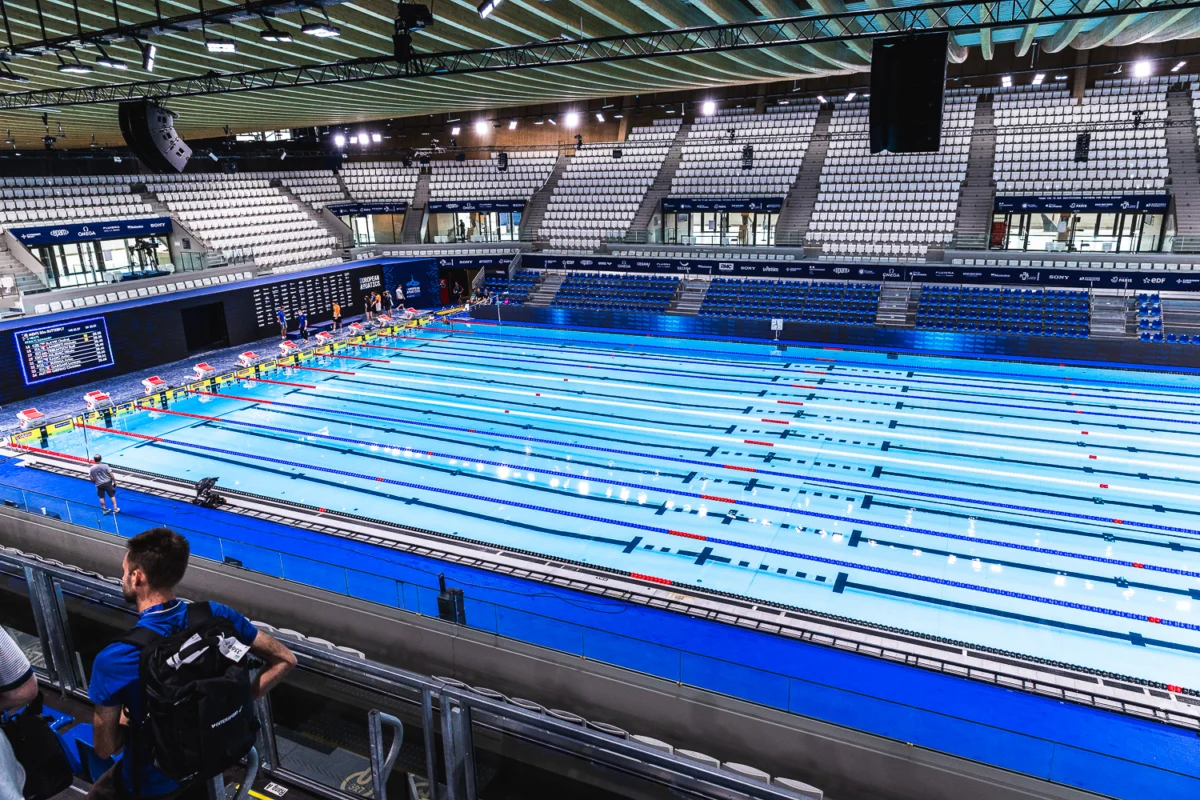
The Nevskaya Volna Water Sports Center in St. Petersburg has become the epicenter of Russian swimming this week as the 2026 Russian Short Course National Championships reach a fever pitch. With the prestigious Short Course World Championships scheduled for this December in Beijing, the stakes in St. Petersburg are existential for the nation’s elite athletes. The selection mandate is clear and unforgiving: only those who meet or exceed the rigorous World Aquatics ‘A’ standards will secure their tickets to the global stage.
As the competition enters its third day, the atmosphere within the facility is one of intense focus. The pool is proving to be incredibly fast, with veterans and rising stars alike pushing the limits of their endurance and speed. While national titles provide the prestige, the primary currency of this meet is qualification times.
A Record-Breaking Semi-Final: The Rise of Egor Kornev
The highlight of the third day—and arguably the entire meet thus far—came in the men’s 100m individual medley. Egor Kornev, the 22-year-old sensation, delivered a performance that has sent ripples through the international swimming community.
In a breathtaking display of versatility and power, Kornev stopped the clock at 50.23 during the semi-final heat. This performance was not merely a victory; it was a demolition of his previous lifetime best and a new Russian national record. By dipping under the 51-second barrier, Kornev has firmly established himself as a force to be reckoned with globally.
Statistical analysis reveals the magnitude of this swim: Kornev now sits as the third-fastest performer in history in the short course 100m IM. With the final still to come, spectators are left wondering if the young star has even more in the tank. His ability to maintain stroke integrity under the immense pressure of a record-breaking swim suggests that he is hitting his peak at exactly the right moment in the Olympic cycle.
Sprint Dominance: Women’s 100m Freestyle Thriller
The women’s 100m freestyle final proved that depth is the hallmark of the current Russian squad. Darya Trofimova, 21, emerged as the victor in a tactical and explosive race, touching the wall in 51.90. Her splits—24.94 on the opening 50m and 26.96 on the return—demonstrated remarkable composure.
Trofimova’s swim was a masterclass in improvement. Entering the meet with a personal best of 52.19, she shaved nearly three-tenths of a second off her career-best time, cementing her status as the second-fastest Russian woman ever in the event, trailing only the national record holder, Mariia Kameneva (51.79).
The podium was rounded out by Darya Klepikova (52.19) and Alina Gaifutdinova (52.43). Significantly, all three medalists cleared the 53.02 World Aquatics ‘A’ standard, signaling a robust contingent ready to challenge for medals in Beijing. The competitive nature of this final illustrates a growing trend in Russian swimming: domestic competition is forcing athletes to find new levels of speed simply to remain on the national roster.
Depth and Consistency: The Men’s 100m Freestyle
If the women’s 100m freestyle was a showcase of individual breakthroughs, the men’s equivalent was a display of sheer consistency and tactical execution. Egor Proshin claimed the gold with a 46.30, holding off a charging Ivan Girev (46.49) and Roman Zhiakov (46.57).
What made this event particularly notable was not just the winner, but the collective performance of the top three. All three men finished well under the 46.89 qualification standard required for the World Championships. This performance depth is crucial for Russia’s relay prospects. With three swimmers comfortably inside the ‘A’ cut, national team coaches will have significant flexibility when constructing the 4x100m relay teams for Beijing.
Breaststroke Powerhouses and the Road to Beijing
The breaststroke events continued the trend of high-caliber performances. In the women’s 100m breaststroke, World Record holder Evgenia Chikunova asserted her dominance, clocking 1:04.45. While she won by over a second, the race was a reminder of the gap between the world’s best and the rest of the field. Only Chikunova managed to clear the 1:04.97 qualification standard, highlighting the challenge of achieving international benchmarks in technical events.
Conversely, the men’s 100m breaststroke provided a tighter contest. Ivan Kozhakin secured the top spot with a 56.42. The race for the remaining podium spots was equally fierce, with Kirill Prigoda and Alexander Zhigalov both clocking 56.78. By hitting the ‘A’ cut, these athletes have guaranteed their names will be in the conversation for the World Championship roster, proving that the pressure of the selection policy is producing the desired results.
Endurance Excellence: Men’s 400m Freestyle
The men’s 400m freestyle was arguably the most rigorous test of the day, demanding both aerobic capacity and the ability to maintain pace under fatigue. Grigory Vekovishchev led the charge, finishing in 3:36.62. This was a near-personal best for the swimmer, who remains within striking distance of his own historical marks.
The battle for silver and bronze saw Saveliy Luzin (3:37.65) and Nikolay Kolesnikov (3:40.16) deliver career-defining efforts. With all three men clearing the 3:42.18 World Aquatics ‘A’ cut, the event showcased a resurgence in Russian middle-distance swimming. These times suggest that the endurance training programs currently being implemented across top-tier Russian clubs are yielding high-quality, international-level results.
Implications for the World Championships
As the 2026 Russian Short Course National Championships head into their final days, the implications of these performances are clear. The Russian selection committee has established a "performance-first" culture. By forcing athletes to hit the World Aquatics ‘A’ standards during the national championships, they are ensuring that only those who can perform under the glare of the spotlight will represent the country in Beijing.
The depth observed in the 100m freestyle events and the record-breaking form of athletes like Egor Kornev suggest that the Russian team will be a formidable presence in December. However, the struggle in other events to consistently meet the ‘A’ standards underscores the reality that elite international success requires more than just domestic dominance.
Looking Ahead
For the athletes who have already secured their qualification, the focus now shifts to recovery and fine-tuning their taper for Beijing. For those who missed the mark, the final days of the St. Petersburg meet represent a last-chance opportunity. The energy in the Nevskaya Volna Water Sports Center is palpable; it is a environment where legacies are being built and careers are being defined.
As the championships conclude, the focus will transition from the domestic results to the broader international landscape. With the bar set high by the current crop of swimmers, the upcoming World Championships in Beijing promise to be one of the most competitive iterations of the event in recent memory. For the Russian swimmers, the task remains the same: translate the speed of St. Petersburg into the glory of the global podium.
The data provided by these championships serves as a blueprint for the future of the sport in the region. With youth, experience, and a clear pathway to international competition, the Russian team appears poised to maintain its position at the forefront of short-course swimming. The world will be watching in December to see if these times hold up against the best in the world.

 Nana
 Lina Hope

 Neng Nana
 Raul Delapena Setiawan